I'm doing a Podcast on entrepreneurship, leadership & management on top of SEO recently. Give me some love?
Subscribe and listen in on Spotify: https://t.co/kIdzZNud1m
There is no sacred cow at SEO Hacker.
We had a process we'd been running for three years. Everyone knew it. Nobody questioned it. Then we actually looked at the numbers and realized it wasn't working — hadn't been for a while. We killed it in a week.
The longer something has been around, the more dangerous it is to assume it's still right. Age isn't proof of value. Results are.
There is no sacred cow at SEO Hacker.
We had a process we'd been running for three years. Everyone knew it. Nobody questioned it. Then we actually looked at the numbers and realized it wasn't working — hadn't been for a while. We killed it in a week.
The longer something has been around, the more dangerous it is to assume it's still right. Age isn't proof of value. Results are.
There is no sacred cow at SEO Hacker.
We had a process we'd been running for three years. Everyone knew it. Nobody questioned it. Then we actually looked at the numbers and realized it wasn't working — hadn't been for a while. We killed it in a week.
The longer something has been around, the more dangerous it is to assume it's still right. Age isn't proof of value. Results are.
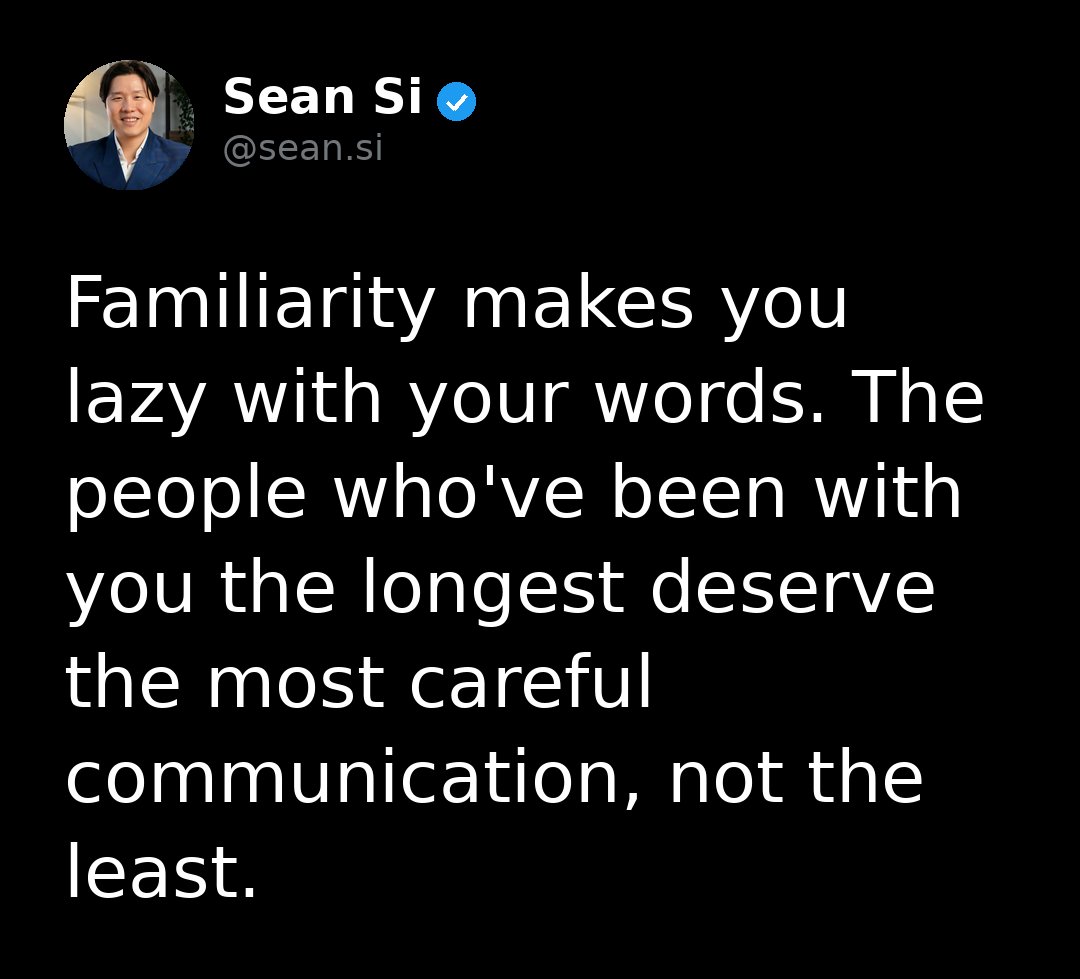
I've caught myself saying things to people I've worked with for years that I would never say to a new hire. Not because I was being cruel — just careless. The relationship felt safe so I stopped being intentional. But they still heard it. They still filed it away.
The people who've been with you the longest deserve the most careful communication, not the least. They're the ones whose trust is actually worth protecting.
Agree?
Loyalty follows the people who showed up first.
I have clients who've been with SEO Hacker since I was a freelancer 16 years ago. Not because we locked them in — they could leave anytime. They stayed because when things were hard for them, we stayed too. We didn't quietly reduce effort when their results dipped. We leaned in harder.
That's what a partnership actually is. You don't earn it with a contract. You earn it by being the kind of company that shows up the same way - especially when times are difficult.
A timely partial report beats a late complete one.
I've had team members sit on updates for days because they didn't have everything figured out yet. By the time they came to me with the full picture, the window to act had already closed — or someone else had already made the wrong call because they were working in the dark.
Tell me what you know now. Flag what you don't. We can work with incomplete information. We can't work with silence.
If you ship perfect, you shipped too late.
I spent years waiting until things were ready. The presentation had to be tight. The product had to be polished. The pitch had to be rehearsed. By the time I sent it, someone else had already moved. Or the window had closed.
Done and out the door beats perfect and sitting in your drafts. The market doesn't reward the best version. It rewards the one that showed up first and learned fast enough to get better.
After running my team for over 15 years, I can spot it from a mile away — a meeting where everyone walked out thinking they agreed, and two weeks later we find out everyone went and did something completely different.
Nobody lied. Nobody was confused in the room. They just each filled in the blanks differently and nobody asked.
The fix is simple but most leaders skip it. Before you leave any meeting, get this on record: who is doing what, by when, and how you'll know it's done.
Call it bureaucracy if you want. It's actually the only thing standing between real alignment and the illusion of it.
They know what needs to happen. They've known for months. They just haven't cut the other 12 things that are preventing it from happening.
I've done this. You tell yourself every item on the list matters. Some of them do. Most of them are just noise that feels important because it keeps you busy. The real work — the one move that changes everything — is usually uncomfortable, expensive, or politically messy. So you keep doing the easier things instead.
Figure out what that one move is. Then stop doing everything else until it's done.
Agree?
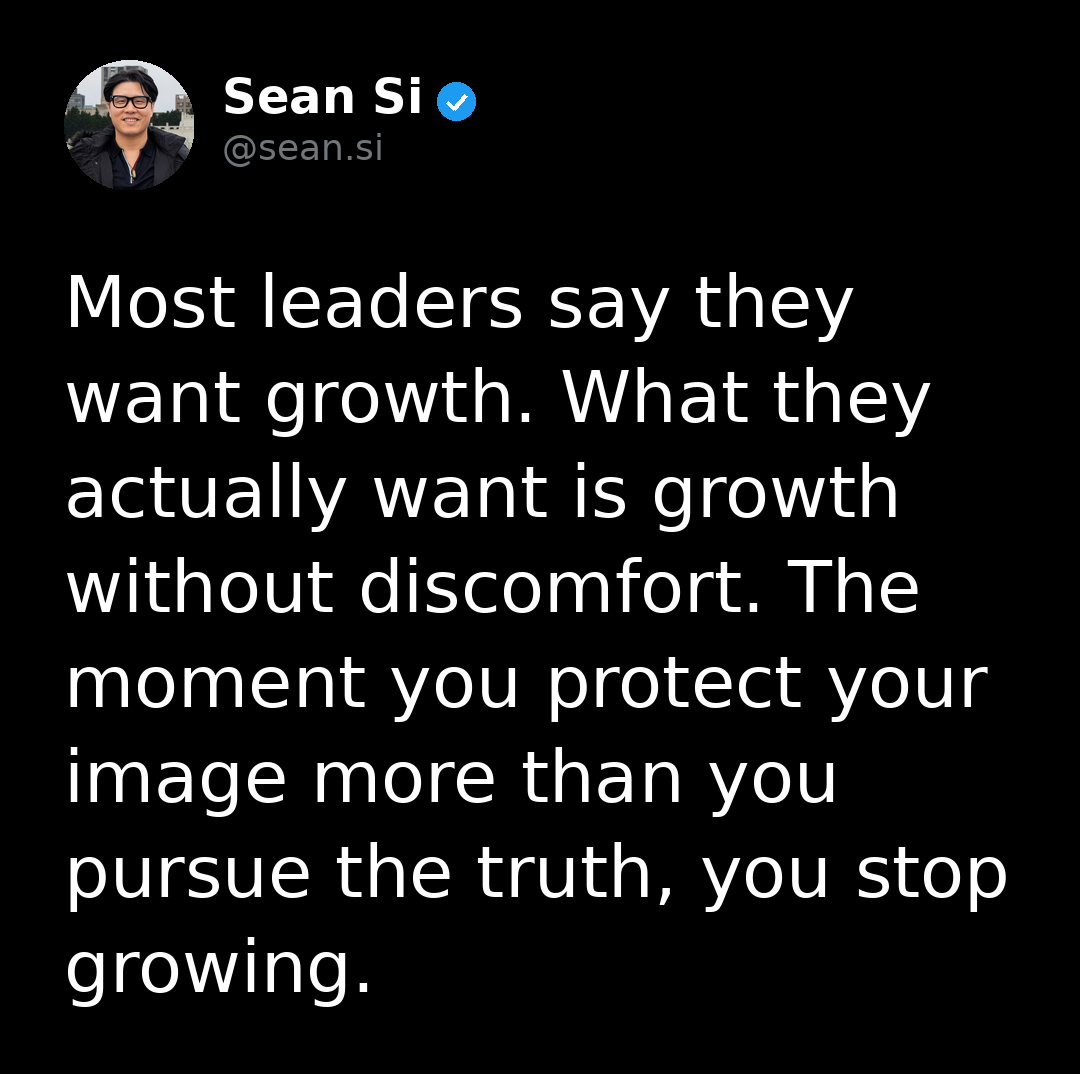
Most leaders say they want growth. What they actually want is growth without discomfort. Those are different things.
I've watched companies plateau not because the market dried up or the product failed — but because the person at the top stopped being willing to be wrong in front of their team. The moment you protect your image more than you pursue the truth, you stop growing.
Growth requires a specific kind of courage. Not the loud kind. The kind where you sit in a meeting, hear that what you built isn't working, and say "okay, what do we do next?"
Mentorship is life-on-life, not Q&A.
I've had people ask me for mentorship and what they really wanted was answers. They wanted me to sit across a table, tell them what to do, and then go execute it themselves. That's consulting, not mentorship. Real mentorship is proximity — watching how someone thinks, how they handle pressure, what they do when things go wrong.
You don't mentor someone by answering their questions. You mentor them by letting them watch you live.
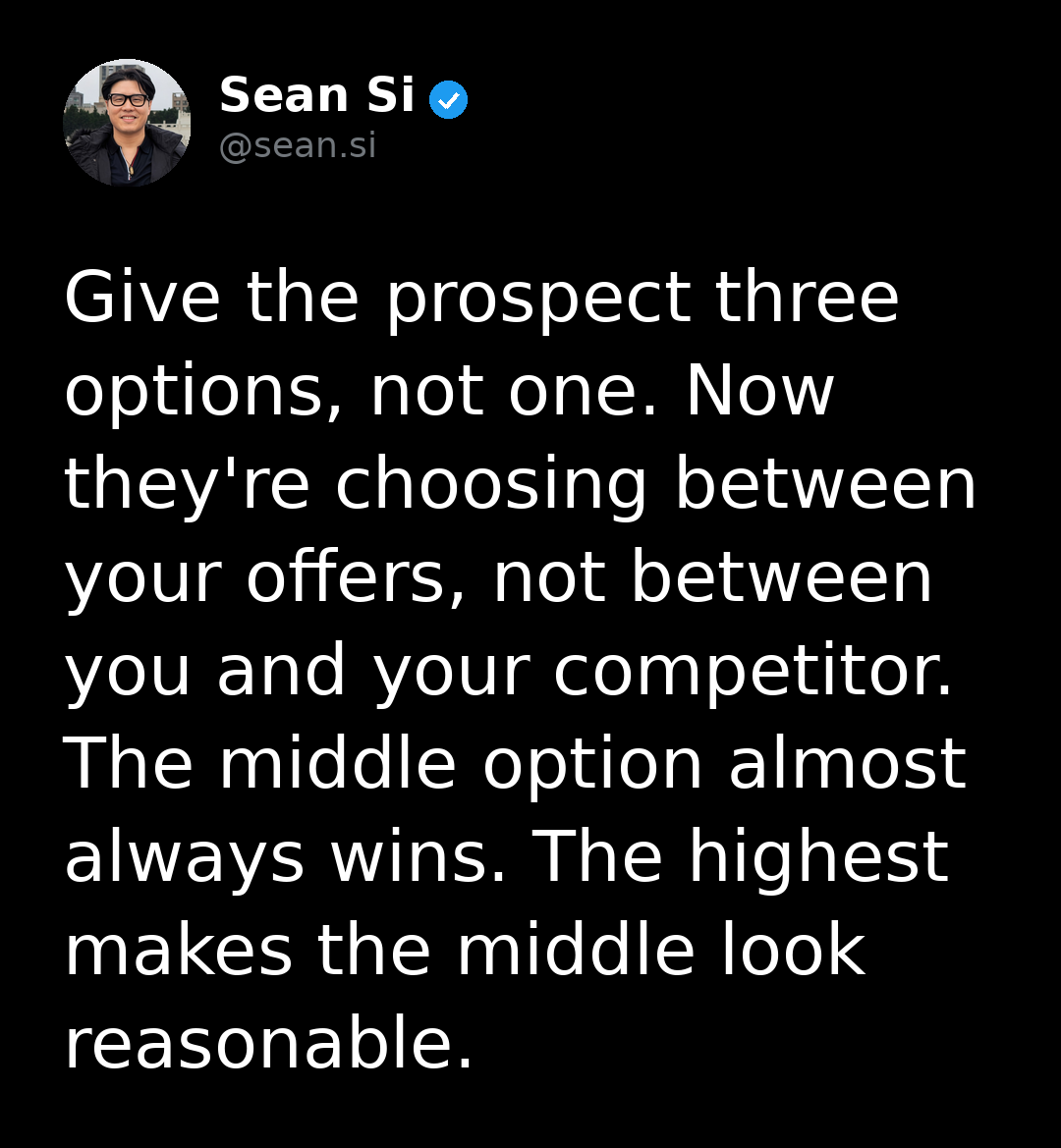
I used to present one package — the one I thought was the best fit. And then I'd wait while they either said yes or negotiated me down. The problem is, presenting one option puts all the pressure on a single point. If they don't like the price, the only move they have is to walk away.
Three options change the dynamic. Now they're choosing between your offers, not between you and your competitor. The middle option almost always wins. And the highest option makes the middle look reasonable.
We do not hit our wounded.
I've seen leaders who, after someone already failed publicly, kept bringing it up in every meeting after. The mistake became the person's identity. That's not accountability — that's something else.
When someone on your team falls, you correct once, clearly. Then you let it go. You don't compound the wound. That's not softness. That's how you keep people willing to take risks for you.