🌍 The World in Numbers
1. 🌐 Countries - 195
2. 🗣️ Languages - 7,170
3. 👥 World Population - 8.3 Billion+
4. 📱 Internet Users - 6.12 Billion
5. 🏙️ Cities with 50,000+ Residents - 12,000+
6. 🌆 Megacities - 33
7. 🌍 Continents - 7
8. 🌊 Oceans - 5
9. 🌋 Active Volcanoes - 1,350
10. 🌕 Moons in the Solar System - 891
11. 🪐 Saturn's Moons - 274
12. ✨ Confirmed Exoplanets - 6,298
13. 🌳 Tree Species - 73,000+
14. 🌲 Tree Species in GlobalTreeSearch - 60,082
15. 🌺 Vascular Plant Species - 391,000
16. 🍄 Fungi Species - 144,000
17. 🐘 Vertebrate Species - 70,000
18. 🐜 Invertebrate Species - 1.3 Million
19. 🐦 Bird Species - 11,000
20. 🦣 Mammal Species - 6,759
21. 🦎 Reptile Species - 10,000+
22. 🐸 Amphibian Species - 8,011
23. 🐟 Fish Species - 36,500+
24. 🧭 Species Assessed by the IUCN Red List - 172,600+
25. ⚠️ Threatened Species - 48,600+
26. 🌲 Forest-Related Green Jobs - 86 Million+
27. 👨👩👧👦 People Dependent on Forests - 880 Million
28. 📴 People Without Internet Access - 2.17 Billion
Source: UN, World Bank, ITU, IUCN, NASA, ESA, GlobalTreeSearch, FAO
Las regiones asoladas por el terrorismo como Ayacucho, Huancavelica, Junín Apurímac, Huánuco. Hoy figuran entre las que más respaldan al MOVADEF, vocero de sendero luminoso.
Sufren del síndrome de Estocolmo, es lamentable que no tengan memoria.
In 1898, an Austrian physicist published a radical mathematical theory that claimed the entire universe was slowly, irreversibly ticking toward its own death.
The elite scientific establishment mocked him so relentlessly that he slipped into a deep depression and eventually took his own life.
Only a few years later, the world realized he was entirely right.
His name was Ludwig Boltzmann.
Today, his breakthrough formula is carved onto his tombstone in Vienna.
Yet outside of the physics community, almost no one understands the brutal, mind-bending philosophical truth he discovered about how our lives actually work.
In the late 19th century, physics was neat, orderly, and beautiful. Scientists believed that if you knew the exact position and velocity of every particle in the universe, you could predict the future perfectly.
The universe was a flawless clock.
Boltzmann looked at the world and realized that was an illusion.
He wanted to solve a deceptively simple riddle: Why does time only move forward? Why does a dropped coffee mug shatter into a hundred pieces, but a hundred scattered pieces never spontaneously jump back together to form a mug?
The laws of standard physics said it could happen. The math didn't forbid it.
So why didn't it?
Boltzmann realized the establishment was looking at the problem completely wrong. They were trying to track every single particle individually. It was an impossible formula.
Instead, Boltzmann decided to use probability and statistics. He stopped looking at individual atoms and started looking at the chaos of the crowd.
He invented a concept called Entropy, the mathematical measure of disorder.
His breakthrough was simple but devastating:
There is only one specific way for the atoms in your coffee mug to be perfectly arranged. But there are trillions of disordered ways for those same atoms to be scattered across the floor.
Things don’t break because the universe is malicious. They break because chaos is statistically overwhelming. Order is rare; disorder is infinite.
Boltzmann proved that the universe is constantly, inevitably moving from a state of low entropy (perfect order) to high entropy (maximum chaos). This cosmic slide toward disorder is the very reason time exists. The "arrow of time" is just the universe getting messier.
The professors of his day were furious. They hated his math because it relied on probability instead of certainty. They refused to believe that the fundamental laws of reality were governed by statistics.
But Boltzmann’s math laid the groundwork for quantum mechanics and explained the fate of the cosmos.
The philosophical lesson Boltzmann left behind is a cold, liberating truth for everyday life:
Order requires deliberate energy. Chaos is free.
Most people treat problems in their lives, a collapsing relationship, a chaotic career, a messy mind, as a sign of personal failure. They think they did something uniquely wrong.
But Boltzmann’s math proves that if you leave any system alone, it will naturally decay into chaos all by itself. Your room doesn't get messy because you are a bad person; it gets messy because the laws of physics dictate that there are infinitely more ways for your clothes to be on the floor than in the closet.
If you want to maintain order, sanity, or success in any area of your life, you cannot rely on things "just working out." The universe is actively trying to scramble your plans.
What is an area of your life right now that is sliding into chaos? Stop waiting for it to fix itself. Chaos is the default setting of the universe. What is the precise, deliberate energy you need to inject into that system today to fight back against the entropy?
🥹 El emotivo mensaje que le dedicó Djokovic a Zverev tras su consagración en Roland Garros
🗣 "Te conozco desde que tenías 10 años. Estabas entrenando en las canchas con mi hermano menor mientras yo competía contra tu hermano mayor, Mischa, tanto en el circuito juvenil como en el profesional"
🗣 "He cultivado una relación respetuosa y amistosa con toda tu familia durante muchos años. Tuvimos innumerables conversaciones sobre tácticas de tenis, jugadas estratégicas, la vida, la familia y los negocios"
🗣 "Nos divertimos dentro y fuera de la cancha. Saber lo que tuviste que soportar con tu enfermedad desde pequeño, superar el mayor obstáculo mental dentro de ti mismo y silenciar a los críticos que pensaban que nunca ganarías un Grand Slam, hace que esta victoria sea aún más especial y memorable"
🗣 "Ver las lágrimas de alegría que compartiste con tus padres, tu hermano y otros miembros del equipo me emocionó. Estoy feliz de que lo hayas logrado y te mereces absolutamente este éxito porque has trabajado muy duro en todos los frentes para que sucediera. Disfrútalo"
🇨🇳¿Por qué Occidente sermonea tanto a China sobre “democracia”?
En el sistema occidental, cada 4 o 5 años se monta un gran espectáculo electoral: promesas, campañas millonarias y cambios de caras.
Pero al final, el poder real (el capital financiero, las grandes corporaciones y las élites) sigue intacto.
La gente vota, pero las políticas económicas fundamentales rara vez cambian.
Esto es lo que Marx llamó democracia burguesa: una forma donde el pueblo elige a sus gobernantes, pero no decide el rumbo de la economía ni la sociedad.
China opera bajo un modelo socialista con características chinas, heredero directo de la Revolución China de 1949.
Según la visión marxista-leninista:
El Partido Comunista actúa como vanguardia de la clase trabajadora y del pueblo.
El Estado no está al servicio del capital privado, sino que dirige la economía hacia objetivos nacionales a largo plazo.
La prioridad no es el lucro de unos pocos, sino el desarrollo productivo y el bienestar colectivo.
Por eso China puede planificar décadas por delante: erradicar la pobreza extrema, construir la mayor red de alta velocidad del mundo, liderar en renovables y tecnología… sin depender de ciclos electorales cortoplacistas.
No es una “dictadura” como repiten en Occidente.
Es una democracia popular concentrada, donde el Partido busca el consenso y la estabilidad para servir los intereses históricos del pueblo chino.
Este es el núcleo del socialismo científico.
poner la política y la economía al servicio de las mayorías, no de las minorías privilegiadas.
Ispanak demirini salmak için limona ihtiyaç duyar.
Havuçlar beta-karotenlerini salmak için zeytinyağına ihtiyaç duyar.
Yağlıe balık omega-3’ünü salmak için zerdeçala ihtiyaç duyar.
Zerdeçal kurkuminini salmak için karabibere ihtiyaç duyar.
Broccoli sulforafanını salmak için domatese ihtiyaç duyar.
Domatesler likopenlerini salmak için zeytinyağına ihtiyaç duyar.
Sarımsak allisini salmak için soğana ihtiyaç duyar.
Yeşil çay kateşinlerini salmak için limona ihtiyaç duyar.
Mercimek ve nohut demirini salmak için biber veya limona ihtiyaç duyar.
Çilek ve nar C vitaminini salmak için yoğurda ihtiyaç duyar. Kırmızı etteki zararlı bileşikleri azaltmak için taze kekik veya rozmarine ihtiyaç duyar.
Aynı malzemelerle yapıyorsunuz ama doğru eşleştirme ile besin değeri katlanıyor. Lezzet aynı, fayda bambaşka!
Mutfağınız artık bir süper gıda laboratuvarı. Afiyet olsun ve bilinçli pişirmeler! 🌿🍅🥑
When I was just a boy growing up in Brooklyn, my parents knew very little of science. But they gave me an invaluable gift: an open door to curiosity.
I remember walking into the public library on 86th Street, trembling slightly with a question that had consumed my mind. I asked the librarian for a book about stars. She smiled and handed me a thin volume filled with pictures of actors and actresses. I told her, politely, that this wasn’t what I meant.
She returned with the right book. I sat down, opened the pages, and read a phrase that took my breath away: Stars are suns, only very far away.
- Carl Sagan
In 1880, a reclusive, self-taught telegraph operator with no university degree went to war with the greatest scientific minds in the British Empire.
He won, changed the mathematics of physics forever, and quietly built the foundation for the entire modern electrical grid.
Yet today, almost no one outside of electrical engineering and applied mathematics even knows his name.
His name was Oliver Heaviside.
The story of how he solved one of the hardest engineering problems in human history is a masterclass in why book smarts fail where deep, messy intuition succeeds.
In the late 19th century, the world was trying to lay massive underwater telegraph cables across the Atlantic Ocean. But they had a crippling problem: the signals kept distorting. You would type a message in London, and by the time it reached New York, it was a smeared, unreadable mess of electricity.
The top physicists of the day, using traditional university math, said the solution was simple: make the cables purer and reduce resistance. They spent millions of dollars trying to make the lines perfect.
It didn't work. The signals still broke.
Heaviside looked at the exact same problem from his messy, self-taught perspective and realized the elite academic establishment was blind.
They were treating an electrical wire like a water pipe. They thought the electricity was inside the copper.
Heaviside figured out that electricity doesn’t flow inside the wire; it flows in the electromagnetic field around the wire.
Then, he did something that made mainstream mathematicians furious. He invented a bizarre shortcut called operational calculus. Instead of spending weeks solving complex, multi-page differential equations to map these fields, he treated calculus like basic algebra.
To the professors at Cambridge, this was a sin. They called his math clumsy, unrigorous, and nonsense.
Heaviside didn't care. His famous response to them was: "Should I refuse my dinner because I do not fully understand the process of digestion?"
He used his illegal math to propose a mind-bending solution: to fix the distorted signal, engineers didn't need to make the cable cleaner. They needed to deliberately add more corruption to it. He suggested wrapping the cables in iron wire to introduce "inductance", intentionally fighting one distortion with another.
The establishment ignored him for years. But when AT&T finally tried his method, the results were instant. Long-distance communication was solved.
Heaviside wasn't trying to pass a math exam or impress a peer-review board. He wanted to solve a real-world problem.
In the process, he took James Clerk Maxwell’s famously complex 20 equations of electromagnetism and condensed them into the 4 beautiful formulas that every single physics student is forced to memorize today. Heaviside did the heavy lifting, but Maxwell got the name.
The lesson Heaviside left behind is a philosophical blueprint for navigating a complex world:
The people who memorize the proper formulas are excellent at solving textbook problems. But they are entirely dependent on the rules staying the same.
The people who understand the underlying system don't care about the rules. They break them to find what actually works.
Most of us approach our life's problems like the 19th-century British establishment. When something goes wrong in our career or relationships, we try to make our existing wire purer. We try harder at a broken method.
But sometimes, the problem isn't that you aren't trying hard enough. The problem is that you are looking inside the wire instead of looking at the field around it.
What is a distortion in your life right now that you keep trying to fix with the standard advice? What happens if you stop trying to follow the textbook formula and start looking at the hidden forces causing the noise?
El discurso completo de Alexander Zverev, CAMPEÓN de Roland Garros:
🗣 "Antes que nada, quiero felicitar a Flavio. Fueron dos semanas increíbles. Alcanzar tu primera final de Grand Slam y jugar de esta manera en una ocasión así es algo extraordinario. No muchos lo consiguen. Y, de corazón, espero que muy pronto puedas levantar uno de estos trofeos."
🗣 "Quiero agradecer al público. Esta cancha es muy especial para mí por muchas razones. Aquí viví algunos de los mejores momentos de mi vida, pero también algunos de los peores. Hace cuatro años estaba tirado en aquella esquina con siete ligamentos rotos y dos huesos fracturados. Hace dos años perdí una final de Grand Slam aquí mismo. Pero esta vez la historia tuvo un final feliz."
🗣 "Gracias a todos ustedes porque sentí su apoyo durante las dos semanas completas. Sinceramente, creo que sin el empuje del público no habría ganado este torneo."
🗣 "También quiero agradecer a mi equipo. Probablemente tenga el equipo más estable del tenis. Mi entrenador es mi padre y llevamos 29 años juntos. Mi hermano también lleva conmigo 29 años."
🗣 "Mi preparador físico trabaja conmigo desde que tenía 16 años. Mi mejor amigo lleva más de diez años a mi lado y es una de las personas más importantes de mi vida. Sergey también lleva más de una década acompañándome en distintos roles."
🗣 "Quiero darles las gracias a todos porque hemos pasado por mucho juntos. Hemos atravesado lesiones, decepciones, derrotas y momentos muy difíciles. En ocasiones también nos tocó perder en los escenarios más importantes."
🗣 "Pero hoy somos campeones de Grand Slam, y eso es lo que realmente importa."
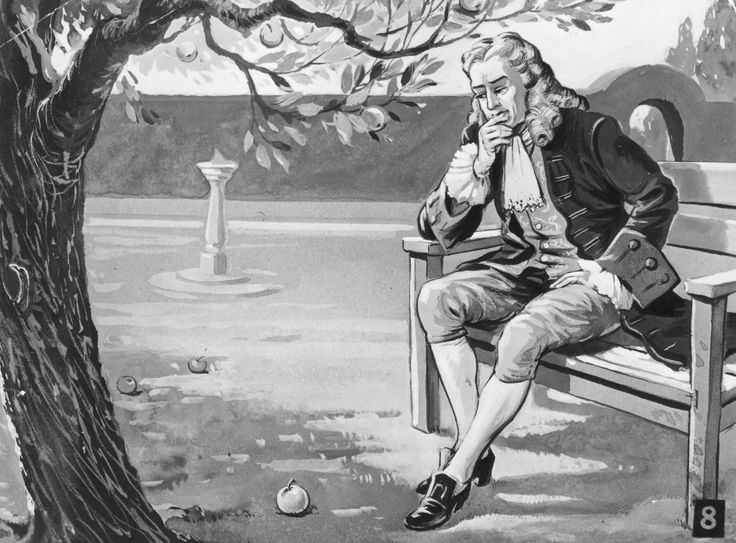
Sir Isaac Newton on atheism ✍️
Atheism is so senseless & odious to mankind that it never had many professors. Can it be by accident that all birds beasts & men have their right side & left side alike shaped (except in their bowels) & just two eyes & no more on either side the face & just two ears on either side the head & a nose with two holes & no more between the eyes & one mouth under the nose & either two fore leggs or two wings or two arms on the sholders & two leggs on the hipps one on either side & no more? Whence arises this uniformity in all their outward shapes but from the counsel & contrivance of an Author? Whence is it that the eyes of all sorts of living creatures are transparent to the very bottom & the only transparent members in the body, having on the outside an hard transparent skin, & within transparent juyces with a crystalline Lens in the middle & a pupil before the Lens all of them so truly shaped & fitted for vision, that no Artist can mend them? Did blind chance know that there was light & what was its refraction & fit the eys of all creatures after the most curious manner to make use of it? These & such like considerations always have & ever will prevail with man kind to believe that there is a being who made all things & has all things in his power & who is therfore to be feared.
Un 7 de junio de 1954, fallecía el matemático Alan Turing, tras haber sido castrado químicamente por Churchill por ser homosexual, Alan era un héroe antifascista que durante la WW2 consiguió descifrar el sistema de comunicaciones nazi Enigma.
Como pago por su enorme labor contra los nazis, el gobierno de Churchill le persiguió durante años por ser homosexual.... Alan fue descubierto en una relación con otro hombre y los británicos le dijeron o vas a prisión o castración química, en las leyes homófobas más duras de la época.
Tras la castración, Alan nunca se recuperó de esa brutalidad, le causó graves daños fisiológicos y mentales que le llevaron a suicidarse con cianuro, mordiendo una manzana envenenada con el químico,
Los mismos que hablan de la homofobia en Cuba en los años 60, lo cual estaba mal en todo el planeta, ocultan que en Reino Unido castraban a los homosexuales y por su odio homófobo que acabaron con la vida de un genio como Alan Turing.