#EPOS@TCS_AH Anthropogenic Hazards webinar #ENRIITCyourCoffee to learn more about "EPISODES - a European platform for analysing human-activity #induced earth tremors" | 21 October at 15:00 (CEST)
https://t.co/3nL9l4UF9U
📽️Great short vid here on one of our platform eNodes - the CDGP (Data Centre for Deep Geothermal Energy) @ecole_terre@CNRS >>
Open Science and geothermal Energy https://t.co/K8XzAFS0B5 via @YouTube
Interested in #inducedseismicity research? AND an #openaccess platform that allows you to do such research WITH #OpenData? Then check out our platform and this helpful presentation (amongst others) from our recent workshop 👉 https://t.co/28MHmw9KOR
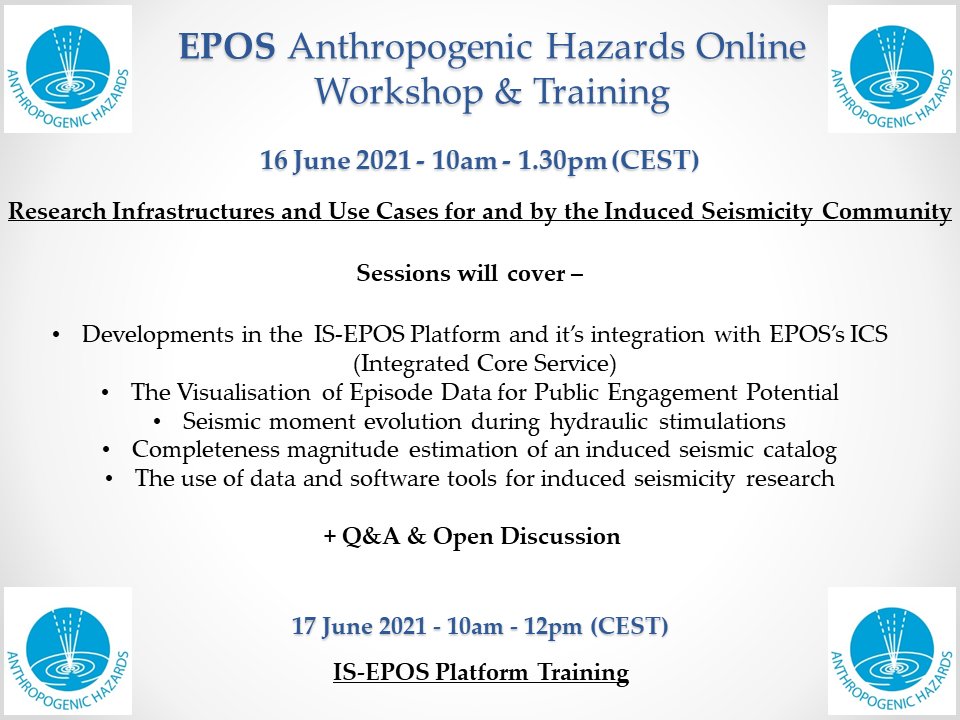
Registration for our upcoming 16-17th June Online @EPOSeu Thematic Core Service for Anthropogenic Hazards (TCS-AH) #inducedseismicity Workshop and Training Event is now open! Check out the details and register here👉https://t.co/U9Z0GXChm5
#researchinfrastructures#opendata
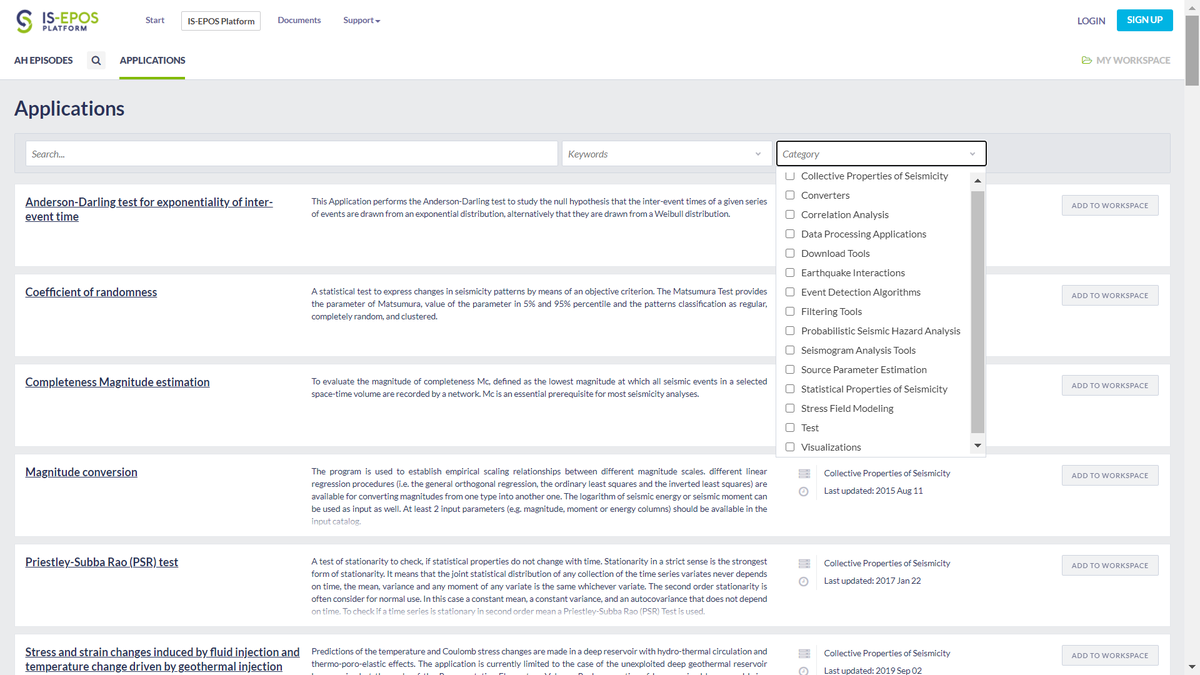
🌐📈Did you know we now have over 65 applications on our online open data research infrastructure (https://t.co/CIE69Woe4U)?
The tools can be used to process, analyse and visualise data, and facilitate research and education into anthropogenic related seismicity.🧐👇
👋Just in case you missed it, below is the full #openaccess link to our paper published in Nature's @ScientificData Journal. It provides details on the #researchinfrastructure behind the @EPOSeu Thematic Core Service for Anthropogenic Hazards 👉https://t.co/KkUdXdo2Ig
@EU_H2020
#SSA21 Annual Meeting 19–23 April 2021; week devoted to #seismology and #earthquake#Science
Deadline to submit abstracts 13 January 2021 at 5 p.m. Pacific;
EPOS TCS seismology encourage to participate: Strong-Motion Data Processing and Dissemination: State-of-the-Art & Outlook
What we do from above can affect us from below (e.g #induced seismicity) so we need to connect the two. More industry-science collaboration and knowledge exchange is needed, this is what we are striving to facilitate for research, improved understanding and societal benefit 😀
📢#inducedseismicity#scientific#research#community Your feedback is important and vital for improving the Anthropogenic Hazards research platform🌐
Please help us help you by taking just a few minutes to complete this short survey👉
https://t.co/gUtJJytfv2
@EPOSeu#OpenData
Today #EPOSeu Sustainability Phase project Executive Board teleconference; Project Coordinator and Working Package Leaders will discuss and take decisions on SP project activities done at M9 and future strategies and plans. Visit https://t.co/yKesJfa5Jl
#EuropeanUnion#research
.@EPOSeu welcomes a new #EPOS_GNSS_data_provider: the National Institute of Geophysics, Geodesy and Geography
@BgSciencesBAS - NIGGG, Bulgaria. NIGGG now provides to #EPOS the data of 17 stations. Info available via #M3G_GNSS portal (https://t.co/w9G2E3nHq2)
🔥🌍Open data alert! Val d'Agri episodes (i.e. time correlated #seismic and #industrial datasets) are now fully open on our #research#infrastructure 👉
Val d'Agri oil field - https://t.co/AcGMsS0hK8
Val d'Agri reservoir - https://t.co/hYa7c9uUWj
#EPOS at #GeoUtrecht2020 virtual conference, 23-26 August; EPOS #research#infrastructure experience presented at the Plenary Keynote Talk: Sharing scientific data and products in solid #Earth#sciences by Massimo Cocco; registration deadline: 13 August https://t.co/qYoIs59h0C
🔥 New @TCS_AH#inducedseismicity paper out today in @SciReports on #stress, #fracture growth rates and critical rupture with fluid injection in a #geothermal field - "Evidence for subcritical rupture of injection-induced earthquakes"👉https://t.co/s5T8rKQOsU