Medical Device Design | Precision Engineering. Obsessed with micro-tolerances, mechanical failure modes, and why the 'perfect' CAD layout is a maintenance night
Forget the software—Starship is a masterclass in raw materials science and mechanical honesty. Re-entering at Mach 25 relying on a ring of physical stainless steel and heat tiles is pure structural grit. Physics always wins over the code.
@RealAirPower1 Carrier deck logistics is the ultimate form of mechanical integrity. In medical dev, we worry about micron clearances on an isolation table. But managing heavy tons of physical steel with zero margin for error under salt-spray environments? That’s pure structural honesty. Respect
@Aerovances The retraction logic on the Il-96 gear is pure mechanical beauty. No fly-by-wire can replace that raw hydraulic power and structural honesty. Keeping a massive airframe like this smooth under load is why physical engineering always wins. Heavy iron forever!
@canalCCore2 Fuji CP-643 is an absolute workhorse. ⚙️ In precision manufacturing, software is just an optimizer, but the mechanical timing and physical component handling are the real kings. Beautiful to see true hardware grit on screen. Respect to the shop floor builders!
@engrbecker Spot on, Rick. True tradition was built on the grit of physical builders who understood steel and engineering integrity. In a world obsessed with paper financial speculation, real wealth isn't generated by an algorithm—it’s built on the factory floor. Respect! 🛠️🇺🇸"
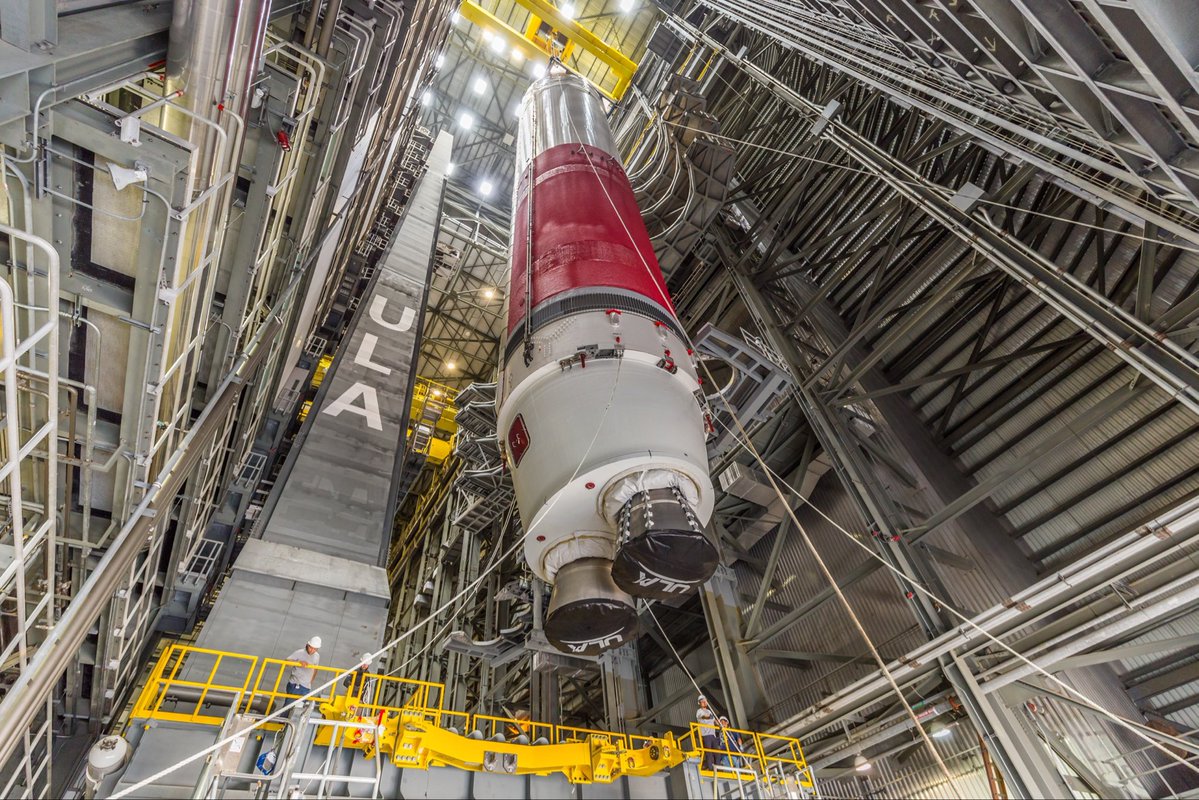
A new chapter begins. The first Vulcan booster is vertical in the new Vertical Integration Facility (VIF-A) dedicated to @Amazonleo. This milestone enables testing of first use technologies and validates systems supporting Amazon’s LEO constellation.
Less than one hour until Falcon 9’s launch of Dragon’s 34th Commercial Resupply Services mission to the @Space_Station. Teams continue to monitor weather, which is currently 10% favorable for liftoff at 6:50 p.m. ET → https://t.co/c8cVFXwJY0
Perseverance in the Wild Martian West 🤠
Our Perseverance Mars rover snapped some photos beyond the western rim of Jezero Crater—the farthest west the rover has ever gone on the Red Planet. See what we found there: https://t.co/nIkwxstE26
SpaceX has just released a massive new list of changes in Starship V3, which is now scheduled to launch on May 19th:
Super Heavy V3 Changes
Grid Fin Redesign:
• Reduced from 4 fins to 3
• Each fin is now: 50% larger, stronger, repositioned for better catching/lifting
• Lowered on booster to reduce heat exposure during hot staging
• Fin hardware moved inside fuel tank for protection
Integrated Hot Stage:
• Removes the old disposable interstage shield
• Booster dome now directly exposed to upper-stage engine ignition
• Tank pressure + steel shielding protect structure
• Interstage actuators retract after separation for protection
New Fuel Transfer System:
• Massive redesign of fuel transfer tube
• Roughly the size of a Falcon 9 first stage
• Allows: simultaneous startup of all 33 Raptors, faster and more reliable flip maneuvers
Engine Bay / Thermal Protection Changes:
• Engine shrouds removed entirely
• New shielding added between engines
• Propulsion + avionics more tightly integrated
• CO₂ fire suppression system removed
• Simpler and lighter aft section
Propellant Loading Improvements:
• Moved from 1 quick disconnect to 2 separate systems
• Adds redundancy
• Reduces complexity of pad interfaces
Starship V3 Changes
Completely Redesigned Propulsion System:
• Clean-sheet redesign
• Supports: new Raptor startup method, larger propellant volume and improved reaction control system
• Reduces trapped/leaked propellant risk
Aft Section Simplification:
• Fluid + electrical systems rerouted
• Engine shrouds deleted
• Large aft cavity removed
Flap Actuation Upgrade:
• Changed from: 2 actuators per flap to 1 actuator with 3 motors
• Improves:, redundancy, mass efficiency, cost
Faster Starlink Deployment:
• Upgraded PEZ dispenser
• Faster satellite deployment speeds
Long-Duration Spaceflight Capability:
• New systems added for: long orbital coasts, orbital refueling, cryogenic fluid management, vacuum, insulated header systems and high-voltage cryogenic recirculation
Ship-to-Ship Docking + Refueling:
• Added 4 docking drogues
• Added propellant transfer connections
• Directly supports in-space refueling architecture
Avionics Upgrades
Massive Electrical System Upgrade:
• ~60 custom avionics units
• Batteries/inverters/high-voltage systems integrated together
• ~9 MW peak power capability
Better Navigation + Redundancy:
• New multi-sensor navigation system
• Designed for precision autonomous flight
Propellant Monitoring in Space:
• New RF sensors measure propellant levels in microgravity
• Important for orbital refueling missions
Camera + Connectivity Upgrades:
• ~50 onboard camera views
• 480 Mbps Starlink connectivity onboard
• Low-latency redundant communications
Raptor 3 Engine Changes
Higher Thrust:
• Sea-level Raptors:
• Increased from:
230 tf → 250 tf
507k lbf → 551k lbf
Vacuum Raptors:
Increased from:
258 tf → 275 tf
568k lbf → 606k lbf
Lower Mass:
• Sea-level engine mass reduced: 1630 kg → 1525 kg
Simpler Design:
• Sensors/controllers integrated into engine body
• Removes need for engine shrouds
• New ignition system for all variants
• Huge Vehicle-Level Weight Savings
• ~1 ton saved per engine across vehicle systems
Launch Pad 2 Upgrades (Starbase)
Faster Propellant Loading:
• Larger propellant farm
• More pumps
• Faster fueling operations
Chopstick Improvements:
• Shorter arms for faster movement
• Switched from hydraulic → electromechanical actuators
• Better reliability + redundancy
Stronger Quick Disconnect Arm:
• Reinforced and redesigned
• Swings farther away during launch
Launch Mount Redesign:
• Better load handling
• Improved launch protection
• Improved throwback reliability
New Flame Diverter System:
• Bidirectional flame diverter
• Designed to eliminate ablation/refurbishment after launch
Hardened Propellant Systems:
• Methane and oxygen systems separated
• Valves/filters moved into protected bunker
• Improves safety and reliability
SpaceX: "Together, these new elements are designed to enable a step-change in Starship capabilities and aim to unlock the vehicle’s core functions, including full and rapid reuse, in-space propellant transfer, deployment of Starlink satellites and orbital data centers, and the ability to send people and cargo to the Moon and Mars."
This is going to be an epic flight! 🚀
@Picklecreekdam Just had a technician scream at me about a bolt clearance on this assembly—made me think of your point again. Real-world feedback is always the loudest.
Update: After staring at this for another 48 hours, my 'medical device brain' has officially moved from admiration to anxiety. 🧵The more I look at this stack-up, the more I worry about that cable management. If I had to swap a sensor in the field under pressure, I'd be cursing the designer. @lagunastarman@perezrob — tell me the truth, is this elegant engineering or a maintenance nightmare waiting to happen? 🛠️🙄
Touché, David! You got me on the ultrasonic logic. As a medical engineer, I spend half my life looking at sonograms, but there’s a massive gap between checking a stable valve and detecting micro-fissures in a 3D-printed Raptor channel during hot-fire stress
Industrial NDT (Non-Destructive Testing) is great, but at these pressures, the margins for error are razor-thin. I guess that’s why we love this stuff—it’s where the math finally meets the metal. I’ll admit, the V3 'sculpture' is starting to win me over. 😉🚀
Love that mindset. 'Design for Maintenance' is a rare religion these days—too many people sacrifice accessibility for a sleek CAD render
I’d love to see how you handled the cable routing on your multi-axis base; that’s always where the real battle is won or lost. Are you guys in the medical space too, or more towards heavy industrial automation? Glad to connect with someone who actually prioritizes the technician's life!
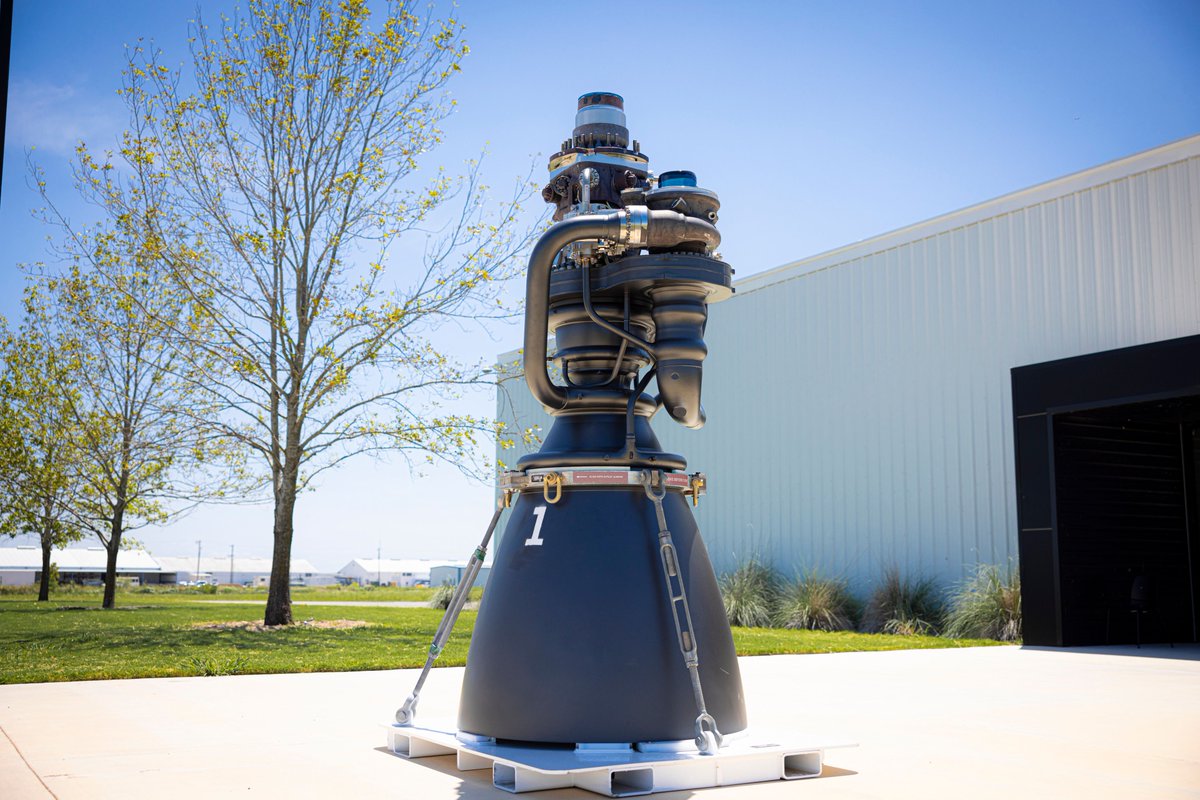
That evolution is stunning, David. Integrating everything into internal 3D-printed channels is a masterclass in weight reduction. But as a medical engineer, I look at Raptor 3 and think: 'How do you inspect the internal fatigue of a hidden channel?
In our world, if we can't see the failure mode, we can't trust the life-cycle. Modern turbojets are complex, yes, but at least their 'horror' is visible. Are we trading maintenance accessibility for an 'inspectability' nightmare?
"It’s a high-precision multi-axis base for a specialized surgical navigation system. In the medical world, we call this 'Tuesday.' 🛠️🔬
The real headache isn’t the gears, but the cable routing under those gold TiN-coated rings. Trying to maintain sub-micron alignment while managing that mess is why I have 'maintenance anxiety.' What’s your take—looks like a nightmare to service, right?