Holocaust survivor and artist Agnes Majtinsky Pal "Numbered", 2004; copper, iron barbed wire, leather, steel, and photographic decals. #InternationalHolocaustRemembranceDay
We will start class a little late today. Let’s meet at 5:30. I will send an email with this informational also I will open the zoom and have a message. Thanks #hist582
@Scuvar1 My background is as a photographer and printmaker. I am inspired by the act of composing photographs and by historical books and type. I have quite a bit of clothing and jewelry that has type and type patterns within it,
ARTIFACT OF THE WEEK:
It's a bird! It's a plane! It's a bannerstone! These stone tools with an interesting history of experimental archaeology were used first as #atlatl accessories and later developed symbolic and cross-cultural significance. #archaeology#pubarch 1/4
Local avocational #archaeologist Larry Kinsella, after experimenting with and without a bannerstone on his atlatl, determined that these highly polished stone tools were likely used not as a counterbalance but to alleviate muscle fatigue when hunting. 3/4
Something frequently used with archaeological artifacts in the past, especially on site at an excavation, are metal wire tags. While strong, the hard metal can scratch surfaces in storage and ultimately cause damage. When in doubt, consult a conservator! #askaconservator 4/4
Just like any field, museums are constantly learning new and better methods. New science in conservation can help us make changes to better preserve artifacts in storage for the future. This is called preventative conservation. 1/4 #museums#pubarch#museumstudies
Sticky labels, along with tape, seemed fine back when they were first adhered. Today we use acid-free hang tags or lacquer and pigment-based ink because over time, tape falls off and leaves behind a sticky residue that can impair artifact integrity. #itweetmuseums#pubarch 3/4
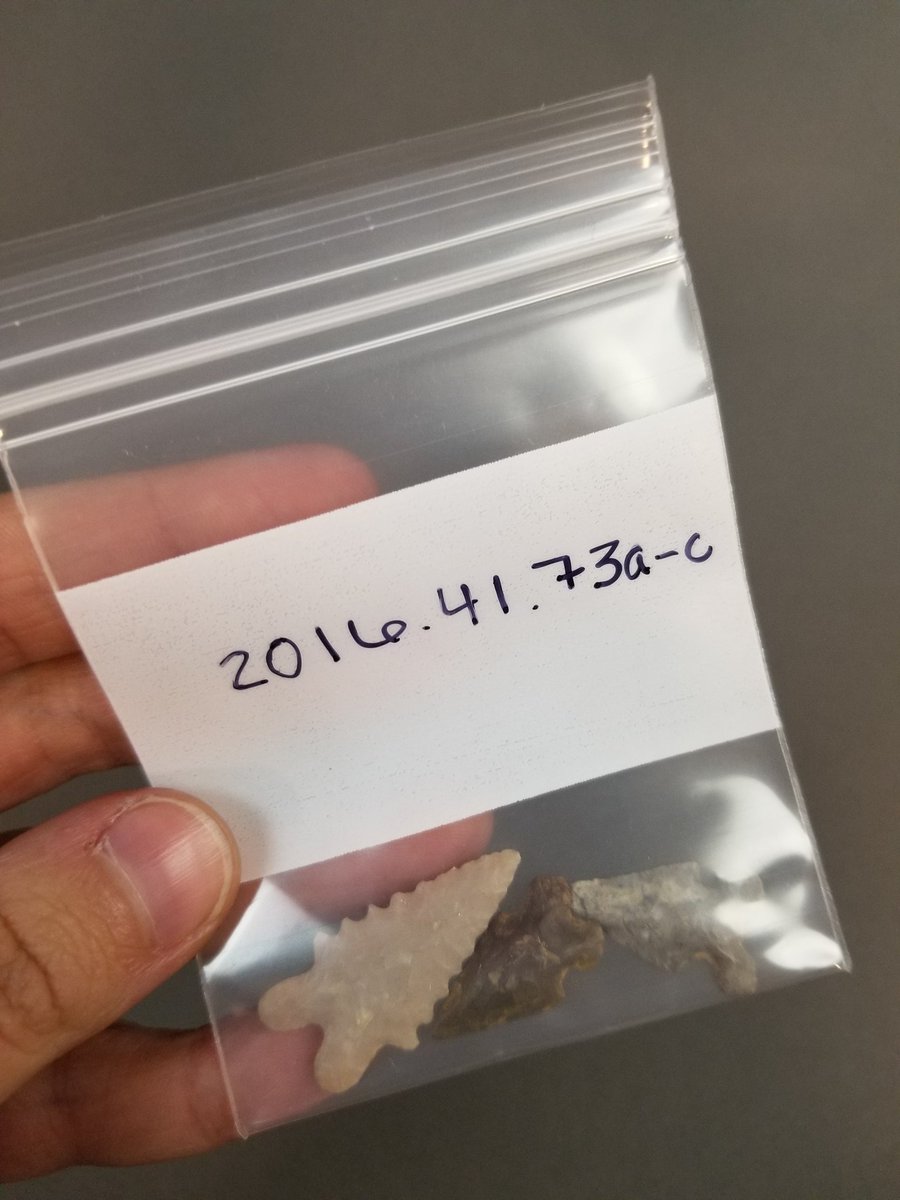
Some #artifacts are too small to mark or tag though, and doing so would detract from their research or aesthetic value. In that case, we use a Sharpie and label a small zip-lock bag with the object ID. Marked, tagged or bagged, the goal is #preservation and #access at all times!
Let's talk tags! Museums have a LOT of objects to keep track of, and one way we do that is by marking and/or tagging an object with its object ID, a tracking number that helps match it to its paperwork, database entry, and location in storage. #museums#pubarch 1/4
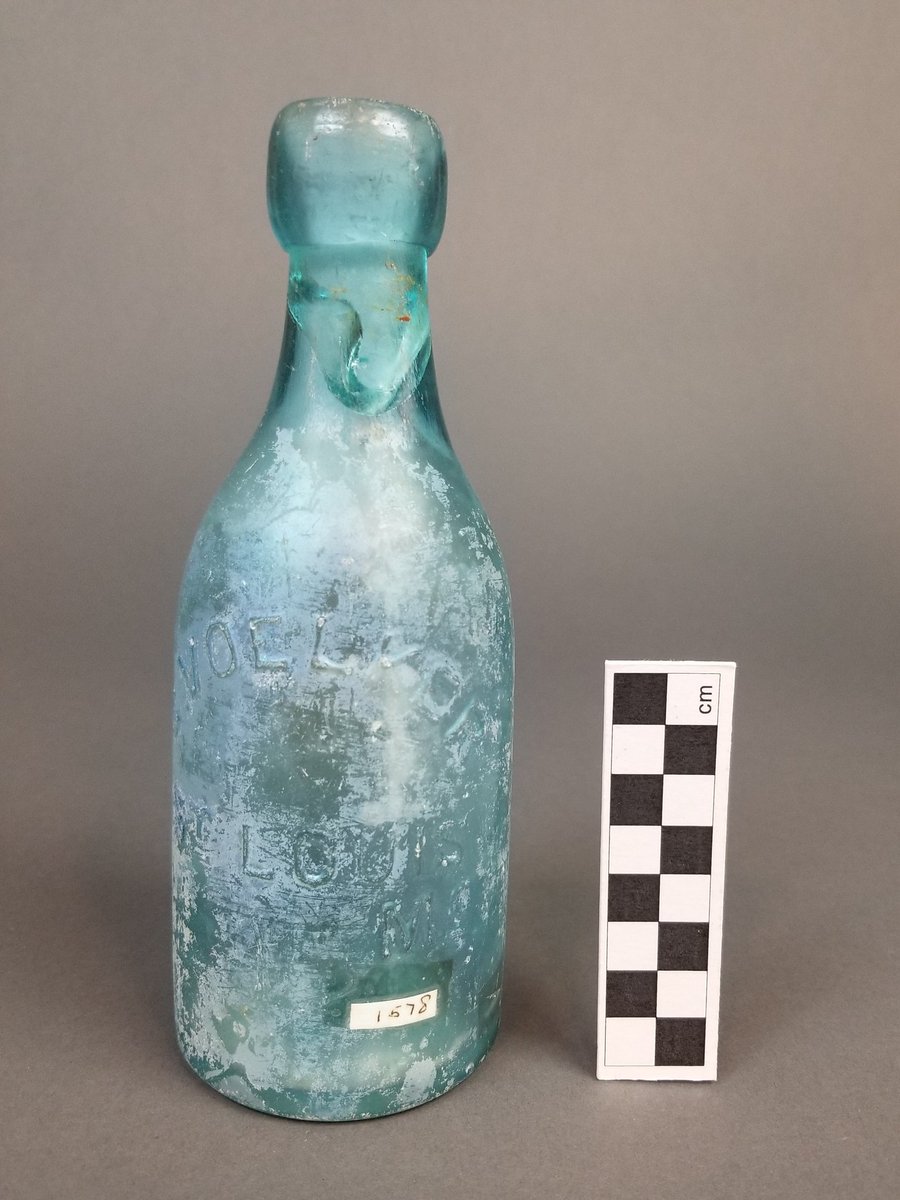
Hanging tags are also a great way to quickly label an object for easy access when retrieving from storage. Less handling = happier, safer artifacts. This bottle is labeled with a larger tag, but archival tags come in many sizes. Don't forget the archival ink! #museumstudies 3/4
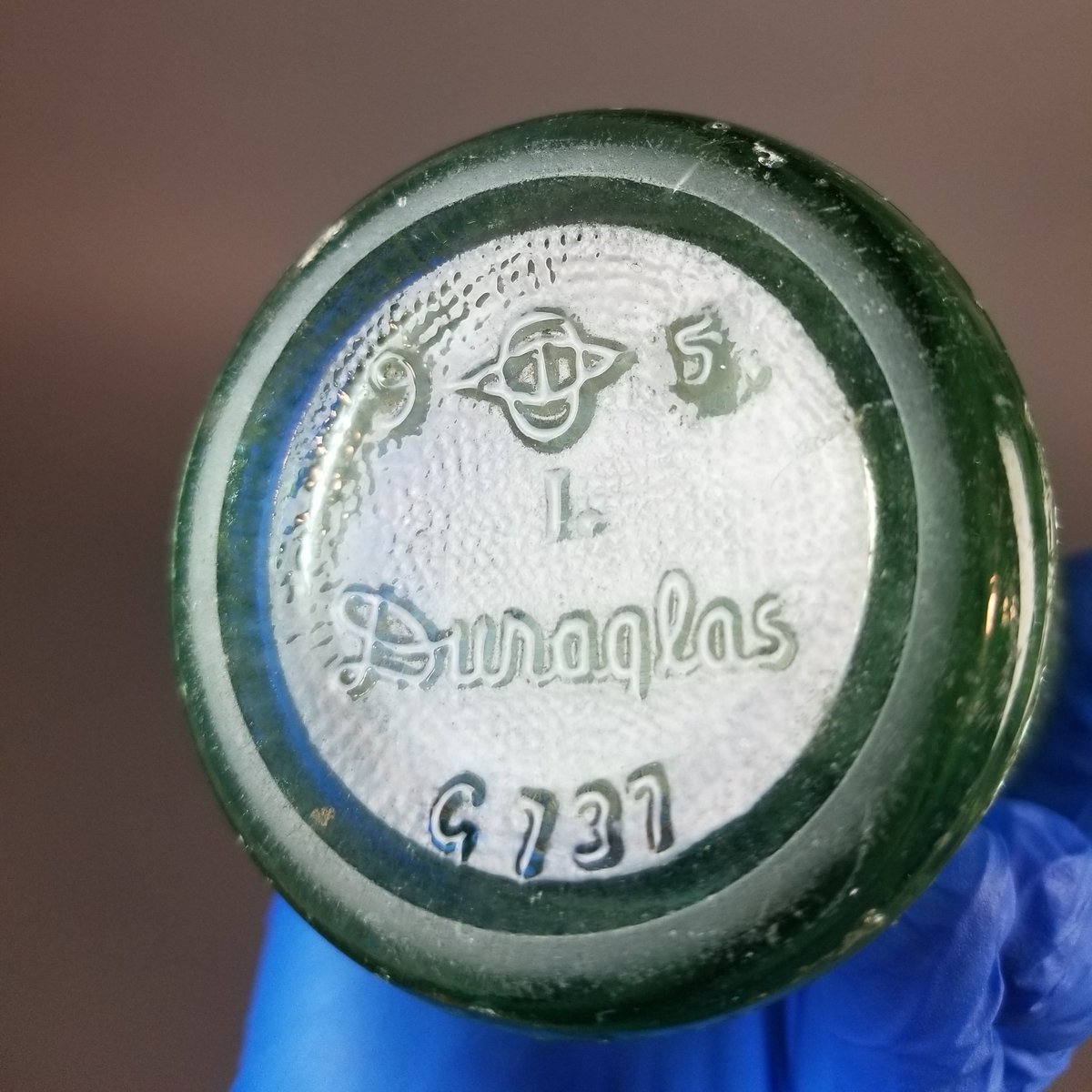
Finally, this machine made Grimes Kola bottle was manufactured in the Streator, IL plant (#9) of the Owens-Illinois glass factory. The number to the right of their logo tells us it was made in 1945, before the start of their 2-digit date system. #illinois#historicarchaeology 5/5
ARTIFACT OF THE WEEK:
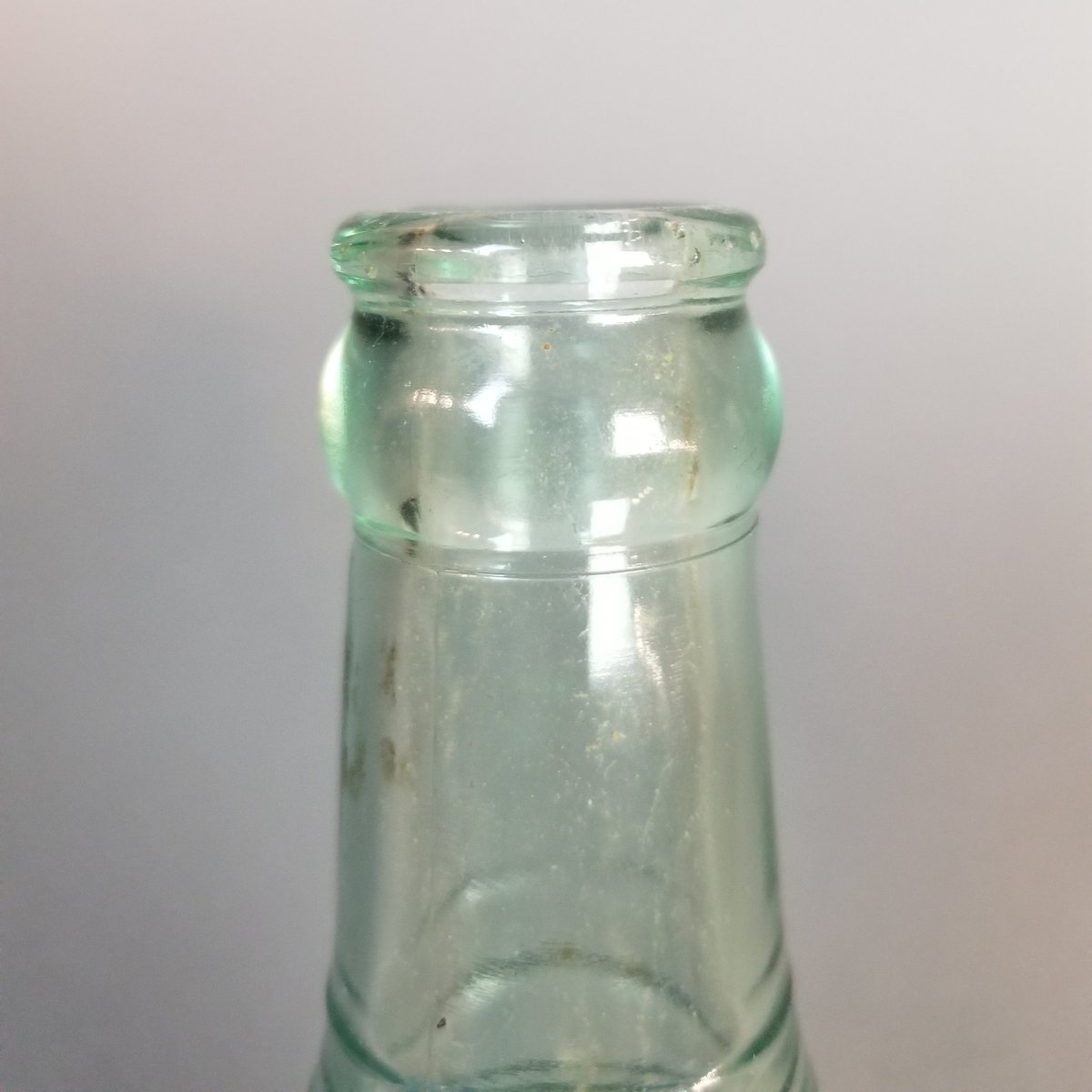
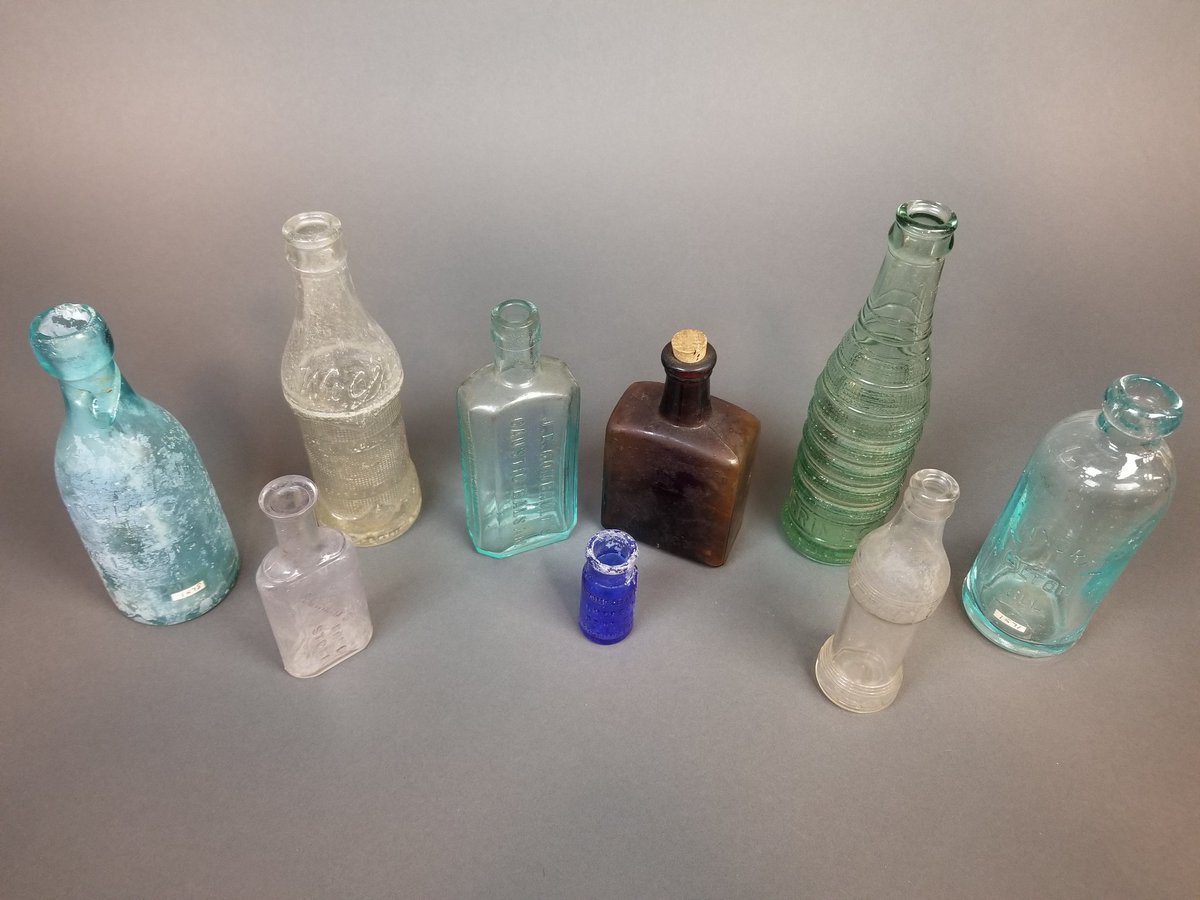
Let's take a deep dive into some the local historic bottles in our collection! Because bottles were often reused after they were first made, and manufacturing techniques went in & out of style, we can usually date bottles to a range of years or decades. 1/5
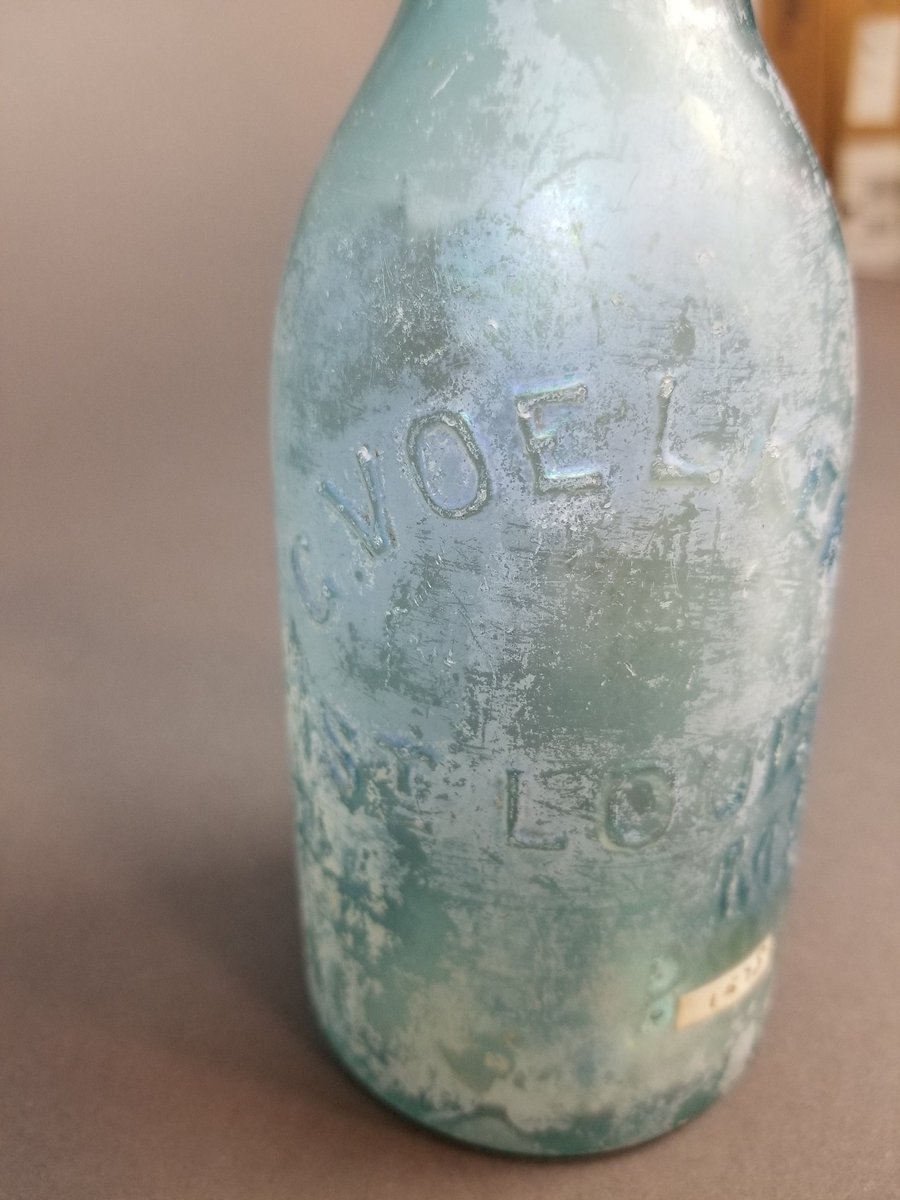
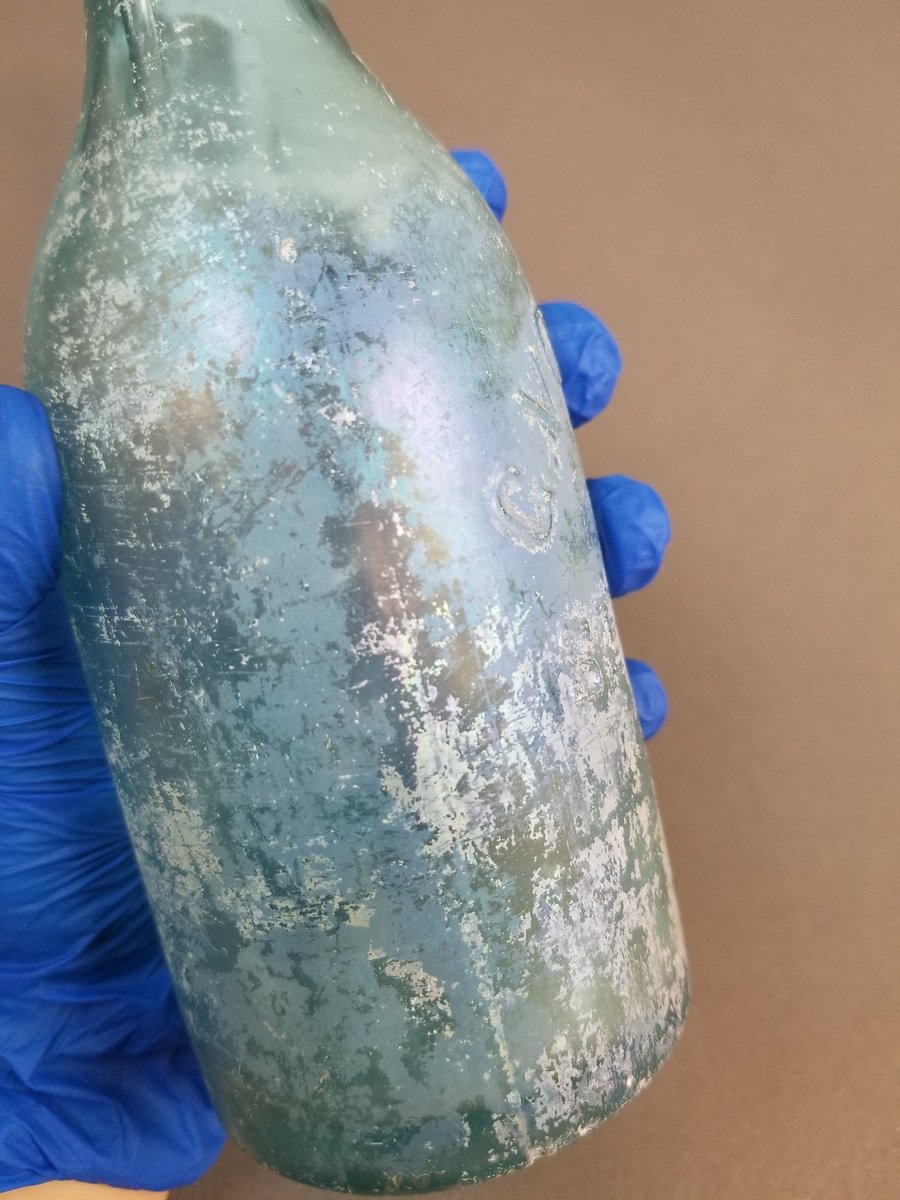
Gottfried Voelker's soda water business was based in St. Louis, MO between 1870-1880. Soda bottles like this were made thick to withstand pressure from carbonation. This one was mouth blown with no air vents. The iridescence comes from being buried in the earth. #archaeology 4/5