Building a world-class industrial real estate investment platform.
On October 16, SAC Industrial Fund II launches.
More markets. More scale. Same discipline.
Great basis. Durable cash flow. Intentional portfolio construction.
10.16.26
@CRE_Brado We are actually the group that bought their buildings in Lake Mills. Let’s catch up some time, would love to hear more about these other examples.
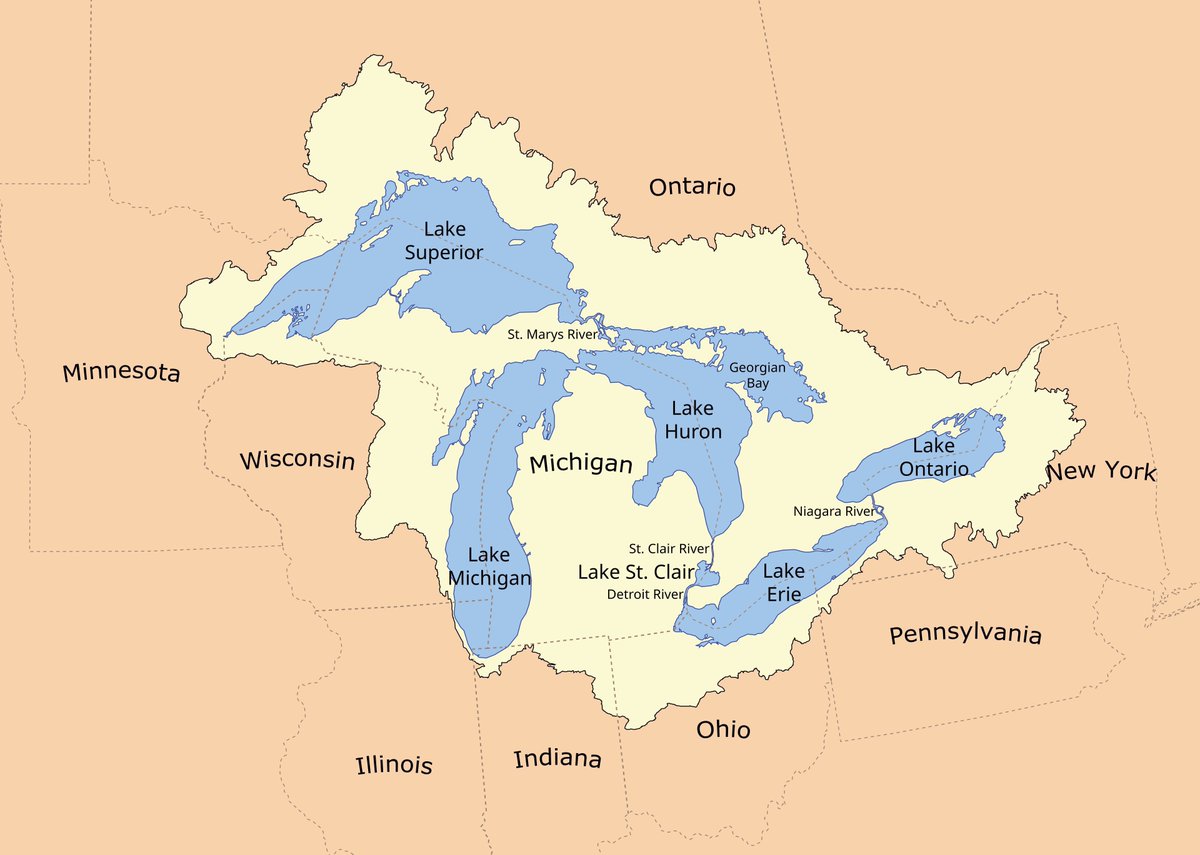
The year is 2050. The Great Lakes Megalopolis is the most valuable region on Earth.
Minneapolis – Milwaukee – Chicago – Indianapolis – Cincinnati – Detroit – Columbus – Cleveland – Pittsburgh – Toronto – Buffalo – Montreal
• 20% of the world's surface fresh water
• Urban centers with finance & tech hubs, and great universities
• Ontario runs one of the largest nuclear fleets in the world, generating up to 60% of its electricity, with grid-scale SMRs being built ahead of schedule. Illinois leads the US in nuclear power, and Michigan is bringing reactors back online.
• The region holds some of the largest untapped copper-nickel-cobalt-platinum-chromite deposits in the world, along with the gallium, indium, and graphite that China guards so jealously.
• The densest industrial base in the Western Hemisphere: heavy machinery, metal refineries, steel, auto, batteries, and aerospace backed by a deep pool of suppliers/engineers/skilled trades.
• Climate-resilient cities with municipal capacity that can absorb millions more.
@MichaelLagazo That first question is the right one. The owners I talk to who get the most from a sale-leaseback have a specific use for the proceeds: equipment, an acquisition, or paying down expensive debt. 'We'll figure it out' is usually a sign to keep the building.
Raising capital taught me something I didn't fully appreciate when I started:
Investors aren't just underwriting the deal.
They're underwriting you.
Do what you say you'll do.
Communicate when things go well.
Communicate even more when they don't.
Trust compounds too.
One of the biggest things I've learned building a real estate investment platform:
Finding deals isn't enough.
You need acquisitions, operations, capital, investor relationships, reporting, accounting and systems.
The real business is building the machine that can repeatedly execute.
I think the Midwest is one of the most interesting places to own industrial real estate.
Manufacturing.
Skilled labor.
Interstate access.
Power.
Existing industrial stock.
Reasonable basis.
You don't need every market to be sexy.
You need businesses to need the buildings.
One of the reasons I love industrial real estate:
You can actually understand the building.
Who uses it?
What do they make?
Why are they there?
What would it cost to replace?
What would another tenant pay?
Sometimes simple questions produce the best underwriting.
CRE underwriting gets dangerous when every assumption needs to go right.
Rent growth.
Exit cap compression.
Perfect occupancy.
Cheap refinancing.
I'd rather own a deal where today's cash flow and basis already make sense.
Upside should be upside.
Not a requirement for survival.
When somebody sends me an industrial deal, I don't start with the broker's IRR.
I want to know:
What does the tenant do?
Why is the building important to them?
Rent vs. market?
Replacement cost?
Re-leasing risk?
What's the downside if we're wrong?
Then we model it.
Small and mid-bay industrial isn't glamorous.
HVAC contractors. Manufacturers. Distributors. Machine shops. Service businesses.
But these companies need somewhere to operate.
Give me functional buildings, reasonable rents and sticky tenants over a sexy investment thesis any day.
@realEstateTrent point made but are you serious? I’d rather attach my scrotum to a cinder block and get pushed off a roof like blue from Wedding Crashers than go through what you’re describing
A sale-leaseback isn't necessarily a distressed transaction.
Sometimes it's the opposite.
A healthy company realizes it has $5M tied up in a building.
Sell the real estate.
Lease it back.
Redeploy the $5M.
Can the business earn more on that capital than the cost of its lease?
One of my favorite things about Midwest industrial:
We're regularly evaluating existing buildings at a fraction of what it would cost to recreate them today.
If I can buy functional industrial real estate at 2–3x below replacement cost, I'm paying attention.
Basis matters.
Our industrial investment philosophy is surprisingly simple:
Buy at a great basis.
Prioritize cash flow.
Use long-term fixed-rate debt.
Don't rely on heroic rent growth.
Let time do some of the heavy lifting.
Boring can compound pretty well.
@ChrisRamsey60 The ultimate flywheel. Build cash flow in the operating business → buy the real estate → let the business keep funding the portfolio → repeat.
@latticeletter 6.7% vs. a 13.1% historical average is the number that jumps out to me. There’s still a lot of capital trapped on operating company balance sheets. For the right business, monetizing the real estate and redeploying that equity can be a pretty compelling trade.
A business owner can have millions of dollars trapped in the building their company occupies.
We buy the real estate.
They sign a long-term lease.
They keep operating.
They redeploy the capital.
That's a sale-leaseback.
The interesting part is what happens next.