Pashinyan's government has approved a draft proposal to create a centralized database that would link every mobile phone in Armenia to its owner.
The government says the system is intended to combat the shadow economy, prevent the sale of illegally imported phones, and help reduce phone theft. Under the proposal, every phone would be registered using its IMEI number and connected to its owner's identity, together with any SIM or eSIM cards used with the device.
If adopted, the database would make it possible to identify who is using a particular phone. It would also allow the database administrator to provide digital services based on the collected data to state and local authorities and, in certain cases, private entities.
The proposal has prompted concerns over privacy, cybersecurity, and the future use of the information. Although the database is being introduced to address illegal phone imports and theft, the law would also create a single system containing the personal and device information of millions of users. Supporters of stronger privacy protections argue that once such a database exists, there is little to prevent its use from expanding beyond its original purpose.
There are also practical concerns. Mobile operators would depend on the centralized database to verify devices, meaning technical failures could disrupt parts of the network. The database would also become an attractive target for hackers because it would contain sensitive information on millions of users.
The government maintains the system will help combat phone theft. Others question how much difference it will make, noting that victims have long been able to provide police with their phones' IMEI numbers, yet stolen devices are rarely recovered.
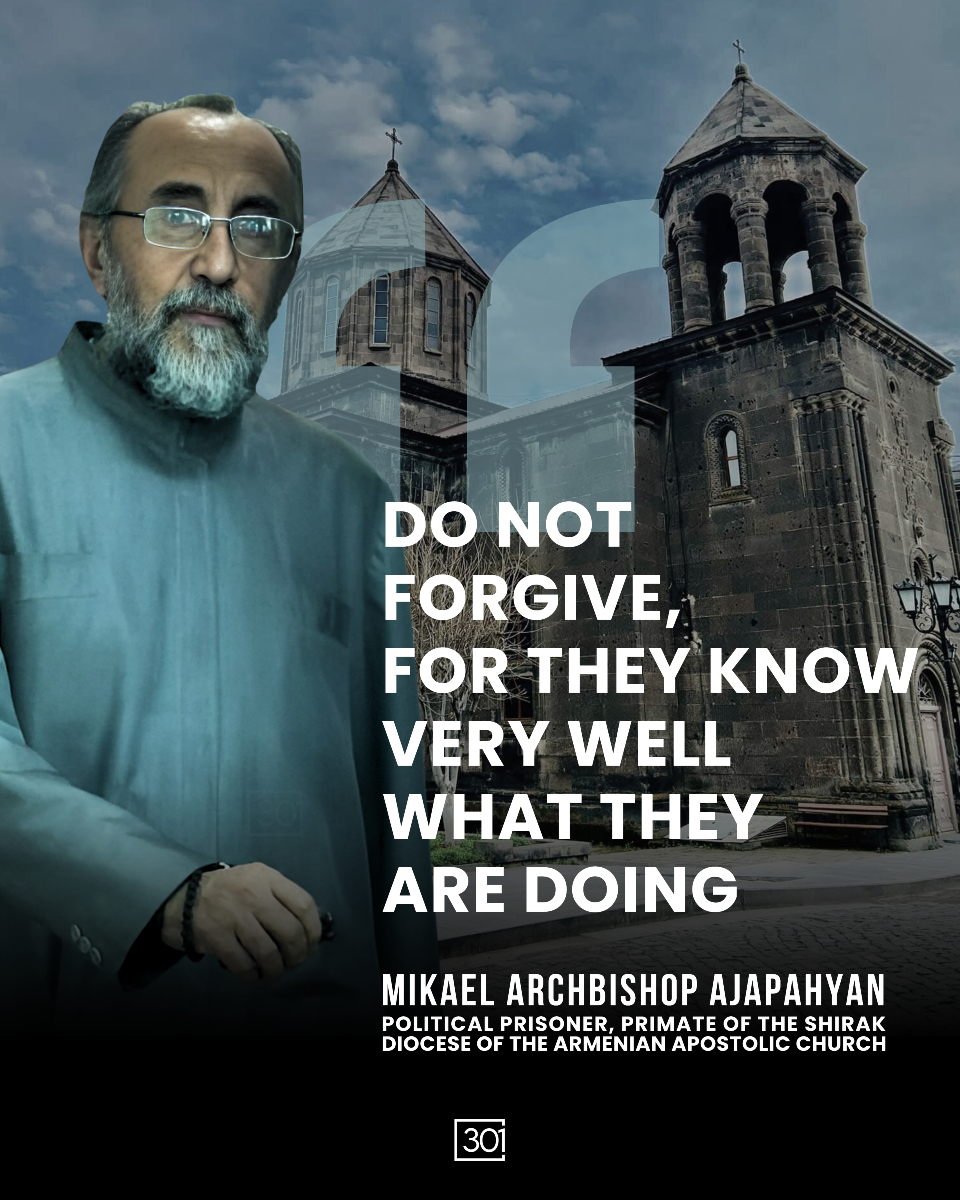
Political prisoner, Archbishop Mikael Ajapahyan, Primate of the Shirak Diocese of the Armenian Apostolic Church, has sent a message from the Yerevan-Kentron penitentiary.
“Lord, my hope and my life, whom shall I fear?
Lord, the refuge of my life, of whom shall I be afraid?
Gratitude and glory to the Almighty for His support and comfort during the past 75 days of my life, without which it would have been impossible to endure the unprecedented and indescribable torrent of injustice we have been forced to confront.
Thanks also to you, my beloved ones—all of you who share in my suffering. Yet, these hardships I endure are absolutely nothing compared to the loss of our homeland and the agony of our brothers in captivity.
I even consider it inappropriate to speak of my own trials when our compatriots from Artsakh are deprived of their homeland and our brothers tortured in captivity.
This absolutely unlawful and fabricated persecution will one day come to an end; all the guilty will answer before the very law that they now violate and trample while passing judgment on me.
And I, with the authority given to me by God—an authority incomparable to their temporary earthly power—shall condemn them and their accomplices not temporarily, but eternally.
Christ said: ‘Forgive, for they know not what they do.’
I, the Lord’s unworthy servant, dare to say: ‘Do not forgive, for they know very well what they are doing.’
Our love and greetings go to the children of our beloved people.
And in the end, I say: ‘If the Lord is with us, who can be against us?’
Stay strong—God is with us.”
Currently, Armenia holds around 30 political prisoners, including senior clergymen, a national benefactor, parents of fallen soldiers, and individuals suffering from serious health conditions.
The Artsakh Tourism and Cultural Development Agency has reported that Azerbaijan has destroyed the monument of Ashot Ghulyan in Stepanakert.
Ashot Ghulyan, also known as Bekor, was a celebrated Armenian hero, commander, and member of the Armenian Revolutionary Federation, who played a key role in the defense of Artsakh. In 1992, during the liberation of Shushi, the first unit under Bekor’s command was the first to enter the city. Under his leadership, many settlements were liberated, and in 1999, he was awarded the title of “Hero of Artsakh.”
Created by Armenian sculptor Yuri Samvelyan, the monument was installed in 1996 at Ghulyan’s burial site in the park bearing his name. While his remains had been transferred to his birthplace, Khndristan, there is currently no information about the condition of his grave.
This act of vandalism is part of Azerbaijan’s ongoing erasure of Armenian heritage and reflects a broader pattern of cultural genocide in Artsakh. The international community must hold Azerbaijan accountable, and the best protection of this heritage is ensuring the inalienable right of the people of Artsakh to return.
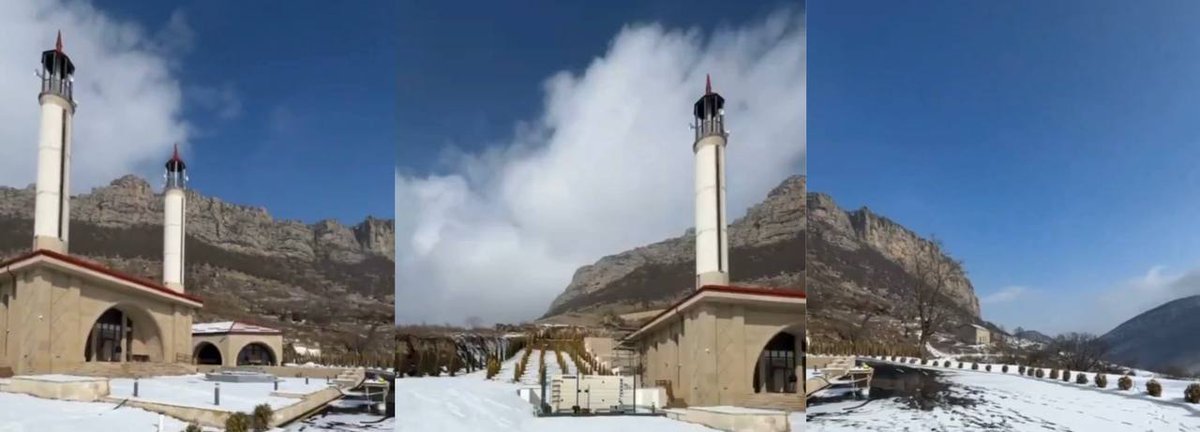
Azerbaijan is Islamizing the Armenian territoryխ
Hadrut is a historical Armenian city. Until the Azerbaijani aggression in 2020, exclusively Armenians lived here. Throughout its history, there has not been a single mosque or Muslim place of worship in Hadrut. .
The endangered Palestinian cultural heritage will be temporarily housed at the Matenadaran.
This announcement was made by Vahan Kostanyan, Deputy Foreign Minister of Armenia, at a high-level international conference on resolving the Palestinian issue through the two-state principle, held at the UN under joint French and Saudi chairmanship.
This development occurs against the backdrop of the ongoing genocide perpetrated by Israel against Palestinians in Gaza. This genocide has resulted in the extensive destruction of civilian infrastructure, widespread displacement, severe starvation, a crippling blockade of humanitarian aid and food supplies, and a devastating death toll exceeding 35,000 Palestinians, many of whom are women and children. Additionally, cultural sites, historical landmarks, and institutions that safeguard Palestinian identity have suffered severe damage or complete destruction. Israel's actions are effectively erasing Palestinian heritage and identity from Gaza.
Armenia’s decision to temporarily safeguard these cultural artifacts at the Matenadaran reflects both cultural solidarity and humanitarian responsibility. The initiative aims to preserve a heritage currently facing existential threats.
This action also highlights a stark difference in international response compared to what occurred during the blockade and forced displacement of Artsakh. From December 2022 through September 2023, Azerbaijan imposed a nine-month blockade of the Berdzor Corridor, cutting off food, medicine, energy, and humanitarian aid for approximately 120,000 ethnic Armenians, precipitating severe starvation and a humanitarian crisis. Despite the catastrophic impact, widespread efforts to protect Artsakh’s cultural heritage fell largely to individuals: citizens, small museum personnel, or local institutions who could evacuate only what they could carry. No organized international or state-level mission intervened to rescue or preserve these artifacts. Currently, Azerbaijan is systematically erasing Armenian cultural heritage and identity from Artsakh's history.
Fires in Artsakh threaten 100 monuments, including the Tigranakert Reserve (1st century BC), the Amaras monastery complex (4th century) and other significant sites in Talish and other settlements. The historic mulberry gardens of Nor Shen were damaged.
#aliev_is_a_criminal
BREAKING: Nikol Pashinyan’s motorcade was caused a traffic accident while returning from Syunik, reportedly injuring a civilians and police officers.
According to eyewitnesses and widely circulated footage, the convoy was moving in its now-characteristic aggressive and erratic manner — a style that has frequently raised public safety concerns.
The Armenian police released a video attempting to downplay the motorcade’s responsibility, framing it with a caption that suggested the crash had no connection to Pashinyan’s convoy. However, viewers noted that the footage itself clearly shows the convoy disrupting traffic flow, creating confusion and effectively paralyzing movement for the benefit of the prime minister’s passage.
Though the actual collision involved a patrol vehicle trailing the convoy and several civilian cars, the disorder caused by the motorcade appears to have been the catalyst.
This is not the first time an incident has occurred involving Pashinyan's convoy. On April 26, 2022, a previous crash claimed the life of a pregnant woman, Sona Mnatsakanyan, who was fatally struck by one of the motorcade’s vehicles.
Azerbaijan has destroyed a series of Armenian memorials in the occupied village of Vank, located in the Martakert district of Artsakh. Among the destroyed monuments are a memorial to the victims of the Great Patriotic War (1941–1945), a khachkar (cross-stone) honoring those who died during the Artsakh Liberation War, and a stele featuring bas-reliefs of fallen heroes.
According to a post by the Artsakh Monuments Facebook page, this act is part of Azerbaijan’s ongoing campaign of cultural erasure in Artsakh, describing it as a continuation of its “anti-Armenian, anti-cultural destructive policy,” where “everything Armenian is being ruthlessly destroyed.”
Azerbaijani forces intensified shooting near Knatsakh (Syunik) village last night – 40 minutes nonstop
1/ Villagers told me that last night stood out due to the unusually intense gunfire, with many unable to sleep.
#Armenia#Azerbaijan
"On March 31, at approximately 12:50 a.m., units of the #Azerbaijan|i armed forces opened fire toward the Khnatsakh settlement in Syunik Province, resulting in damage to a residential house. No casualties were reported" - MOD #Armenia
As the Armenian government moves forward with “peace negotiations” with Azerbaijan, the details remain vague. Officials avoid calling it a “peace treaty,” opting for the term “peace agreement.” But what exactly is being agreed upon? What is being hidden from the Armenian people?
The difference between a peace treaty and a peace agreement is crucial. A peace treaty is a binding international document with legal enforcement and protections, while a peace agreement is weaker—often non-binding or a verbal commitment with no legal weight. By refusing to call it a treaty, Armenian authorities signal they are not securing lasting peace but a vague arrangement that Azerbaijan could break without consequences.
The government has refused to disclose details of the negotiations. Will Armenian lands be surrendered? Will vital infrastructure fall under Azerbaijani control? Are new territorial claims being accepted? These questions remain unanswered, leaving the Armenian people in the dark about the looming consequences.
After the ethnic cleansing of Artsakh’s Armenian population in September 2023, the government abandoned efforts to protect their rights. Instead of demanding international protection for the displaced, officials have erased Artsakh from political discussions, silently accepting Azerbaijan’s crimes.
Armenia’s borders are wide open to further attacks. Azerbaijan has repeatedly violated Armenia’s borders and seized land, yet the government is rushing into an agreement with no real security guarantees. Pashinyan’s government seems content with empty promises, leaving border communities vulnerable.
Armenia’s leadership seems eager to please everyone except its own people, bowing to foreign demands while making secret deals that could permanently weaken the country.
This is not peace; it’s a national betrayal. The government is surrendering without a fight, hiding details of the agreement, ignoring Azerbaijan’s ongoing threats, and abandoning Artsakh and border communities. Armenia deserves a true peace treaty that guarantees its sovereignty, not a meaningless deal that will embolden Azerbaijan.
Read the full article at https://t.co/oMHZmfjVSa
Azerbaijan Puts Forward New Demands to Armenia Outside the “Peace Agreement” Framework
Following Azerbaijan’s announcement that negotiations on a so-called “peace agreement” with Armenia have concluded, Azerbaijani officials and media have begun articulating additional demands that extend beyond the framework of the agreement. These demands, widely circulated in Azerbaijani state media, are being presented as prerequisites for signing the agreement.
Key Demands:
• “Return of Western Azerbaijanis” – Azerbaijan insists that Armenia facilitate the return of Azerbaijanis who claim ancestral ties to Armenian territory and ensure their unrestricted movement.
• Zangezur Corridor – Azerbaijan demands the opening of a corridor through Armenia’s Syunik province under the conditions outlined by Ilham Aliyev in November 2021, when he stated that it would “unite the entire Turkic world.”
• Constitutional Amendments – Azerbaijan requires Armenia to amend its Constitution to remove references to Artsakh (Nagorno-Karabakh) and align with Baku’s territorial claims.
• Compensation Payments – Armenia is expected to provide financial compensation to Azerbaijan, though the exact reasoning and amounts have not been specified.
• Dissolution of the OSCE Minsk Group – Azerbaijan demands that Armenia take steps to formally disband the OSCE Minsk Group, which previously mediated the conflict over Artsakh.
• Disarmament of Armenia – Azerbaijan insists that Armenia dismantle its military capabilities and return acquired weaponry.
• Erasure of Artsakh War Legacy – Azerbaijan seeks to eliminate any commemoration of the First Artsakh War and its participants in Armenia.
• Closure of National Institutions – Azerbaijani authorities demand the shutdown of organizations in Armenia that promote Armenian national identity and values.
These demands have been reiterated in statements by Azerbaijani officials and widely reported in Azerbaijani state media.
Armenian human rights advocate and former Ombudsman Arman Tatoyan has expressed concerns that the Armenian government is concealing crucial details of the negotiation process. He argues that the authorities are projecting an illusion of control while, in reality, the proposed agreement undermines Armenia’s sovereignty and interests.
As Azerbaijani officials continue to push these demands in their public discourse, questions remain about the true extent of Armenia’s concessions and the implications for the region’s stability.
BREAKING: Israeli Missile Strike in Syria
A short while ago, an Israeli missile struck Dummar, a northwestern district of Damascus that is home to several Armenian families.
Reports indicate that there have been injuries and significant material damage.
Source: Kantsasar Weekly via Facebook.
A genocide is unfolding in Syria, claiming thousands of lives, including Armenians. Yet, Armenia’s government remains silent—no statements, no condemnation, no action. As a nation that has suffered genocide, Armenia should be among the most vocal in denouncing such atrocities. Instead, its leadership remains passive.
Amid the crisis, Deputy Foreign Minister Vahan Kostanyan visited Damascus on January 27, 2025—the first official engagement with Syria’s new leadership after the fall of Bashar al-Assad. His discussions with Foreign Minister Asaad al-Shaybani focused on bilateral relations, cooperation, and Armenia’s readiness to support Syria in humanitarian efforts and reform initiatives.
Armenia, more than any other country, should stand against genocide. Its silence not only betrays the victims in Syria but also undermines its own history and moral responsibility. How long will it choose to look away?
Azerbaijan Introduces New Preconditions for ‘Peace’ with Armenia
Azerbaijan has introduced yet another precondition for signing a peace agreement with Armenia, demanding that Yerevan take responsibility for being an “aggressor” and “occupier” and hand over individuals accused of “war crimes.”
Hajiyev stated that Armenia’s sincere pursuit of peace and a new beginning in relations with Azerbaijan would be demonstrated by its willingness to accept responsibility and extradite those accused of war crimes, particularly individuals currently in Armenia.
“Instead of engaging in unnecessary propaganda against the trial taking place in Azerbaijan, the Armenian government should cooperate to support the restoration of transitional justice and the establishment of lasting peace in the region,” he wrote.
Tigran Abrahamyan, secretary of the opposition "With Honor” faction in the Armenian Parliament, responded by pointing out that Azerbaijan is using this as a way to “evaluate” Armenia’s sincerity, effectively coercing Yerevan into accepting Baku’s narrative.
Earlier, during an ongoing trial in Baku, Azerbaijan presented accusations against Armenia’s second and third presidents, high-ranking military officials, public figures, and key figures in the national liberation movement.
In a parallel development, Azerbaijan has recently intensified its campaign against 3rd President Serzh Sargsyan, mentioning his name in one of the fabricated crime cases being built in Baku.
❗️Crimes and vandalism by Azerbaijan continue
Recently, images have emerged showing that a mosque has been constructed in the village of Karin Tak in occupied Artsakh. The ancient Armenian village was razed to the ground by Azerbaijan last year. Destruction of the Armenian heritage of Artsakh and falsification of its history are at the core of the genocidal and Armenophobic state policy of Azerbaijan.
Turkish Bayraktar was flying today on the border with #Armenia
Earlier today, two more UAVs were flying from the other side of Mount Ararat - closer to the border with #Iran.