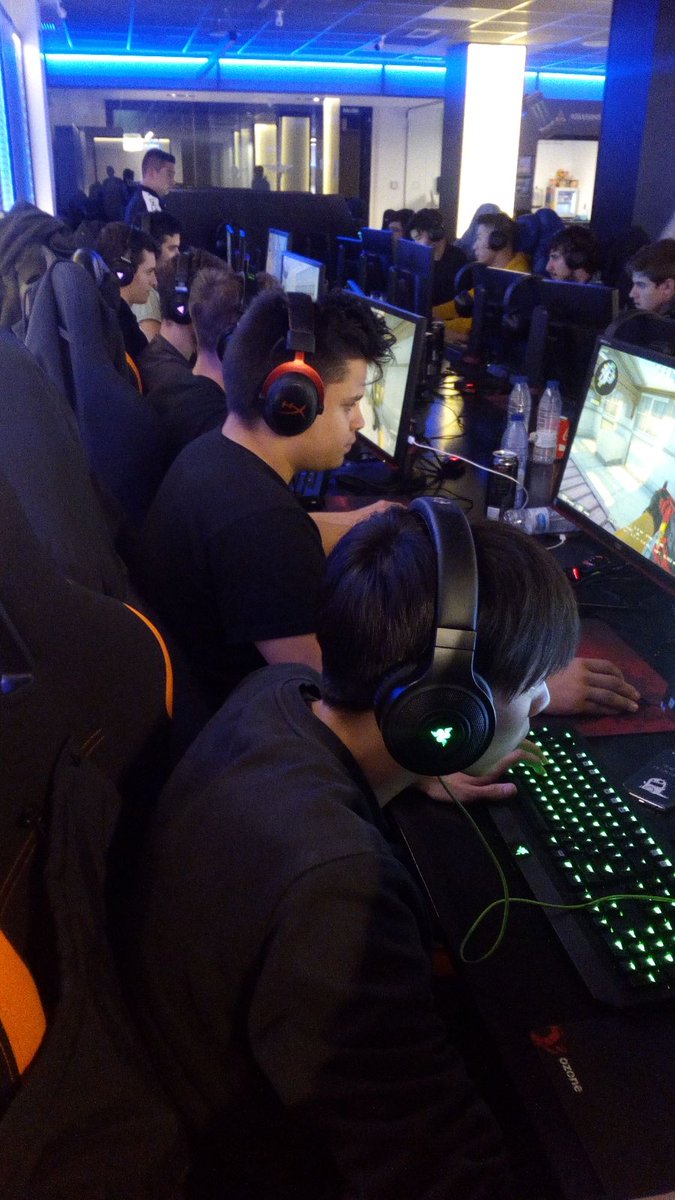
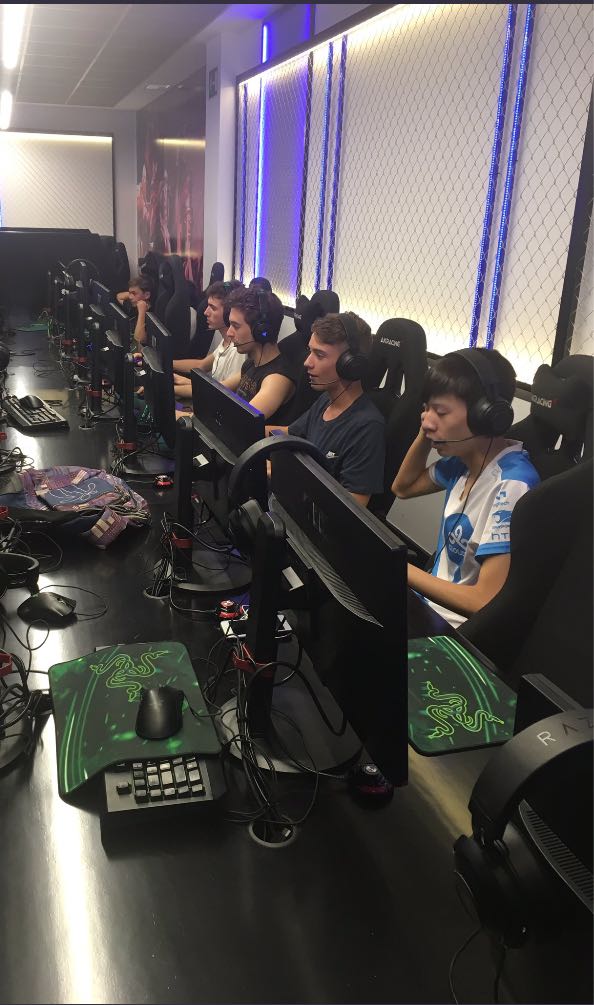
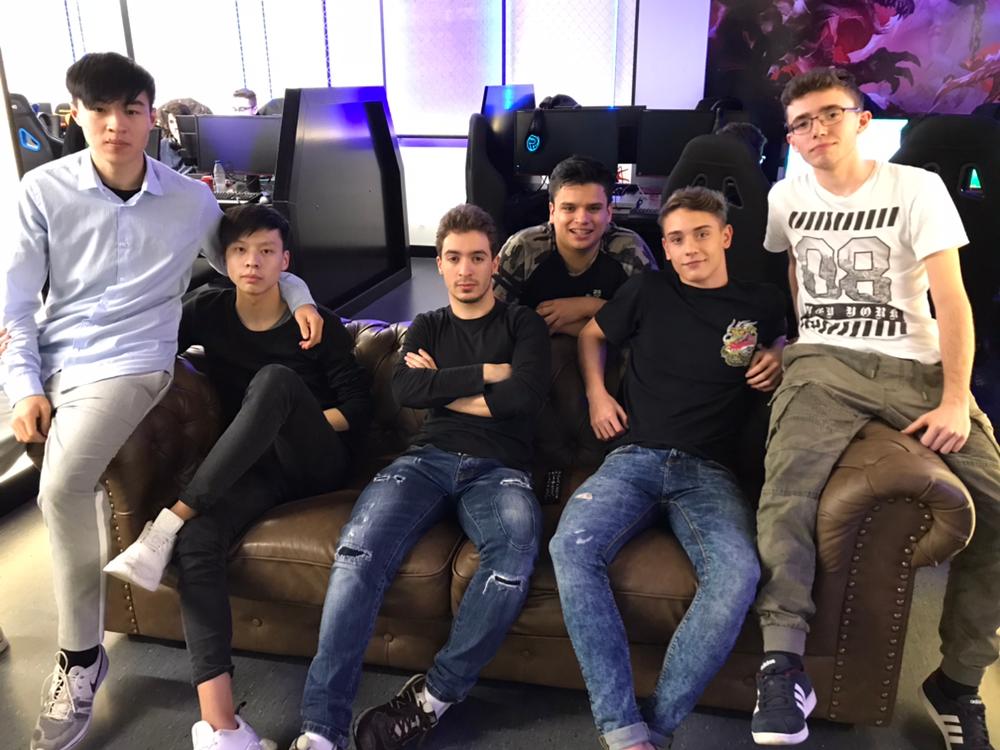
Tras la bootcamp con mis compañeros de equipo, e inspirado en los bonitos textos sobre sus equipos de @VdaK1ng y @b1auCS me ha apetecido escribir la en un largo resumen la historia de mi equipo.
Aquí podéis leerla, gracias por tu atención ^^: https://t.co/V6iDPpfiZ9
We'd love our flow-based generative models to learn the optimal transport from noise to data... but they rarely do ❌.
Mini-batch Optimal Transport methods aim to fix this — but they're costly and require large batch sizes to work well... Can we approximate this behaviour cheaply and effectively?
💡 In our new preprint, we introduce 𝐖𝐞𝐢𝐠𝐡𝐭𝐞𝐝 𝐂𝐨𝐧𝐝𝐢𝐭𝐢𝐨𝐧𝐚𝐥 𝐅𝐥𝐨𝐰 𝐌𝐚𝐭𝐜𝐡𝐢𝐧𝐠 🌀 — a simple and intuitive way to approximate 𝑒𝑛𝑡𝑟𝑜𝑝𝑖𝑐 𝑜𝑝𝑡𝑖𝑚𝑎𝑙 𝑡𝑟𝑎𝑛𝑠𝑝𝑜𝑟𝑡 behaviour without ever explicitly solving OT.
w/ M. Meunier*, @AlvaroCartea, @C__Reisinger, @yaringal, @jmhernandez233
🔗 https://t.co/uvuMdp8F68
🧵(1/🧵)
@johnowhitaker@iScienceLuvr Both models are measured in the CPU, not only the baseline. It's also justified and part of the future work to optimise the code for the ODE solvers. In any case, resource-constrained devices don't have GPUs!
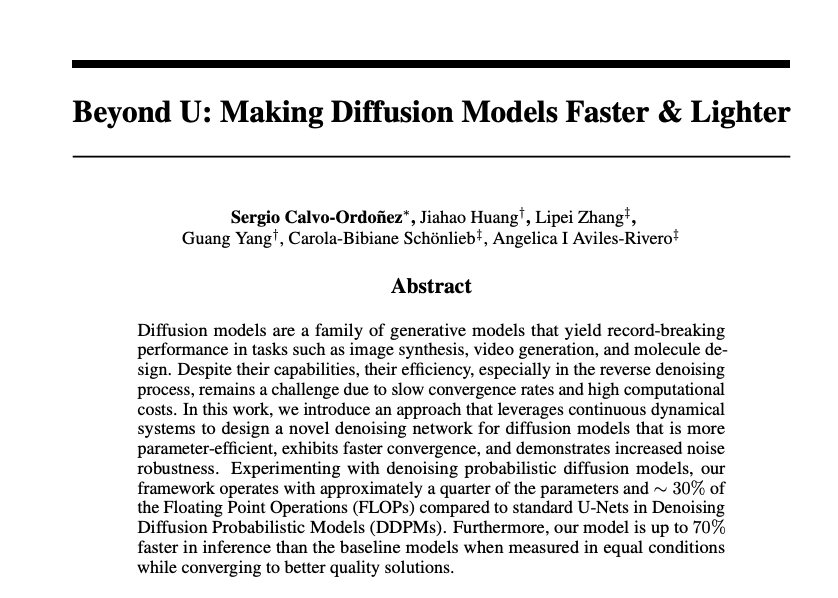
Beyond U: Making Diffusion Models Faster & Lighter
abs: https://t.co/mWcE2Z9fGH
Introduces a novel diffusion model architecture is is dynamical with each block in the model governed by a neural ODE. Uses significantly less FLOPs and memory while obtaining similar FID.
Beyond U: Making Diffusion Models Faster & Lighter
paper page: https://t.co/d1y1Lvb6Mz
Diffusion models are a family of generative models that yield record-breaking performance in tasks such as image synthesis, video generation, and molecule design. Despite their capabilities, their efficiency, especially in the reverse denoising process, remains a challenge due to slow convergence rates and high computational costs. In this work, we introduce an approach that leverages continuous dynamical systems to design a novel denoising network for diffusion models that is more parameter-efficient, exhibits faster convergence, and demonstrates increased noise robustness. Experimenting with denoising probabilistic diffusion models, our framework operates with approximately a quarter of the parameters and 30% of the Floating Point Operations (FLOPs) compared to standard U-Nets in Denoising Diffusion Probabilistic Models (DDPMs). Furthermore, our model is up to 70% faster in inference than the baseline models when measured in equal conditions while converging to better quality solutions.
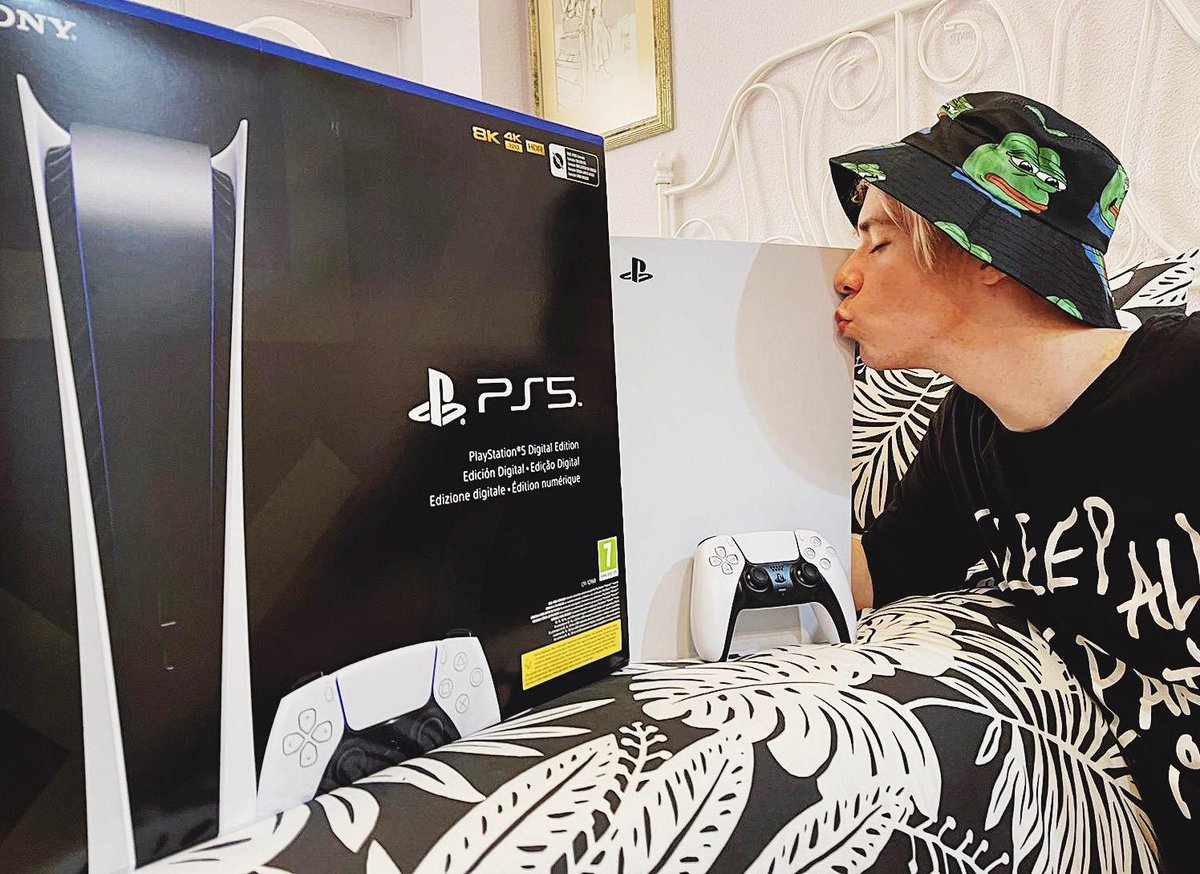
💥SORTEO PS5💥
SOLAMENTE TIENES QUE DAR RT A ESTE TUIT Y SEGUIRME @FolagoR
EL DOMINGO 29 DIRÉ EL GANADOR CONTESTANDO A ESTE TUIT. FÁCIL Y SENCILLO
ESTOY HACIENDO LO MISMO EN MI INSTAGRAM https://t.co/whB1W7ZyeN y en mi twitch https://t.co/5vL44o35Ja
ES INTERNACIONAL
SUERTE