An independent human rights organization founded in June 2011, documents HR violations in Syria, supporting the transition towards democracy [email protected]
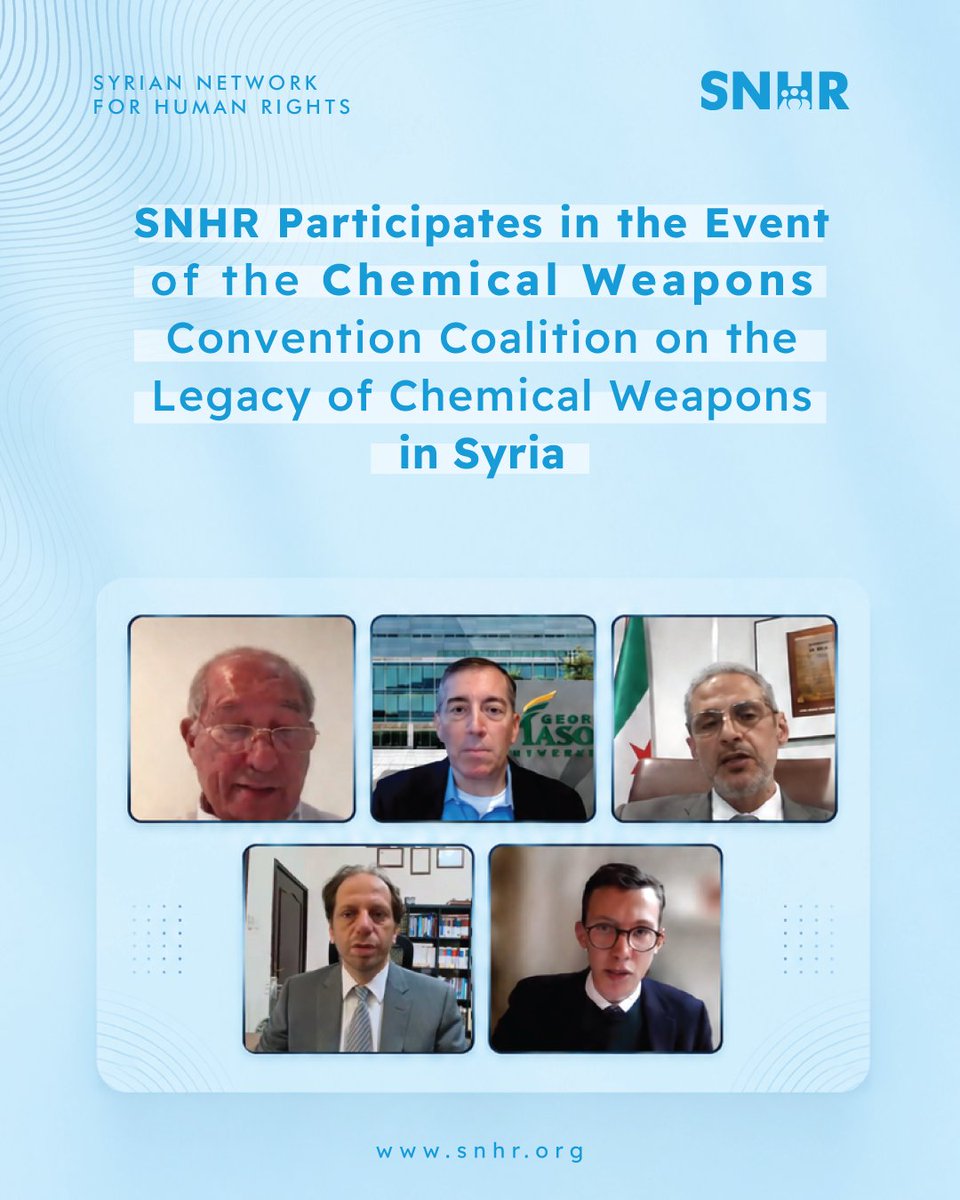
SNHR Participates in the Event of the Chemical Weapons Convention Coalition on the Legacy of Chemical Weapons in Syria
Fadel Abdulghany, Executive Director of the Syrian Network for Human Rights (SNHR), participated on September 16, 2026, in an online event titled “Syria’s Chemical Weapons Legacy: Current Issues and Challenges,” organized by the Arms Control Association and the Chemical Weapons Convention (CWC)Coalition.
In his intervention, titled “From Documentation to Fair Trial: Turning Evidence into Individual Criminal Responsibility for Chemical Weapons Crimes in Syria,” Mr. Abdulghany focused on the role of documentation in advancing accountability efforts, stressing that the challenge does not lie in a lack of evidence, but rather in transforming the extensive and fragmented record into individual criminal cases capable of withstanding trial and appeal.
He noted that SNHR has documented 222 chemical weapons attacks in Syria between December 23, 2012, and December 8, 2024. Assad regime forces carried out 217 of these attacks, while ISIS carried out five.
Mr. Abdulghany emphasized that SNHR continues to provide structured documentation materials to support judicial authorities in opening, prioritizing, and directing investigations. These materials include incident chronologies, records of victims and injured persons, source matrices, leads for reaching witnesses, and clear assessments of the strengths and weaknesses of the available evidence.
View full statement: https://t.co/hz8tDzPXK2
#SNHR #Syria
@FADELABDULGHANY@cwccoalition@ArmsControlNow@MhdKatoub
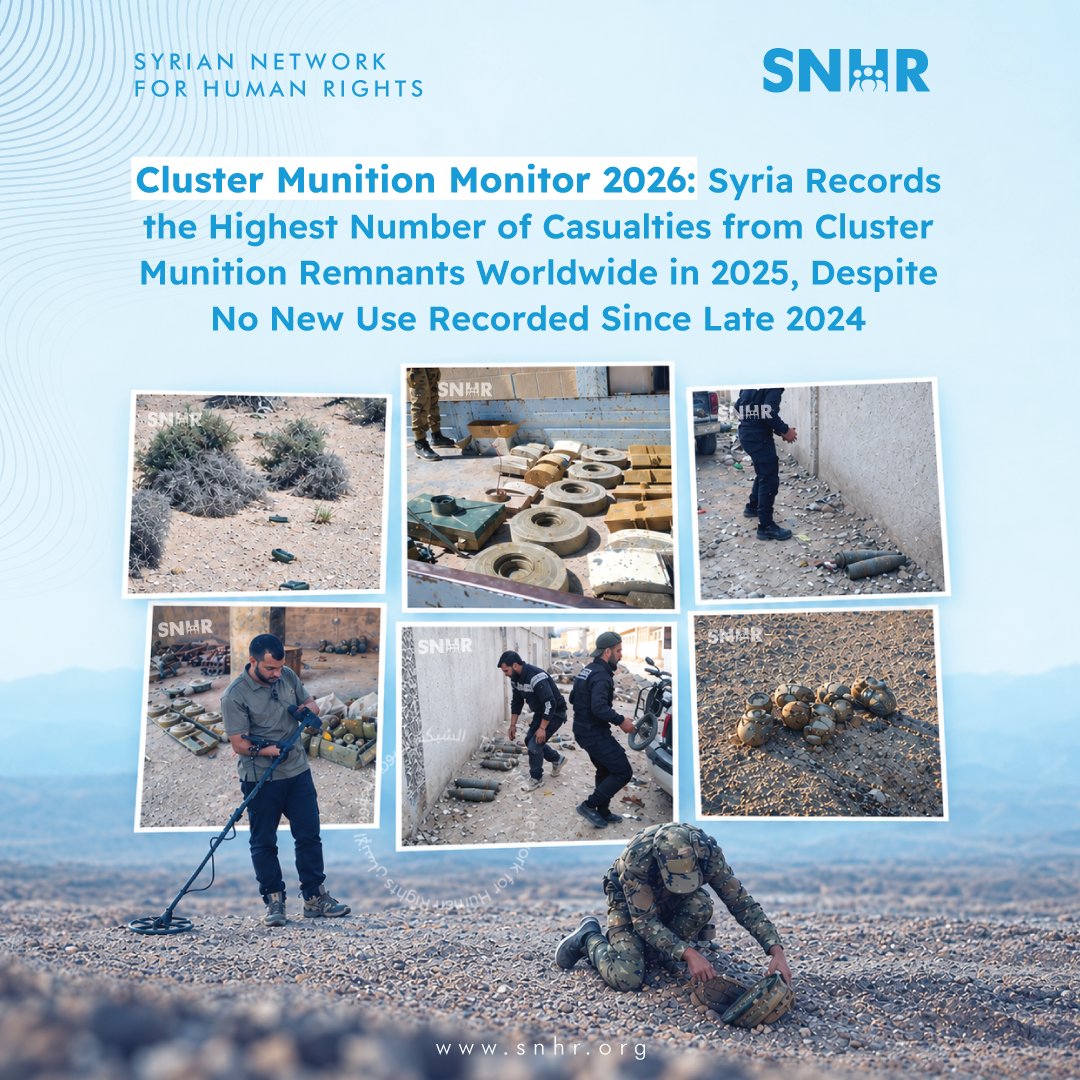
Cluster Munition Monitor 2026: Syria Records the World’s Highest Number of Victims of Cluster Munition Remnants in 2025 Despite No New Use Reported Since Late 2024
Syrian Network for Human Rights (SNHR) is the Cluster Munition Monitor’s country member for Syria and shares all documented data with the Monitor.
The 2026 Cluster Munition Monitor report found that Syria recorded the highest number of people killed or injured by cluster munition remnants in a single country in 2025, with 68 casualties out of 117 recorded worldwide.
The Syrian Network for Human Rights (SNHR) has been a member of the Cluster Munition Monitor for Syria since 2020, sharing documented data on the use of cluster munitions, victims, incident locations, and the parties responsible.
Although no new use of cluster munitions has been documented in Syria since late 2024, their remnants continue to pose a serious and ongoing threat to civilians, particularly in areas that have not undergone comprehensive surveying or sufficient clearance operations.
According to the report:
At least 1,063 people were killed or injured by cluster munitions worldwide in 2025.
117 casualties were recorded as a result of cluster munition remnants, with 68 occurring in Syria, accounting for approximately 58% of the global total.
A total of 4,557 people have been documented as killed or injured in Syria as a result of cluster munition attacks and their remnants
View full statement: https://t.co/kMeDkLbboY
#SNHR #Syria
@banclusterbombs@MineMonitor@minefreeworld
The Syrian Network for Human Rights (SNHR) released its third quarterly report today, October 2, 2026, which reviews the toll of detention and release cases that SNHR was able to document in Syria during the third quarter of 2026.
SNHR documented at least 13 cases of detention, including one child, that arbitrarily targeted civilians during the third quarter of 2026. The cases documented in the period covered by the report were distributed across the three months as follows: five cases in July, seven cases in August, and one case in September. August recorded the highest toll.
SNHR called on all parties controlling Syrian territory to immediately cease all forms of arbitrary detention and enforced disappearance, to disclose the whereabouts of all detainees, to enable them to communicate with their families and lawyers, to release all persons detained for the peaceful exercise of their fundamental rights.
View the full report: https://t.co/dX12MbU2ex
#SNHR #Syria
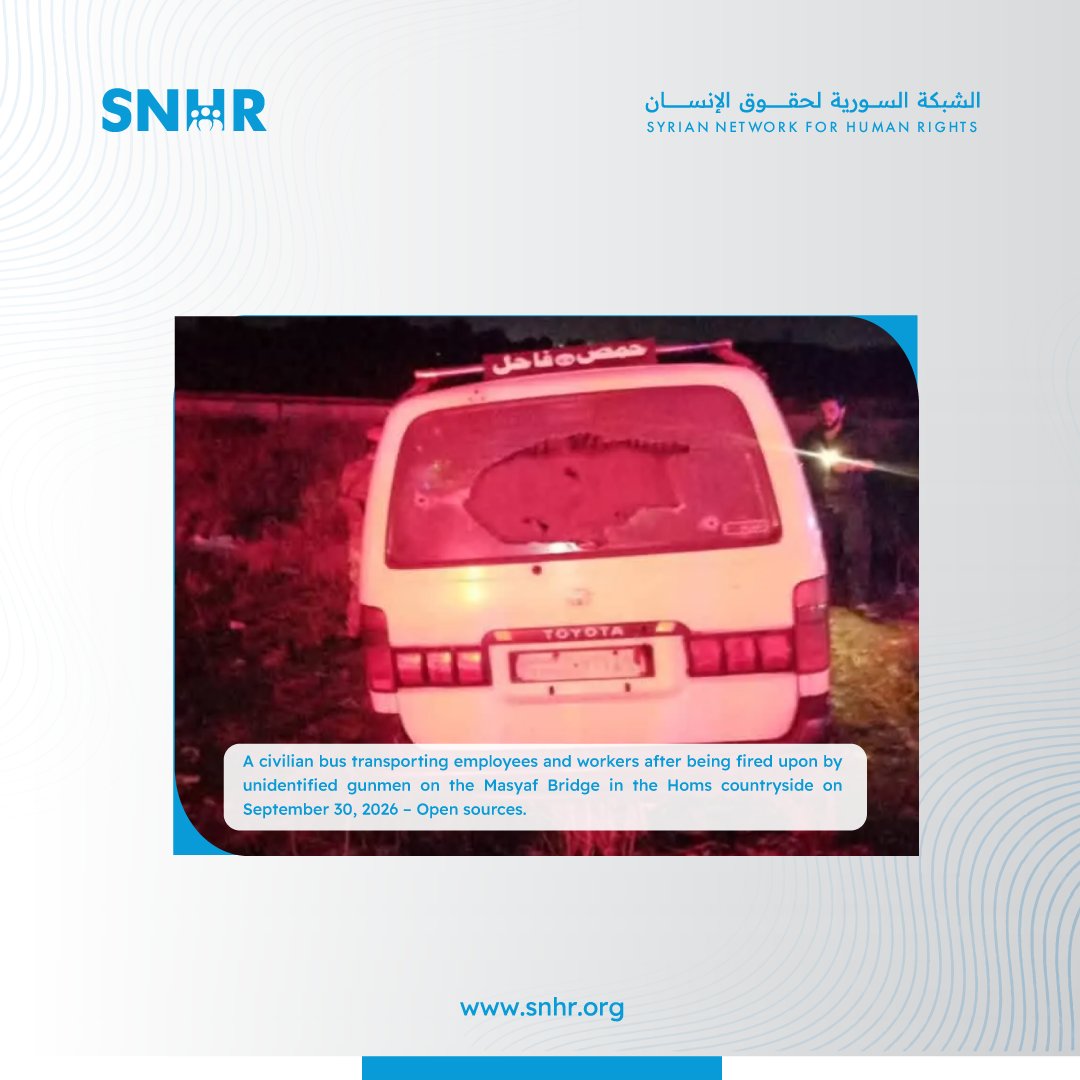
The killing of seven civilians and the injury of four others have been documented following an attack by unidentified gunmen on a transport bus near the Masyaf Bridge in the countryside of Homs Governorate on September 30, 2026.
Details: https://t.co/oWcs0qmHHX
#SNHR#Syria
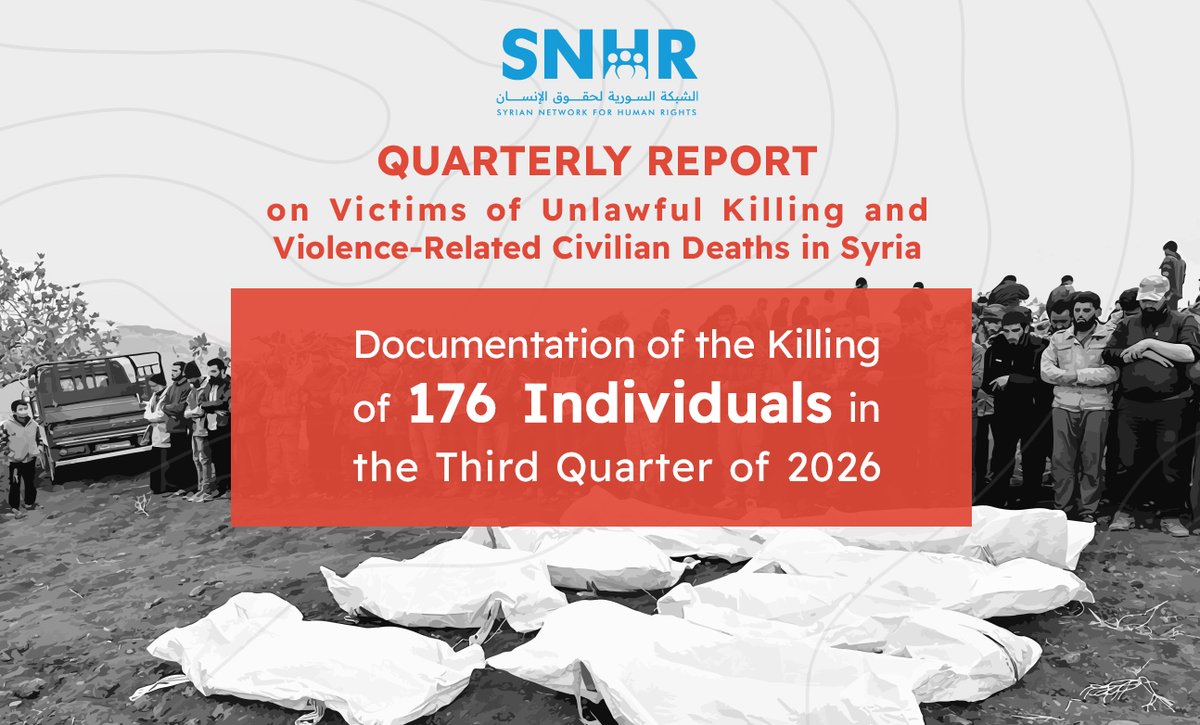
Quarterly Report on Victims of Unlawful Killing and Violence-Related Civilian Deaths in Syria
Documentation of 176 Deaths in the Third Quarter of 2026
In its third quarterly report on victims of unlawful killing and violence-related civilian deaths in Syria—released today—the Syrian Network for Human Rights (SNHR) stated that it documented the deaths of at least 176 individuals during the third quarter of 2026. The toll includes 15 children, 10 women, one medical worker, and one Civil Defense worker; the report also documents one death due to torture and two massacres.
The report covers incidents documented by the SNHR during the third quarter of 2026, focusing on victims of unlawful killing and violence-related civilian deaths. It presents the figures categorized by the party responsible (or likely responsible), the nature of the incident, and the governorate, in addition to documenting attacks on vital civilian facilities.
The Network clarified that this figure represents the minimum number of cases it was able to document and verify according to its methodology; it does not necessarily reflect the full extent of all incidents of unlawful killing or violence-related civilian deaths that occurred during the reporting period.
To read the full report: https://t.co/IMu38yG8iF
#SyrianNetwork #Syria
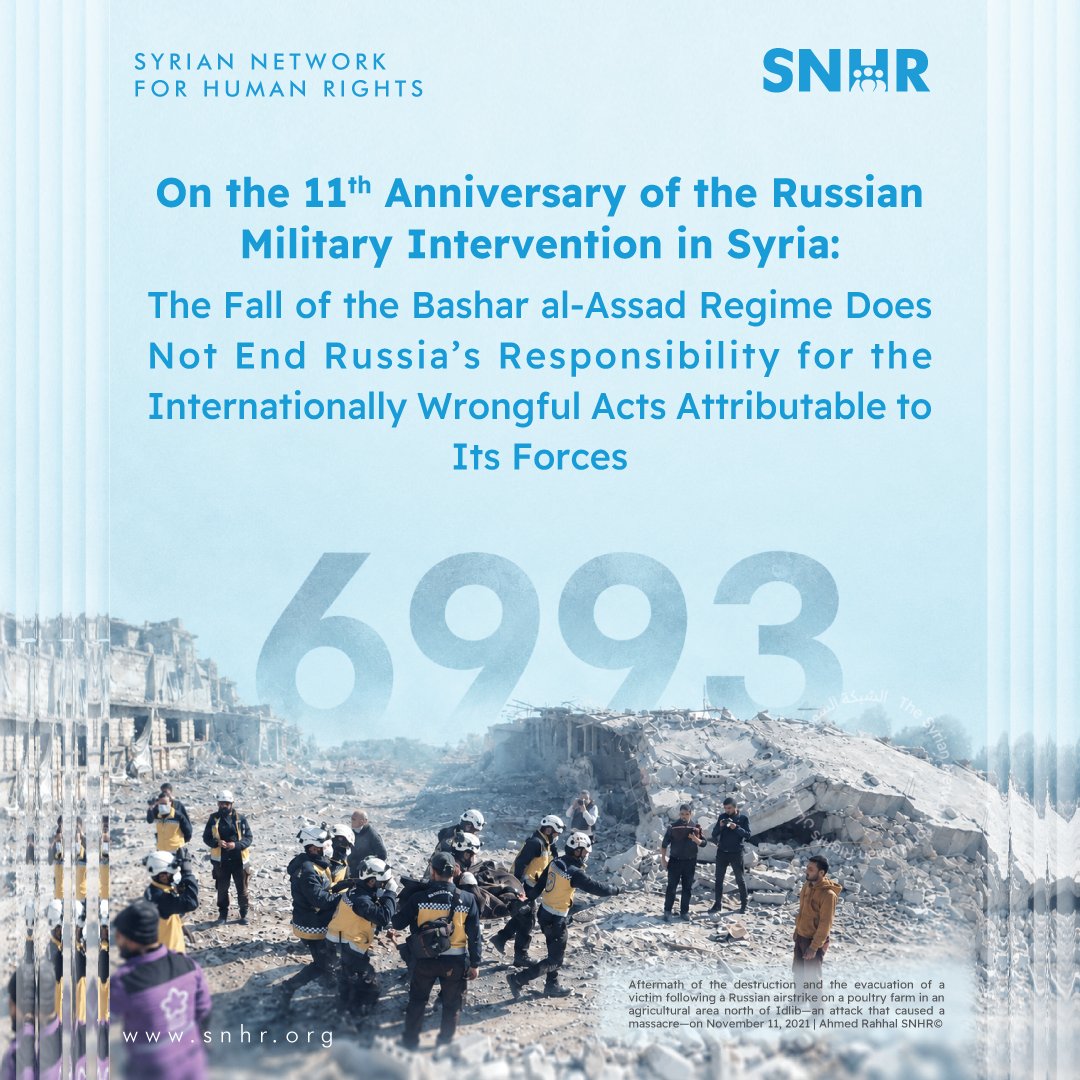
On the 11th Anniversary of the Russian Military Intervention in Syria: The Fall of the Bashar al-Assad Regime Does Not End Russia’s Responsibility for the Internationally Wrongful Acts Attributable to Its Forces
Today marks the 11th anniversary of the Russian military intervention in Syria, which is the second anniversary to pass since the fall of the Bashar al-Assad regime on December 8, 2024. However, even with the fall of the former regime, in support of which Russia intervened militarily, the humanitarian and legal consequences of that intervention have remained present in the lives of thousands of families who lost family members, and in the communities whose homes, facilities, and livelihoods were damaged. The Syrian Network for Human Rights (SNHR) believes that the change of authority in Syria doesn’t end Russia’s responsibility for the internationally wrongful acts attributable to its forces, nor the obligations incumbent upon it to make reparation.
According to the database of SNHR, Russian forces caused the deaths of at least 6,993 civilians, including 2,061 children and 984 women (adult females), between September 30, 2015, and December 8, 2024. Among the victims were at least 70 medical personnel, including 12 women, and 24 media workers. These forces also committed at least 363 massacres, according to SNHR’s adopted definition of a massacre.
SNHR also documented at least 1,262 incidents of attacks carried out by Russian forces on vital civilian facilities.
To view the full statement: https://t.co/nSXtqGTSWa
#SNHR #Syria
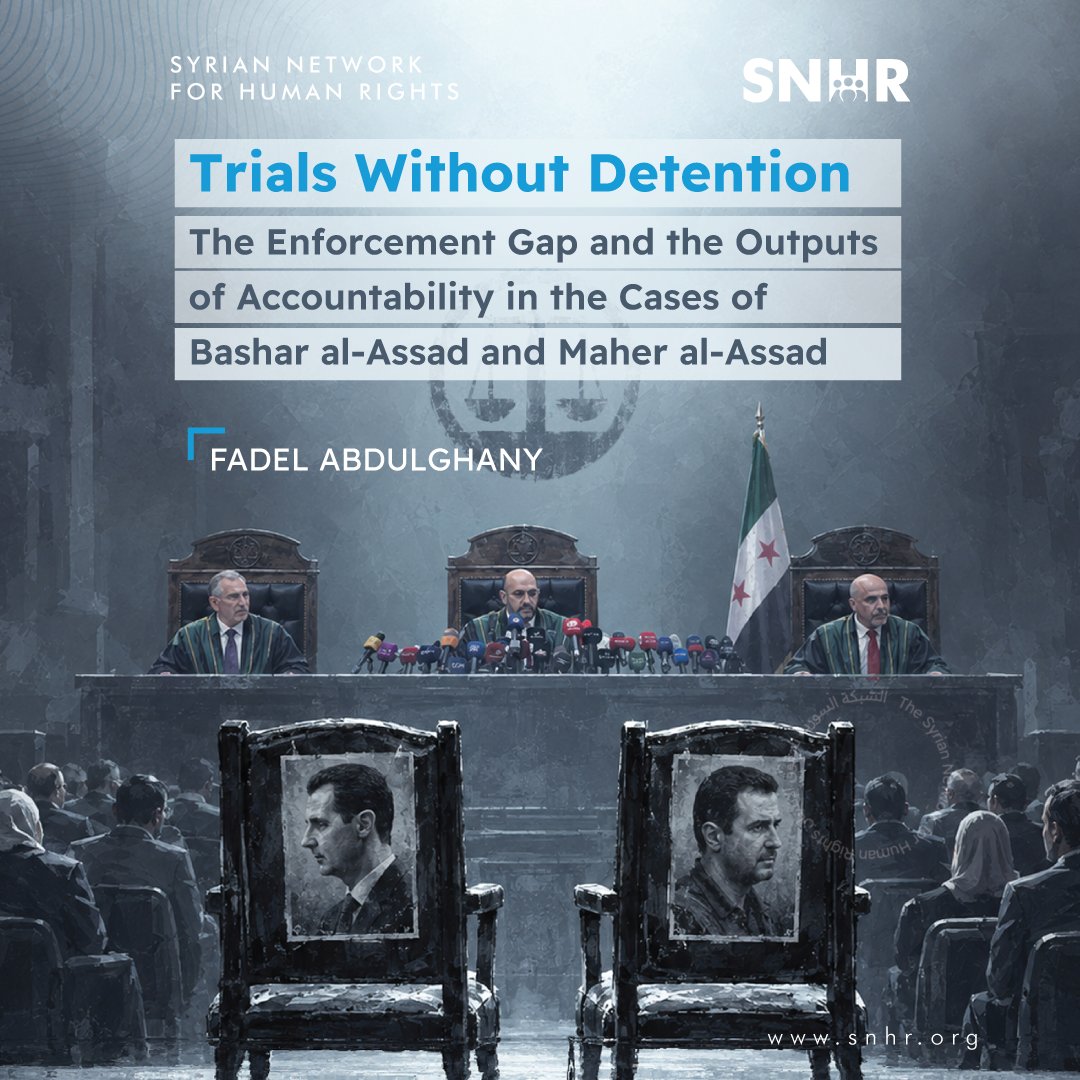
The Arab Center for Contemporary Syria Studies has published a paper titled “Trials Without Detention: The Enforcement Gap and the Outputs of Accountability in the Cases of Bashar al-Assad and Maher al-Assad,” authored by Mr. Fadel Abdulghany, Executive Director of the Syrian Network for Human Rights.
The paper examines the feasibility of legal proceedings related to the trial track of Bashar and Maher al-Assad through three levels:
Legal-doctrinal level: An analysis of personal and functional immunities in light of the two rulings issued by the French Court of Cassation on 25 July 2025, alongside an examination of the cross-border limits of the ne bis in idem principle.
Theoretical level: A reconceptualization of the enforcement gap as a stable structural condition within a defined time frame, with a focus on the distinctions between evidence and proof, investigation and adjudication, and evidence-gathering and the authority to rule on criminal responsibility.
Applied level: Recommendations for the institutional actors involved in the accountability system, taking into account the jurisdictional limits of each actor and what each can contribute within those limits.
To view the full research paper:https://t.co/fOkvS9JpYA
#SNHR #Syria
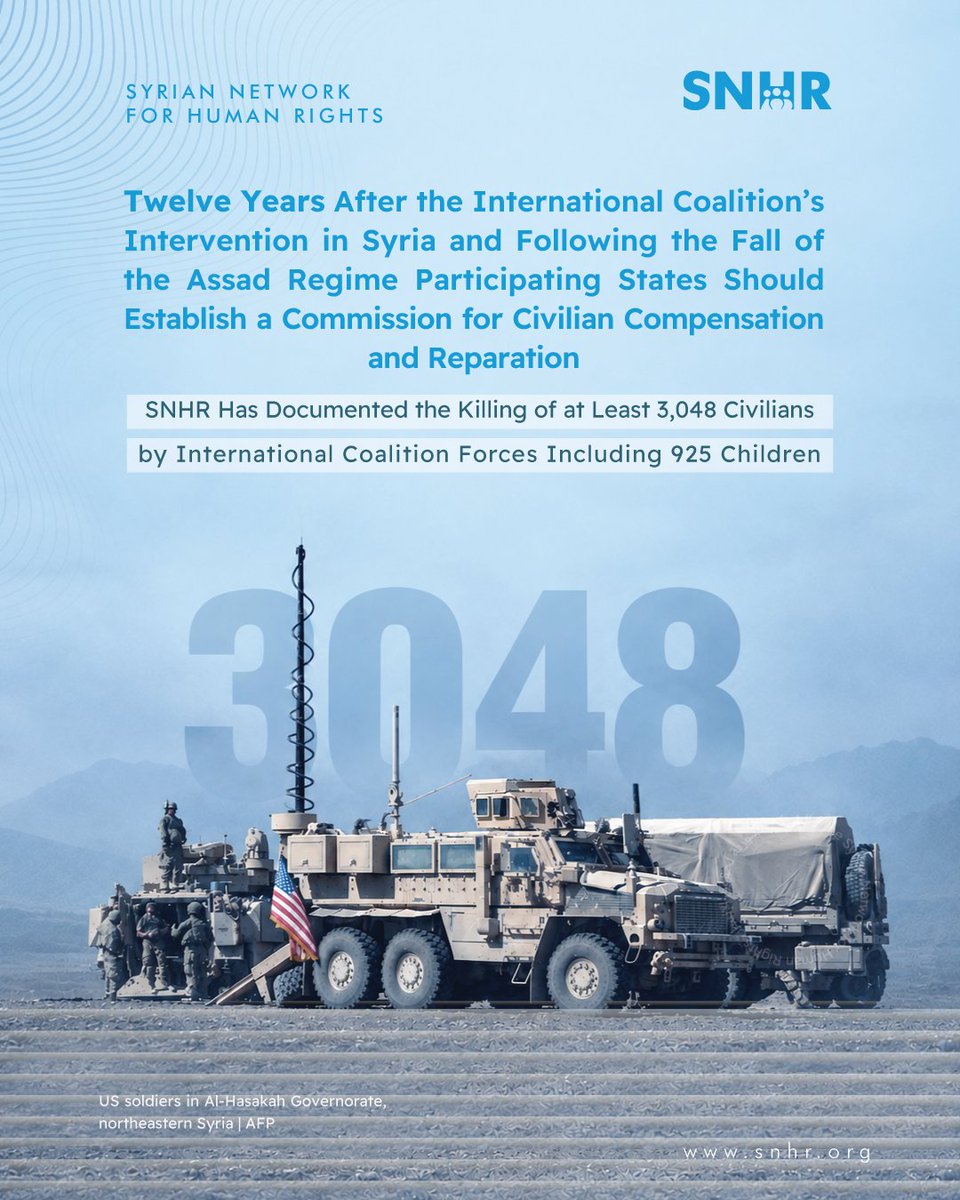
Twelve Years After the International Coalition’s Intervention in Syria and Following the Fall of the Assad Regime, States Should Establish a Commission for Civilian Compensation and Reparation
The Syrian Network for Human Rights (SNHR) has documented the killing of at least 3,048 civilians, including 925 children, by International Coalition forces since the beginning of its military operations in Syria in September 2014.
In its report, SNHR documents the harm inflicted on civilians, including 172 massacres and 181 attacks on vital civilian facilities, and examines the legal framework governing State responsibility and reparation.
SNHR notes the absence of a unified and independent mechanism through which Syrian civilians can submit claims, receive reasoned decisions, and seek independent review of those decisions.
SNHR calls on the States that participated in International Coalition operations to establish an independent commission for civilian claims and reparation in Syria, tasked with assessing civilian harm linked to Coalition operations and determining responsibility based on the available facts and evidence.
View full statement: https://t.co/TIiNI2ptfT
#SNHR #Syria
SNHR's Executive Director Fadel Abdulghany joins @SitesConscience's "Hive Mind Series" session, "Documenting Refugee Experiences."
The conversation explores how documentation in displacement can strengthen protection, community resilience, social cohesion, and accountability — moving refugee documentation from an administrative/humanitarian task to a long-term investment in rights.
🗓️ Sept 23 | 9:00 AM ET
🎙️ Moderated by Justine Di Mayo, Deputy Program Director, ICSC
🔗 Register: https://t.co/OzSCQjT8dL
#Syria #HumanRights #Refugees #Documentation #Accountability
@FADELABDULGHANY@SitesConscience
Trial Monitoring Report on the First and Second Hearings in the Trial of Ahmad Badr al-Din Hassoun before the Fourth Criminal Court in Damascus
The Syrian Network for Human Rights (SNHR) has released a report monitoring the proceedings of the first and second hearings in the trial of Ahmad Badr al-Din Hassoun, the former Grand Mufti of the Syrian Arab Republic, before the Fourth Criminal Court in Damascus, held on 25 June and 16 July 2026.
The report provides an interim assessment of respect for fair trial guarantees, monitoring the extent to which the rights of the defense were upheld during the two hearings, including the presence of the accused accompanied by his lawyer, his being informed of the charges and given an opportunity to respond, and the defense being enabled to present its witnesses.
SNHR also identifies a number of issues requiring further scrutiny, most notably the availability of complete audio and visual evidence to the defense, the safeguards surrounding the withholding of the identity of a prosecution witness, and issues relating to the appearance of judicial impartiality.
SNHR emphasizes that this assessment is limited to monitoring the trial proceedings and fair trial guarantees and does not address the criminal responsibility of the accused or determine the accuracy of the facts attributed to him.
View the full report: https://t.co/nWhS1KlIDj
#SNHR #Syria