https://t.co/j3IF125Am1
@IRENA
🌏❄️ #PreCOP31 — @SNOWPANEL❄️ GLOBAL −1.5°C RESTORATION BURDEN PROPOSAL
As Australia, Fiji and Tuvalu co-host the Pacific Pre-COP31 Leaders’ Event, SnowPanel❄️ proposes that governments consider an additional dimension of international @climate responsibility:
🇦🇺 @AlboMP
🇫🇯 @slrabuka
🌊 @ForumSEC — Pacific Islands Forum
⚡ @IRENA — International Renewable Energy Agency
🌐 @UNFCCC
If nations can share the burden of reducing emissions, can they also share the burden of physically restoring parts of the climate system?
@SnowPanel❄️ proposes approximately 2,465 floating polar restoration units, each equipped with an IJmuiden-scale pump capable of moving around 50,000 litres of seawater per second.
Combined, the proposed international fleet would have a theoretical pumping capacity of approximately 123,250 m³ of seawater per second.
The concept is to lift polar seawater through floating restoration infrastructure and atomise it into fine droplets approximately 100 metres above the ocean, increasing atmospheric exposure under sufficiently cold conditions and encouraging freeze-back as snow and ice.
Under the current conceptual engineering scenario:
❄️ ~2,465 floating polar restoration units
💧 ~50,000 L/s per unit
🌊 ~123,250 m³/s combined capacity
🏗️ ~100 m atomisation elevation
🧊 90% illustrative freeze-back assumption
⏱️ 10 years continuous operation
At theoretical full throughput, approximately 38,900 km³ of seawater could be processed over ten years.
At an illustrative 90% freeze-back, that corresponds to approximately 35,000 km³ of frozen-water equivalent — a volumetric equivalent of approximately 35 million km² of ice averaging one metre thick.
This is a volume-equivalence calculation, not a prediction that 35 million km² of additional stable sea ice would automatically form and persist. Freeze efficiency, atmospheric transport, ice distribution, salinity, seasonal melt, ocean circulation, albedo, ecological effects and long-term persistence require field validation and coupled climate modelling.
🌡️ THE −1.5°C RESTORATION OBJECTIVE
SnowPanel❄️ proposes investigating whether cryosphere restoration at this scale could contribute to a −1.5°C global temperature-restoration objective.
The physical proposition is based principally on restoring albedo:
☀️ Dark ocean absorbs substantial incoming solar energy.
❄️ Bright snow and ice reflect substantially more incoming sunlight.
Restoring persistent high-albedo polar coverage could therefore reduce absorbed solar energy and produce negative radiative forcing.
The −1.5°C figure is a proposed restoration objective, not yet a validated climate prediction. Determining the actual temperature response requires coupled atmosphere–ocean–sea-ice modelling and progressive field validation.
🌍 THE GLOBAL RESTORATION BURDEN
SnowPanel❄️ proposes that responsibility for approximately 2,465 floating polar restoration units should be internationally distributed rather than placed solely upon nations possessing polar territory.
Our proposed starting framework is:
📊 50% current emissions
➕
📜 50% historical contribution to warming
=
🌎 100% of the 2,465-unit international restoration fleet
A country's allocation would not necessarily require that country to physically operate restoration units within its own waters.
Its allocation could instead represent responsibility for:
🏗️ Manufacturing
💰 Financing
⚡ Renewable-energy generation
🌊 Offshore infrastructure
🚢 Deployment and logistics
🔬 Scientific monitoring
🛰️ Environmental observation
🤝 Joint international operation
⚡ ENERGY TRANSITION → CLIMATE RESTORATION
@IRENA is highlighting at #PreCOP31 that for Small Island Developing States, the energy transition requires urgent action and investment, including through its SIDS Lighthouses Initiative and Pacific Regional Dialogue on Energy Transition Investments and Finance.
SnowPanel proposes extending that discussion with another engineering question:
Could large-scale renewable-energy infrastructure eventually power not only decarbonisation, but physical climate-restoration infrastructure?
Our current conceptual SnowPanel❄️ scenario estimates approximately:
⚡ 111 GW continuous electrical demand
If supplied by 15 MW offshore wind turbines operating at an illustrative 45% capacity factor, approximately:
💨 247 GW installed offshore-wind capacity
would be required to provide that average power.
That corresponds to roughly:
🌬️ 16,500 × 15 MW offshore wind turbines
before additional allowances for storage, transmission, redundancy and system losses.
This means SnowPanel❄️ is not simply a seawater-pumping concept.
It proposes integrating:
🌊 Ocean engineering
💨 Offshore renewable energy
❄️ Cryosphere restoration
🔬 Climate-system monitoring
🌊 WHY #PreCOP31?
Pacific nations face substantial exposure to sea-level rise and ocean change while many have contributed comparatively little to accumulated global emissions.
The international climate discussion therefore raises a larger engineering question:
Should climate responsibility extend beyond reducing future damage to investigating whether humanity can physically restore some of what has already been lost?
SnowPanel❄️ proposes examining four parallel strategies:
🏭 MITIGATION — reduce future emissions.
🌱 REMOVAL — remove accumulated atmospheric CO₂.
🛡️ ADAPTATION — protect communities against unavoidable impacts.
❄️ RESTORATION — investigate rebuilding damaged climate-regulating systems, including the cryosphere.
🌏 THE SNOWPANEL❄️ GLOBAL PROPOSITION
❄️ ~2,465 floating polar restoration units
🌊 ~50,000 L/s IJmuiden-scale pump per unit
💧 ~123,250 m³/s combined capacity
🏗️ ~100 m atomisation elevation
🧊 ~35,000 km³ conceptual 10-year freeze-back
🌐 ~35 million km² volumetric equivalent at 1 metre
⚡ ~111 GW estimated continuous power
💨 ~247 GW illustrative installed offshore wind
🌡️ −1.5°C proposed global restoration objective
🌍 50% current emissions + 50% historical contribution to warming
The proposition to governments and institutions at #PreCOP31 is not that these outcomes have already been demonstrated.
It is that a restoration concept of this potential scale can be modelled, engineered, field-tested and measured — then validated, modified or rejected on evidence.
The first step does not require building 2,465 units.
It requires establishing whether large-scale physical cryosphere restoration can materially alter Earth's energy balance — and determining through modelling and field trials what scale would actually be required.
Science can establish the climate response. 🔬
Engineering can establish whether it can be built. 🏗️
Renewable energy can provide the power. 💨⚡
International cooperation can establish how the burden could be shared. 🌏
Field trials can establish what actually works. ❄️
@UNFCCC@ForumSEC@IRENA@AlboMP@slrabuka
#PreCOP31 #COP31 #SnowPanel #ClimateRestoration #Cryosphere #SeaIce #EnergyTransition #RenewableEnergy #OffshoreWind #ClimateFinance #OceanClimate #Pacific ❄️🌊🌏
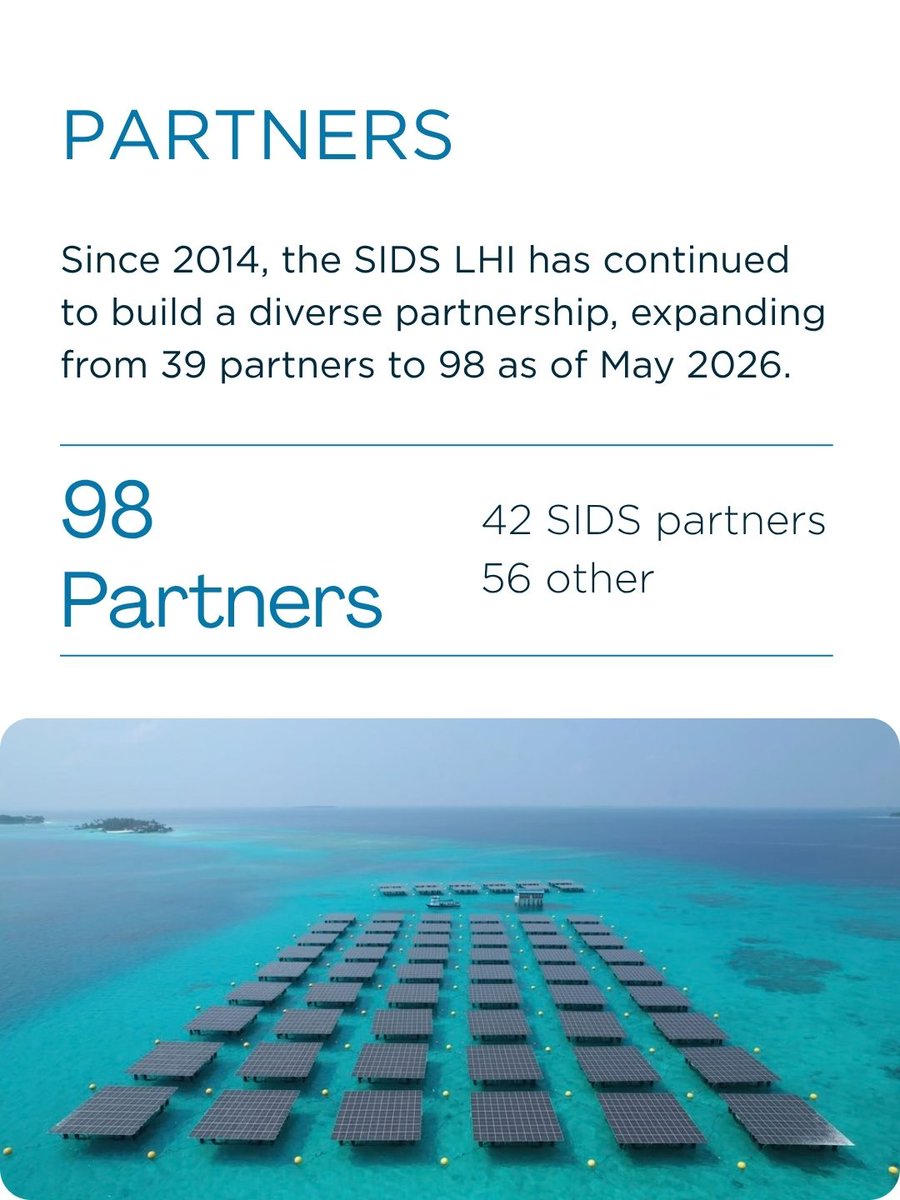
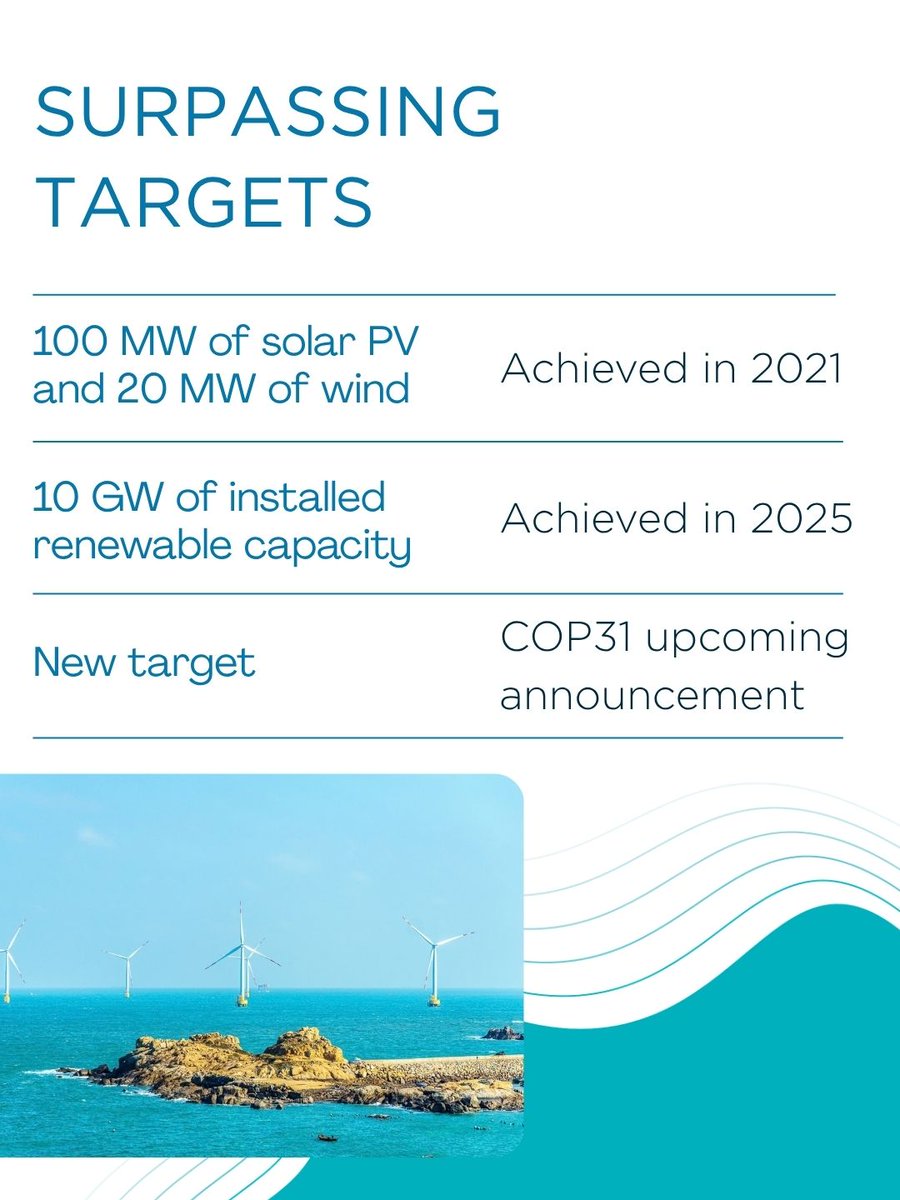
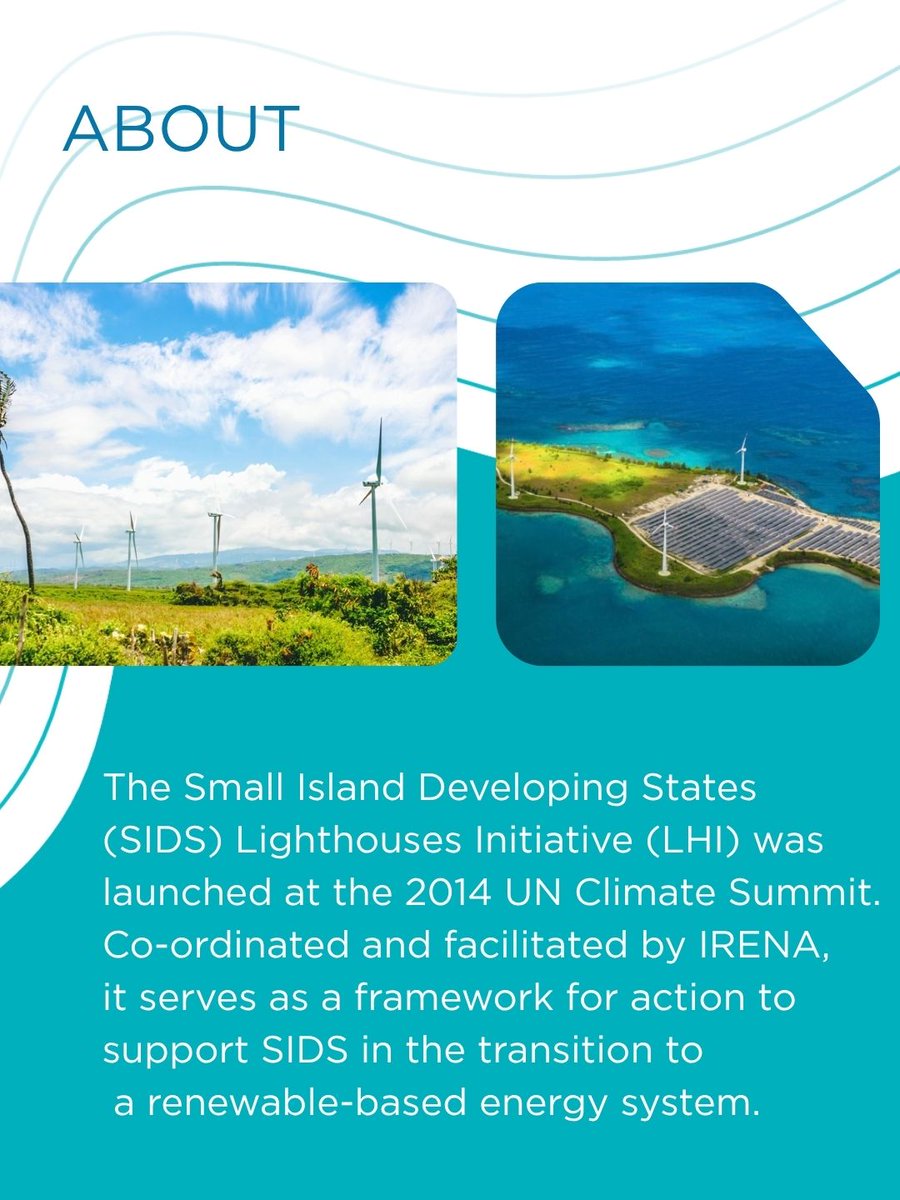
For Small Island Developing States (SIDS), the #energytransition is a question of urgent action for investment. At #PreCOP31 in Fiji next week, @IRENA through SIDS Lighthouses Initiative (LHI) supports Pacific SIDS to identify solutions through its 'Pacific Regional Dialogue on Energy Transition Investments and Finance': https://t.co/EluyTFXaiL
Stay tuned & slide through the images to learn about SIDS LHI����
Using the glass analogy, consider a glass containing equal amounts of hot and cold water. Once mixed, the glass becomes colder than the original hot water because heat moves into the colder portion until both reach a new equilibrium temperature. @SnowPanel❄️ applies the same fundamental principle to the ocean. Introducing additional cold ice into warmer surface water causes the ice to absorb heat as it warms and melts, reducing the temperature of the surrounding water. While the ice remains frozen, its bright surface can also reflect solar energy that dark ocean would otherwise absorb. The glass analogy demonstrates the local physical effect clearly: adding cold water or ice to warmer water lowers its temperature. What still requires @climate modelling and field validation is the scale—how much maintained ice, reflective area and ocean-heat absorption would be required to translate that local cooling into a specific reduction in global @WMO average temperature!! 🥃
https://t.co/5C9TgReGGD
@WMO
Officials—including @antonioguterres—repeatedly state that “the science is clear.” But that phrase must not imply that every @climate relationship has been quantified.
Evidence strongly supports human-caused warming and continuing polar-ice loss. Yet science has not established a universal quantity of restored ice that guarantees a specific reduction in global temperature!
That unresolved relationship should be investigated through transparent climate modelling, controlled experiments and restoration-scale engineering trials—not dismissed through broad appeals to scientific certainty.
Climate science has measured the loss. Now it must help engineer and verify the restoration. 🌍🛠️@SnowPanel❄️
Rivers across the globe in 2025 had one of the driest years in more than 3 decades.
The WMO Global #StateOfWater Report 2025 shows a continuation of the long-term decline in Earth’s freshwater storage and in glacier retreat.
🔴 OUT NOW: https://t.co/mUWRMRdY5s
The scientifically consistent conclusion is that the loss or restoration of equivalent effective reflective ice coverage can be evaluated using the same @IPCC_CH reduced-order temperature-response framework!
The @IPCC_CH does not assign a fixed temperature value to each gigatonne of ice lost or restored. Instead, the change in ice must first be translated into a change in global radiative forcing after accounting for its reflective area, location, surface albedo, seasonal sunlight, cloud masking and persistence.
Published sea-ice radiative-effect calculations indicate that replacing approximately 35 million km² of bright sea ice with dark ocean could create an illustrative positive global forcing of approximately +1.4 W/m². Applying the @IPCC_CH reduced-order equilibrium relationship—temperature change equals radiative forcing divided by the climate-feedback parameter—and using a feedback parameter of approximately 1.31 W/m² per degree Celsius, the calculation is (+1.4 ÷ 1.31), producing an estimated equilibrium warming of approximately +1.07°C, rounded to +1.1°C.
If @SnowPanel❄️ restored and maintained an equivalent area of bright ice under comparable geographic, seasonal, albedo and cloud conditions, the direct radiative forcing would reverse sign to approximately −1.4 W/m². Applying the same @IPCC_CH relationship gives (−1.4 ÷ 1.31), producing an estimated equilibrium cooling of approximately −1.07°C, rounded to −1.1°C.
*The calculation is therefore physically and mathematically symmetrical at the radiative-forcing level: losing effective reflective ice area produces positive forcing, while restoring equivalent effective reflective area produces negative forcing. It would be scientifically inconsistent to accept the first-order warming calculation for ice loss while refusing to apply the same framework to equivalent ice restoration.*
Neither figure guarantees the temperature change that would be reached within ten years. The atmosphere responds relatively quickly, but ocean heat uptake delays the full global response. The ten-year result must therefore be calculated using an @IPCC_CH-style impulse-response function that estimates what fraction of the eventual equilibrium response would occur during that period. @SnowPanel❄️
Independent analysis identifies pumping capacity, energy demand, polar maintenance and deployment logistics as central scaling challenges. However, references to “millions of pumps” should not be attributed directly to @SnowPanel❄️.
RESTORATION-SCALE CRYOSPHERE ENGINEERING
@SnowPanel❄️
There is currently no @PNASNews scientifically validated single quantity of ice that guarantees a specific reduction in global temperature.
❄️ What would it take to investigate rebuilding polar ice at a genuinely planetary engineering scale?
SnowPanel❄️ proposes approximately 2,465 floating polar restoration units using @technology derived from @Pentair Fairbanks Nijhuis IJmuiden-scale pumps. Each conceptual unit would be designed to move approximately 50,000 litres of seawater per second—or 50 m³/s. ⚙️🌊
Combined conceptual capacity:
🌊 Approximately 123,250 m³ of seawater per second
⚙️ 2,465 IJmuiden-scale pumps
⏱️ Continuous operation over ten years
🌫️ Approximately 100 m atomisation elevation
❄️ Conceptual 90% frozen-fraction target
💨 Powered by dedicated offshore wind energy
Rather than discharging bulk water, the system would elevate and atomise seawater into fine droplets above the polar ocean. Under sufficiently cold conditions, the objective would be to provide enough atmospheric residence time for those droplets to cool, nucleate and form snow or ice before returning to the polar environment. 🌨️🧊
Over ten years, the proposed fleet would process approximately 38,900 km³ of seawater. At an assumed 90% frozen fraction, the simplified calculation produces approximately:
⚖️ 35,000 Gt of frozen seawater by mass
🧊 38,200 km³ of solid-ice volume, allowing for ice density
❄️ The equivalent of approximately 1.09 m of ice across 35 million km²
🌡️ WHAT COULD THAT MEAN FOR TEMPERATURE?
There is currently no scientifically validated quantity of manufactured polar ice that guarantees a particular reduction in global temperature.
A reduced-order atmosphere–ocean energy-balance estimate suggests that maintaining approximately 35 million km² of additional bright polar ice could potentially produce a global cooling response on the order of 1.5°C over a decade, under favourable assumptions concerning location, albedo, seasonality and persistence.
That is a research hypothesis—not a validated climate prediction. It would require full coupled atmosphere–ocean–sea-ice modelling, engineering validation and controlled field trials.
The purpose of the proposal is not to claim that the outcome has already been proven. It is to define the engineering scale required to test whether deliberate cryosphere restoration could become a practical climate-recovery pathway.
A measured problem requires a built—and scientifically verified—solution. 🌍❄️🛠️
The proposed system is designed to process seawater at planetary restoration scale. 🌊💨❄️🌍
The @PNASNews headline asks: “Can a simple geoengineering approach restore dwindling Arctic ice?”
But deploying millions of smaller pumps across the Arctic is not simple engineering. It multiplies installations, power connections, maintenance demands and failure points millions of times.
@SNOWPANEL❄️ proposes a fundamentally different architecture: approximately 2,465 high-capacity floating polar restoration units, using IJmuiden-scale pumping technology and powered by dedicated offshore wind energy.
The freezing principle may be simple. The planetary engineering is not—and its design must reflect that reality. 🌊💨❄️🌍
Can a simple geoengineering approach restore dwindling Arctic ice? | PNAS https://t.co/UZzTWEBBRU
Peer-reviewed scientific discussion now treats engineered sea-ice thickening as a researchable intervention, with field results showing that timing and site conditions can produce measurable persistence benefits. via @SnowPanel❄️
Article🗒️⤵️
Can a simple geoengineering approach restore dwindling Arctic ice? | @PNASNews https://t.co/UZzTWEBBRU
https://t.co/CKMhJmGIiq
@WMO
❄ @SNOWPANEL❄️ — A NATIONAL BURDEN-SHARING MODEL FOR A @COP21 Paris 1.5°C RESTORATION TARGET 🏗️🌡️
SnowPanel proposes approximately 2,465 floating polar restoration units, each equipped with an IJmuiden-scale pump capable of moving around 50,000 litres of seawater per second.
Operating collectively over ten years, these stations would investigate whether sufficient persistent, high-albedo polar ice could be restored to support a global cooling response on the order of −1.5°C under favourable assumptions. 🌊➡️❄️
⚖️ HOW WOULD RESPONSIBILITY BE DISTRIBUTED?
SnowPanel proposes an indicative burden-sharing formula based equally on:
🔴 50% current national emissions, representing who continues adding warming pressure today.
🔵 50% cumulative historical emissions, representing each nation’s approximate contribution to existing warming.
Local national temperatures are not used because greenhouse gases mix globally. Historical emissions provide a more relevant indicator of responsibility for accumulated global warming.
Under the simplified SnowPanel model:
−1.5°C ÷ 2,465 pumps = approximately −0.0006085°C per pump.
This produces the following national allocation:
🇨🇳 China: 22.05% responsibility—approximately 544 pumps, representing −0.331°C of the collective target.
🇺🇸 United States: 16.78%—approximately 414 pumps, representing −0.252°C.
🇮🇳 India: 5.70%—approximately 140 pumps, representing −0.086°C.
🇷🇺 Russia: 5.60%—approximately 138 pumps, representing −0.084°C.
🇩🇪 Germany: 3.34%—approximately 82 pumps, representing −0.050°C.
🇧🇷 Brazil: 3.31%—approximately 82 pumps, representing −0.050°C.
🇯🇵 Japan: 3.13%—approximately 77 pumps, representing −0.047°C.
🇮🇩 Indonesia: 2.93%—approximately 72 pumps, representing −0.044°C.
🇬🇧 United Kingdom: 2.61%—approximately 64 pumps, representing −0.039°C.
🇨🇦 Canada: 2.02%—approximately 50 pumps, representing −0.030°C.
🇰🇷 South Korea: 1.46%—approximately 36 pumps, representing −0.022°C.
🇮🇷 Iran: 1.42%—approximately 35 pumps, representing −0.021°C.
🇫🇷 France: 1.38%—approximately 34 pumps, representing −0.021°C.
🇲🇽 Mexico: 1.31%—approximately 32 pumps, representing −0.020°C.
🇸🇦 Saudi Arabia: 1.23%—approximately 30 pumps, representing −0.018°C.
🇦🇺 Australia: 1.21%—approximately 30 pumps, representing −0.018°C.
🇵🇱 Poland: 1.15%—approximately 28 pumps, representing −0.017°C.
🇿🇦 South Africa: 1.11%—approximately 27 pumps, representing −0.017°C.
🇮🇹 Italy: 1.05%—approximately 26 pumps, representing −0.016°C.
🇹🇷 Türkiye: 0.93%—approximately 23 pumps, representing −0.014°C.
🇪🇸 Spain: 0.77%—approximately 19 pumps, representing −0.012°C.
🇺🇦 Ukraine: 0.76%—approximately 19 pumps, representing −0.011°C.
🇳🇱 Netherlands: 0.67%—approximately 17 pumps, representing −0.010°C.
🇰🇿 Kazakhstan: 0.63%—approximately 16 pumps, representing −0.009°C.
🇦�� Argentina: 0.63%—approximately 15 pumps, representing −0.009°C.
🇻🇳 Vietnam: 0.59%—approximately 15 pumps, representing −0.009°C.
🇵🇰 Pakistan: 0.54%—approximately 13 pumps, representing −0.008°C.
🇳🇬 Nigeria: 0.44%—approximately 11 pumps, representing −0.007°C.
🇦🇪 United Arab Emirates: 0.44%—approximately 11 pumps, representing −0.007°C.
🇮🇶 Iraq: 0.44%—approximately 11 pumps, representing −0.007°C.
🌐 All remaining nations collectively: 14.36%—approximately 354 pumps, representing the remaining −0.215°C.
✅ GLOBAL TOTAL: 100%—2,465 IJmuiden-scale pumps—allocated across a conceptual −1.5°C restoration objective.
Each pump operating for ten years would process approximately 15.77 km³ of seawater. At the conceptual 90% freeze-back assumption, this represents approximately 14.19 km³ of frozen-water equivalent, or around 14,190 km² at an average depth of one metre.
Across the complete fleet:
🌊 123,250 m³ of seawater processed every second
❄️ Approximately 35,000 km³ of frozen-water equivalent
🧊 Approximately 35 million km² at an average one-metre water-equivalent thickness
🌡️ A proposed cooling objective on the order of −1.5°C under favourable albedo and persistence assumptions
This does not mean one pump would independently reduce global temperature by exactly −0.0006085°C. The figures divide the collective target for burden-sharing purposes.
The actual response would depend on ice location, seasonal survival, albedo, clouds, ocean heat uptake, circulation, salinity, drift and atmosphere–ocean feedbacks. Coupled climate simulations and field validation would be required. 🔬📊
This is not an existing @COP21 Paris obligation or an allocation adopted by the @UN, @UNEP, @IPCC_CH or @UNFCCC. It is a proposed @SnowPanel❄️ framework connecting responsibility for emissions with measurable contributions to climate restoration.
The principle is straightforward:
Responsibility should reflect both who contributed to accumulated warming—and who continues adding to it today. 🌍⚖️
Mitigation asks nations to reduce future damage. SnowPanel asks:
What should each nation contribute toward physically restoring the planetary systems already damaged? ❄️🌊🛠️
Model it. Engineer it. Test it. Measure it. Then let the evidence determine its potential.
https://t.co/d6U16Reed2 via @YouTube
@SNOWPANEL❄️
#SnowPanel #Cryosphere #ClimateRestoration #ClimateEngineering #SeaIce #Albedo #ClimateScience #ParisAgreement #Engineering
August 2026 was the warmest August on record. It was also the warmest summer on record for North America and Western Europe.
From record-high temperatures to heavy storms, This map from @NOAA shows the recent weather & climate events around the world. https://t.co/uzEoTDVkoQ
🔴 El Niño is strengthening. @WMO forecasts a near 100 % probability that it will persist into early 2027.
📡 Seasonal forecasts give us time to anticipate risks and prepare before impacts unfold.
➡️ https://t.co/8T0j2Gokgl
A small lake of meltwater can pool near a glacier's terminus. But extreme or fast ice melt, or ice or rock avalanches into these lakes, can cause water to overflow. These glacial lake outburst floods can be rapid and deadly. Learn more about glaciers: https://t.co/m4slFae6K6
https://t.co/nJ0ps1WScW
@PIK_Climate
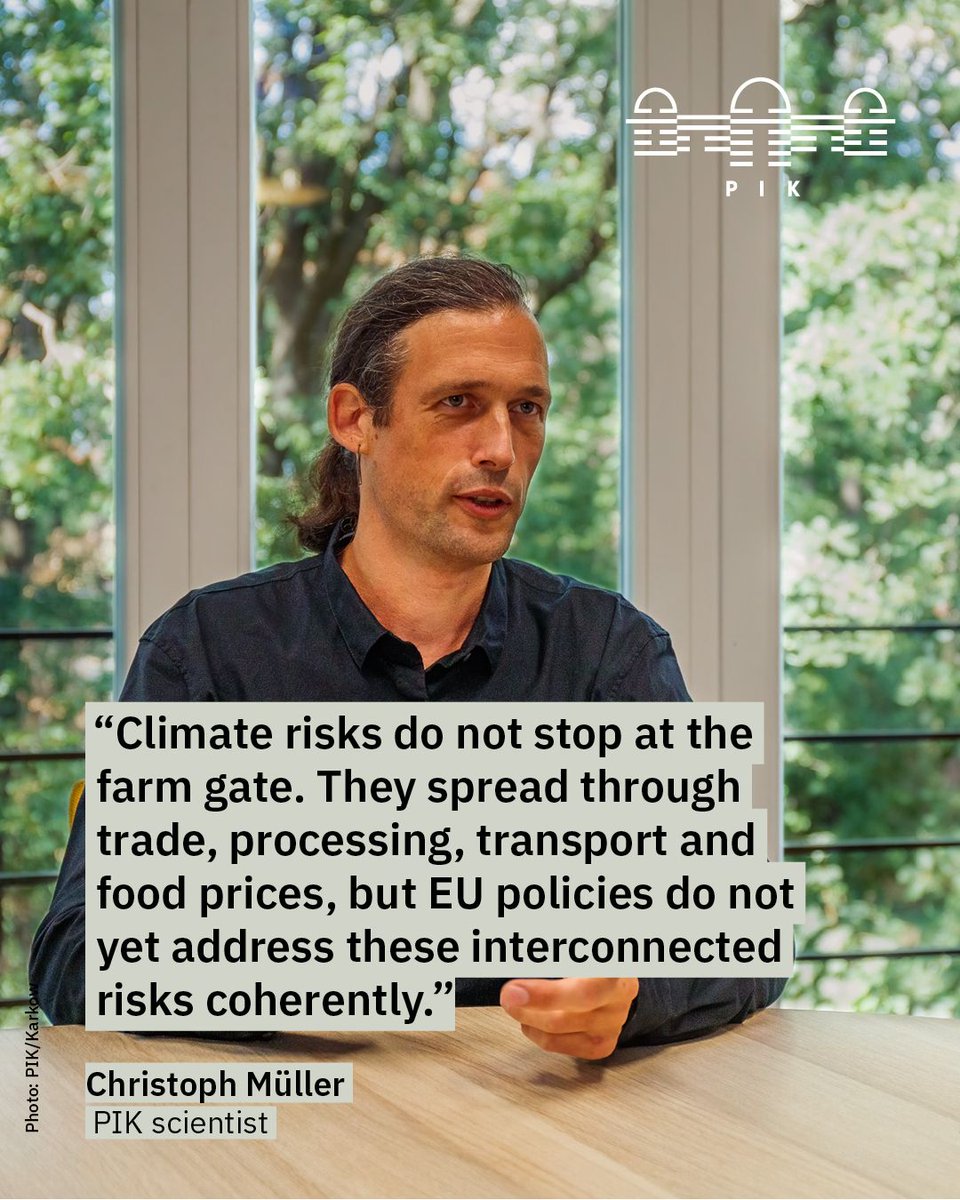
“Climate risks do not stop at the farm gate. They spread through trade, processing, transport and food prices—but @EU_Commission EU policies do not yet address these interconnected risks coherently.” Christoph Müller
@PIK_Climate scientist
"Climate science can measure and predict these risks, but without* adequately engineering restoration pathways, measurement alone will neither restore the @climate nor reduce the risks." @SnowPanel❄️
A measured problem still requires a built solution. 🌍🛠️
RESTORATION-SCALE CRYOSPHERE ENGINEERING
@SnowPanel❄️
What would it take to investigate rebuilding polar ice at a genuinely planetary engineering scale? SnowPanel proposes approximately 2,465 pumping stations using @Pentair Fairbanks Nijhuis IJmuiden-scale pump technology, with each conceptual unit rated to move approximately 50,000 litres of seawater per second. (50 m³/s). ⚙️🌊
Combined capacity:
🌊 ~123,250 m³ of seawater every second
⚙️ ~2,465 × 50,000 L/s pumps
⏱️ Continuous operation over 10 years
🌫️ ~100 m atomisation elevation
❄️ Conceptual 90% freeze-back target
Rather than discharging bulk water, seawater would be elevated and atomised into fine droplets above the polar ocean. Under sufficiently cold conditions, the objective would be to provide enough atmospheric residence time for droplets to cool, nucleate and form snow or ice before returning to the polar environment.🌨️🧊
At an assumed 90% freeze-back efficiency, the simplified engineering calculation indicates that approximately 2,465 pumps operating continuously for a decade could process the water-volume equivalent required to produce:
❄️ ~35 million km² of additional polar ice at an average 1 m thickness
🧊 ~35,000 km³ of ice-volume equivalent
⚖️ ~31,500 Gt of ice
🌡️ WHAT COULD THAT MEAN FOR TEMPERATURE?
There is currently no scientifically validated single quantity of ice that guarantees a specific reduction in global temperature.
However, a reduced-order atmosphere–ocean energy-balance estimate suggests that maintaining roughly 35 million km² of additional bright polar ice could produce a global cooling response on the order of 1.5°C over a decade under favourable albedo and persistence assumptions.
⚠️ This is not yet a validated climate prediction. The actual response depends on where the ice forms, how much survives the sunlit seasons, snow and ice albedo, clouds, ocean heat uptake, circulation, melt, ice drift and atmosphere–ocean feedbacks. Establishing the temperature response therefore requires full coupled atmosphere–ocean–sea-ice simulations followed by field validation. 🔬🌎
💧🌍 WHAT ABOUT CARBON?
The approximately 35,000 km³ of seawater associated with the ice-volume scenario initially contains an estimated ~3,160 Gt CO₂-equivalent as dissolved inorganic carbon (DIC).
At the absolute theoretical upper bound of 100% permanent retention:
💰 ~3,160 Gt CO₂-equivalent
💵 At US$50/t → ~US$158 trillion
💵 At US$100/t → ~US$316 trillion
💵 At US$200/t → ~US$632 trillion Under a hypothetical 42.5% permanent-retention scenario: 🌍 ~1,340 Gt CO₂-equivalent
💰 ~US$67–268 trillion theoretical value in @CarbonCredits US$50–200/t.
Again, these are theoretical inventory/value calculations—not presently creditable carbon removals. Any carbon-credit methodology would require experimentally verified retention, permanence, additionality, brine accounting, lifecycle emissions, independent MRV and protection against double counting. 📊🔬
❄️ THE CENTRAL QUESTION
SnowPanel is not claiming that 2,465 pumps are already proven to cool Earth by 1.5°C.
It proposes something testable:
Can industrial-scale polar water circulation and atmospheric atomisation create persistent additional high-albedo snow and ice—and, if so, what measurable effect would that restoration have on Earth's energy balance?
🌍 If institutions warn of accelerating glacier loss, shrinking sea ice, methane destabilisation and narrowing intervention windows, then restoration-scale cryosphere engineering deserves rigorous scientific evaluation—not dismissal without testing.
🔬 Model it.
⚙️ Engineer it.
❄️ Test it. 🛰️ Measure it.
🌍 Then let the evidence determine its potential. #SnowPanel #Cryosphere #ClimateEngineering #ClimateScience #SeaIce #PolarResearch #Albedo #Engineering #OffshoreWind #ClimateRestoration
https://t.co/vO7wlfsL1C via @YouTube
🆕 Climate change threatens Europe’s whole food system: extreme heat, droughts and floods damage crops and fisheries, then ripple through storage, processing, transport and trade. Southern Europe is particularly exposed, with recurrent droughts and heat: https://t.co/lILwVllvpo
🆕 Climate change threatens Europe’s whole food system: extreme heat, droughts and floods damage crops and fisheries, then ripple through storage, processing, transport and trade. Southern Europe is particularly exposed, with recurrent droughts and heat: https://t.co/lILwVllvpo
@antonioguterres Climate science must remain involved to measure safety and results—but endlessly documenting rising temperatures and ice loss, without adequately engineering restoration pathways, will not restore the climate. A measured problem still requires a built solution. @SNOWPANEL🌍❄️🛠️
https://t.co/uY3JwyOHuK
@WMO
❄️🌍 @SNOWPANEL❄️ — RESTORATION-SCALE CRYOSPHERE ENGINEERING
What would it take to investigate rebuilding polar ice at a genuinely planetary engineering scale?
SnowPanel proposes a floating polar restoration system built around approximately 2,465 IJmuiden-scale centrifugal pumping stations, each capable of moving approximately 50,000 litres of seawater per second (50 m³/s). ⚙️🌊
Combined capacity:
🌊 ~123,250 m³ of seawater every second
⚙️ ~2,465 × 50,000 L/s pumps
⏱️ Continuous operation over 10 years
🌫️ ~100 m atomisation elevation
❄️ Conceptual 90% freeze-back target
Rather than discharging bulk water, seawater would be elevated and atomised into fine droplets above the polar ocean. Under sufficiently cold conditions, the objective would be to provide enough atmospheric residence time for droplets to cool, nucleate and form snow or ice before returning to the polar environment. 🌨️🧊
At an assumed 90% freeze-back efficiency, the simplified engineering calculation indicates that approximately 2,465 pumps operating continuously for a decade could process the water-volume equivalent required to produce:
❄️ ~35 million km² of additional polar ice at an average 1 m thickness
🧊 ~35,000 km³ of ice-volume equivalent
⚖️ ~31,500 Gt of ice
🌡️ WHAT COULD THAT MEAN FOR TEMPERATURE?
There is currently no scientifically validated single quantity of ice that guarantees a specific reduction in global temperature.
However, a reduced-order atmosphere–ocean energy-balance estimate suggests that maintaining roughly 35 million km² of additional bright polar ice could produce a global cooling response on the order of 1.5°C over a decade under favourable albedo and persistence assumptions.
⚠️ This is not yet a validated climate prediction.
The actual response depends on where the ice forms, how much survives the sunlit seasons, snow and ice albedo, clouds, ocean heat uptake, circulation, melt, ice drift and atmosphere–ocean feedbacks. Establishing the temperature response therefore requires full coupled atmosphere–ocean–sea-ice simulations followed by field validation. 🔬🌎
⚡ THE ENERGY CHALLENGE
Lifting this extraordinary quantity of seawater approximately 100 metres would itself constitute a massive energy system.
Our first-order hydraulic estimate is approximately:
⚡ ~111 GW continuous electrical demand
One conceptual power configuration using 15 MW floating offshore wind turbines at an illustrative ~45% capacity factor would require approximately:
🌬️ ~16,000–17,000 floating offshore wind turbines
⚡ ~250 GW installed wind capacity
Other generation combinations—including nuclear, wind-plus-storage or hybrid systems—could therefore be compared during engineering evaluation.
💧🌍 WHAT ABOUT CARBON?
The approximately 35,000 km³ of seawater associated with the ice-volume scenario initially contains an estimated ~3,160 Gt CO₂-equivalent as dissolved inorganic carbon (DIC).
At the absolute theoretical upper bound of 100% permanent retention:
💰 ~3,160 Gt CO₂-equivalent
💵 At US$50/t → ~US$158 trillion
💵 At US$100/t → ~US$316 trillion
💵 At US$200/t → ~US$632 trillion
Under a hypothetical 42.5% permanent-retention scenario:
🌍 ~1,340 Gt CO₂-equivalent
💰 ~US$67–268 trillion theoretical value in @CarbonCredits US$50–200/t.
Again, these are theoretical inventory/value calculations—not presently creditable carbon removals. Any carbon-credit methodology would require experimentally verified retention, permanence, additionality, brine accounting, lifecycle emissions, independent MRV and protection against double counting. 📊🔬
❄️ THE CENTRAL QUESTION
SnowPanel is not claiming that 2,465 pumps are already proven to cool Earth by 1.5°C.
It proposes something testable:
Can industrial-scale polar water circulation and atmospheric atomisation create persistent additional high-albedo snow and ice—and, if so, what measurable effect would that restoration have on Earth's energy balance?
🌍 If institutions warn of accelerating glacier loss, shrinking sea ice, methane destabilisation and narrowing intervention windows, then restoration-scale cryosphere engineering deserves rigorous scientific evaluation—not dismissal without testing.
🔬 Model it.
⚙️ Engineer it.
❄️ Test it.
🛰️ Measure it.
🌍 Then let the evidence determine its potential.
#SnowPanel #Cryosphere #ClimateEngineering #ClimateScience #SeaIce #PolarResearch #Albedo #Engineering #OffshoreWind #ClimateRestoration
https://t.co/7BJOa2Nhgz via @YouTube
July had been a month of weather extremes, and the record ocean temperatures, extreme heat, drought, wildfires and flooding continue to shape the global climate through August.
Here’s a look at some recent weather events from around the globe 👉 https://t.co/HwhJqOvpU2
https://t.co/pQCb1LjvCv
@antonioguterres
Climate science has established the problem with extraordinary detail, but observation and modelling alone cannot repair the climate system.
Science tells us what is changing, why it is changing and what risks lie ahead; engineering determines what can actually be built, tested and scaled to intervene. The next stage must therefore move beyond repeatedly documenting polar ice loss toward rigorous engineering evaluation of practical restoration systems—while retaining scientific measurement to verify effectiveness, safety and environmental consequences.
Science defines the problem and validates the results; engineering delivers the solution. Science identifies, measures and predicts climate change. Engineering converts that scientific knowledge into tested, deployable solutions. @SnowPanel❄️
Humanity is speeding towards a climate catastrophe.
That’s the stark warning from the latest @UNEP report.
Every fraction of a degree of warming will cost lives, deepen inequalities & push ecosystems closer to irreversible damage.
We must raise ambition, accelerate #ClimateAction & fight for humanity. NOW.
https://t.co/KhwIThOfMf
https://t.co/uY3JwyOHuK
@WMO
❄️🌍 @SNOWPANEL❄️ — RESTORATION-SCALE CRYOSPHERE ENGINEERING
What would it take to investigate rebuilding polar ice at a genuinely planetary engineering scale?
SnowPanel proposes a floating polar restoration system built around approximately 2,465 IJmuiden-scale centrifugal pumping stations, each capable of moving approximately 50,000 litres of seawater per second (50 m³/s). ⚙️🌊
Combined capacity:
🌊 ~123,250 m³ of seawater every second
⚙️ ~2,465 × 50,000 L/s pumps
⏱️ Continuous operation over 10 years
🌫️ ~100 m atomisation elevation
❄️ Conceptual 90% freeze-back target
Rather than discharging bulk water, seawater would be elevated and atomised into fine droplets above the polar ocean. Under sufficiently cold conditions, the objective would be to provide enough atmospheric residence time for droplets to cool, nucleate and form snow or ice before returning to the polar environment. 🌨️🧊
At an assumed 90% freeze-back efficiency, the simplified engineering calculation indicates that approximately 2,465 pumps operating continuously for a decade could process the water-volume equivalent required to produce:
❄️ ~35 million km² of additional polar ice at an average 1 m thickness
🧊 ~35,000 km³ of ice-volume equivalent
⚖️ ~31,500 Gt of ice
🌡️ WHAT COULD THAT MEAN FOR TEMPERATURE?
There is currently no scientifically validated single quantity of ice that guarantees a specific reduction in global temperature.
However, a reduced-order atmosphere–ocean energy-balance estimate suggests that maintaining roughly 35 million km² of additional bright polar ice could produce a global cooling response on the order of 1.5°C over a decade under favourable albedo and persistence assumptions.
⚠️ This is not yet a validated climate prediction.
The actual response depends on where the ice forms, how much survives the sunlit seasons, snow and ice albedo, clouds, ocean heat uptake, circulation, melt, ice drift and atmosphere–ocean feedbacks. Establishing the temperature response therefore requires full coupled atmosphere–ocean–sea-ice simulations followed by field validation. 🔬🌎
⚡ THE ENERGY CHALLENGE
Lifting this extraordinary quantity of seawater approximately 100 metres would itself constitute a massive energy system.
Our first-order hydraulic estimate is approximately:
⚡ ~111 GW continuous electrical demand
One conceptual power configuration using 15 MW floating offshore wind turbines at an illustrative ~45% capacity factor would require approximately:
🌬️ ~16,000–17,000 floating offshore wind turbines
⚡ ~250 GW installed wind capacity
Other generation combinations—including nuclear, wind-plus-storage or hybrid systems—could therefore be compared during engineering evaluation.
💧🌍 WHAT ABOUT CARBON?
The approximately 35,000 km³ of seawater associated with the ice-volume scenario initially contains an estimated ~3,160 Gt CO₂-equivalent as dissolved inorganic carbon (DIC).
At the absolute theoretical upper bound of 100% permanent retention:
💰 ~3,160 Gt CO₂-equivalent
💵 At US$50/t → ~US$158 trillion
💵 At US$100/t → ~US$316 trillion
💵 At US$200/t → ~US$632 trillion
Under a hypothetical 42.5% permanent-retention scenario:
🌍 ~1,340 Gt CO₂-equivalent
💰 ~US$67–268 trillion theoretical value in @CarbonCredits US$50–200/t.
Again, these are theoretical inventory/value calculations—not presently creditable carbon removals. Any carbon-credit methodology would require experimentally verified retention, permanence, additionality, brine accounting, lifecycle emissions, independent MRV and protection against double counting. 📊🔬
❄�� THE CENTRAL QUESTION
SnowPanel is not claiming that 2,465 pumps are already proven to cool Earth by 1.5°C.
It proposes something testable:
Can industrial-scale polar water circulation and atmospheric atomisation create persistent additional high-albedo snow and ice—and, if so, what measurable effect would that restoration have on Earth's energy balance?
🌍 If institutions warn of accelerating glacier loss, shrinking sea ice, methane destabilisation and narrowing intervention windows, then restoration-scale cryosphere engineering deserves rigorous scientific evaluation—not dismissal without testing.
🔬 Model it.
⚙️ Engineer it.
❄️ Test it.
🛰️ Measure it.
🌍 Then let the evidence determine its potential.
#SnowPanel #Cryosphere #ClimateEngineering #ClimateScience #SeaIce #PolarResearch #Albedo #Engineering #OffshoreWind #ClimateRestoration
https://t.co/7BJOa2Nhgz via @YouTube