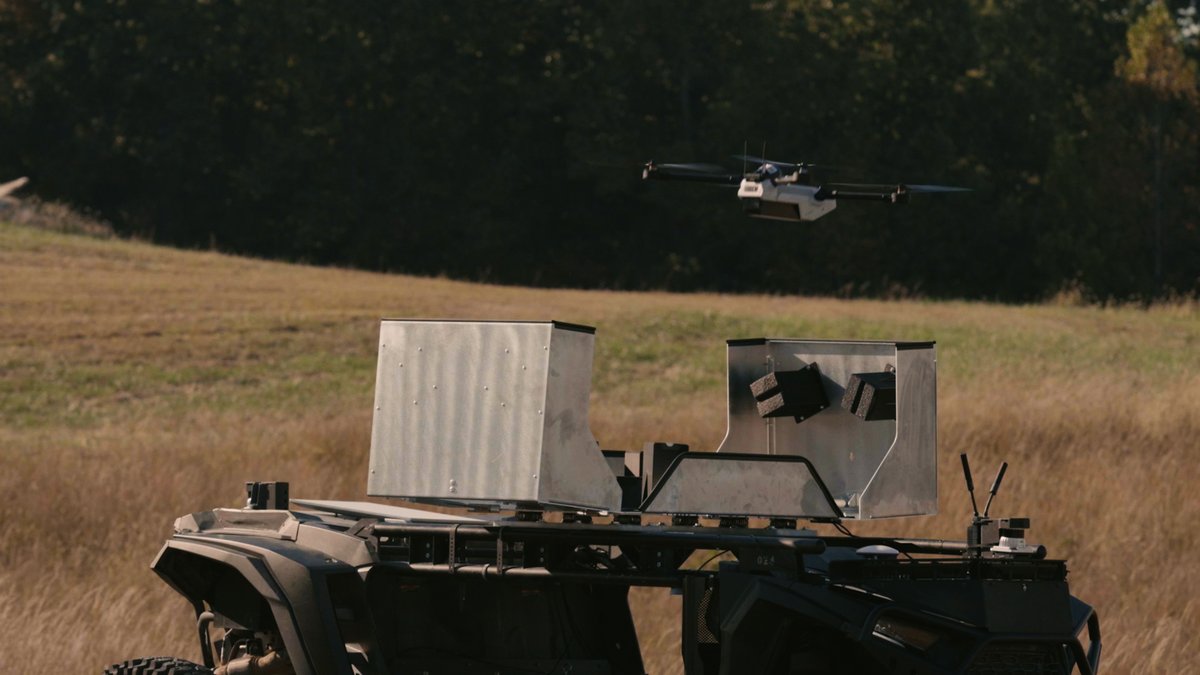
To all who ask me about the scale of agentic robotics!!
It’s gonna be everywhere.
Now we just need to bet on the right people to adjust, understand how to leverage the capabilities for real use cases and distribute it for each domain
.@Ken_Goldberg, UC Berkeley professor of engineering, said new models make it possible for teams of AI agents to develop robot-control programs, test them in simulated environments and revise the code when something doesn’t work.
Read the story: https://t.co/qnJ1G98orD
Second generation building in defense.
I took my dad to this great vineyard for some quality time.
Spending an afternoon getting business advice from an experienced defense entrepreneur over Cabernet Franc is my favorite weekend activity!
@gbenjos Exactly. Initially I thought the first solution would have to be completely deterministic, but the agencies we work with prove me wrong.. they embrace innovation much more than I thought
As more autonomous systems get linked to Lattice or whatever other integration layer, sense-making of the sensor data and decisions in dynamic operational environment still relies on the limited, human operator.
That loop is the bottleneck to scale.
Autonomy that ignores it just multiplies the noise.
It’s visible in the video they posted inside the article, in the comments
https://t.co/YFytCKNv9H
The RACER program keeps proving what autonomous systems can do on the battlefield. We ran the first space-to-tactical ground autonomous experiment that detected, tracked, and engaged simulated threats, all while keeping humans in control.
מסכימה, וככל שאפקט הרעש גדל ככה הקריטיות בהטמעת נוסחאות גדלה. מכאן קל לגזור שאחד השימושים החשובים והדחופים להטמעה של נוסחאות מדוייקות הוא בתהליכי קבלת החלטות במשימות ביטחוניות: סיווג שגוי של כטבמ נפץ בודד בשגרה והחלטה לא ליירט יכולה לגרור לתגובה עצימה וכל אפקט הפרפר שזה גורר איתו.
ב-1954 פסיכולוג אחד שאל שאלה פשוטה: מי מחליט טוב יותר, מומחה עם שלושים שנות ניסיון, או נוסחה פשוטה וטיפשה?
בשנת 1954 יצא ספר שאף אחד כמעט לא קרא, והוא אולי הספר הכי חשוב שנכתב על קבלת החלטות. פסיכולוג בשם פול מיל השווה בין שתי דרכים לחזות את העתיד: מומחים עם ניסיון ואינטואיציה, מול נוסחאות מתמטיות פשוטות. הנוסחאות ניצחו.
מאז זה נבדק שוב ושוב, בכל תחום כמעט: רפואה, גיוס עובדים, אשראי, ספורט, בתי משפט. בדיקה של 136 מחקרים מצאה שהנוסחה ניצחה את המומחה או השוותה לו כמעט תמיד. המומחה ניצח רק בשישה אחוזים מהמקרים.
והנה הנתון הכי מוזר. חוקר בשם לואיס גולדברג בנה נוסחה שלמדה לחקות מומחה אחד, לפי כל ההחלטות שהוא קיבל בעבר. ואז הוא נתן לאותם תיקים לעבור אצל המומחה ואצל החיקוי שלו. החיקוי ניצח את המקור. שוב ושוב.
למה? כי הנוסחה עושה את מה שהמומחה עושה, רק בלי להיות עייפה, רעבה או במצב רוח רע. היא פשוט הוא, בלי הרעש.
דניאל כהנמן קרא לזה בספרו האחרון במילה אחת: רעש. תנו לאותו תיק לשני שופטים, ותקבלו עונשים שונים לגמרי. תנו לאותה בקשת ביטוח לשני חתמים באותה חברה, ותקבלו מחירים שונים. בחברת ביטוח אחת ההנהלה חשבה שהפער בין החתמים הוא עשרה אחוזים. הוא היה חמישים וחמישה. אף אחד לא שם לב, כי אף פעם לא נותנים את אותו תיק לשני אנשים ובודקים.
והלקח פשוט: הבעיה שלנו בקבלת החלטות היא בדרך כלל לא שאנחנו לא יודעים מספיק. היא שאנחנו לא עקביים.
ועכשיו נכנסה הבינה המלאכותית, והיא בדיוק ההפך מהרעש. במשחק המפורסם של אלפא-גו מול לי סדול ב-2016, המכונה שיחקה מהלך, מהלך 37, שהפרשנים היו בטוחים שהוא טעות. אף שחקן אנושי לא היה משחק ככה. זה היה המהלך שניצח את המשחק. המכונה לא הייתה חכמה יותר מהאלוף. היא פשוט לא סחבה אלפי שנים של הרגלים אנושיים על הגב.
אז אולי המהפכה האמיתית של הבינה המלאכותית בקבלת החלטות היא לא שהיא חכמה מאיתנו. היא שהיא עקבית, ואנחנו לא. ובקבלת החלטות, מתברר, עקביות משעממת מנצחת גאונות משתנה כמעט בכל פעם
אתמול היה היום הראשון בתוכנית פיילוטים של אחד מהגופים הממשלתיים
באמצע היום קלטתי שאני האישה היחידה שם מצד הסטרטאפים, שזה לא חריג בדיפנס
אבל מה שהיה מעניין, זה שמצד הגוף הממשלתי הצמרת הייתה כמעט כולה נשים וזו חוויה הפוכה לגמרי ממה שהכרתי בשירות שלי
I spoke to a Ukrainian soldierthat came as a mentor. He also only liked one solution (acoustic solution using tens of microphones for every 200 meters). Operational experience wins…
מזל טוב ישראל,
הקונגרס רוצה למזג את פיתוח האמל״ח של ישראל ואמריקה, מניח את התשתית לשינוי דרמטי באופי הסיוע האמריקני - מכסף לרכש, לשת״פ טכנולוגי.
סעיף 224 בהצעת תקציב הביטחון לשנת 2027 מבקש להניח את התשתית לשיתוף פעולה מחקרי וטכנולוגי שיאפשר לשתי המדינות לחלוק מידע, ידע ופיתוח משותף של אמצעים וטכנולוגיות בשורה של תחומים.
מתוך הדיווח של responsible statecraft:
Section 224 lays the groundwork for bilateral research and development, co-production of weapons, joint ventures, licensing agreements, and seemingly every manner of U.S.-Israeli military-industrial complex cooperation. The U.S. and Israel already work together heavily on missile defense, but this provision would greatly expand coordination to seemingly every area of defense tech, including AI, quantum, autonomous systems, directed energy, cyber, biotech, and many more. It also proposes “network integration” and “data fusion.” In other words, the U.S. military’s data could soon be the Israeli military’s data.
If fully enacted, this proposal would provide a higher level of military-industrial integration than the U.S. has with any other country in the world.
The damage caused by a mishandled swarm.
When a military is able to engage the threat effectively and reduce the damage - it has less of an urgency to reply as agressively.
We see a huge increase in number of drones per swarm and the defense forces will need to adjust.
Our responses to Russia’s prolongation of the war and its attacks on our cities and communities are entirely justified. This time, Ukrainian long-range sanctions reached the Moscow region, and we are clearly telling the Russians: their state must end its war. Ukrainian drone and missile manufacturers continue their work. I am grateful to the Security Service of Ukraine and all the Defense Forces of Ukraine for their precision. The distance from Ukraine’s state border is over 500 km. The concentration of Russian air defense in the Moscow region is the highest. But we are overcoming it. Glory to Ukraine!