I worked in tax department of two oil companies for 13 years, heading the unit for 6 years out of those 13.
One major thing I learnt from that role, which still applies to me in my post 9-5 endeavours today, is outlook to problem no matter the scale.
FIRS can bring a tax "liability" of N20 billion and I won't budge.
I knew I would defend it - legally - and we probably won't pay 1% of that. Worst case, we take each other to court.
In most cases, they just apply flat tax rates on your company's balance sheet items and slam you as tax liability.
All those things don't move me.
We will defend it.
English. Law. Mathematics. Even shouting match.
That was practically my lifestyle for 10+ years. My work.
Anyone not familiar with the job - including accountants in other departments - will start shaking when such letters come.
I have learnt not to.
I also faced National Assembly committees at least 4 times, with my executive management, on those things.
They don't move me.
Now, that I have "retired" from 9-5, the outlook to seeming problem follows me to my endeavour.
My business once had a half a billion Naira financial obligation to settle and our liquidity was very tight. Three days to due date, we didn't have up to 10% of that in bank.
My other management staff were worried. I wasn't. I was still going to play my football. No one is going to die. 😀
Well, by stroke of miracle, we had business patronages that got us cash to settle that obligation.
I learnt to dismiss seeming problem from m experience working in tax.
To tell you how lawless this country can become whenever the powerful are involved, remember that it was this same Nigeria where the Court of Appeal sacked MC Oluomo as the National President of the National Union of Road Transport Workers (NURTW), yet he refused to vacate that office for a whole two years.
For two years, MC Oluomo flagrantly disregarded a valid judgment of the Court of Appeal.
Yet, no security agency made any serious effort to enforce the judgment.
Not even the Presidency deemed it necessary to advise him to respect the rule of law.
That is the reality before us.
So, anyone waiting for the Presidency to take decisive action on the issues involving either Femi Gbajabiamila or David Umahi may simply be wasting precious time.
This pattern has always been there for everyone to see.
I am Ekene Aninze Esq.
TINUBU MAY CAPTURE THE BALLOT. HE WILL NOT CAPTURE NIGERIA.
Letters from Stockholm
By Kio Amachree
Tinubu’s supporters keep telling me that their man will win the 2027 election and that I am wasting my time. They may be right about one thing: with state institutions weakened, governors compromised and the electoral machinery vulnerable to manipulation, Tinubu may be declared the winner.
But a declaration is not legitimacy.
He can dominate INEC, recruit political defectors and surround himself with security officers. He can spend billions manufacturing endorsements and engineering the electoral infrastructure. What he cannot purchase is the consent of millions of Nigerians who have endured four years of insecurity, hunger, collapsing institutions and government by patronage.
If the 2027 election is transparently stolen, Nigeria could enter a profound national crisis. The popular upheavals witnessed in Bangladesh, Nepal and Sri Lanka should be understood as warnings: citizens pushed beyond endurance eventually withdraw their consent. Nigerians must answer electoral wrongdoing through peaceful mass mobilisation, lawful resistance, independent journalism, litigation and international scrutiny—not bloodshed.
Members of the police, military and security services must also remember that their oath is to Nigeria and its Constitution, not to one president, one family or one political machine. They are Nigerians with families who suffer from the same inflation, insecurity and institutional decay. They must never accept unlawful orders to suppress peaceful citizens or protect electoral fraud.
Tinubu is not Caesar, and Nigeria is not his private estate. He has never commanded the permanent loyalty of the institutions he now attempts to control. Nigerian power is transactional: those collecting money and proclaiming eternal allegiance today may abandon him the moment his authority begins to collapse. Political loyalty purchased with cash expires when the cash or power disappears.
His inner circle should understand this clearly. Those presently applauding Bola Tinubu, Seyi Tinubu, Remi Tinubu and their politically connected associates will not necessarily remain beside them when accountability arrives. Patronage creates beneficiaries; it does not create believers.
I know how power operates in Nigeria. I come from a family whose service to the country is part of the public record. My father served Nigeria’s legal and diplomatic institutions, and members of my family helped build its security architecture. Those institutions were established to defend the republic—not to enthrone a dynasty.
Tinubu may manipulate an election. He may even secure an official declaration. But if he destroys the credibility of the ballot, he will inherit a presidency stripped of public consent and surrounded by peaceful national resistance.
These four years can be his last—not through violence or military intervention, but through the determined refusal of Nigerians to surrender their republic.
Let him spend the money. Let him manipulate the machinery. Let him purchase every temporary friend available.
He can buy an announcement. He cannot buy Nigeria.
#Nigeria2027 #Tinubu #DefendDemocracy #ProtectTheVote #INEC #ElectoralJustice #RuleOfLaw #NigeriaDecides #PeacefulResistance #EndStateCapture #LettersFromStockholm #KioAmachree
@Admiral_Cyborg I’m sure they compete among themselves as to the amount of money they are able to loot, instead of competing on projects and policies implemented.
With the level of killings by terrorists in Plateau, Benue, Zamfara, and Katsina states, many will still sell their votes to APC in the states.
They forget the dead because of semo. 😭
Side chic to Jide Sanwo-Olu without a job has luxury cars worth millions of dollars, jewelleries, and cash on dollars.
Imagine what his wife will have. Imagine what he will have. Did you see outrage from Agbado members?
They are okay with it.
THREE THINGS TINUBU SUPPORTERS WILL NEVER DO EVEN IF YOU PUT A GUN TO THEIR HEAD.
1. Ask Tinubu to show his school certificate.
2. Ask of his place of birth and origin
3. Encourage Nigerians to register and collect voters card.
Feel free to add yours
“I won the last election in Nigeria, but I do not dwell on it. The facts are there, and Nigerians know what happened.”
~ Peter Obi tells international community in Berlin.
cost-of-living crisis.
Aggressive Tax & Tariff Hikes: Raising electricity tariffs and aggressively expanding the tax net burdened struggling businesses and reduced the purchasing power of ordinary citizens before the economy could stabilize.
A Throne Is Not a Trophy: What Asari Dokubo's Crown Says About Nigeria
By Kio Amachree
Letters from Stockholm
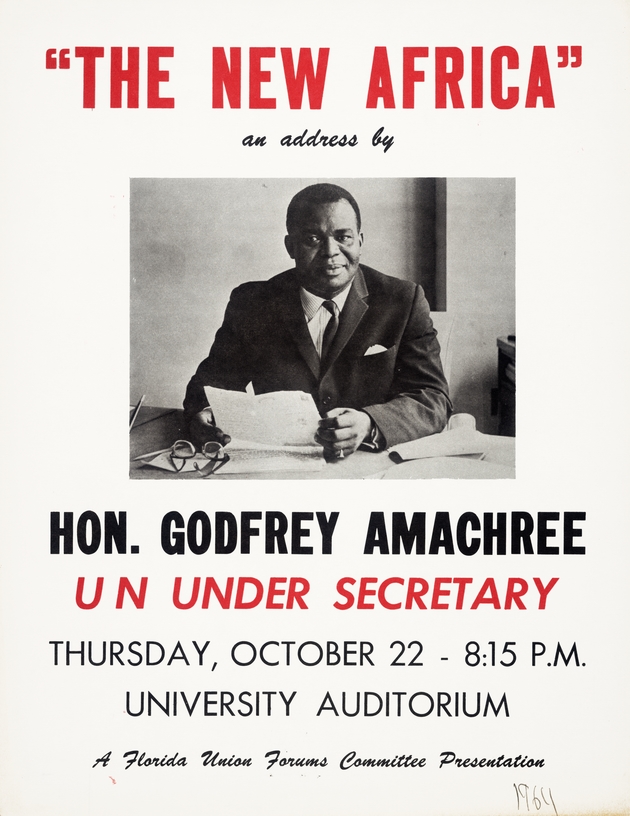
I come from the royal family of Kalabari land. My name, Amachree, is the name of the dynasty that has sat on the Kalabari throne for centuries, since King Amachree I consolidated the kingdom and gave it the line of succession that endures to this day. My grandfather, Chief Sekin Amachree, sat at the table in London in 1958 when Nigeria negotiated its independence. My father, Chief Godfrey Kio Jaja Amachree QC, was Nigeria's first Solicitor-General and the first African Under-Secretary-General of the United Nations. I do not say this to boast. I say it so the reader understands that when I speak about the Kalabari throne, I am not speaking as a spectator. I am speaking about my family's house.
So imagine my confusion, watching from Stockholm, as video after video crosses my screen of Mujahid Asari Dokubo parading himself as a Kalabari king, draped in coral and velvet, receiving homage, installing chiefs, staging regattas. This is a man the world first met as a militant leader in the creeks of the Niger Delta. A man who, in recent years, has become better known for viral videos in which he taunts the Igbo people with the language of slavery, boasts of his willingness to deal violently with his enemies, and positioned himself as an enforcer for the political fortunes of President Bola Tinubu. How does such a man become a king?
The technical answer is that he did not become the Amanyanabo of Kalabari. The throne of my ancestors, seated in Buguma, remains what it has always been. What Mr. Dokubo received, on the last day of 2024, was a staff of office as Amanyanabo of Elem Kalabari, styled as the ancestral source of the Kalabari people, handed to him not by the custodians of tradition acting in serene consensus, but at Government House in Port Harcourt, by a sitting state governor. He justified it with a genealogical claim of descent from Amakiri, the founder before the Amachree line. Claims of this kind are easy to make and hard to test, and in Nigeria they are rarely tested at all when the claimant is politically useful.
And that is the real story. Not one man's coral beads, but the machinery that produced them. Across Nigeria, traditional stools are being minted, revived, upgraded and conferred at a pace that would embarrass a diploma mill. Governors hand out staffs of office the way party chairmen hand out nomination forms. Businessmen with questionable fortunes collect chieftaincy titles in a dozen kingdoms they could not find on a map. Universities that cannot pay their lecturers sell honorary doctorates to the same men. I have written before about Nigeria's title culture, this national addiction to prefixes, and the kingship inflation is its most dangerous strain, because a throne is not a certificate. A throne carries the moral authority of a people. When it is handed to a man whose public record is intimidation, ethnic taunting and political thuggery, that authority is not transferred to him. It is drained from the institution.
Consider what a traditional ruler is supposed to be. He is the father of all his people, including the strangers in his midst. The Kalabari kingdom my father raised me to revere was a trading civilization, one that grew wealthy and powerful precisely because it welcomed the world to its waterways. The Igbo trader in a Kalabari market was under the king's protection. What, then, are we to make of a self-styled Kalabari monarch who entertains millions online by describing an entire ethnic nation as his slaves? This is not eccentricity. It is a repudiation of the very idea of kingship. A man who preaches hatred cannot be a father of anyone.
And consider the politics. A traditional ruler is meant to stand above the partisan fray, so that when the community fractures, someone remains whom all sides can trust. Mr. Dokubo, by contrast, announced himself as a warrior for one presidential candidate and promised consequences for those who stood in the way. When the reward for such loyalty arrives in the form of a staff of office from a friendly Government House, every Nigerian can do the arithmetic. The crown becomes a receipt.
I am often asked why I write these columns from so far away, and whether a man in Stockholm has any business commenting on the affairs of the creeks. My answer is that distance is precisely what allows one to see the pattern. The counterfeit kingship is the same disease as the phantom agencies, the no-bid contracts, the honorary degrees, the ghost workers. It is the substitution of performance for substance, of noise for legitimacy. Nigeria is being governed, at every level, by men who have discovered that in the absence of functioning institutions, the appearance of authority works almost as well as the real thing, and costs far less to acquire.
The Kalabari people deserve better. Nigeria deserves better. Thrones that took six centuries to build should not be counterfeited in an afternoon at Government House. The chiefs, elders and custodians of Kalabari tradition should say plainly what many of them whisper privately, that legitimacy cannot be conferred by a governor's photograph, and that a kingdom's honor is not for rent. And the rest of Nigeria should understand that this is not a quaint quarrel over beads and canoes. A country that lets bullies buy its crowns will soon find that it has nothing left that money and menace cannot take.
My family has guarded this throne for six hundred years. We did not guard it so that it could become a costume.
Letters from Stockholm
Pay the People, Not the Gunmen: The Niger Delta Deserves Development, Not Danegeld
By Kio Amachree
There is a word from medieval England that describes precisely what Nigeria is doing in the Niger Delta today. Danegeld. It was the tribute the English crown paid to Viking raiders to persuade them not to plunder the coast. The lesson of history was learned bitterly and recorded permanently: once you pay the Danegeld, you never get rid of the Dane. Nigeria has been paying its own Danegeld in the creeks of the Delta for nearly two decades, and the results are exactly what Rudyard Kipling predicted. The raiders grow richer. The people grow poorer. And the state grows smaller.
Consider the arithmetic of the present arrangement. The pipeline surveillance contract awarded to Tantita Security Services, the company owned by the former militant leader Government Ekpemupolo, known as Tompolo, costs the country approximately four billion naira every month, and the renewal now under negotiation has been reported as a multi-trillion naira arrangement, with figures of over two trillion naira in circulation. This is public money. It is oil money. It is the patrimony of the very communities whose fishing grounds were poisoned and whose farmlands were burned so that the crude could flow. And instead of reaching those communities as schools, clinics, clean water and remediation, it is routed to private security empires headed by men who first came to national attention by blowing up the infrastructure they are now paid to guard.
Let us be honest about what this model is. It is not security. It is protection money dressed in a government letterhead. When a state pays those with the capacity for violence not to exercise it, that state has not solved its security problem; it has monetized it, institutionalized it, and guaranteed its permanence. Why would any rational actor in the creeks ever allow genuine peace to take root, when instability is the very asset being rented to the federal government at billions of naira a month? The incentive structure is upside down. We have made sabotage a career path and surveillance a franchise.
And what has the nation received for this extraordinary outlay? The defenders of the arrangement point to recovered production, and there have been gains since the darkest days of 2022. But look closer. Nigeria's crude output has continued to fall below critical benchmarks, averaging around 1.46 million barrels per day in recent months and dipping as low as 1.31 million barrels per day in February 2026, well short of the OPEC quota of 1.5 million and the federal budget assumption of 1.84 million barrels per day. Oil theft continues to erode national revenue, and even the contract's defenders concede that the surveillance companies cannot cover remote and swampy terrain, leaving vast creek networks vulnerable to illegal bunkering and refining. Illegal bunkering networks have in fact expanded into urban peripheries, riverine areas, and even into Abia State in early 2026, evidence that the monopolistic structure has not dismantled the criminal syndicates but merely allowed them to adapt and exploit the gaps. We are paying premium prices for a leaking umbrella.
Meanwhile, in Abuja, a joint committee of the House of Representatives has emphatically rejected calls to break up the contract and has instead urged the federal government and NNPCL to grant a fresh long-term extension. Legislators passing votes of confidence on a private security contractor is a spectacle that should embarrass a serious country. The National Assembly's constitutional duty is oversight of public funds, not cheerleading for their capture. When lawmakers lobby for the renewal of a no-tender arrangement worth trillions, the public is entitled to ask who is overseeing whom.
Now place this against the condition of the people in whose name the oil is pumped. Over 47 percent of the population of the region lives below the poverty line, in the territory that has bankrolled the Nigerian state for two generations. Between 1976 and 2006 alone there were at least 7,000 oil spills affecting more than 2,500 square kilometres, and more than 2.5 billion cubic feet of natural gas are flared every day, poisoning the air of villages that sit in darkness because the same gas that lights the flares has never been used to light their homes. Communities across the Delta still lack basic amenities like public schools, hospitals, electricity and passable roads, seventy years after Shell struck oil in 1956. In Ogoniland, ninety-one percent of surveyed residents report falling fish catches, with the fish that are caught smelling and tasting of oil, lowering their market value and endangering the health of those who eat them.
Nor can anyone claim the money was never there. Between 2000 and 2018 alone, Niger Delta states received over ten trillion naira through the constitutional 13 percent derivation principle, yet the living conditions in the oil-producing communities remain nauseating, because governors have behaved, in the words of one civil society leader from the region, like emperors, commissioners for 13 percent derivation, accountable to no one, protected by a culture of impunity. So the Delta suffers a double robbery. First the derivation funds are captured by state houses. Then the surveillance funds are captured by warlords. The ordinary fisherman in Bille, the market woman in Bori, the schoolchild in Okrika, stands at the end of a pipeline of money from which everything has been siphoned before it reaches them, a grim mirror of the pipelines of crude they live beside.
Here is what a serious nation would do, and what I propose.
First, pipeline protection is a sovereign function and must be returned to the sovereign. The Nigerian Navy, the Army, the police marine commands and the Civil Defence Corps exist for exactly this purpose. If they are under-equipped, then equip them, because a fraction of four billion naira a month would buy patrol boats, surveillance drones, sensor technology along rights of way, and proper pay for uniformed personnel who answer to a chain of command and a court martial, not to a chieftain's ledger. A state that outsources its monopoly on force has surrendered the defining attribute of statehood. No one proposes hiring reformed armed robbers to guard the Central Bank; the logic is no different in the creeks.
Second, the trillions earmarked for surveillance rents should be redirected, transparently and audibly, to the communities themselves. Fund the host community development trusts under the Petroleum Industry Act properly and police them fiercely. Build the water schemes, the cottage hospitals, the technical colleges, the fish farms and the shore protection that the Delta has been promised since before the civil war. Accelerate the Ogoniland clean-up and extend genuine remediation across Rivers, Bayelsa and Delta States. A young man with a trade, a job and a future does not tap a pipeline. Development is the cheapest pipeline security ever invented.
Third, ring-fence and audit the 13 percent derivation. Every kobo received by Rivers, Delta, Bayelsa, Akwa Ibom and their sister states should be published quarterly, project by project, community by community. The governors who have treated derivation as a private inheritance should face the same forensic scrutiny, and where warranted the same international asset-tracing consequences, that I have long argued must apply to all who loot the Nigerian patrimony. The Isabel Precedent does not stop at Abuja; it runs through every creek-side government house.
Fourth, no more monopolies, no more no-bid renewals. Whatever residual civilian surveillance role remains should be competitively tendered, decentralized across the oil-producing states, time-limited, performance-measured and published. A decentralised model involving contractors from each oil-producing state, chosen through transparent and competitive bidding, would harness local knowledge while distributing economic opportunity fairly across the region, rather than concentrating trillions in a single pair of hands.
The deeper question is what kind of federation Nigeria intends to be. A country that pays warlords to protect its treasury while its children study under mango trees has confused appeasement with governance. The Delta does not need another strongman enriched in its name. It needs functioning schools in Andoni, a dialysis machine in Yenagoa, streetlights in Buguma, clean creeks in Nembe, and the dignity of citizens who finally receive what their land has given. Spend the dollars on the people. Let the state carry the guns. That is not a radical proposal. It is simply what every functioning nation on earth already does.
The Danegeld has been paid long enough. It is time to stop paying the Dane.
Kio Amachree writes the column Letters from Stockholm and is Founder and President of Worldview International, a diaspora accountability platform.