An Austrian Tongue Choir from the Alps region of Tyrol sings ‘Moscow Nights’ with their tongue in a 1982 performance.
If not for the Internet, we’d never know music videos like this existed.
@RealTimBooth Thank you for popping in Montreal. We are blessed to have you and to witness your growth as musicians and performers. We are all aging together with you and it feels special to be part of this maturity by your side as your true fans.
@RealTimBooth Proud to be a Montrealer when I read this. It was indeed a show of love for a band that respects its audience by always playing the extra songs to be different from gig to gig. Took my family and my sons to the concert and you ticked all the boxes to prepare the next James’ fans
@glasvegas This album is pristine. Perfect. Appropriate. The artwork inspired by German expressionism and Frans Masereel goes hand in hand with the hollow songwriting. There are no favorite songs to be named; the fading in/out of the song sequence make it an aural & social experiment.
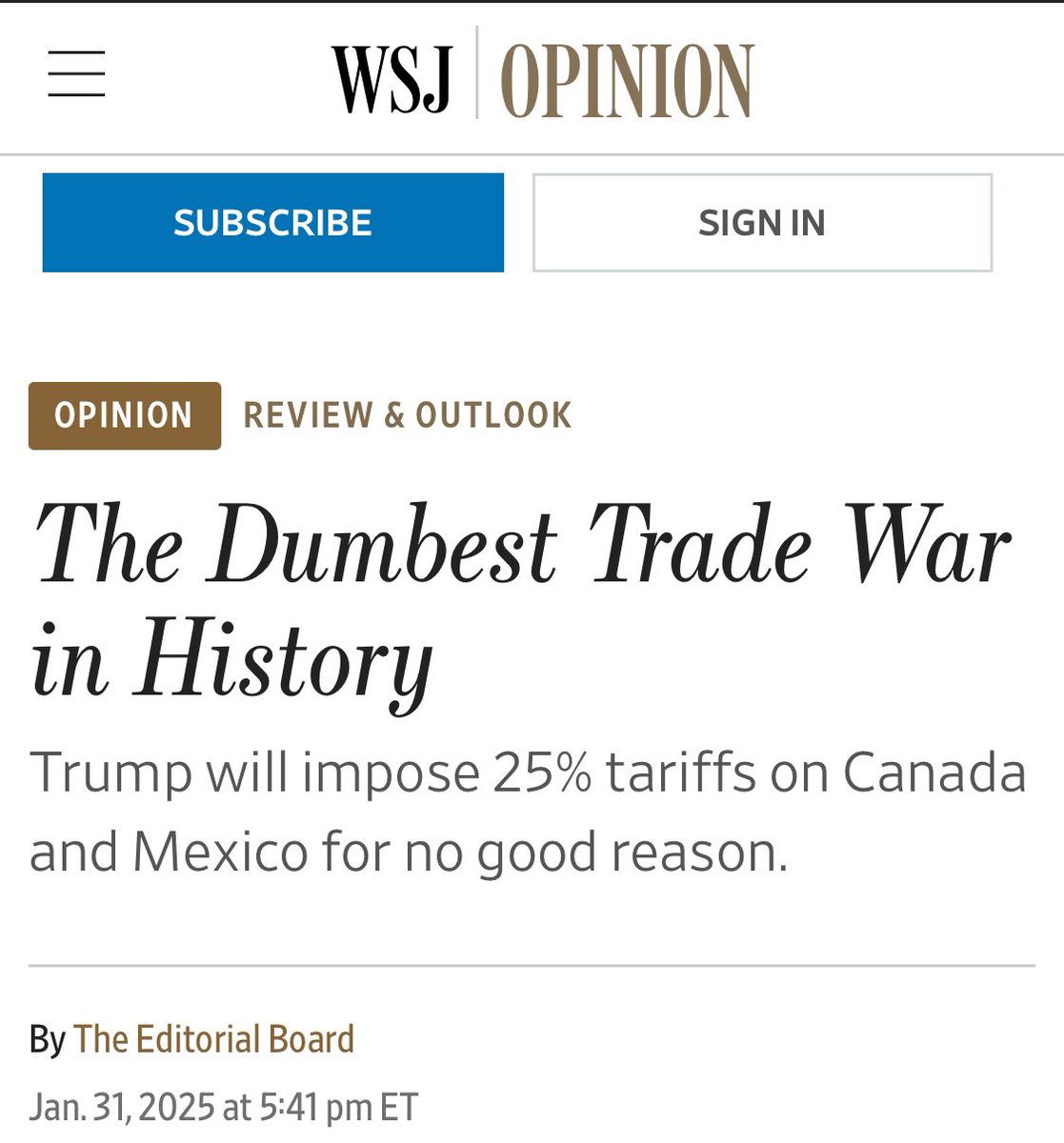
“The dumbest trade war in history”
The WSJ Editorial Board slams Trump’s trade war with Camada and Mexico:
“Mr. Trump sometimes sounds as if the U.S. shouldn’t import anything at all, that America can be a perfectly closed economy making everything at home. This is called autarky, and it isn’t the world we live in, or one that we should want to live in, as Mr. Trump may soon find out…
None of this is supposed to happen under the U.S.-Mexico-Canada trade agreement that Mr. Trump negotiated and signed in his first term. The U.S. willingness to ignore its treaty obligations, even with friends, won’t make other countries eager to do deals. Maybe Mr. Trump will claim victory and pull back if he wins some token concessions.
But if a North American trade war persists, it will qualify as one of the dumbest in history."
@max_gagnon @Richardlabbe 👍🏼@max_gagnon !
@Richardlabbe à quand les reportages de fond de votre part qui soulignent les dommages collatéraux de cette grève sur l’industrie cinématographique québécoise? Voici un lien vers un article de votre collègue du Devoir auquel j’ai participé
https://t.co/y26PJoTL9e
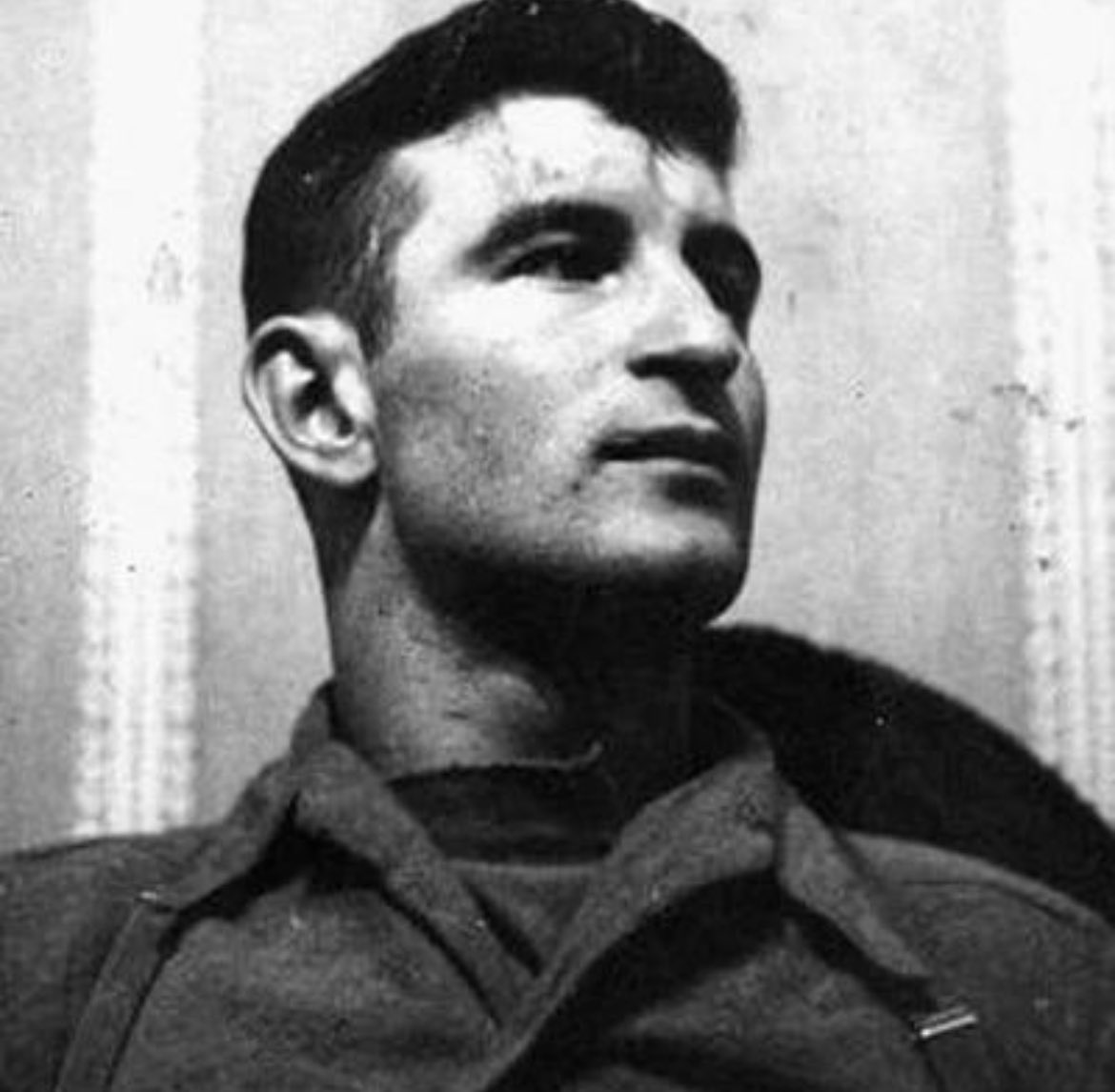
Leó Major, known as the real-life Rambo, served in the Canadian Army during World War II. He demonstrated tremendous bravery throughout the war, capturing a German Armored Vehicle with secret codes and single-handedly apprehending 93 German soldiers in the Netherlands. Despite losing an eye to a phosphorus grenade and being injured by a landmine, Major recovered and returned to duty.
One incident in the Dutch town of Zwolle showcased Major's extraordinary heroism. While on a scouting mission with his friend Willy Arsenault, their position was compromised, leading to Arsenault's death. In response, Major fought back, killing two enemy troops and seizing Arsenault's weapons. Fueled by anger, Major embarked on a one-person rampage, entering Zwolle alone to free the town from German troops.
Major drove a hijacked German vehicle into town and engaged the enemy, creating the impression of a much larger attacking force. He captured around 100 enemy troops, set fire to the Gestapo HQ, and forced the Germans to retreat. The Dutch resistance took control of the town hall, and the next day, the allies entered Zwolle without encountering resistance. Major's actions saved civilian lives.
After the war, Major served in the Korean War before retiring to Canada. He lived a quiet life until his death in 2008, leaving behind a legacy of remarkable bravery and selflessness.
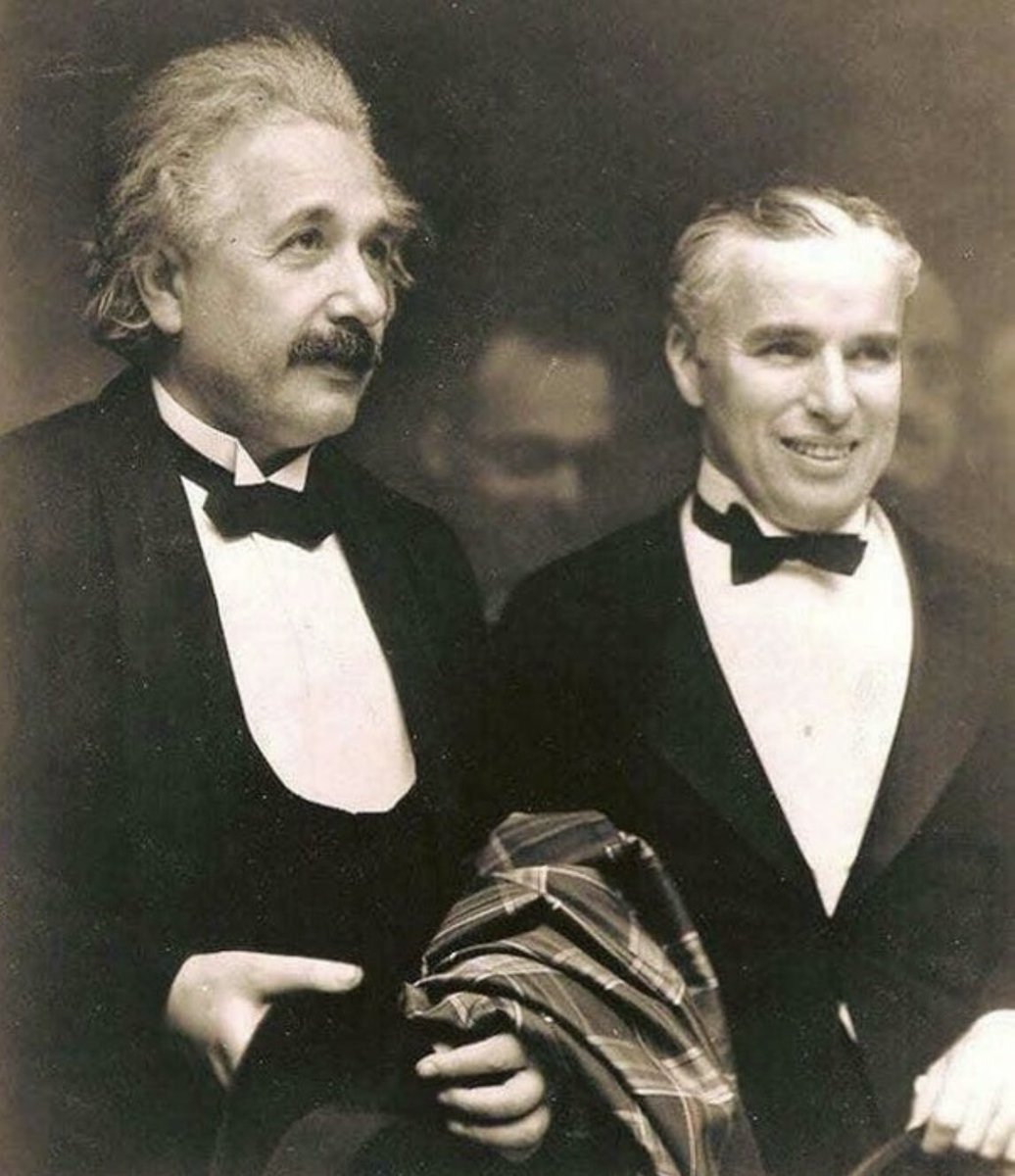
When Albert Einstein met Charlie Chaplin in 1931, Einstein said, "What I admire most about your art is its universality. You do not say a word, and yet the world understands you." "It's true." Replied Chaplin, "But your fame is even greater. The world admires you, when no one understands you."