Earth pulsates every 26 seconds. No one knows for sure why.
and satellites can show it!
This incredible footage reveals that Earth is a living creature.
Ching Shih’s rise to power is one of the most improbable success stories in maritime history. Born as Shih Yang in 1775 in Guangdong province, she spent her early years working as a prostitute on a "flower boat" (a floating brothel) in Canton.
Her life changed forever in 1801 when she was captured by or perhaps strategically married the notorious pirate commander Cheng I. Rather than being a mere trophy wife, she negotiated a formal partnership agreement that granted her 50% of his loot and an equal share in the command of his growing confederation of pirate fleets.
Upon her husband's death in 1807, Ching Shih faced a potential power vacuum that could have ended her life. Instead, she acted with decisive political silk, securing the loyalty of her husband’s most powerful commanders and forming a close alliance with his adopted son, Cheung Po Tsai. By consolidating the "Red Flag Fleet" under her absolute authority, she transformed a loose collection of outlaws into a disciplined, bureaucratic machine.
She implemented a strict legal code: any pirate who gave an unauthorized order or disobeyed a superior was beheaded on the spot, and theft from the common treasury was a capital offense. At the height of her power, Ching Shih was the de facto ruler of the South China Sea, commanding a force of roughly 80,000 pirates and 1,800 vessels.
Her fleet was so formidable that it successfully repelled the combined naval might of the Qing Dynasty, the British Royal Navy, and the Portuguese Navy. She didn't just raid ships; she ran a sophisticated protection racket, taxing coastal villages and controlling the salt trade. Any ship that refused to pay for her "protection" was ruthlessly hunted down and destroyed, making her more powerful than many of the world's formal emperors at the time. Her most legendary feat, however, was her exit from the life of crime.
Recognizing that the tide of international naval technology was turning, she entered into peace negotiations with the Chinese government in 1810. In a display of incredible bravado, she walked into the Governor-General’s office unarmed to finalize the terms. She successfully negotiated a full pardon for herself and the vast majority of her crew, allowing them to keep their immense wealth.
She retired to Guangzhou, where she opened a successful gambling house and died in her bed at the age of 69, one of the few pirate legends to ever die of old age as a free and wealthy woman.
#archaeohistories
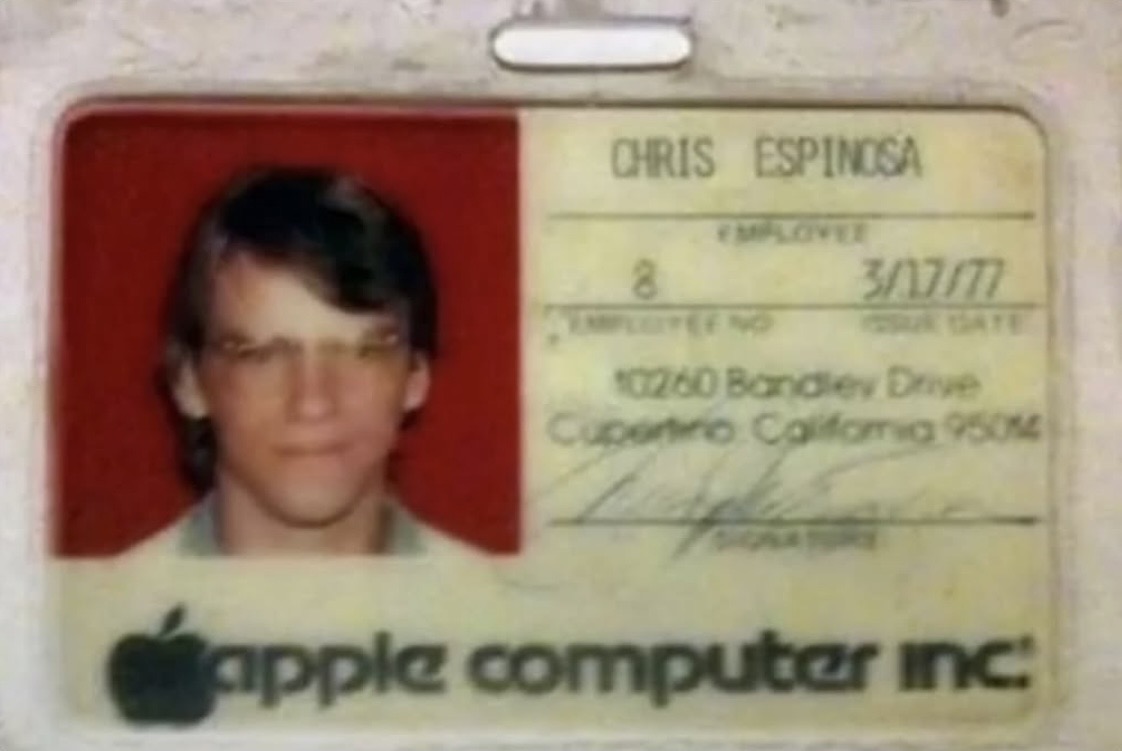
Chris Espinosa is Apple’s longest-serving employee. He joined the company in 1976 at just 14 years old, writing BASIC code when Apple was still operating out of Steve Jobs’ garage.
Chris Espinosa holds the unique distinction of being Apple’s longest-serving employee, having joined the company in 1976 at just 14 years old. A Bay Area teenager fascinated by computers, he began working alongside Steve Jobs and Steve Wozniak when Apple was still run out of Jobs’ parents’ garage in Los Altos, California.
While attending high school, Espinosa wrote BASIC code and helped create user manuals for the Apple II, one of Apple’s earliest and most influential machines. His employee badge number—8—underscores just how early he became part of the company’s journey.
Over nearly five decades, Espinosa has watched Apple grow from a tiny startup into one of the world’s most valuable corporations. He has worked under every CEO in Apple’s history and contributed across software, developer tools, and documentation. Despite countless opportunities elsewhere, he remained loyal, often quipping that he “joined Apple before it was a company.” Today, his career stands as a living connection to Apple’s origins and a rare example of lifelong dedication in Silicon Valley.
How much does the government actually leave you alone in different places?
THEY FORGOT YOU EXIST:
🇵🇾 Paraguay: Literally nobody checks anything
🇬🇪 Georgia: Government is MIA in the best way
🇲🇽 Mexico: Outside of border zones, total freedom
🇹🇭 Thailand: Live your life, just don't insult the king
🇵🇭 Philippines: Chaos = freedom
LEAVE YOU ALONE (MOSTLY):
🇨🇴 Colombia: Relaxed unless you're doing something stupid
🇵🇹 Portugal: Bureaucratic but not invasive
🇻🇳 Vietnam: Communist on paper, capitalist in practice
🇦🇱 Albania: Post-communist = government exhaustion
🇷🇴 Romania: They have bigger problems than you
WATCHING BUT NOT SUFFOCATING:
🇮🇹 Italy: Bureaucratic mess, not police state
🇵🇱 Poland: Conservative government but chill on ground level
🇬🇷 Greece: Too disorganized to monitor muchALWAYS WATCHING:
🇫🇷 France: Regulations for everything
🇩🇪 Germany: Rules, rules, rules
🇨🇭 Switzerland: Neighbors will report you for Sunday laundry
🇸🇬 Singapore: Cameras everywhere, fines for everything
DYSTOPIAN VIBES:
🇨🇳 China: Social credit, surveillance, VPN required
🇪🇸 Spain: Paperwork hell, almost everything is forbidden
🇦🇪 UAE: Modern but controlled
🇬🇧 UK: CCTV capital of the world
I've visited 60+ countries. Paraguay and Georgia are the only places I've felt truly left alone. No random document checks, no weird rules, no surveillance paranoia...
I'd take personal freedom with chaos over "security" any time
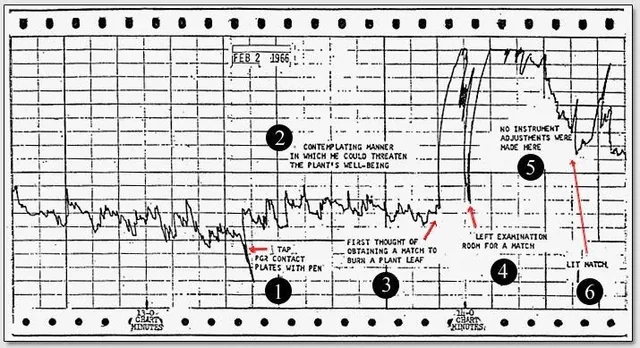
🚨 The biggest discovery about "consciousness" didn't come from neuroscientists.
It came from a bored CIA agent with a polygraph machine and a houseplant.
What he found in 1966 still puzzles materialist scientists today.
The experiment and the evidence will change how you see reality:🧵
In 2012, French student Anaïs Bordier was watching YouTube when she spotted an American actress, Samantha Futerman, who looked exactly like her.
Curious, she discovered they’d both been born on the same day, in the same year, and in the same city in South Korea.
Anaïs reached out to Samantha, and their conversations soon revealed they’d both been adopted Anaïs in France, Samantha in the U.S., without knowing they had a twin.
A DNA test confirmed it: they were identical sisters, separated at birth and reunited 25 years later. Their story inspired the 2015 documentary Twinsters.
The 1883 eruption of Indonesia's Krakatoa volcano was so gargantuan that it's almost impossible to comprehend.
The loudest sound in recorded history, it ruptured the eardrums of people more than 40 miles from the epicenter, created a sound wave that circled the globe seven times, and could be heard all the way in New York City — more than 10,000 miles away.
And even those around the world who didn't hear the blast still reported seeing the sun turn purple, the moon turn blue, and the sky turn red. In fact, the sky grew so red as far away as Connecticut that one local fire department was dispatched to put out what they were sure was a blaze burning somewhere right in town.
As for those who were much closer to the eruption, Krakatoa tore its island almost completely in two. Later, the bodies of those killed in the blast floated on "rafts" made of volcanic stone all the way to the coast of Africa.
Haunting Photos of the Worst Natural Disasters in History
https://t.co/11JYJKlMZT
Playing with your child could boost their brain development by nearly 20%.
A landmark study led by Dr. Helen Norman at the University of Leeds revealed striking evidence of the value of father-child play. After examining data from thousands of families across England, the researchers found that children whose fathers frequently engaged in playful activities—such as drawing, reading, painting, or simply messing around—were 18% more likely to hit key developmental milestones by age five.
This early boost carries real weight. Age five marks a critical transition into formal schooling, where readiness can profoundly influence long-term academic success.
Drawing on the UK’s Millennium Cohort Study—a long-term tracking project funded by the Economic and Social Research Council—the analysis isolated the most influential factor. Surprisingly, it wasn’t family income, screen exposure, or even maternal involvement. What mattered most was whether fathers felt they were spending sufficient playful time with their children.
Children whose dads reported having “nowhere near enough” time for play were far less likely to achieve important emotional and cognitive benchmarks.
The findings go beyond urging more hours on the clock; they call for a cultural rethink. Many fathers view play as optional or secondary, yet the evidence shows it’s foundational.
Even brief, intentional moments—10 minutes of reading a bedtime story, building a cardboard rocket, or inventing goofy voices—can ignite lasting gains in cognitive skills and emotional health.
The core message is clear: never underestimate the power of those small, joyful interactions.
["Young children do better at school if their dads play with them regularly, study finds." I news, 2025]
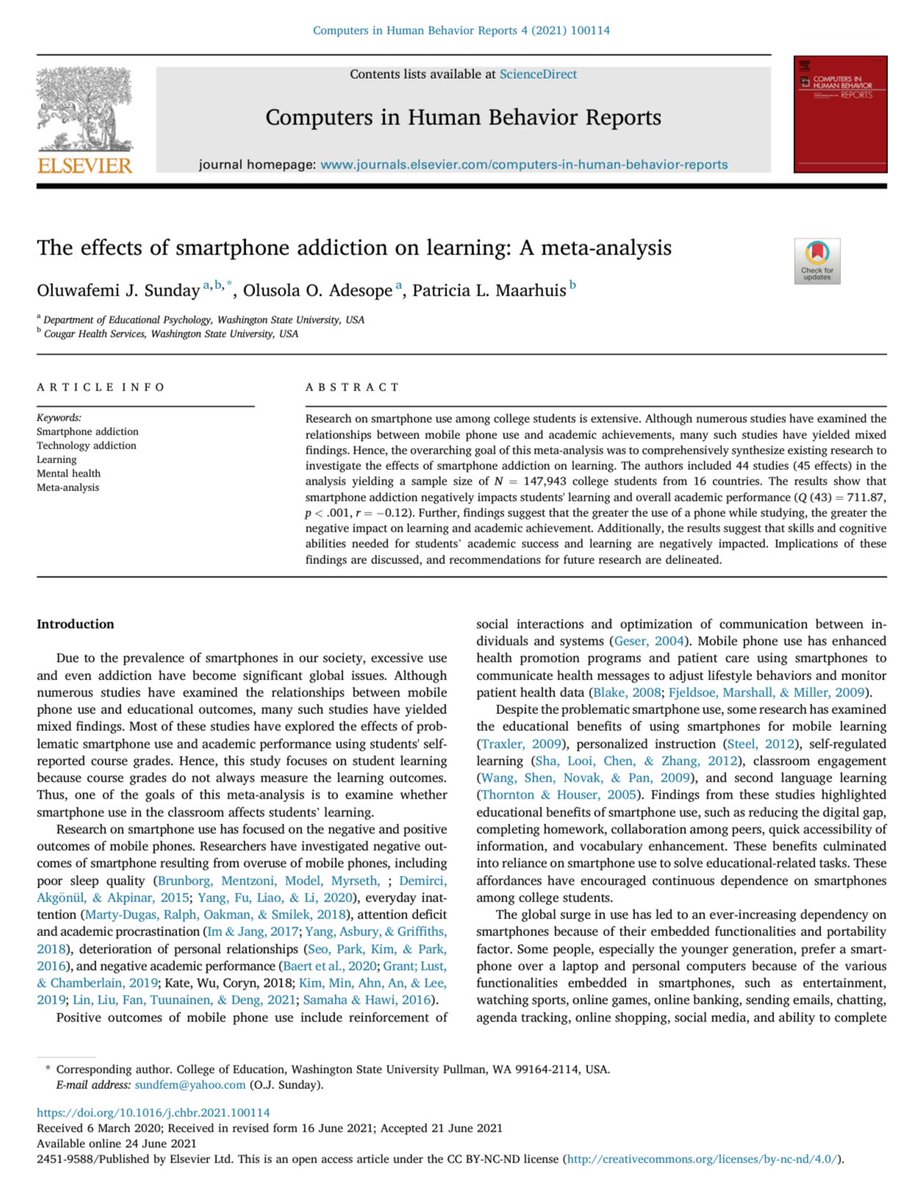
Smartphone addiction has negative impacts on student learning and overall academic performance. The greater the use of a phone while studying, the greater the negative impact on learning. The skills and cognitive abilities students needed for academic success are negatively affected by excessive phone use. The results of this meta-analysis implied that addicted users show a diminished level in learning.
Japan develops spherical solar cells that capture light from all directions.
Japan has highlighted a solar technology called Sphelar, developed by Kyosemi Corporation, that uses tiny spherical silicon solar cells instead of flat panels.
Each cell is about 1-2 millimeters wide and can absorb sunlight from all directions. Unlike traditional solar panels, these cells don’t need to be tilted toward the Sun or mounted on tracking systems. They can collect direct sunlight, reflected light, and diffused light, which helps maintain power generation even on cloudy days or in shaded areas.
The reported efficiency is around 20%, similar to many standard silicon solar panels. The main advantage is not higher peak efficiency, but more consistent energy collection throughout the day.
Another benefit is manufacturing. The cells are made by forming silicon directly into spheres, which reduces material waste compared to cutting flat silicon wafers. This could lower costs if produced at scale.
The technology is still best suited for niche and building integrated applications rather than replacing conventional rooftop panels.
Step back to the early 1700s and imagine plunging into the Baltic Sea wearing the Wanha Herra, one of the world’s oldest surviving diving suits. This extraordinary piece of Finnish ingenuity was crafted from waterproofed leather, sealed with tar to protect the wearer from the cold, wet depths. Though primitive by today’s standards, it was a marvel of its era, allowing humans to explore underwater spaces that were previously unreachable.
Air was delivered from the surface through a leather hose connected to a bellows, a simple yet effective system that kept divers breathing as they worked below. The suit enabled essential underwater tasks, from inspecting ship hulls and repairing damage to salvaging sunken cargo. Divers wearing the Wanha Herra braved dangerous conditions, relying on skill, courage, and the ingenuity of early engineering to accomplish feats that laid the groundwork for modern scuba diving.
Today, the Wanha Herra stands as a priceless artifact of maritime history, offering a window into the daring spirit of early explorers who sought to conquer the underwater world. Its design reflects both the challenges and creativity of the time, reminding us how human innovation has long pushed the boundaries of what is possible beneath the waves.
#archaeohistories











![Rainmaker1973's tweet photo. Playing with your child could boost their brain development by nearly 20%.
A landmark study led by Dr. Helen Norman at the University of Leeds revealed striking evidence of the value of father-child play. After examining data from thousands of families across England, the researchers found that children whose fathers frequently engaged in playful activities—such as drawing, reading, painting, or simply messing around—were 18% more likely to hit key developmental milestones by age five.
This early boost carries real weight. Age five marks a critical transition into formal schooling, where readiness can profoundly influence long-term academic success.
Drawing on the UK’s Millennium Cohort Study—a long-term tracking project funded by the Economic and Social Research Council—the analysis isolated the most influential factor. Surprisingly, it wasn’t family income, screen exposure, or even maternal involvement. What mattered most was whether fathers felt they were spending sufficient playful time with their children.
Children whose dads reported having “nowhere near enough” time for play were far less likely to achieve important emotional and cognitive benchmarks.
The findings go beyond urging more hours on the clock; they call for a cultural rethink. Many fathers view play as optional or secondary, yet the evidence shows it’s foundational.
Even brief, intentional moments—10 minutes of reading a bedtime story, building a cardboard rocket, or inventing goofy voices—can ignite lasting gains in cognitive skills and emotional health.
The core message is clear: never underestimate the power of those small, joyful interactions.
["Young children do better at school if their dads play with them regularly, study finds." I news, 2025]](https://pbs.twimg.com/media/G9l--soX0AAcRNf.jpg)