BREAKING: AI can now build RAG pipelines like Google Brain's retrieval research team (for free).
Here are 12 insane Claude prompts that replace $380K/year ML engineers at top AI labs (Save for later)
Major preprint just out!
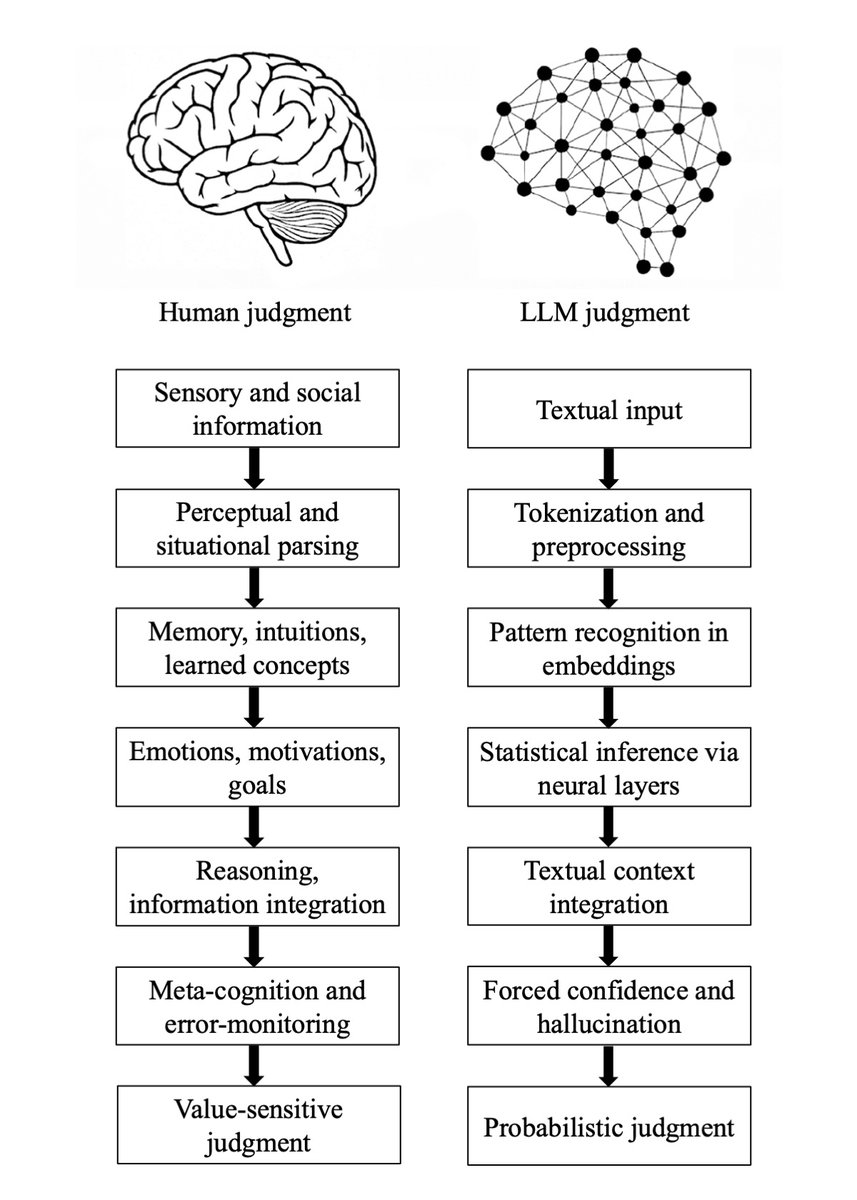
We compare how humans and LLMs form judgments across seven epistemological stages.
We highlight seven fault lines, points at which humans and LLMs fundamentally diverge:
The Grounding fault: Humans anchor judgment in perceptual, embodied, and social experience, whereas LLMs begin from text alone, reconstructing meaning indirectly from symbols.
The Parsing fault: Humans parse situations through integrated perceptual and conceptual processes; LLMs perform mechanical tokenization that yields a structurally convenient but semantically thin representation.
The Experience fault: Humans rely on episodic memory, intuitive physics and psychology, and learned concepts; LLMs rely solely on statistical associations encoded in embeddings.
The Motivation fault: Human judgment is guided by emotions, goals, values, and evolutionarily shaped motivations; LLMs have no intrinsic preferences, aims, or affective significance.
The Causality fault: Humans reason using causal models, counterfactuals, and principled evaluation; LLMs integrate textual context without constructing causal explanations, depending instead on surface correlations.
The Metacognitive fault: Humans monitor uncertainty, detect errors, and can suspend judgment; LLMs lack metacognition and must always produce an output, making hallucinations structurally unavoidable.
The Value fault: Human judgments reflect identity, morality, and real-world stakes; LLM "judgments" are probabilistic next-token predictions without intrinsic valuation or accountability.
Despite these fault lines, humans systematically over-believe LLM outputs, because fluent and confident language produce a credibility bias.
We argue that this creates a structural condition, Epistemia:
linguistic plausibility substitutes for epistemic evaluation, producing the feeling of knowing without actually knowing.
To address Epistemia, we propose three complementary strategies: epistemic evaluation, epistemic governance, and epistemic literacy.
Full paper in the first reply.
Joint with @Walter4C & @matjazperc
Prompt optimization and improvement are really the key for getting the best results out of these LLMs.
But then the factors on which the prompt needs to be optimized depends on the context and the intent of the user's utterance. It's a bit hard to be defined generic.
🤖 60 Days Of Deep Reinforcement Learning
Learn Beginners, Intermediate and Advanced Deep Reinforcement Learning topics in 60 days! In this repo, You'll find everything well arranged from articles, tutorials, youtube videos, papers implementations, projects and codes.
The galore of agent libraries are aiding adaption in the mask phase. Design rigor of applying AI methods to solve use cases - an essential part of the foundation - is lacking attention. Needs to be corrected to leverage awesome capabilities of the LLMs
It’s the lag time that makes it so dangerous. The first year is usually coasting on initial momentum or hype, which effectively masks the rot.
By the time the decay actually shows up in the product or the culture—usually right around that 24-month mark—it’s often too deep to fix without a total reset. It’s like termites; you don't see the damage until the structure starts leaning.
Do you think that timeline is accelerating with how fast teams spin up now?
Swapping models when you are dealing with these usecases
1 - data representations
2 - specific generation formats
3 - code generation for function calling
You want to choose the model that is closest to the one you are replacing
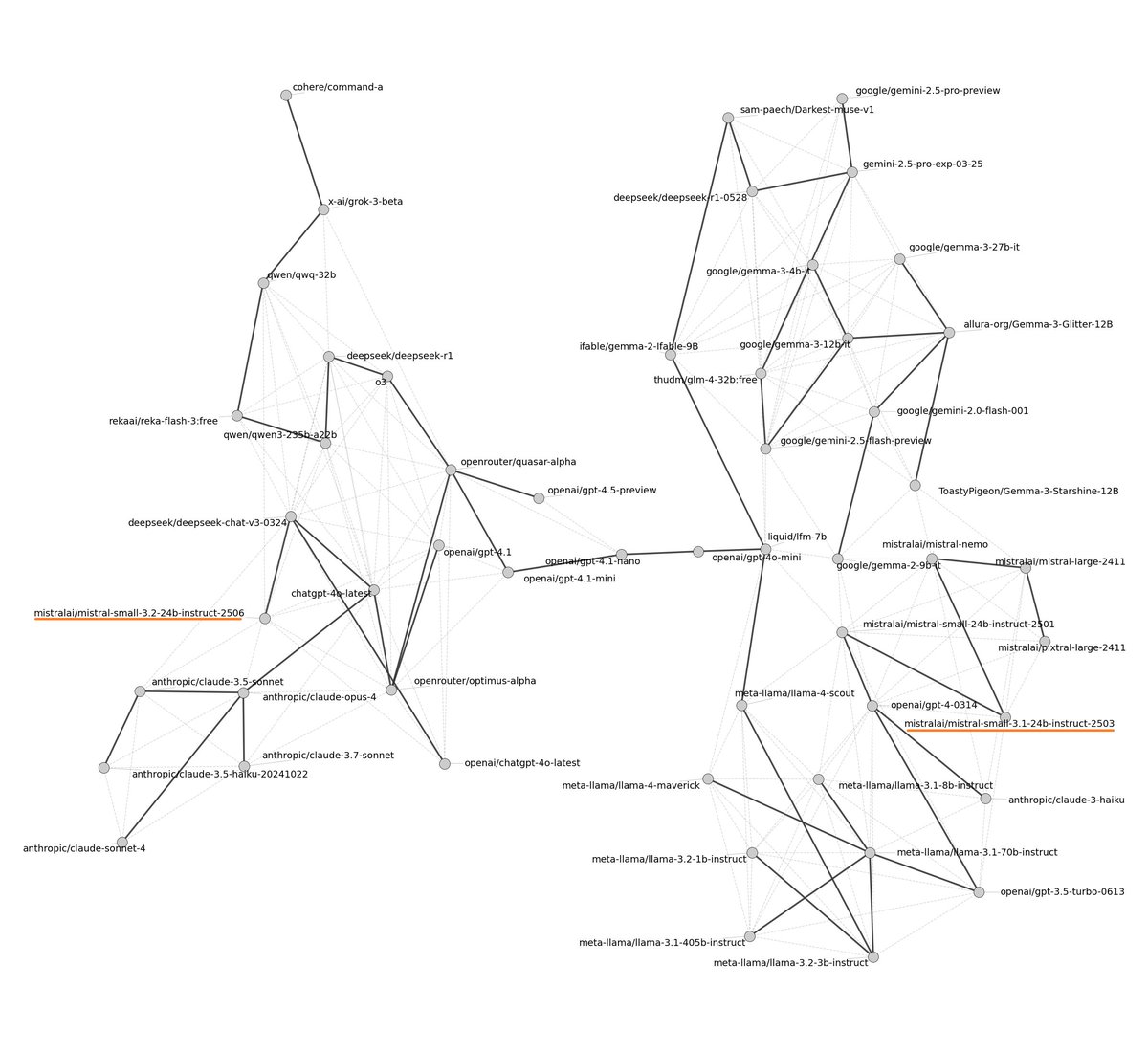
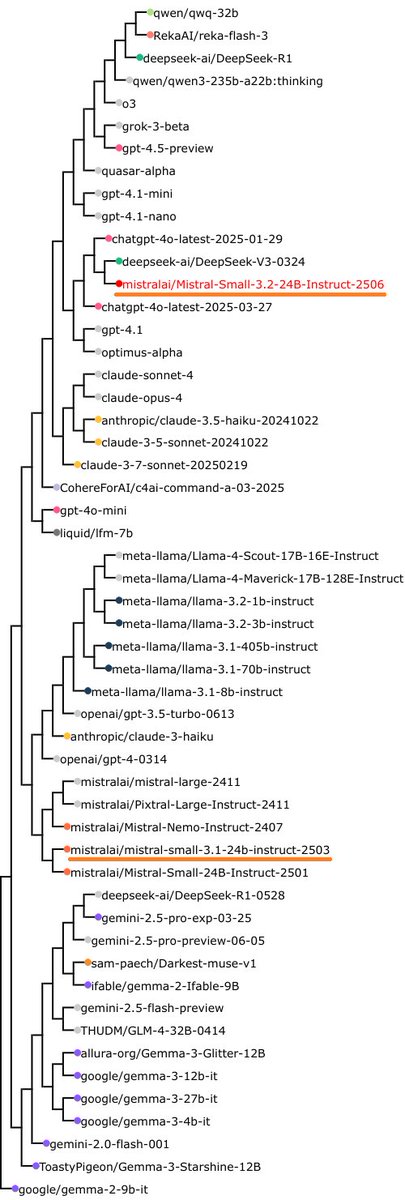
Been seeing some chatter that the new mistral small 3.2 writes a lot like deepseek v3. This analysis of their slop profiles confirms.
I think the network representation here makes a bit more sense than the phylo tree, given the complicated nature of model lineages.
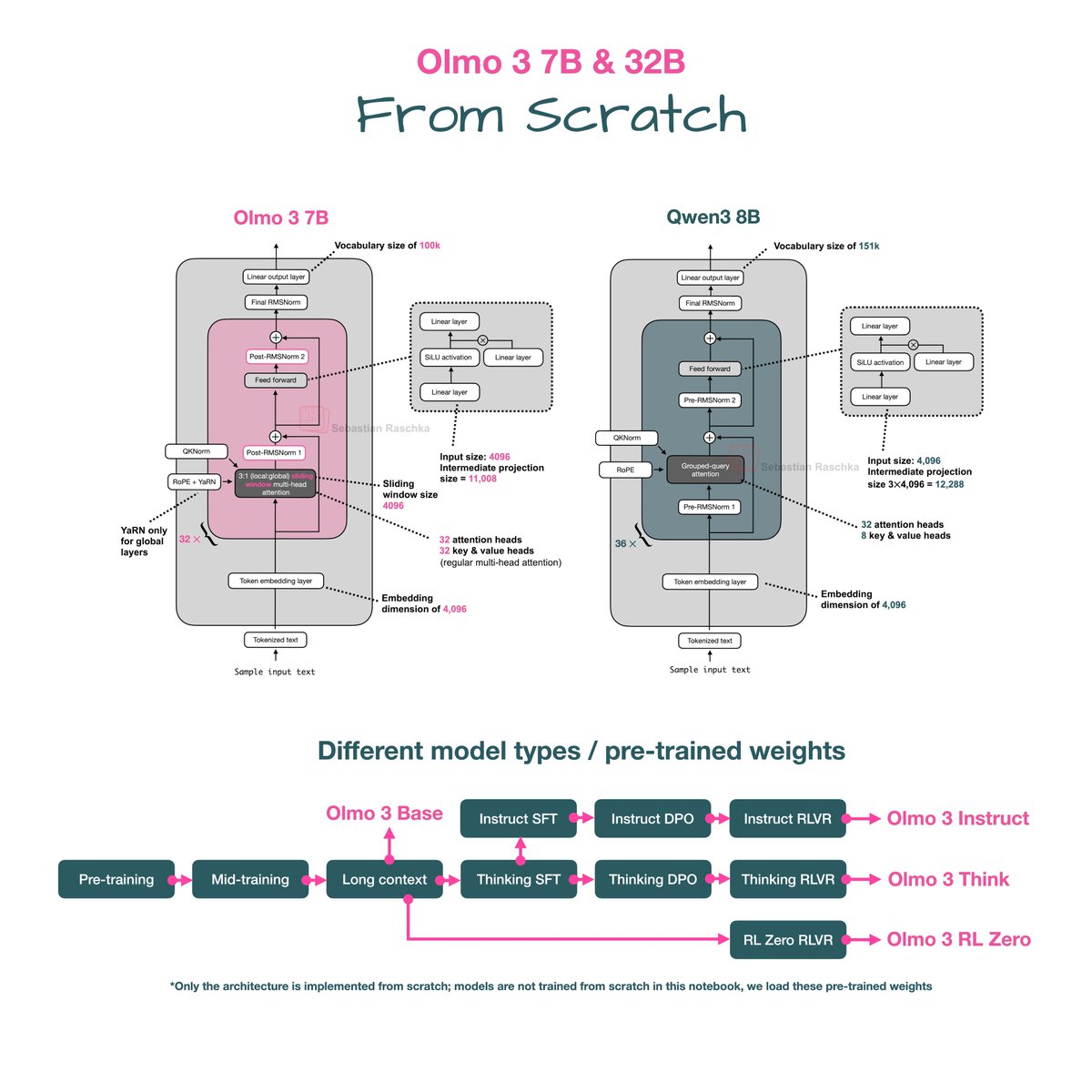
Implemented Olmo 3 from scratch (in a standalone notebook) this weekend!
If you are a coder, probably the best way to read the architecture details at a glance: https://t.co/wF8PkoDuBe
A number of people are talking about implications of AI to schools. I spoke about some of my thoughts to a school board earlier, some highlights:
1. You will never be able to detect the use of AI in homework. Full stop. All "detectors" of AI imo don't really work, can be defeated in various ways, and are in principle doomed to fail. You have to assume that any work done outside classroom has used AI.
2. Therefore, the majority of grading has to shift to in-class work (instead of at-home assignments), in settings where teachers can physically monitor students. The students remain motivated to learn how to solve problems without AI because they know they will be evaluated without it in class later.
3. We want students to be able to use AI, it is here to stay and it is extremely powerful, but we also don't want students to be naked in the world without it. Using the calculator as an example of a historically disruptive technology, school teaches you how to do all the basic math & arithmetic so that you can in principle do it by hand, even if calculators are pervasive and greatly speed up work in practical settings. In addition, you understand what it's doing for you, so should it give you a wrong answer (e.g. you mistyped "prompt"), you should be able to notice it, gut check it, verify it in some other way, etc. The verification ability is especially important in the case of AI, which is presently a lot more fallible in a great variety of ways compared to calculators.
4. A lot of the evaluation settings remain at teacher's discretion and involve a creative design space of no tools, cheatsheets, open book, provided AI responses, direct internet/AI access, etc.
TLDR the goal is that the students are proficient in the use of AI, but can also exist without it, and imo the only way to get there is to flip classes around and move the majority of testing to in class settings.
A surprising number of people are claiming this isn't real? Here's the parallel run I did in Cursor. Same exact prompt. Same exact codebase.
Gemini gladly wrote arbitrary code execution for a tool that LLMs use. No validation whatsoever.
Not bad for a UML Diagram. Resolution not exactly readable. Nano banana pro suggests breaking it up. What's it about all these LLMs they seem to lean towards PlantUML for default UML markup? Sonnet yesterday - Gemini and Nano banana too. Is there some metadata/bais?
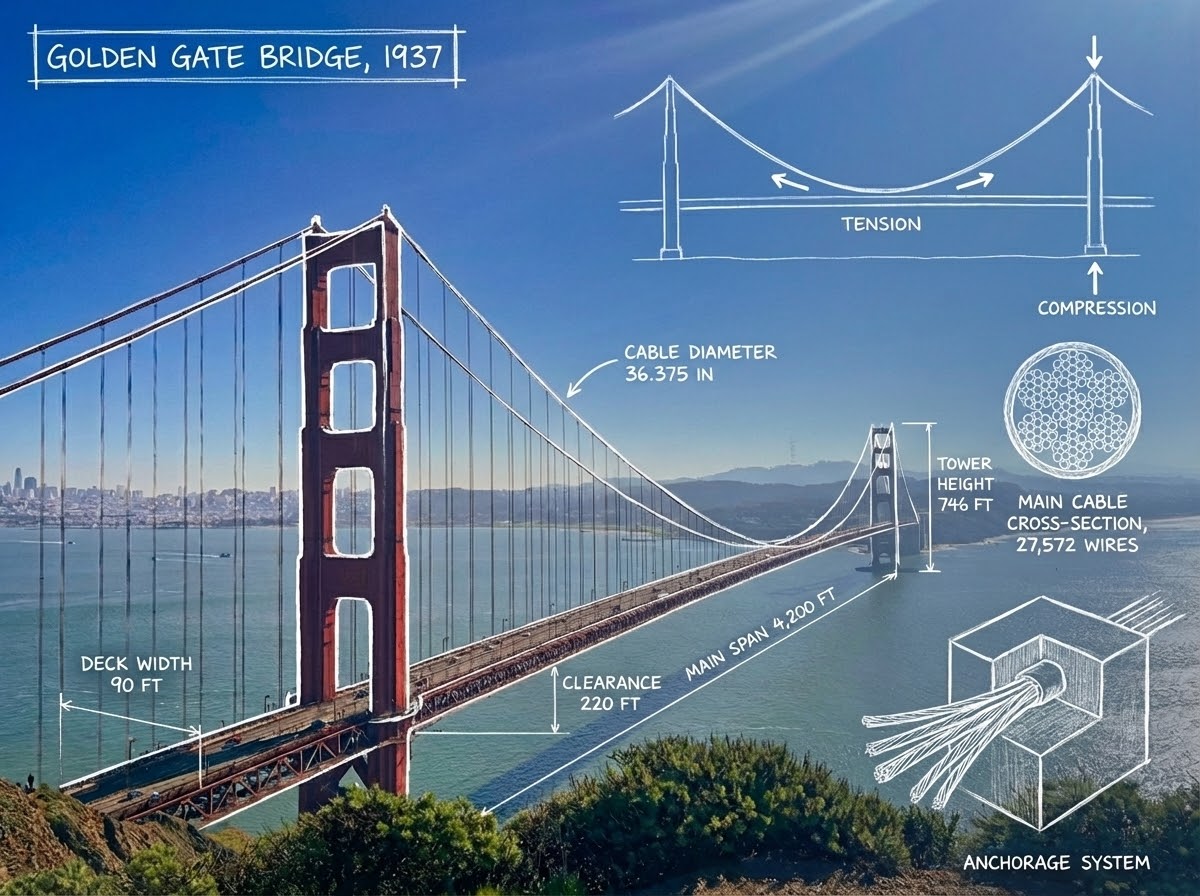
You went 🍌🍌 for Nano Banana. Now, meet Nano Banana Pro.
It’s SOTA for image generation + editing with more advanced world knowledge, text rendering, precision + controls. Built on Gemini 3, it’s really good at complex infographics - much like how engineers see the world:)
They said a simple, no-nonsense intro to probability didn’t exist. This book proves them wrong—a true gem and the #1 pick on Awesome Math Books for good reason: short, sweet, and brilliant.
#probability