USA: Sisäministeri Burgum määräsi tuulivoiman etuuskohtelun lopetettavaksi. Tuulivoima on epäluotettavaa, ulkomaista riippuvaista ja tappaa villieläimiä ja lintuja. Yritys pyörittää & aikakausi rakentaa energiajärjestelmää tuulivoiman ympärille ovat virallisesti ohi.
2/ Interior Sec Doug Burgum ordered the end of preferential treatment for wind energy.
Why? Because wind is unreliable, foreign-dependent, and deadly to wildlife. Basically bird blenders.
And Biden tried to rig the entire energy system around it.
That era is officially over.
For forty years we’ve been told the planet has a single 'global average temperature'—a made-up figure treated as more credible than the weather outside your own window.
The great flaw in this is that there really is no one temperature scenario that applies to any geographical point anywhere on Earth. Not in the way people imagine, any more than there’s a single 'global mood' or 'sense of irony. If you say, 'The planet's average temperature is 15°C', it means absolutely nothing to a person struggling across frost-bitten Siberia or sipping a piña colada on a humid summer's night in Brazil. It's meaningless to human geography and policy.
Statistically, you can average the temperature of a polar ice cap and the Sahara Desert, but the resulting number describes a place that doesn't exist. It’s a computer model—not reality. The concept of a single global temperature metric only makes sense from a cosmic distance. It's a planetary metric, designed for satellites, not human life or geography.
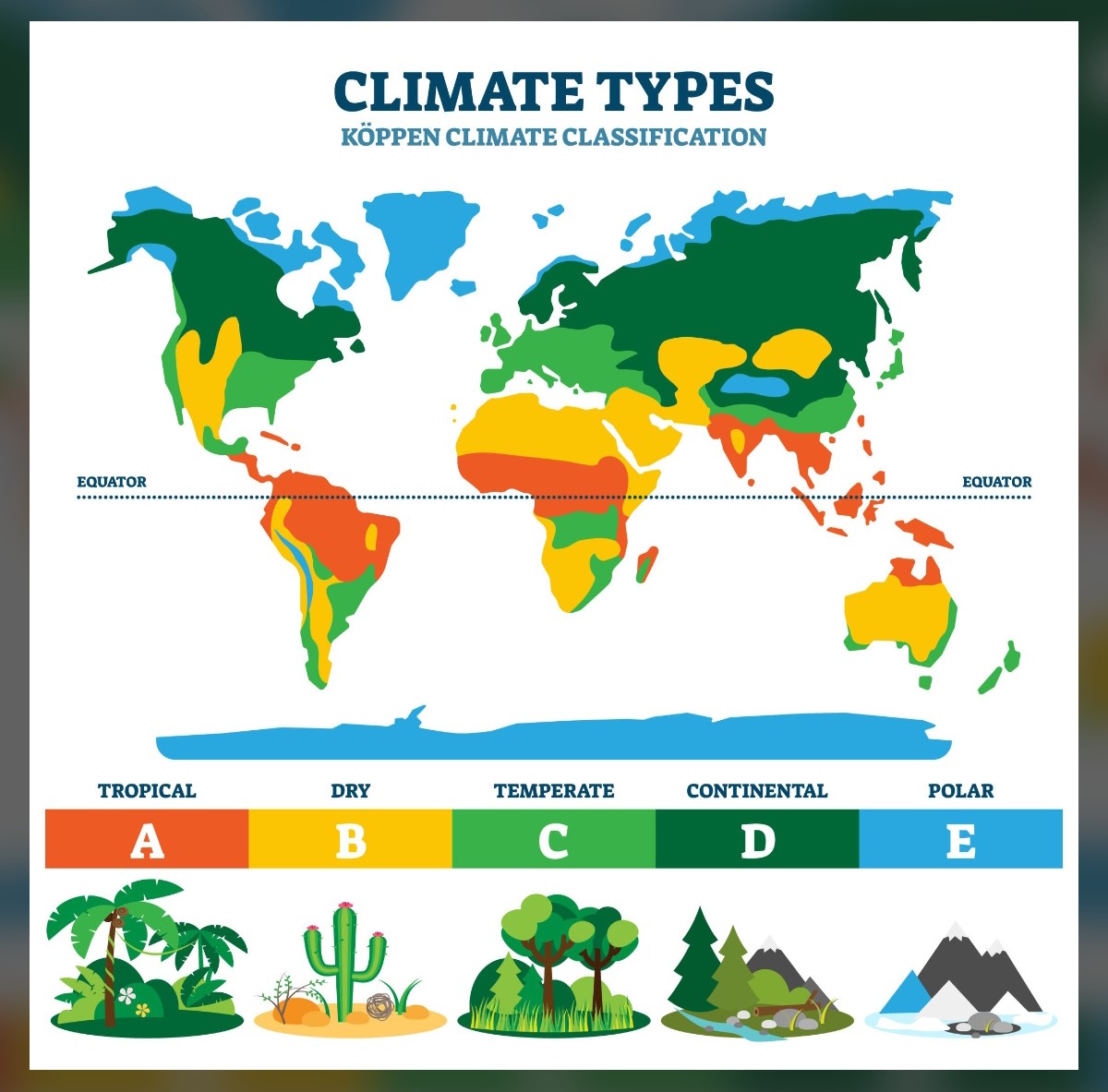
When international bodies focus entirely on moving a single global average by 0.1°C, they treat the Earth as a Lego land thermodynamic system. But the planet doesn't experience climate that way. Earth's climate is fractured into multiple distinct climate zones (roughly 14 separate scenarios) based on lived experiences. All of them are entirely regional, dictated by local topography, ocean currents, vegetation cover, and atmospheric pressure systems.
Tourism campaigns market Hawaii as an idyllic, uniform tropical paradise. But anyone who's actually been there knows the island contains roughly 10 of the world’s 14 distinct climate zones, ranging from continuously wet tropical rainforests to arid deserts, and even alpine tundra on top of Mauna Kea where it snows.
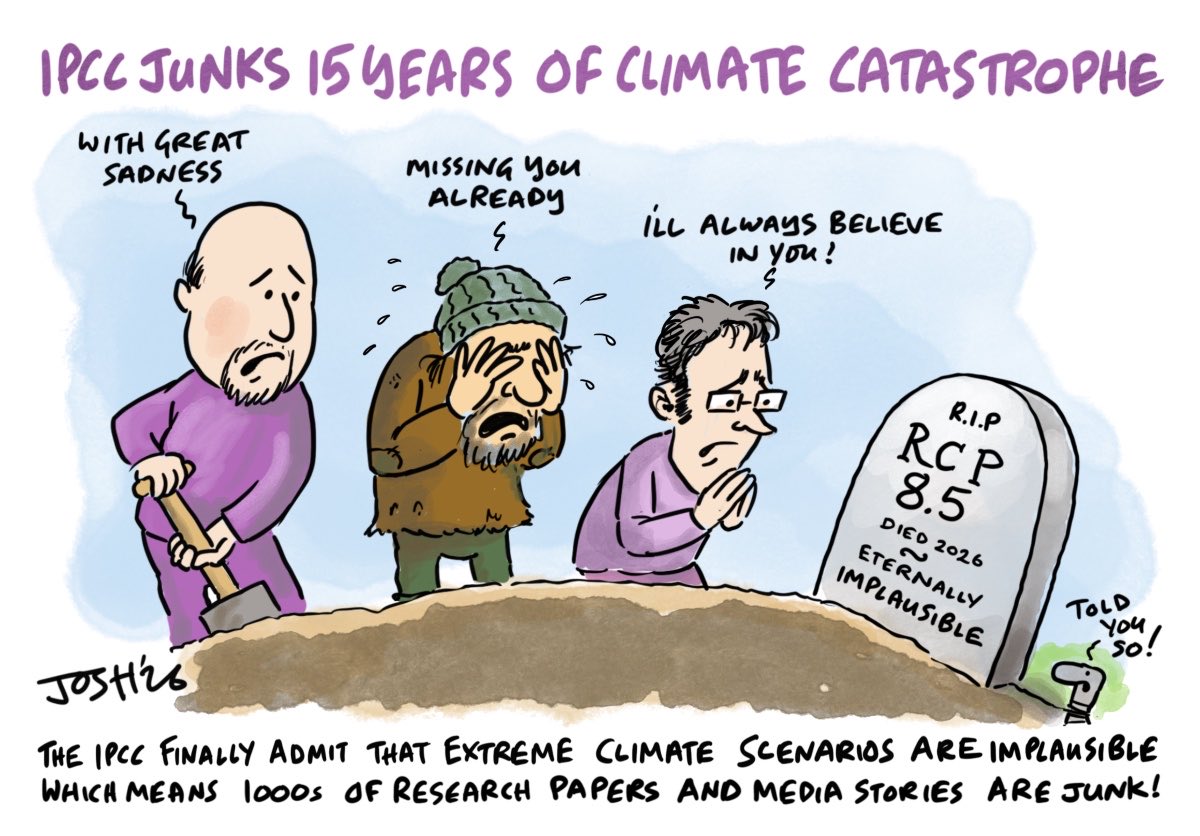
International institutions are quietly backing away from their most extreme 'collapse' scenarios. The entire apparatus was built on a flawed premise - trying to govern the world based on a single, aggregated temperature marker that no human ever actually experiences. The Hawaii analogy shows how local reality obliterates uniform narratives.
The true danger isn't a minor shift in a global statistical average, but the civilisational paralysis from letting central bureaucracies replace reality with ideology.
When an immense institutional and bureaucratic apparatus is built around a specific set of numbers, targets and narratives, it develops an enormous amount of structural inertia. It doesn't just stop or turn on a dime because the underlying assumptions shift.
We’ve elevated heavily processed, continent-sized guesswork into a Holy Scripture, then handed trillion-dollar policy levers to people who treat any questioning of the guess as heresy.
It turns out there is no thermometer big enough to measure 'the Earth'.
Wind and solar look cheap on paper, but only because their true costs are hidden.
Power grids must balance supply and demand every second. Wind and solar cannot do that. Their output follows the weather, which is variable.
So every megawatt of wind or solar requires a matching megawatt of reliable backup. A 100 MW wind farm does not replace a 100 MW gas plant. The gas plant still has to be built, staffed, fueled and kept ready at all times.
Consumers are effectively paying for two systems, but only one is accounted for.
Think of it like hiring a worker who only shows up 30% of the time. The hourly wage looks cheap, but you still need a fully trained backup worker available 24-7 to fill in for the other 70%. That backup is required and still costs money even when sitting idle. But the extra cost is ignored.
This accounting trick explains why renewables look inexpensive in charts, while electricity prices soar in grids that rely heavily on them.
Globally, the renewable failure is clear.
In 2024, solar supplied just 1.4% of global primary energy. Wind supplied about 1.5%. Fossil fuels still provided around 87%. This is not a global energy transition. It is a costly experiment played by a handful of Western economies.
Vanha video, joka poistettu.
Laita maissinjyviä neljän puhelimen väliin, soita puhelimilla ja katso, mitä tapahtuu!! Säteily poksauttaa ne popcorneiksi!!
Mieti, mitä säteily tekee herkille aivosoluillesi, jos se tekee tämän jo pelkille maissinjyville!!??
Between 3,000-3,500 new AI data centers are planned or under construction globally. They’ll use a staggering 190 gigawatts of power.
For perspective, that’s more electricity than many countries use. But they’re not just using power. They’re devouring water — as much as 449 million gallons. Every. Single. Day.
Nissan warning letter appears to be saying that engine oil supply is cut nearly IN HALF.
And the Strait of Hormuz is still choked off, so this is only the beginning...
See this shocking report from Zeee. So now your home just gets all its power CUT OFF because a data center wants to move in?
This is getting utterly insane...
As AI systems rapidly expand, communities across America are seeing massive data centers suddenly appear near their neighborhoods. These facilities consume enormous amounts of electricity, water, land, and infrastructure resources, driving up utility costs, straining local housing markets, and changing the quality of life for families who have lived in these communities for generations.
Big Tech companies promote these projects as innovation, while government officials increasingly frame them as national security infrastructure.
When residents in Utah protested one proposed data center in their community, Kevin O’Leary dismissed them as “foreign agents,” further fueling frustration among locals who say their concerns are being ignored.
Despite widespread opposition, local, state, and federal authorities continue pushing these projects forward. Many residents worry about long-term impacts on jobs, family stability, property values, farmland, water access, wildlife, and the broader ecosystem surrounding these rapidly expanding industrial sites.
At the same time, questions are growing about whether this infrastructure is laying the foundation for a future built around digital ID systems, AI surveillance, and centralized technological control, while everyday citizens are left paying the economic and environmental costs.
@HealthRanger joins me to break it all down.
Just got word Mobil and Shell have informed Costco and Walmart they have no packaged product to send them and to expect bare shelves in the motor oil section in a few weeks
Californians just got their last drop of cheap oil delivered...
From here forward, it gets crazy.
This is what happens when an entire state shuts down most of its oil refining and energy infrastructure...
BREKEND!!
"Laag frequent geluid van windturbines veroorzaakt ziekte: Nieuwe studie uit Mainz toont een enorm verhoogd risico op hartschade aan:"
https://t.co/RgKoAqfNta