📢How do supervisory behaviours impact early-career researchers? Our preprint explores how scientific supervisors shape the wellbeing of ECRs. We analysed 2604 anonymous responses from ECRs across 65 countries🌍 to understand the impact of mentorship. This is what we found👇
Old couple, new arguments 🌱
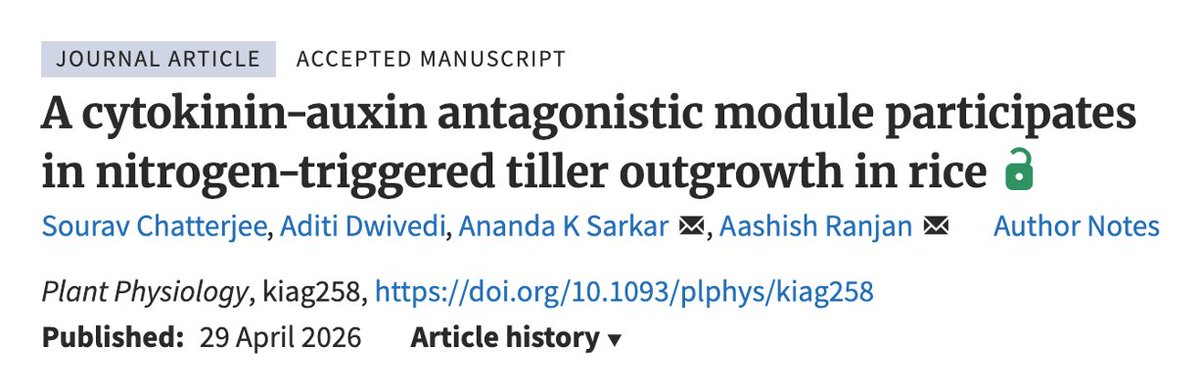
Auxin and Cytokinin are at it again, deciding the fate of rice tiller buds, now with nitrogen calling the shots.
Our latest work dissects the dynamic.
Big shoutout to the team 🙌 @aditidwivedi_11, anandasarkar, @AashishPlantBio.
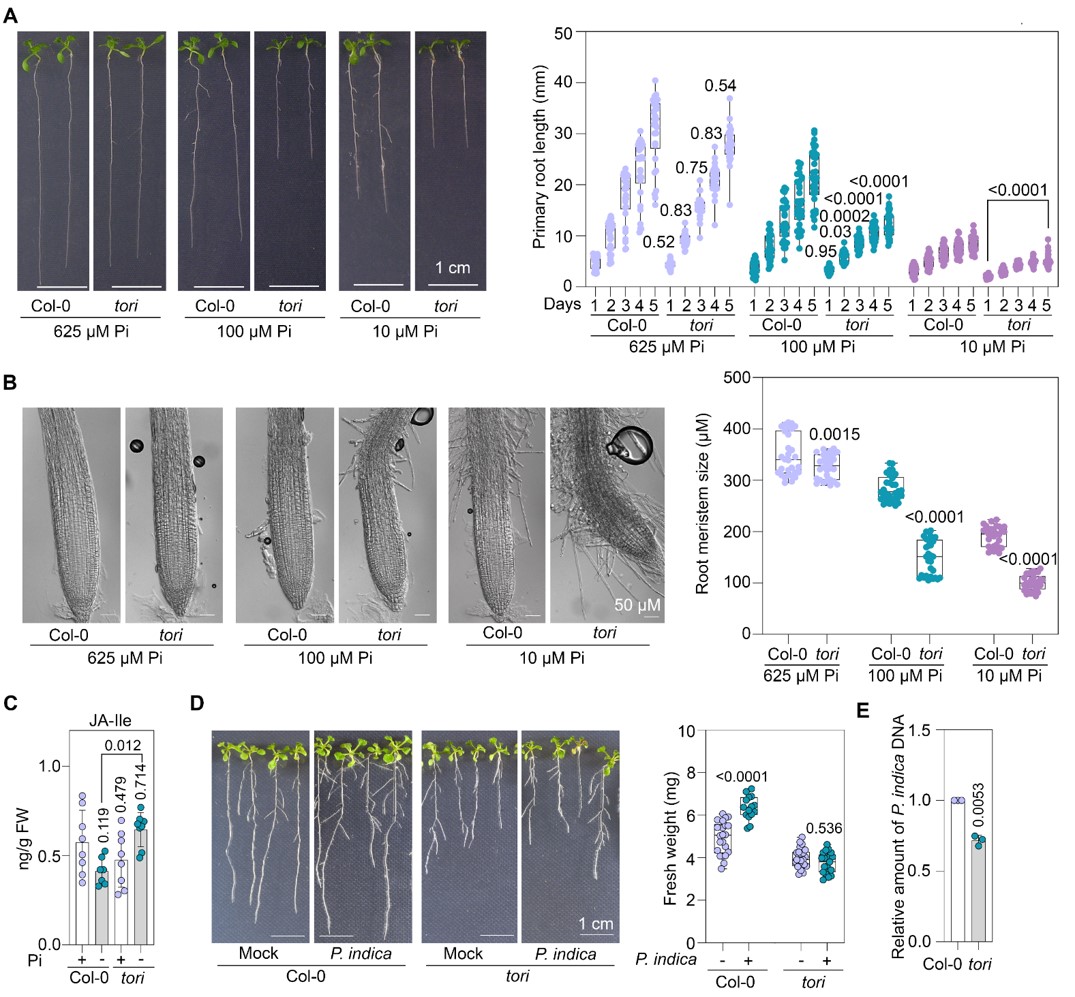
This preprint reporting Arabidopsis' response to phosphate deficiency explores an atypical crosstalk between plant TORC1 and Nutrient starvation; congratulations to the team 👌
Preprint:
Here we are reporting Arabidopsis TOR kinase regulates phosphate signaling response by regulating PHR1 protein abundance. TOR-PHR1 signaling also regulates the association of beneficial fungus.
Enjoy it with your morning tea.
Suggestions pls.
https://t.co/ogeFyrMLX1
Leaves are mostly thin, but a lot goes on into maintaining their thickness in changing environments. Check out this new review by @PrakshiAneja, @rajarshi_sanyal, and @AashishPlantBio 🍃🍃
🌿Just published in New Phytologist!
Our review explores how leaf thickness—shaped by genetics and environment—boosts plant fitness. Can this hidden trait hold answers for climate resilience? 🌍https://t.co/PrMes6gvaE
@PrakshiAneja@rajarshi_sanyal
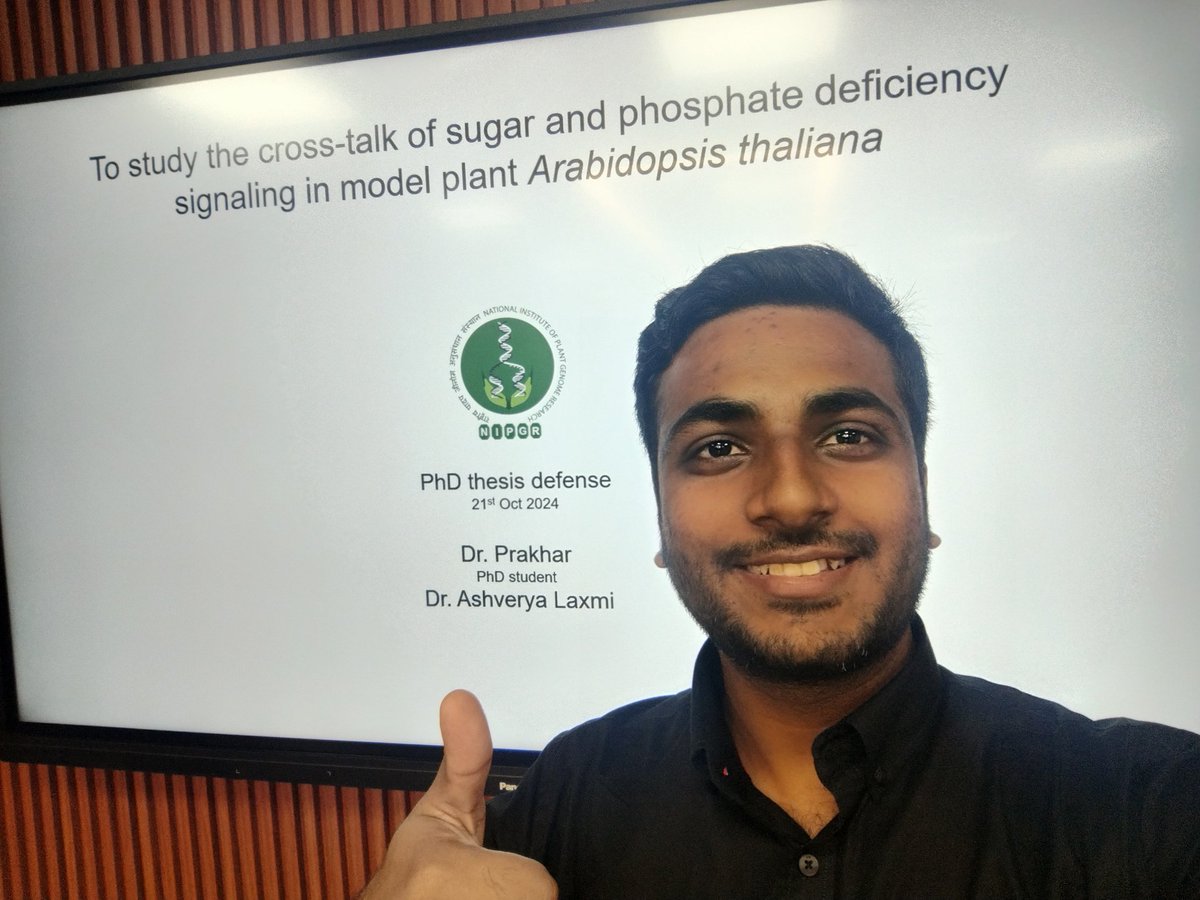
Hello people. I have defended my PhD work on sugar signalling and Pi deficiency. I have identified the novel role of TOR kinase in regulating Pi deficiency signalling. More updates on the paper soon.
Entering the new decade of life with a PhD degree.
#NewPaper 'Petiole XLA (xylem to leaf area ratio) integrates hydraulic safety and efficiency across a diverse group of eucalypt leaves' by Chris Blackman, Ben Halliwell, Gabrielle Hartill, and Timothy Brodribb in Plant, Cell and Environment.
https://t.co/b3UfL52QGb
Delighted to share another publication from my Ph.D. research published in Plant Science journal ! I thank my supervisor @AshutoshNIPGR for his constant guidance and co-author @Grv_plantsci . Read the study here:
https://t.co/QvmtT4UStM
Check out the latest summary of a breakthrough research in Nature Plants by Chung et al. You will definitely find it interesting. Plant Science Research Weekly #PSRW@plantae_org@ASPB
A paternal perspective on maternal inheritance https://t.co/5N9ul5mqj9
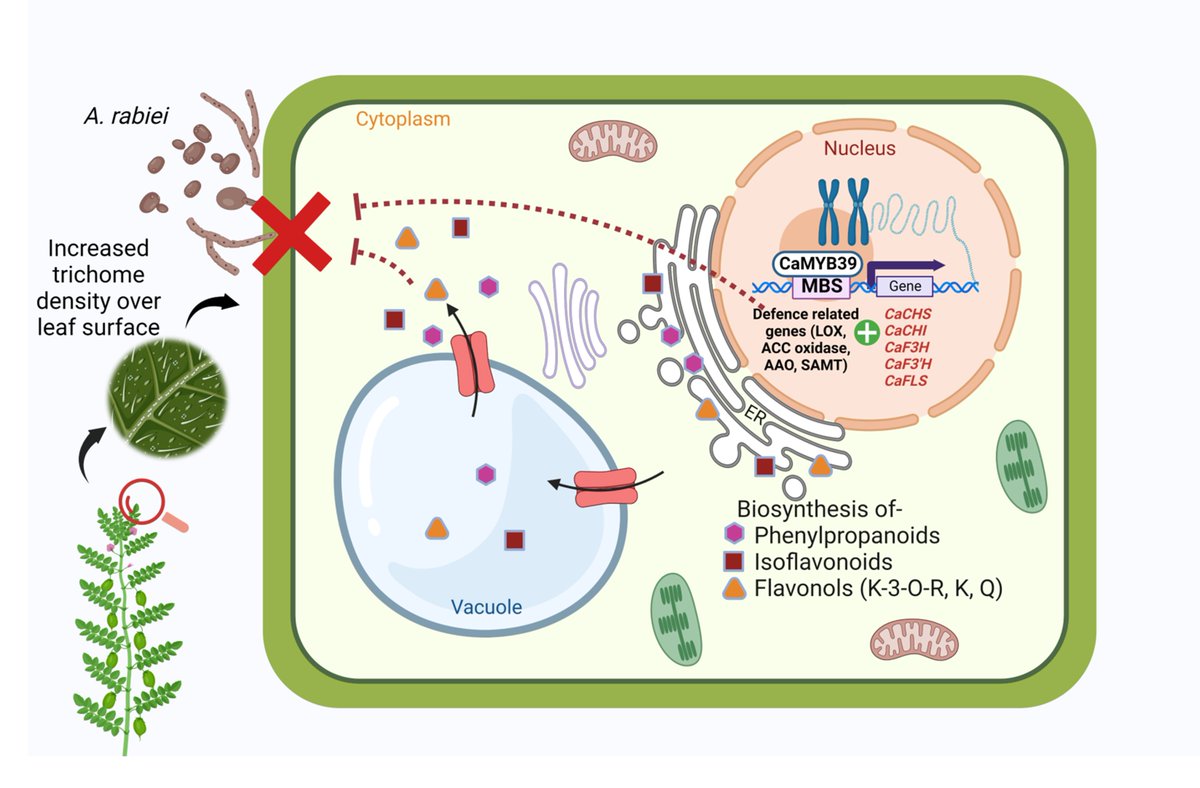
A research article from Dr Ashutosh Pandey’s group entitled “The R2R3-MYB-SG7 transcription factor CaMYB39 orchestrates surface phenylpropanoid metabolism & pathogen resistance in chickpea” has been published in ‘New Phytologist’.
@DBTIndia@AshutoshNIPGR
https://t.co/GzdLJWXaXS
We will open the book. Its pages are blank. We are going to put words on them ourselves. The book is called Opportunity and its first chapter is New Year's Day.
Here's a flashback of 2022 lab memories.
#AR204 wishes you all a very Happy New Year !
Recognizing Plant Physiology author Pasquale Luca Curci https://t.co/dyFzpuGTdG first author of "Identification of new growth regulators using cross-species network analysis in plants" @HildeNelissen@ASPB#WeAreASPB
A misleading paper in @ScienceMagazine just came out talking about how a single gene can increase rice yield by 41-68%. As a (wanna-be) plant breeder, I’m here to tell you why this study is misleading, and we can’t “solve” yield through single genes 🧵
https://t.co/Myd6DobSV7
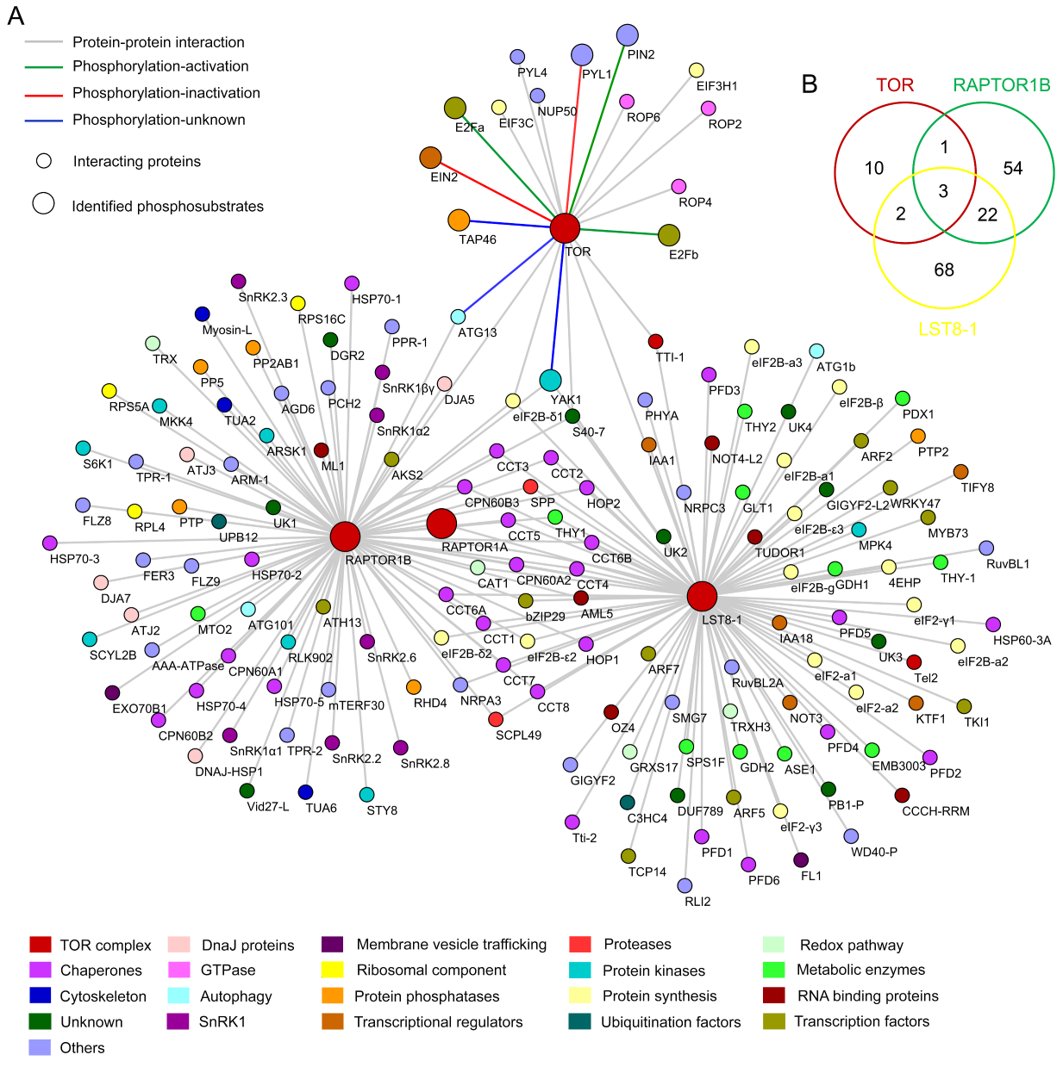
Happy to share the 'social network' of Arabidopsis TORC1 published in @JXBot
Using the available PPI and phosphoproteome data, we discuss the major nodal points of TORC1 action and highlight unexplored regions of the signaling network.
https://t.co/tDKLpsXv2J
@AshveryaLaxmi
Incredibly excited to share our paper ‘Somatic mutation rates scale with lifespan across mammals’ now published @nature.
https://t.co/a68IkkTt33
An illustrated & updated tweetorial… [1/24]










![ATJCagan's tweet photo. Incredibly excited to share our paper ‘Somatic mutation rates scale with lifespan across mammals’ now published @nature.
https://t.co/a68IkkTt33
An illustrated & updated tweetorial… [1/24] https://t.co/o8BLsIXH7x](https://pbs.twimg.com/media/FQPMMCCWYAIybBt.jpg)


