I'm excited to launch Relational Capital, a $50m solo GP fund.
I spent the last 8 years as a founder, building @usekojo into the largest US construction procurement platform.
Now I'm backing founders at the earliest stages with $1m-$5m checks.
An abundant future lies ahead 🇺🇸
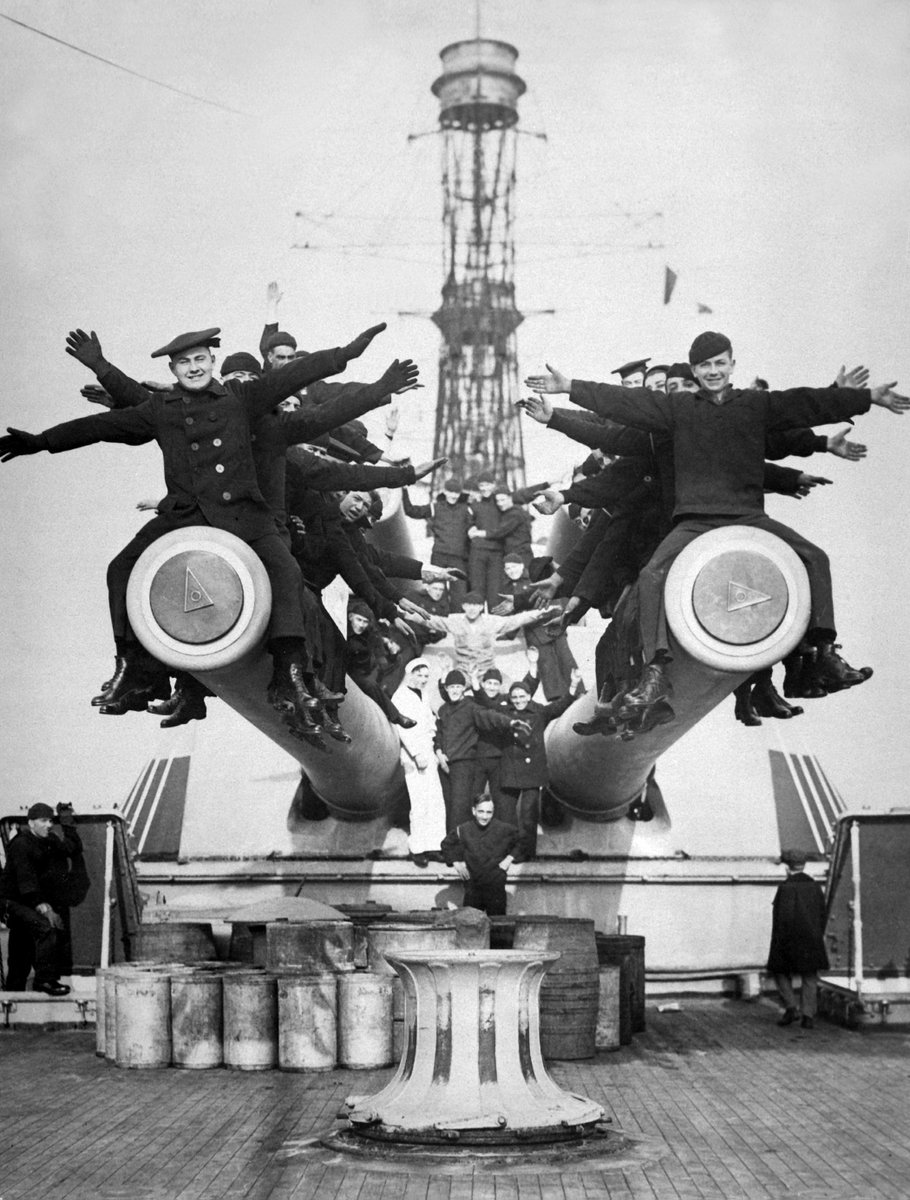
What a fucking photo.
Hung Cao’s family fled the Vietnamese communists as refugees.
He returns to meet with the Vietnamese communists as emissary of the most powerful empire in world history, acting Secretary of the United States Navy.
It’s like a biblical story. Joseph’s brothers sell him into slavery and he returns to them as the powerful representative of the Pharaoh
Amazing
What It Takes to Build a Smelter
A smelter is where a materials story becomes real. Before that, a company can have a process, a feedstock strategy, customers, capital, and government support.
All of that matters. But production becomes real only when a plant can turn inputs into usable metal, consistently and economically. That is the hard part.
For magnesium, that means more than proving chemistry in a lab. It means building a system around feedstock, energy, purity, operations, offtake, equipment, and plant execution.
The U.S. Geological Survey reports that primary magnesium production in Utah decreased significantly in 2021 after failures of critical equipment used in production, with only limited production that ceased in 2022.
That history matters because it shows how physical production can fail. Industrial capacity is not an announcement. It is machinery that works.
Magrathea is building that physical layer. The company is building the U.S.’s only new magnesium metal smelter and has secured more than $100 million in backing across private investors, government, and commercial partnerships. Magrathea has more than $500 million per year in future metal sales under MOU, with multiple binding commercial agreements in place.
The capital matters because smelters are not software products. They require equipment, sites, engineering, permits, energy, operating discipline, and customers willing to buy the output. They also require standards.
In 2025, Magrathea announced that metal produced from its pilot had met the Department of War’s purity target, following a $19.6 million award through Title III of the Defense Production Act to rebuild America’s magnesium metal supply base.
That is one step in a longer path.
A smelter has to do more than produce magnesium once. It has to produce metal reliably, at quality, at cost, and at scale. That is what makes this an industrial capacity problem.
The hard part is not the idea. It is production.
Sources
U.S. Geological Survey, “Mineral Commodity Summaries 2026: Magnesium Metal.”
https://t.co/SwvIA2nGYm
Magrathea Metals, “Magrathea backed by $100M to rebuild American magnesium production.”
https://t.co/qOj03BTIlQ
Magrathea Metals, “Magrathea meets purity targets for US Department of War.”
https://t.co/Njxo7Lq1g7
TETRA Technologies, “TETRA Technologies, Inc. and Magrathea Metals, Inc. Advance Joint Venture Plans to Produce Magnesium in Arkansas.”
https://t.co/LICV7GnQNZ
We are scaling our mission-critical production facilities. If you are ready to join a world-class team and secure the sovereign energetics pipeline, apply at the links below! 👇
D-Day Energetics. The GOCOs. Following emergency Allied task orders to build the invasion stockpiles, facilities like Radford and Holston Ordnance Works were pushed into overdrive. By January 1944, Holston alone was churning out a mind-blowing 1.1 million pounds of Composition B explosives every single day, while Radford maxed out production lines to supply the millions of pounds of stabilized nitrocellulose needed for the beach assault.
D-Day Energetics. The 14-Inch. Providing heavy fire support offshore, the battleship USS Nevada pounded reinforced concrete German bunkers. The Energetic Package was SPD (Smokeless Powder, Diphenylamine)-a single-base nitrocellulose propellant stabilized with diphenylamine. A full charge for just one 14-inch gun required roughly 420 pounds of this NC propellant, split across several silk bags. The precise nitration allowed the ship to hurl a 1,400-pound projectile over 14 miles inland with pinpoint accuracy.
D-Day Energetics. "Flying Dustpans" (The 4.2-Inch Chemical Mortar). The US Army's 87th Chemical Mortar Battalion was vital on D-Day, firing high-explosive and white phosphorus shells directly onto the beaches to mask troop movements. The Energetic Package was sheet-form nitrocellulose-based propellant disk increments fit around the mortar shell tail assembly. Mortar crews could adjust their range on the fly simply by ripping off or adding these rapid-burning nitrocellulose sheets. When dropped down the smoothbore tube, the firing pin struck the ignition cartridge, instantly igniting the NC sheets to build the gas pressure needed to loft the heavy shells over the coastal cliffs.
D-Day Energetics. The .30-06. Every Allied infantryman hitting the sand carried an M1 Garand rifle loaded with .30-06 ammunition. The Energetic Package was IMR 4895-a single-base nitrocellulose powder. The Allied war effort relied entirely on the exact web thickness and uniform geometry of those single-perforated cylindrical grains to ensure a progressive burn rate. This precise chemistry gave the rifle a consistent muzzle velocity of 2,800 feet per second while preventing jams in the middle of a beach assault.
D-Day Energetics - The Bangalore Torpedo. To break past the seawalls, soldiers had to clear massive webs of barbed wire and landmines under heavy fire. The Energetic Package was Amatol (TNT + Ammonium Nitrate) or Composition B (RDX + TNT) packed into a steel pipe. To detonate multiple connected pipes instantly in wet sand, they used Primacord detonating cord. This flexible explosive line relied heavily on a protective, waterproof nitrocellulose lacquer coating to shield the explosive core from the waves, ensuring it successfully blasted a literal highway open for infantry.