I think one of the main reasons why some Catholics are shocked by the SSPX excommunications is because in our current day, ecclesial punishment seems to go only one way. Yes, the consecrations against papal approval were a schismatic act, and the punishment is deserved.
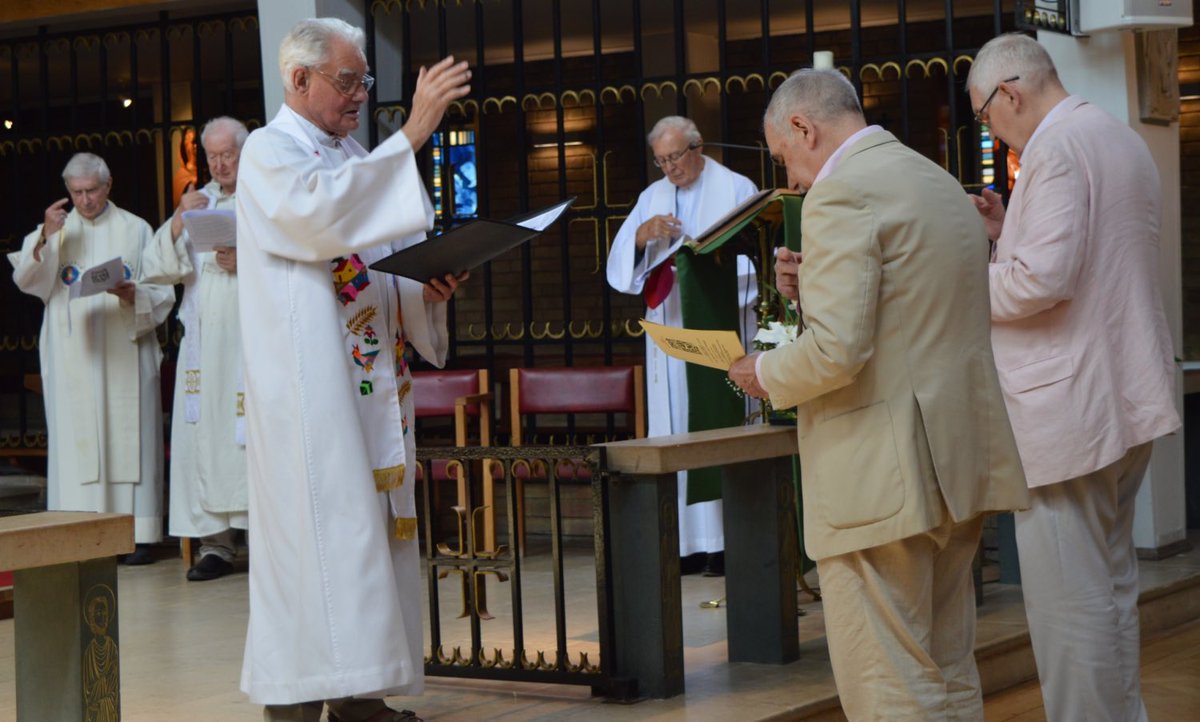
But this upcoming Sunday, you could essentially attend a “Pride Mass” (like this one pictured below, from last Sunday) and not face any penalties. You can advocate for women’s ordination, publicly dissent from Catholic teaching on contraception (see Fordham University’s president), or be a pro-abortion politician (Biden)—and you remain in “full communion”.
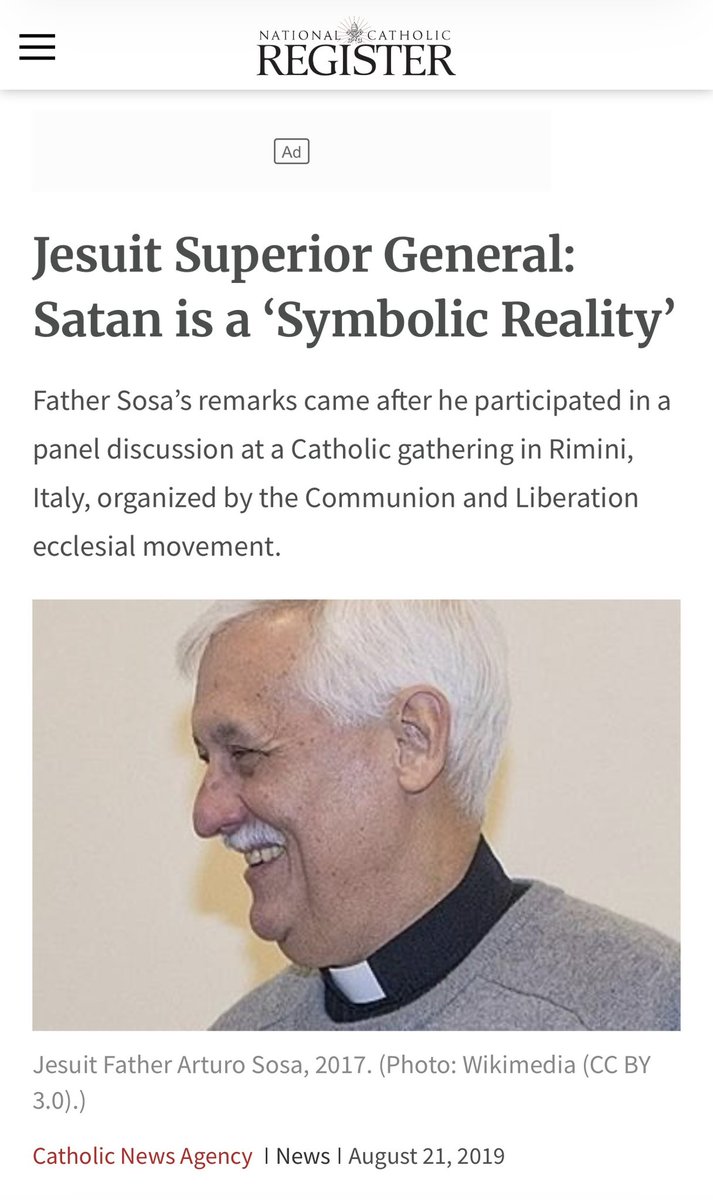
I’ll leave it to the canon lawyers to figure out legal minutiae. But the fact is, on the ground, faithful Catholics see a ridiculous double standard. You can “bless” a same-sex partnership during Mass (pictured below, at London’s Holy Apostles Church), and remain a priest in good standing. You can doubt the existence of Satan (see the Superior General of the Jesuits), and publicly dissent against revealed truths, and still not be excommunicated.
This isn’t “whataboutism”. This is an attempt to examine the basic principles by which the Church condemns dissent and rebellion. If those principles aren’t applied evenly and consistently, don’t expect the Catholic faithful to trust the Church’s leadership on crime and punishment.
Mairi Murray, a 21-year-old from Coatbridge, is going viral after singing a Gaelic ceilidh song from Uist on a platform at Glasgow Central Station
Read the full interview with her 👇
@PetriOP@CatholicForLife Also with many priests leaving the priesthood, people aren’t willing to confess to someone who won’t be in the job in a few years.
Scotland’s Catholic Bishops Challenge Scottish Government Over Conscience Rights
The Bishops’ Conference of Scotland has expressed deep concern over the Scottish Government’s response to proposed amendments to the Assisted Dying for Terminally Ill Adults (Scotland) Bill. The amendments, tabled by John Mason MSP and Paul O’Kane MSP, seek to introduce provisions allowing organisations—including hospices, care homes, and faith‑based institutions—to exercise conscientious objection.
In its response to these reasonable amendments, the Scottish Government stated that “it is not clear how an institution might demonstrate what their ‘conscience’ position is.”
The Bishops’ Conference strongly disagrees with this position, noting that every organisation has guiding values that shape its mission and practice.
For many faith‑based organisations, including Catholic hospices and care homes, these values are fundamentally incompatible with the introduction of assisted suicide. The Bishops’ Conference maintains that no organisation should be compelled by the State to participate in the deliberate ending of life when doing so would violate its ethical or religious principles.
The Bishops’ Conference urges the Scottish Government and MSPs to recognise and respect institutional conscience rights, ensuring that organisations are not forced into actions that contradict their foundational values.
Bishop John Keenan,
President of the Bishops’ Conference of Scotland
Dear brothers and sisters in Christ,
Scotland stands at a moment of profound moral consequence. In the coming weeks, the Scottish Parliament will cast its final vote on the Assisted Dying for Terminally Ill Adults (Scotland) Bill; legislation that would, for the first time in our nation’s history, permit physician-assisted suicide. As your shepherds, entrusted with the care of souls and the protection of human dignity, we write to you with deep concern.
True compassion is not found in hastening death but in walking with those who suffer, ensuring they receive the medical, emotional, and spiritual care that affirms their inherent worth. Every person—regardless of age, illness, disability, or circumstance—is a gift from God. There is no such thing as a life without value. Our task as a society is not to eliminate suffering by eliminating the sufferer, but to surround every individual with love, support, and dignity until their natural end.
Over recent months, several Members of the Scottish Parliament who once supported the proposal have now either withdrawn, or are seriously considering withdrawing, their backing, recognising that the risks embedded within it are too grave to ignore. Their change of heart reflects a dawning awareness that coercion, especially the subtle, hidden coercion experienced by the most vulnerable, including the elderly, the sick, the disabled and those living with domestic abuse, cannot be reliably detected, let alone prevented.
Key protections that should form the very foundation of such legislation, however flawed the principle may be, have been removed or rejected. Proposals for mandatory training for doctors to recognise coercive control were voted down by the Parliament Health and Social Care Committee. Measures ensuring that patients are offered proper palliative and social care before considering assisted suicide were dismissed. An opt-out for hospices and care homes who object to assisted suicide was also rejected. Even the conscience rights of healthcare workers remain uncertain. As a result, MSPs are being asked to vote on a Bill that is incomplete and reliant on future intervention from Westminster—an arrangement that several parliamentarians have already described as unworkable and irresponsible.
Experience from abroad also offers a sober warning. In countries where assisted suicide has been introduced, narrow criteria have widened over time, placing ever more people
at risk—not because of unbearable physical suffering, but because they feel abandoned, isolated, or burdensome. We must not allow such a trajectory to take root here in Scotland.
We therefore urge you, the Catholic faithful of Scotland, to act. Please contact your MSPs and respectfully ask them to oppose this legislation. Make your voice heard in defence of those who may not be able to speak for themselves. Resources to assist you—including Care Not Killing’s online email tool—are available and we invite you to use them prayerfully and thoughtfully.
Let us also hold in prayer all those approaching the end of life, all who care for them, and all charged with shaping the laws of our land. May the Holy Spirit grant our nation the wisdom to choose the path of life, compassion, and genuine human solidarity.
Yours devotedly in Christ,
+ John Keenan, President, Bishop of Paisley
+ Brian McGee, Vice-President, Bishop of Argyll and the Isles
+ Andrew McKenzie, Episcopal Secretary, Bishop of Dunkeld
+ Leo Cushley, Archbishop of St Andrews and Edinburgh
+ William Nolan, Archbishop of Glasgow
+ Joseph Toal, Bishop of Motherwell
+ Hugh Gilbert, Bishop of Aberdeen
+ Francis Dougan, Bishop of Galloway
Scotland's Catholic Bishops make final plea ahead of assisted suicide bill coming before Scottish Parliament. Pastoral letter at https://t.co/q1F27TRGGA
This week, seven of the country’s most influential healthcare bodies united to express concerns about safeguards in Liam McArthur’s Assisted Dying Bill.
Kevin McKenna isn’t surprised 👇