Online predators don't start with threats. They start with trust.
Teach your child to: ✅ Never share personal information. ✅ Never keep online secrets. ✅ Comes to parents if something feels wrong.
Make digital safety an ongoing conversation —not a one-time talk
#safekids
Keeping kids safe online shouldn’t mean constantly looking over their shoulder.
https://t.co/JzBLroGMXj gives you smart digital parenting features:
✔ AI Insights & Health Score
✔ Real-time Alerts & Live Location
✔ Kids Safe Browser
✔ Screen Time Management
#safekids
Screen-time conversations don't have to become arguments.
Questions like "But everyone has a phone!" or "Why do I need screen-time limits?" are opportunities to build healthy digital habits—not just set rules.
Here's how parents can deal with such questions.
#parentingguide
The first years of life are when children learn the most about the world around them.
A baby's developing brain needs interaction more than entertainment.
Nothing teaches them more than real people, real play, and real experiences.
Many parents hand babies a phone or tablet thinking it’s harmless entertainment. 📱
But what starts as a quick distraction can gradually become a habit—and eventually a dependency.
The best solution is prevention. ❤️ Research links excessive screen time in infancy to physical, cognitive, and emotional challenges. Give little minds more play, interaction, and real-world exploration instead. 👶🌱
Conversations matter—but so do the right tools.
With https://t.co/JzBLroGMXj, parents can set healthy screen time limits, block harmful content, manage apps, and get better visibility into their child's online activity.
Because online safety shouldn't be left to chance.
YOUR CHILD'S ONLINE SAFETY STARTS WITH YOU AS A PARENT.
Children rely on parents and caregivers to guide them through the digital world. Set healthy screen time limits, use parental controls, and ensure the content they access is age-appropriate. Small steps today can help protect them from online risks tomorrow.
Together, let's create a safer internet for every child.
#SafeYoungClicksUG #AnInclusiveDigitalEconomy #GoldenPosts
@UCC_Official@UgCERT@Bbossa@MoICT_Ug
What Happens After 10 PM?
The choices kids make before bed can impact how they feel tomorrow.
Less scrolling. More sleep.
With https://t.co/JzBLroGMXj, parents can encourage healthier and safe screen habits for their kids
Download https://t.co/JzBLroGMXj Try free for 15 days
Online risks are closer than many parents realize.
Childlight estimates that 300M+ children experience online exploitation a year.
5 ways to help keep kids safer online: Keep conversations open Know the apps they use Set healthy screen-time limits Use digital safety tools
The average Gen Z teen spends 9 hours a day on screens.
That's why conversations about online safety, digital wellbeing, and healthy screen habits matter more than ever.
https://t.co/JzBLroGMXj helps making online experiences safer for kids and less stressful for parents.
Know more. Stress less.
Where they are What they are watching What needs your attention
Any risks alert
https://t.co/JzBLroGMXj helps parents stay one step ahead.
Download the app now
📲 Free 15-Day Trial
#childsafefy#parentingguide#onlinesafety#digitalsafety#safekids
"It's only 30 minutes."
That's how unhealthy screen habits often begin in kids.
Over time: 😴 Less sleep 🧠 Less focus 😠 More mood swings 🎨 Less time to be a kid
Healthy boundaries today. Healthier habits tomorrow.
Read full carousel at : https://t.co/oBdmVYwYAS
We carefully choose what our children eat, watch, and learn. Maybe it's time we were just as thoughtful about when we hand them a smartphone. The conversation is becoming harder to ignore.
Growing up should happen before growing online.
A massive study just confirmed it, giving kids smartphones before 13 can have serious mental health consequences.
Sapien Labs, in the Journal of Human Development and Capabilities, surveyed over 100,000 young adults. Key finding: those given smartphones before age 13 faced sharply higher risks of depression, anxiety, aggression, and hallucinations in adulthood.
Lead researcher Dr. Tara Thiagarajan warns that pre-teen brains are ill-equipped for social media’s relentless demands.
Girls showed diminished self-esteem and emotional strength; boys displayed lower empathy and stability, compared to peers who delayed phone use.
The team calls for urgent action: treat smartphones for under-13s with the same restrictions as alcohol or tobacco.
As evidence mounts and experts raise alarms, this study fuels a worldwide push: safeguard children’s minds by holding off on that first phone.
[Tara C. Thiagarajan et al., "Protecting the Developing Mind in a Digital Age: A Global Policy Imperative", 2025, https://t.co/o5xd5eRH1u]
Kids don’t need less fun. They need more reasons to look away from screens. ✨
🎨 Create 📚 Read 🧩 Explore 🤝 Connect
The best digital detox is one they actually enjoy.
Follow @SafeAnywhereai for more digital parenting tips.
Read full carousel at : https://t.co/zp4ixLJyQg
Online safety for kids is becoming a policy priority around the world. As the conversation evolves, protecting children in digital spaces remains more important than ever.
Parents, what's your take on this? 👇
You can't watch every click your child makes online. But you can make their digital world safer.
https://t.co/JzBLroGMXj helps block harmful content, enforce SafeSearch, manage screen time, and gives parents better visibility.
Try FREE for 15 days.
#childsafefy#digitalsafety
The UK’s proposed teen social media curfew is a reminder that healthier digital habits matter.
Parental Control App like https://t.co/JzBLroGMXj help parents create safer online experiences, stronger digital boundaries and encourages healthier screen habits for their children.
UK proposes overnight social media curfew for older teens
Under the proposal, social media access for users aged 16 and 17 would be blocked by default between midnight and 6 a.m.
https://t.co/pOYdQd2OQR
Big changes could be coming for young social media users in the UK. What do you think—should under-16s be restricted from social media?
Parents, what's your take on this? 👇
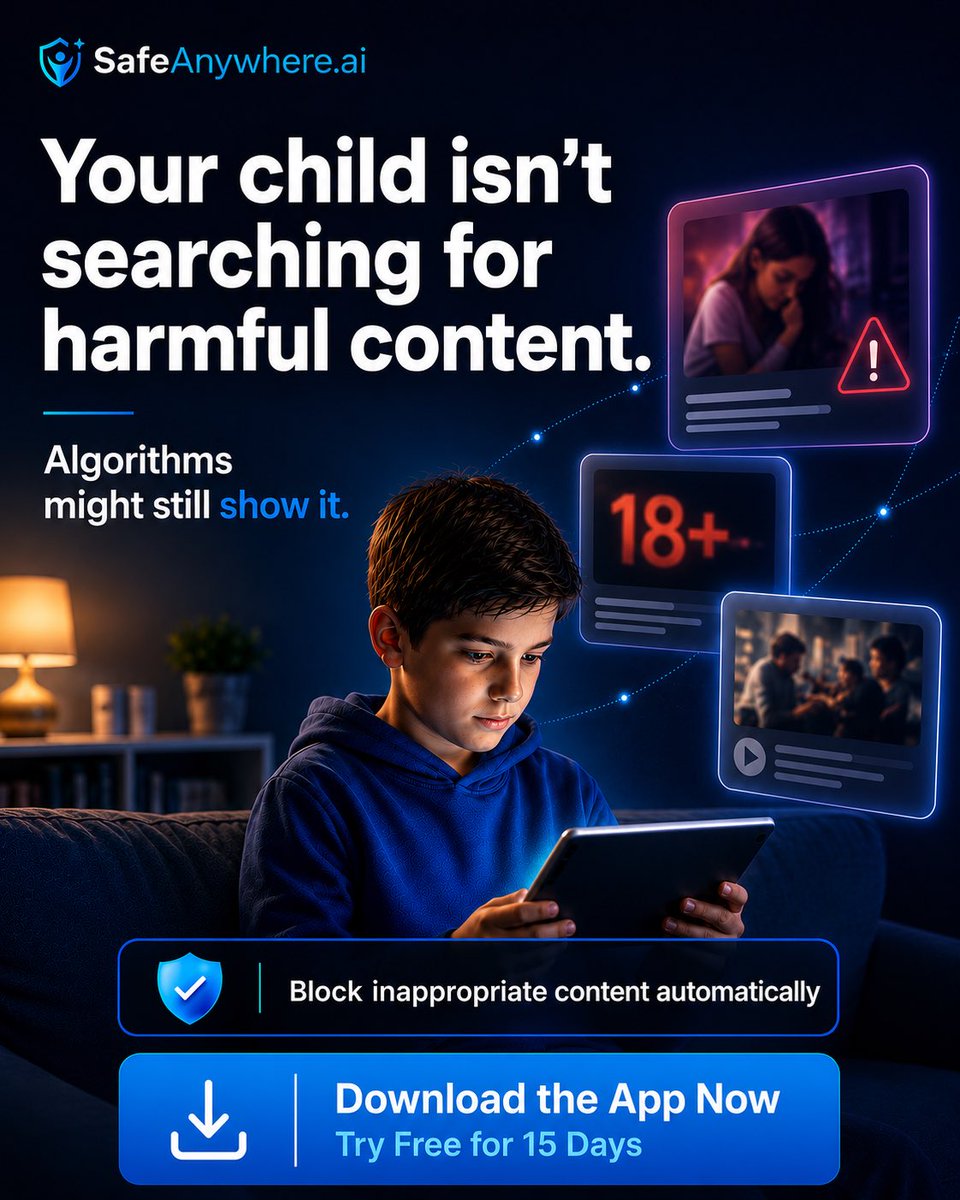
The biggest online risk isn't always what kids search for. It's what gets recommended.
Protect their digital world with https://t.co/JzBLroGMXj
🛡️ Safer browsing 🚫 Harmful content blocking ⏱️ Screen time controls
Try the App Free for 15 days.
#kidssafety#modernparenting
New research says it's not just kids' screen time that matters—parents' phone habits do too.
Frequent phone interruptions during meals, conversations, and playtime can impact a child's behavior, emotional development.
Kids don't just listen to us—they watch us.
#screentime
Research like this shows that healthy digital habits matter as much as digital safety.
https://t.co/JzBLroGMXj helps kids explore online safely while developing healthier relationships with technology.
What kids see online matters, but so does how long they spend.
#screentime
This MRI study on young kids just exposed something terrifying:
They scanned the brains of 60 children aged 3–5 — including 5-year-old Rose — and found interactive screen time is causing measurable loss of white matter in their developing brains. Even just 2 hours a day is linked to impaired neural connectivity, language, and literacy development.
Professor Mike Nagel (neuroscientist and father) said his first reaction was simply: “Wow… I was not anticipating seeing anything like that.”
We’re physically changing children’s brains before they even start school — and the damage is visible on scans.
This one actually unsettled me. I’ve always suspected too much screen time was bad, but seeing real white matter loss in toddlers hits different.
Parents of little ones — has this kind of research changed how much screen time you allow?
Small changes can reveal bigger digital risks.
Hidden screens Stranger connections Too much scrolling Mood shifts
Don’t panic. Understand
https://t.co/JzBLroGMXj helps parents support safer online experiences for kids with AI-powered protection.
Start your free trial now.





![Rainmaker1973's tweet photo. A massive study just confirmed it, giving kids smartphones before 13 can have serious mental health consequences.
Sapien Labs, in the Journal of Human Development and Capabilities, surveyed over 100,000 young adults. Key finding: those given smartphones before age 13 faced sharply higher risks of depression, anxiety, aggression, and hallucinations in adulthood.
Lead researcher Dr. Tara Thiagarajan warns that pre-teen brains are ill-equipped for social media’s relentless demands.
Girls showed diminished self-esteem and emotional strength; boys displayed lower empathy and stability, compared to peers who delayed phone use.
The team calls for urgent action: treat smartphones for under-13s with the same restrictions as alcohol or tobacco.
As evidence mounts and experts raise alarms, this study fuels a worldwide push: safeguard children’s minds by holding off on that first phone.
[Tara C. Thiagarajan et al., "Protecting the Developing Mind in a Digital Age: A Global Policy Imperative", 2025, https://t.co/o5xd5eRH1u]](https://pbs.twimg.com/media/HNRRuylXMAAywsy.png)