Are you interested in hierarchical dimensionality analysis? Here's our new "Taxonomic Graph Analysis" used to model the IPIP-NEO Personality Hierarchy. The project is led by Andrew Samo and Alexander Christensen, with the collaboration of Luis Garrido, Paco Abad, Sam McAbee, and me!
In our preprint (link in the comments) we introduce a new approach to understanding personality structure: Taxonomic Graph Analysis (TGA), is a comprehensive network psychometrics approach that identifies hierarchical personality structures from the bottom up rather than imposing existing theoretical models. We applied TGA to the open-source 300-item IPIP-NEO dataset with over 149,000 participants and reveal a three-level structure of personality:
28 first-level dimensions (facets)
6 second-level dimensions (traits)
3 third-level dimensions (meta-traits)
What makes this approach very interesting is how it addresses longstanding methodological challenges in personality assessment:
Local independence violations
Wording effects
Dimensionality assessment
Structural robustness
While some dimensions aligned with traditional IPIP-NEO structure, we found significant deviations. The emergence of novel dimensions like "Sociability," "Integrity," and "Impulsivity" at the second level and a "Disinhibition" meta-trait at the third level represents a major departure from the traditional five-factor model.
Our research effectively integrates empirical findings scattered across personality literature into a coherent hierarchical structure. This data-driven framework demonstrates TGA's value for investigating complex psychological constructs and offers a rigorous new perspective on personality taxonomy.
This work exemplifies how innovative psychometric methods can reshape our understanding of fundamental psychological constructs. Its implications extend beyond personality assessment to potentially revolutionize how we conceptualize and measure human traits across psychology.
Link to the Published Paper in the Comments.
New paper: Applying computation tools to over 2000 years of textual data in Chinese, we test the hypothesis that the organization of families (kin-based institutions) shapes our psychology. @MohammadAtari90@slingerland20@KevinHong1991@JF_Schulz
Are you interested in hierarchical dimensionality analysis? Here's our new "Taxonomic Graph Analysis" used to model the IPIP-NEO Personality Hierarchy. The project is led by Andrew Samo and Alexander Christensen, with the collaboration of Luis Garrido, Paco Abad, Sam McAbee, and me!
In our preprint (link in the comments) we introduce a new approach to understanding personality structure: Taxonomic Graph Analysis (TGA), is a comprehensive network psychometrics approach that identifies hierarchical personality structures from the bottom up rather than imposing existing theoretical models. We applied TGA to the open-source 300-item IPIP-NEO dataset with over 149,000 participants and reveal a three-level structure of personality:
28 first-level dimensions (facets)
6 second-level dimensions (traits)
3 third-level dimensions (meta-traits)
What makes this approach very interesting is how it addresses longstanding methodological challenges in personality assessment:
Local independence violations
Wording effects
Dimensionality assessment
Structural robustness
While some dimensions aligned with traditional IPIP-NEO structure, we found significant deviations. The emergence of novel dimensions like "Sociability," "Integrity," and "Impulsivity" at the second level and a "Disinhibition" meta-trait at the third level represents a major departure from the traditional five-factor model.
Our research effectively integrates empirical findings scattered across personality literature into a coherent hierarchical structure. This data-driven framework demonstrates TGA's value for investigating complex psychological constructs and offers a rigorous new perspective on personality taxonomy.
This work exemplifies how innovative psychometric methods can reshape our understanding of fundamental psychological constructs. Its implications extend beyond personality assessment to potentially revolutionize how we conceptualize and measure human traits across psychology.
Our co-founder @marycamacho shares the frustrating experience that sparked Cirdia's approach to privacy-first wellness technology.
Read her personal story of losing years of fitness data and why that experience matters for all of us.
https://t.co/KbRc2qNbad
1/🧵 Today marks the company launch of @cirdia_wellness - a new venture creating privacy-first wellness technology that puts YOU in control of your biometric data. I want to share some context about this and my ongoing role @H_O_L_O_.
New cultural evolution modelling paper with @benoitdecourson on @PNASNews!
"Weak individual preferences stabilize culture"
A quick 🧵
https://t.co/jcOYpUVfQW
Let's review. Game on. The question: Is there evidence that population-level variation exists in susceptibility to visual illusions? @DorsaAmir & @chazfirestone wrote a fascinating paper to which I will reply in two storm tweets. I see major problems. Storm 1 coming...
It's been almost 40 years since the New Urbanism was created, so just a few things to set the record straight.
The entire reason for this movement was a bunch of people (mostly architects) looking around at older, traditional American small towns and pre-WWII neighborhoods and saying, "hey, those are really great. Why don't we build those anymore?"
That's it. That's the whole thing.
When those same people, and later many others, started to actually try and design/build new places that fit the mold, we all ran headlong into the reality of development in the US in the late 20th/early 21st century.
That reality is a dizzying maze of local, state and federal regulations and requirements, and (let's be honest here), a Big corporate culture that likes it that way.
So, the New Urbanists tried in their way to reform that culture, so we could build places like those that inspire us. Spoiler alert: it's really hard. And along the way, you make all sorts of compromises and do what you can just to get things built.
So when you actually try to do things, and have some success, you ultimately get attacked from every direction. Hit pieces have come from the left, right, top and bottom. It got so common we used to have a list of typical criticisms with rebuttals.
Do we often go beyond and engage in hyperbole? Of course! Sometimes you have to grab people's attention, and sometimes you really have to push back. Like, for example, cars really can be wonderful. I know many New Urbanists that are car enthusiasts. But *needing* a car to just go get a gallon of milk? And having places a kid can't walk to the ice cream store? That's really dumb, and un-American.
But really, this is all ok - New Urbanists like critique. We like debate. We've always felt it makes us better. And, there's plenty worth critiquing. None of us are gods, we are just humans doing the best we possibly can given the playing field.
In the end, after all, we're just trying to make really great places for people to live their lives in. If you're so inclined, you might even say we're trying to Make America Walkable Again, or Make America Beautiful Again.
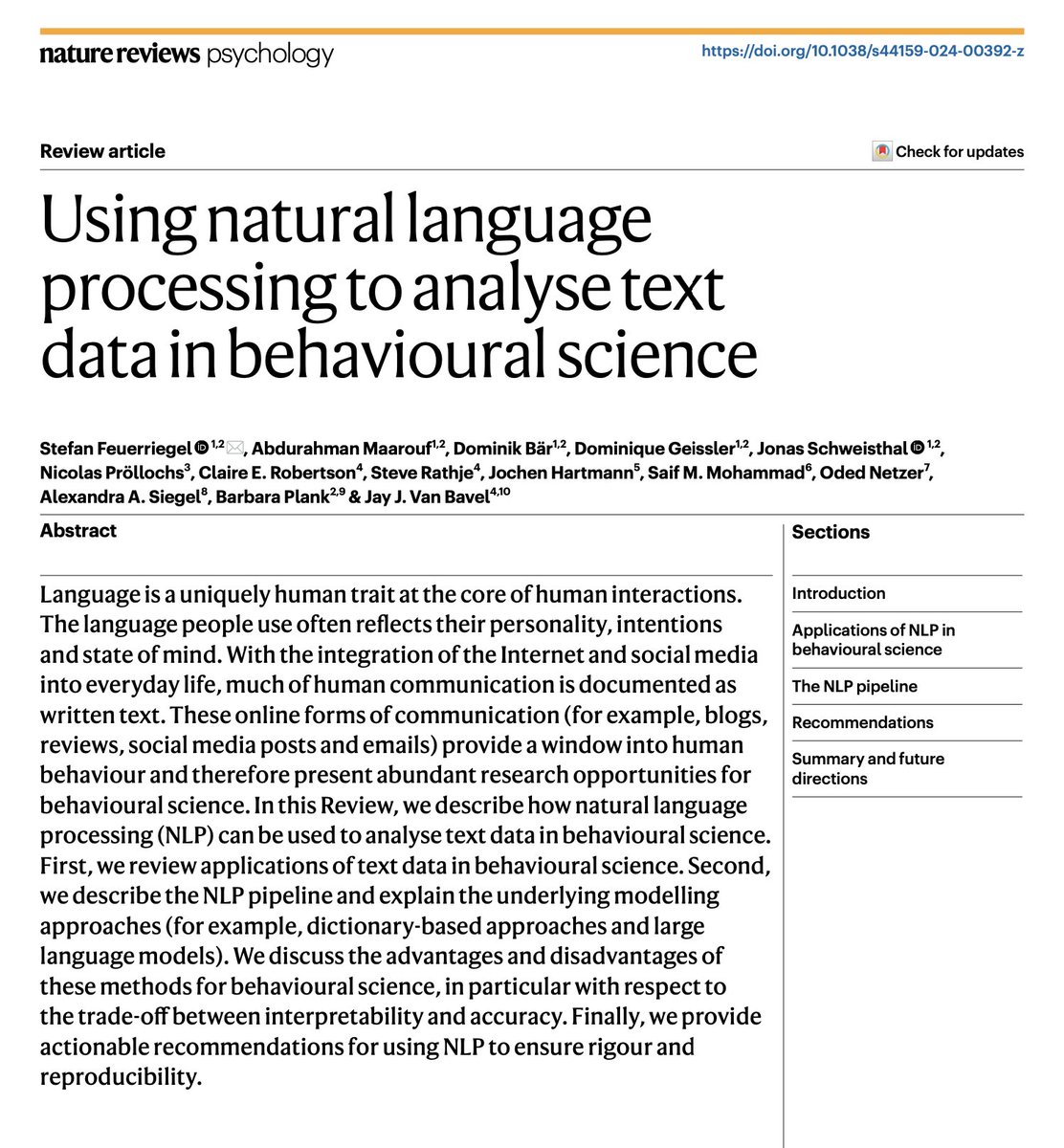
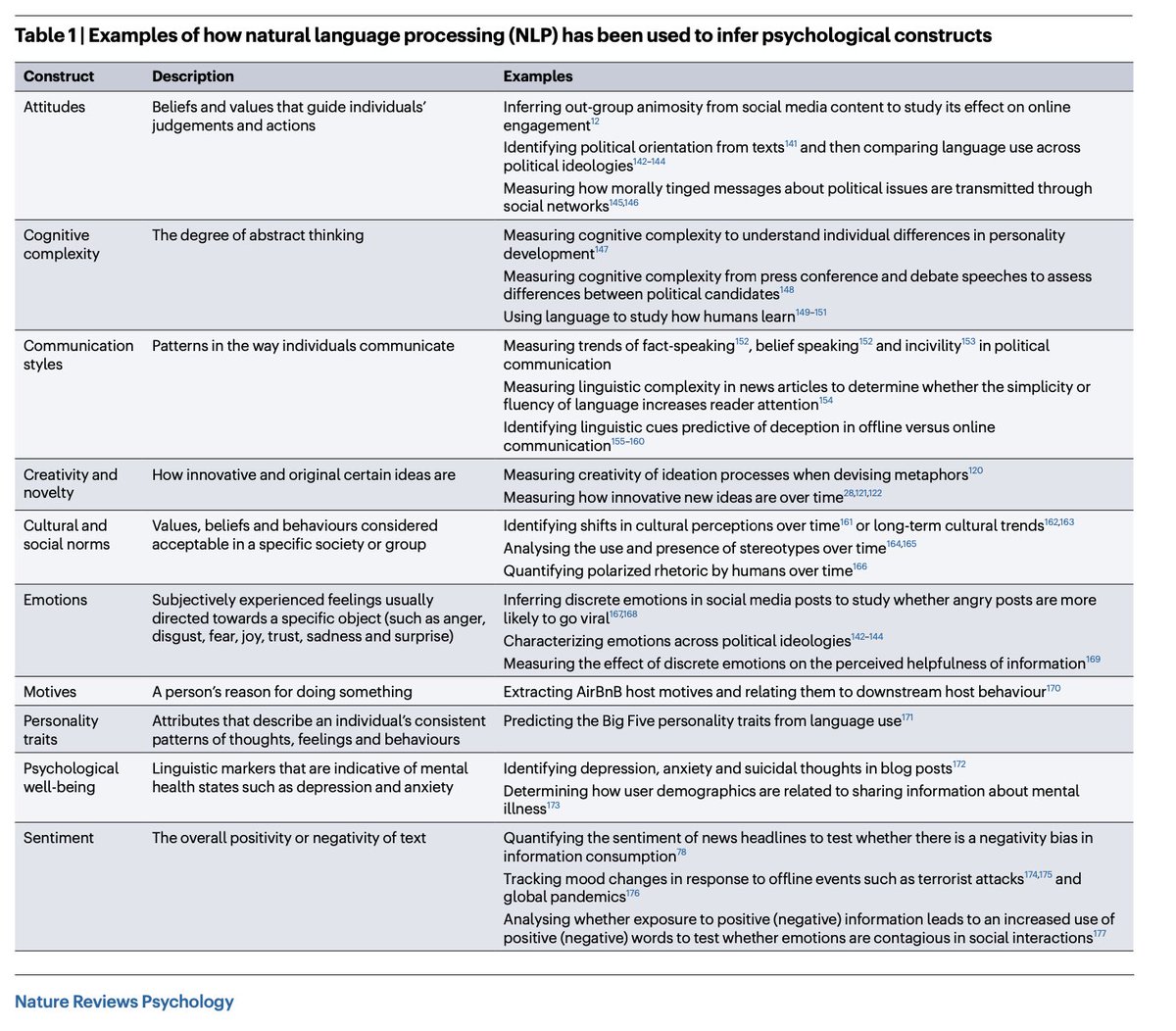
We have a new paper explaining all the ways you can use natural language processing to analyze text data in @NatRevPsych
We provide user friendly recommendations for using NLP to ensure rigour and reproducibility
Free link: https://t.co/S10dqqrwKy
Led by @stfeuerriegel
🌟 Join us tomorrow for a seminar on Participatory Modeling for Collaborative & Equitable Planning with Moira Zellner! 🌍
🗓️ Date: Friday, Dec 6th ⏰ Time: 12 PM ET
Explore how participatory modeling fosters collaboration & equity. #Equity#ParticipatoryModeling#ProSocial
Fresh off the press at Public Transport! Searches from @transitapp showed that rideshare competes w public transit when trips are inconvenient AND complements them for complete trips. w @ryanqiwang@jdbk@Sage_Gibbons Alex Deng & Edgar Castro.
https://t.co/QXAO1z8Hjf