I will be dedicating the #Gandhi peace award to the doctors and nurses who were killed in #Syria while on duty including Dr. Hasan Alaaraj, Dr. Majed Bari Dr. Wasim Moaz and 930 other healthcare workers @PEPeace#Gandhiaward@P4HR@hrw@MedGlobalOrg@UNOCHA
This is insane footage of the massive mudslide at the Nepal-China border earlier today: the mudslide, originating from Nepal, seems to have basically completely obliterated the border port in Gyirong (吉隆), Shigatse City, Tibet/Xizang.
We're likely looking at one of the worst mudslides in China's history, really bad tragedy.
For having myself lived in Nepal during several months (in the middle of the devastating 2015 earthquake!), probably the place in the world where nature is the scariest.
مديرية دمشق القديمة:
📌 إطلاق اليوم التجريبي لفعالية «دمشق تتنفس» يوم الإثنين 31 آب 2026، لمدة 24 ساعة.
📌 تشمل الفعالية إيقاف دخول السيارات والدراجات النارية والآليات إلى مدينة دمشق القديمة، عبر إغلاق مداخلها ومنع الحركة داخلها خلال اليوم المحدد.
📌 الحركة المرورية ستعود إلى طبيعتها في اليوم التالي، مع استمرار الفعالية ليوم واحد فقط.
📌 تهدف الفعالية إلى توفير مساحة أوسع للزوار والمشاة، والحد من الازدحام داخل المدينة القديمة، والمساهمة في حماية البيئة.
📌 ستعمل سيارات نقل كهربائية في عدة نقاط داخل المدينة القديمة، لتسهيل حركة كبار السن وذوي الهمم والأطفال ومن لديهم صعوبات في الحركة.
From NYC to Lebabon as part of ToT medical missions of @MedGlobalOrg in a country in the midst of a turbulent region. Join us and be a change-maker like Tobias.
Two weeks of training can have an impact well beyond two weeks.
In Saida, Lebanon, MedGlobal volunteer Dr. Tobias Kirchwey is mentoring emergency and ICU physicians in point-of-care ultrasound (POCUS), a tool that can support rapid assessment and clinical decision-making in trauma care.
The goal is for those physicians to take the skills forward, train their colleagues, and help strengthen access to POCUS across South Lebanon.
Help us strengthen healthcare where it’s needed most: https://t.co/GpT7AhyDoD
Question 1: How have drones, attacks on infrastructure, and the disappearance of clear frontlines changed the way humanitarian organisations such as @MedGlobalOrg operates?
Traditional models of emergency medical response no longer work. We have had to redesign how we operate, train, and deliver care under constant aerial threat and without safe rear areas.
• No clear frontlines means the entire civilian space is the battlefield. Hospitals, ambulances, and first responders are deliberately or indiscriminately targeted. “Double-tap” attacks on responders have become routine. Medical evacuations that once took hours are now delayed for days or weeks because drones loiter overhead and ambulances are attacked. Survivable injuries become fatal; infection rates (including multidrug-resistant organisms) explode because patients sit contaminated for prolonged periods and move through multiple contaminated sites.
• Injury patterns have changed dramatically. Drone strikes produce complex polytrauma—simultaneous blast, penetrating, and burn injuries, often to multiple body regions, high rates of traumatic amputation, and contamination that drives severe infections. Classic trauma algorithms and evacuation timelines no longer fit.
• Infrastructure attacks compound everything. Power, water, communications, and roads are repeatedly hit. Large static hospitals become high-value targets or non-functional. Continuity of care collapses unless you decentralize.
We adapted by shifting from primarily supporting fixed facilities to a more agile, frontline-oriented model:
• Heavy investment in mobile clinics, modular health units, and support for underground/stabilization points so care moves closer to patients and away from predictable targets.
• Prolonged field care capacity — training Ukrainian teams to keep patients alive for extended periods until safer evacuation windows open.
• Intensive infection prevention and control (IPC) and antimicrobial resistance focus because delayed care + battlefield contamination creates a “silent killer.”
• Mental health and resilience support for both patients and the health workforce, who are themselves under repeated attack.
MedGlobal has developed and scaled one of the few (and in some respects the only) field-tested humanitarian medical training packages specifically designed for the new realities of drone warfare and CBRNE threats in active conflict.
This includes:
• Hands-on surgical skills labs and trauma training focused on the polytrauma patterns seen with drones (blast-burn-penetrating combinations, limb salvage under prolonged field conditions).
• CBRNE/chemical response training adapted for austere settings — using evidence-based dry decontamination approaches (PRISM methods) rather than water-dependent systems that are impractical or dangerous in many conflict zones. This builds on our earlier Syria experience with chemical weapons and has been delivered with Ukrainian partners (including State Emergency Service personnel) and expanded regionally.
• Integration of these modules into trainings that have reached thousands of Ukrainian health workers across more than 500 hospitals in 18 oblasts, and multiple universities since 2022, alongside supplies and mobile care.
Ukraine’s own innovations (mobile units, underground points, medical trains) plus this kind of targeted capacity-building are becoming the practical blueprint. We are now carrying these lessons into other theaters where drones are proliferating.
The old “stabilize and evacuate quickly to a well-resourced hospital” model is obsolete; the new model is decentralized, prolonged field care + specialized trauma/CBRNE readiness under persistent aerial threat.
•A Russian drone strike on Aug 23 destroyed a Ukrainian Red Cross warehouse in Kherson holding UAH 28 million (~$680K) worth of humanitarian supplies — medical supplies, blankets, hygiene kits, and winter-prep equipment. WFP Ukraine's August brief reports maritime logistics completely blocked since late July due to port attacks; aid has reached 290,364 people.
•Ukraine's underground hospital network is expanding: a new €2.5M underground facility is planned near the front line (Protect Ukraine/HMM Healthcare), and Zaporizhzhia is already delivering babies in a subterranean maternity ward 20 km from combat.
•Brain drain deepens: nearly 4,000 Ukrainian healthcare professionals have obtained work rights in Poland since 2022, strengthening Polish health capacity but thinning Ukraine's own workforce.
•Ukrainian Independence Day (Aug 24): Danish NGO Bevar Ukraine sent its 600th aid truck, carrying generators to power two frontline medical clinics.
Today, I formally rescinded Syria’s designation as a State Sponsor of Terrorism. This action unlocks new potential for Syria’s economic revitalization and progress. The Trump Administration continues to advance U.S. national security to achieve peace, prosperity, and security in the Middle East.
Women-friendly clinics in Yemen, a creative solution by @MedGlobalOrg to the increased maternal morbidity and mortality by providing accessible clinics run by trained midwives and equipped portable ultrasounds and with solar panels for clean energy, in remote villages
For too many women in Yemen, care is hours away.
In the video, you'll see one of MedGlobal's female-friendly clinics, and the community they serve, with no cuts to the video.
It's right there, when and where women need it.
Watch to learn more. Donate to provide more accessible care: https://t.co/ImGyeOKqVD
Attacks on health care were relentless in 2025. Using data collected by Insecurity Insight, the Safeguarding Health in Conflict Coalition (SHCC) @SafeguardingHC recorded 2,546 incidents in 33 countries in which damage to or the destruction of health care facilities was reported on at least 790 occasions, 455 health workers were killed, 218 kidnapped and 263 arrested.
In 2025, violence by state actors was reported in 26 countries and territories, an increase of nine compared to 2024. Over 80% of these incidents involved state actors attacking health care outside their own territory, including through cross-border operations or attacks in contested areas. The vast majority of such incidents were attributed to the Israel Defense Forces (IDF) in Iran, Lebanon, the oPt, Syria, and Yemen and to Russian forces in Ukraine.
.@MedGlobalOrg impact in Ukraine
- Trained more than 4,000 healthcare professionals across 119 hospitals and 15 medical universities in 16 oblasts. Training covers trauma surgery, emergency response/resuscitation, infection control, point-of-care ultrasound (POCUS), mental health support, and specialized skills for modern conflict injuries.
• Trained more than 1,900 Ukrainian first responders, including practical field skills for operating under fire and chemical, biological, radiological, nuclear, and explosive (CBRN/CBRNE) response protocols.
• Distributed $23 million in medications, medical supplies, and equipment to over 524 health centers across 20 regions.
• Delivered more than 8,500 mobile clinic consultations in frontline and hard-to-reach communities, providing primary care, specialist consultations, and mental health support. https://t.co/EyIgGDNZRe
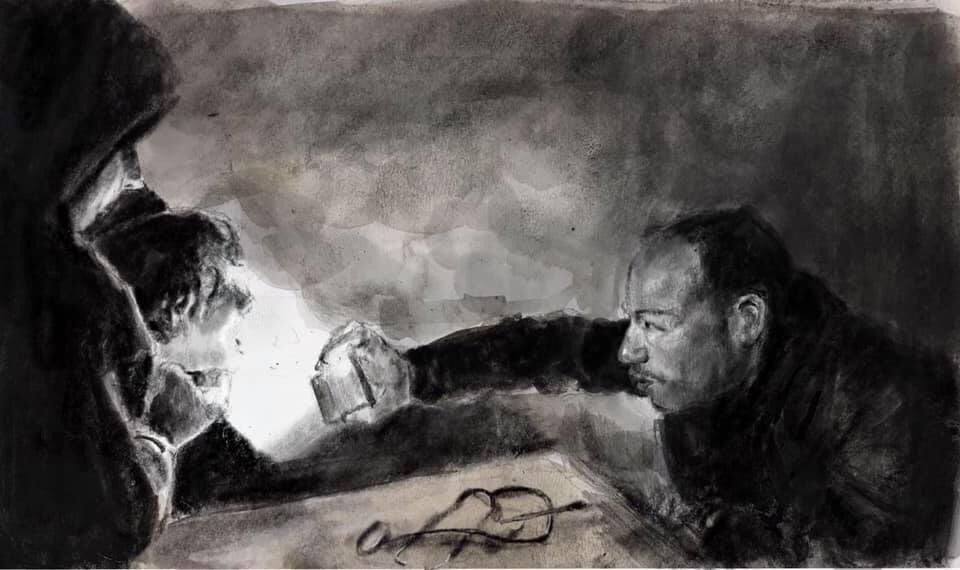
A double-tap (or “double strike”) is an initial attack followed, after a short delay, by a second strike on the same location, often while first responders, medical personnel, or civilians are present.
- White Helmets (Syria Civil Defence) Investigation Support and Case-building Unit: Identified 122 potential double-tap attacks from 2014 to early 2025 that specifically targeted or affected their volunteers and other first responders/medical workers/civilians at the scene. They detailed 12 of these cases with strong evidence. These attacks killed at least 70 White Helmets volunteers and injured over 200. The vast majority are attributed to Assad regime forces and Russian allies.
- Ukrainian authorities, the UN Human Rights Monitoring Mission, the OSCE, and human rights groups have described many of these as deliberate and potentially amounting to war crimes under international humanitarian law, because they target protected persons (civilians and emergency/medical workers).
- Truth Hounds identified 200 incidents with hallmarks of double-tap strikes by the Russians in Ukraine, and fully verified 92 of them (causing at least 20 deaths and 108 injuries among emergency responders, plus significant damage to vehicles and facilities). Drones carried out the second strike in more than half of the verified cases.
• Official Ukrainian data and monitors note a clear increase in the tactic, especially from 2024 onward with the widespread use of FPV and other drones. Double-tap strikes targeting rescuers, medics, firefighters, and police who arrive after an initial attack have become a recurring pattern.
https://t.co/YnYSKnHLf7
Les corbeaux sont excellents pour associer une action spécifique à un résultat utile. Une fois qu'ils découvrent que le mouvement d'une poignée produit de l'eau, ils peuvent se souvenir du mécanisme et répéter le comportement plus tard. Ce corbeau s'est même rappelé la dernière étape : l'éteindre lorsqu'il a terminé.
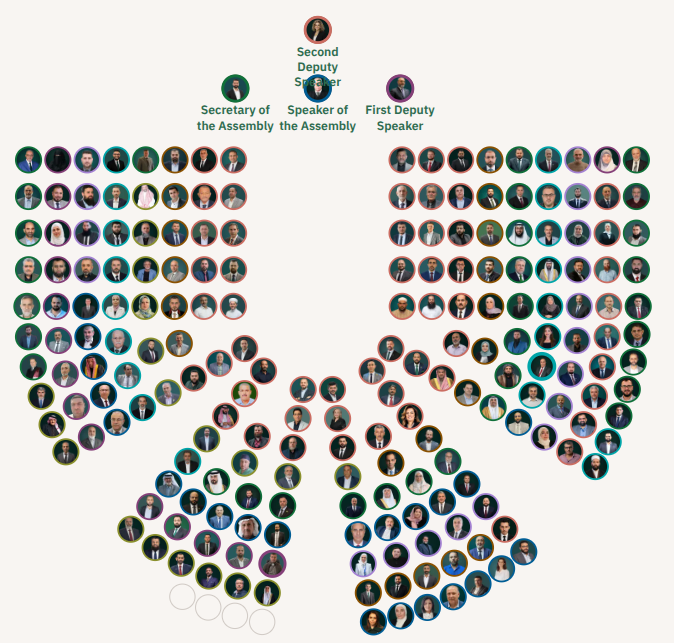
The folks at @OmranDirasat put together an interactive tool that helps users understand who sits on the Syrian People's Assembly and what the body's makeup might mean.
Great work by a team that includes two former colleagues @MuhsenAlmustafa and @BaraaKhurfan.
Today the UN flag is lowered globally in solidarity with over 1,000 aid workers killed in past three years.
We lower our flags. We remember our friends and colleagues. We demand accountability for those who killed them.