What does inclusion look like from a child’s point of view?
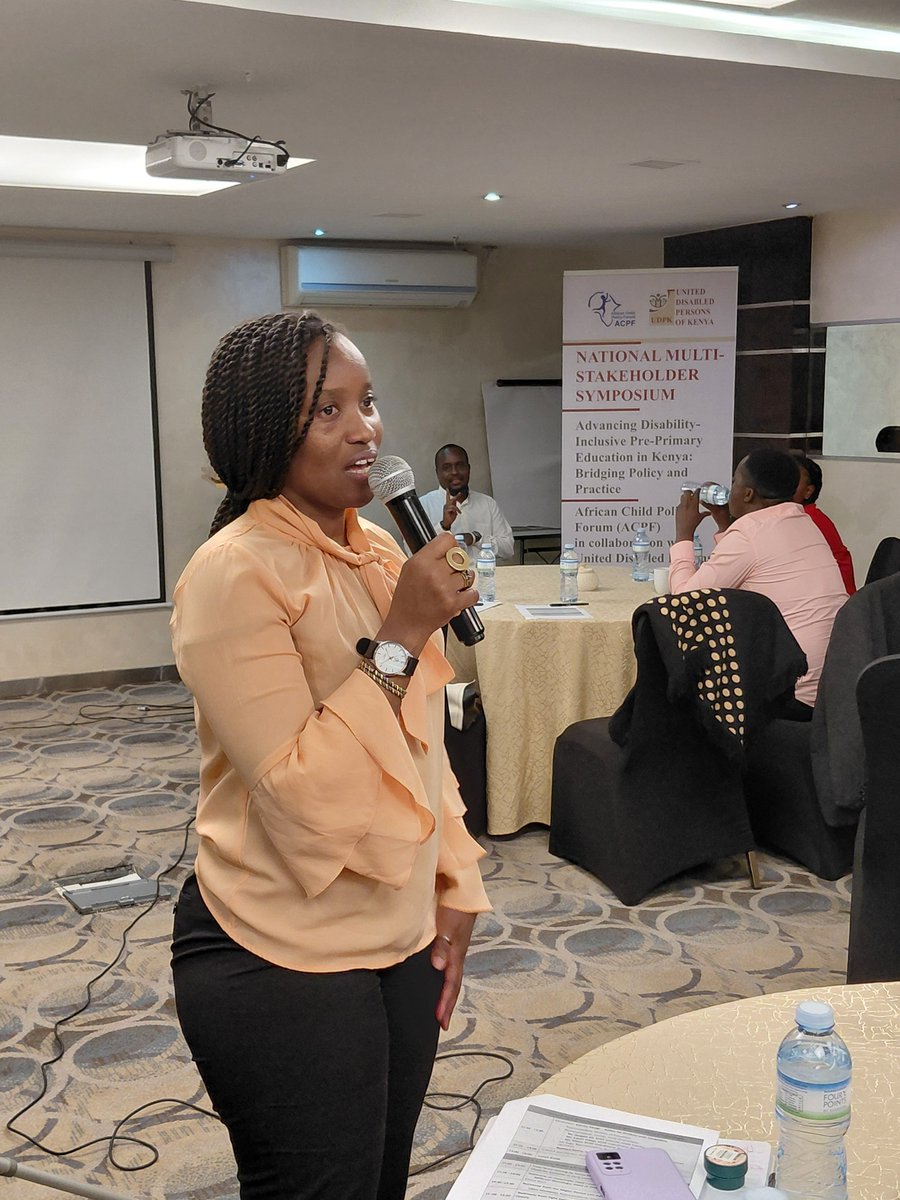
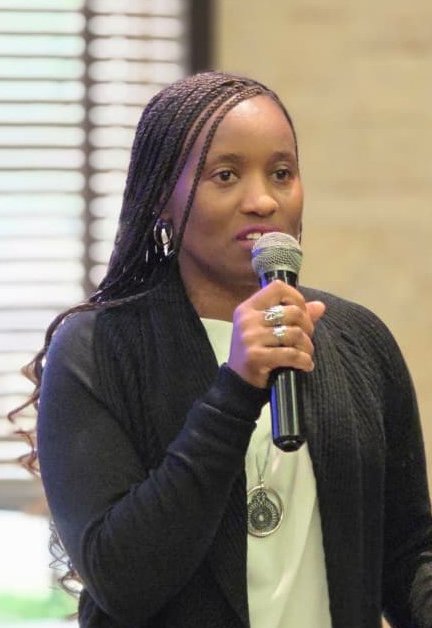
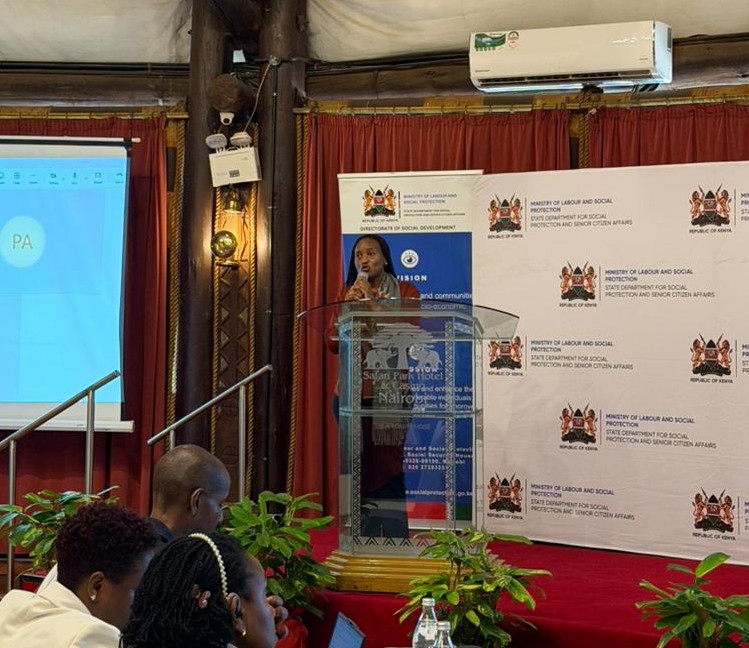
At the National Symposium on Advancing Disability-Inclusive Pre-Primary Education in Kenya, UDPK CEO Sally Nduta (@Sallynduta1) urged participants to listen to children with disabilities when making decisions about their education.
Children have spoken about wanting to join clubs, use accessible washrooms and have clean water at school. Sally reminded participants that these experiences shape a child’s health, dignity and ability to take part in learning.
She also called for attention to caregivers, Kenyan Sign Language access, safeguarding and ways to keep children learning when floods disrupt schooling.
As we examine the study findings, children’s views and the different barriers they face must help shape the actions that follows.
#InclusiveEducation #ECDE #DisabilityInclusion
African Child Policy Forum (ACPF)
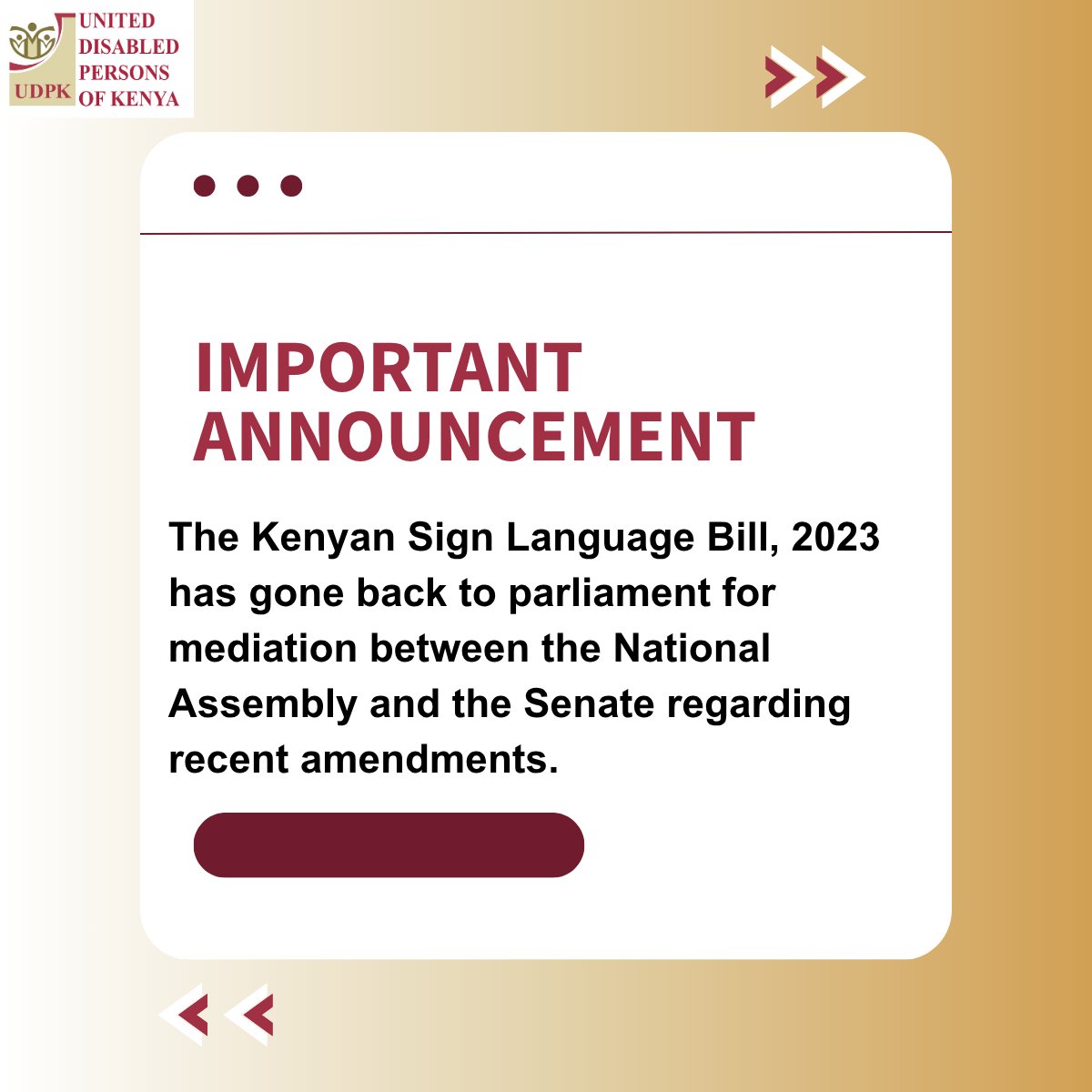
It is #DeafAwarenessMonth and this week is #DeafAwarenessWeek. Despite the awareness creation on, “Declaring Deaf People's Human Rights, the Kenya Sign Language Bill was taken back to parliament for mediation. This means that if the current parliament lapses, the Bill will be lost.
It is therefore important for parliament to conclude mediation on the Kenyan Bill within the constitutional timeframe to protect the rights and priorities of the Deaf community. #DeafRights #KenyaSignLanguageBill2026
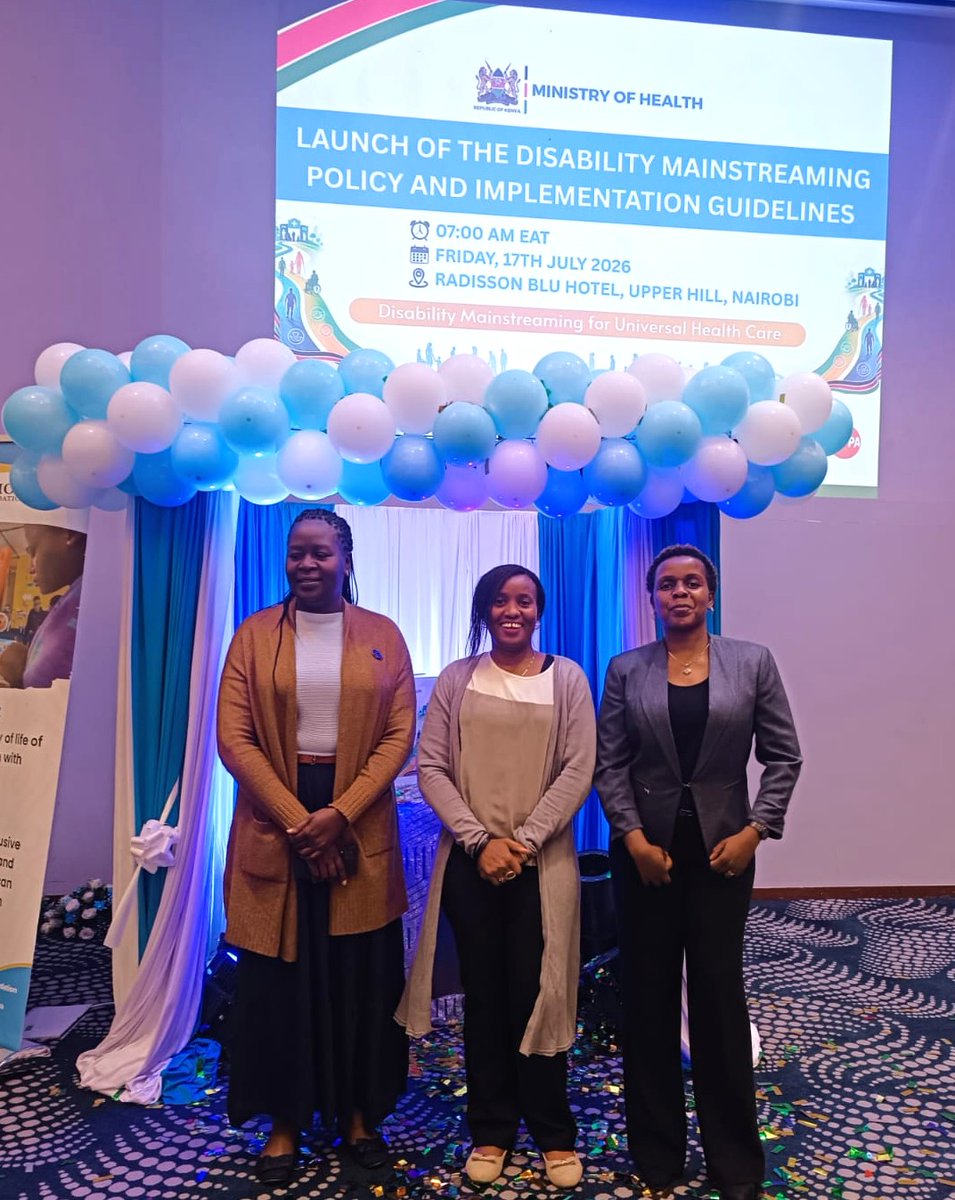
Kenya has launched the Disability Mainstreaming Policy together with its implementation guidelines for the Health sector. This policy is a positive step in providing a framework to enhance Disability Inclusion across Kenya’s health system, by addressing barriers therefore ensuring better access to quality healthcare for persons with disabilities.
The right to the highest attainable standard of health by persons with disabilities is protected by the Constitution, Persons with disabilities Act, 2025, Health Act, the Convention on the Rights of Persons with Disabilities (CRPD), Africa Disability Protocol (ADP) and other human rights frameworks.
The Ministry of Health led the development of the policy through a consultative process which included persons with disabilities and their organisations (OPDs), disability focussed organizations, county governments and other stakeholders. The Policy Implementation Guidelines have set targets including;
1. Ensuring accessible communication to all service delivery points,
2. Advancing Disability inclusion in health promotion, early identification of disability, rehabilitation, mental health referral services.
3. Disability inclusion in maternal and child health, immunization, nutrition, prevention and management of non-communicable diseases, sexual and reproductive health and emergency health services.
4. Adequate rehabilitation services Assistive technologies.
5. Advancing employment of persons with disabilities in health care at national, county, community levels.
6. Involving persons with disabilities in planning, implementation, monitoring and evaluation.
The ministry committed to review the training curriculum for Community Health Volunteers (CHVs) and counties also committed to setting up Disability Mainstreaming units to coordinate disability inclusion across the devolved functions in the health care system.
There is focus on meaningful engagement of persons with disabilities and their organisations (OPDs) as we move to implementation.
As OPDs, we have our work cut out in monitoring implementation as per the targets set in the Implementation Guidelines for the Policy. #InclusiveHealth @MOH_Kenya
If a court has an accessible building with ramps and allocated parking spaces for persons with disabilities, does this ensure access to justice for persons with disabilities?
For many women and girls with disabilities, harmful stereotypes continue to influence how they are treated when seeking justice. Their credibility is often questioned, while the reasonable accommodations needed for equal participation in legal processes are frequently overlooked.
In partnership with International Commission of Jurists (@icj_org )we are convening justice actors, Organizations of Persons with Disabilities (OPDs), civil society organizations, and legal practitioners to strengthen understanding of disability rights, gender equality, and access to justice while creating space for dialogue between communities and justice institutions.
Through the shared learnings and evidence-based discussions, the workshops aim to support an accessible justice system that considers all the components and not just infrastructural accessibility. #AccessToJustice #WomenAndGirls
Persons with disabilities must be at the centre of decisions making process. The Kakamega County Disability @KakamegaCaucus is leading structured engagement with the County Government and County Assembly to advocate for increased investment in assistive technologies, inclusive planning, and responsive budgeting.
By bringing the lived experiences of persons with disabilities directly into policy and budget discussions, OPDs are helping shape a future where assistive technologies are available, affordable, and accessible to everyone who needs them. @EduMinKenya@Ncpwds@LabourSPKE@IDA_CRPD_Forum@CHAI_health@apdkdisability
https://t.co/lbuv2WxdbW
We were honoured to have one of our occupational therapists featured on the KBC Radio English Service, where he discussed the importance of early intervention for physical disabilities and the role of occupational therapy in improving lives.
Thank you, KBC, for the platform.
This past weekend, UDPK joined Royal Patches Foundation to commemorate World Vitiligo Day 2026 under the theme, "From Stigma to Strength."
As part of our political participation initiative with @UraiaTrust , we partnered with the Independent Electoral and Boundaries Commission (@IEBCKenya ) to engage participants on the electoral process, voter rights, and the importance of registering as voters. The partnership enabled persons with disabilities to register as voters.
Availability of voter education and registration helped remove barriers to voter registration, increased understanding of the electoral process and promoted greater participation of persons with disabilities in civic life. #WorldVitiligoDay2026 #PoliticalParticipation
"The road to Kenya's Persons with Disabilities Act 2025 was long and paved by the relentless determination of persons with disabilities themselves."
Today, we joined Kenyatta University (@KenyattaUni) and @Sightsavers Kenya to disseminate groundbreaking study on how evidence is used in disability inclusive policy making in Kenya. At the event, our CEO - Sally Nduta opened with a powerful reflection,
"This study brought back memories of every struggle, every submission, every hearing platform that persons with disabilities showed up for sometimes at great personal cost. That effort must never be taken for granted." Sally Nduta (@SallyNduta1 )
The study maps who held power in the policymaking process, what evidence was used, and critically what still needs to change. Three recommendations stand out:
1. Strengthen trusted #DisabilityData - because we cannot advocate for what remains invisible.
2. Make evidence 'policy-ready' - so that what OPDs produce actually lands in decision-making avenues.
3. Support OPDs as evidence actors - not just as sources and producers of data, but as meaningful actors.
The Act is a milestone. But implementation is the next frontier. Evidence must continue to drive it and organisations of persons with disabilities (#OPDs) must be at the centre of that process.
To every person with a disability who fought for this law we honour!
We will share the study once it's made publicly available.
@MwauraIsaac1
"Care and support should never be confused with institutionalization." Sally Nduta
Speaking at the Inclusive Community Care & Support Systems Forum, themed "Scaling Inclusive Community Care and Support Systems by Bridging the Gaps in Unpaid Care through Gender-Transformative and Disability-Inclusive Solutions," our CEO @SallyNduta1 shared valuable insights on care and support.
She emphasized that care and support is about inclusion in the community, not segregation in institutions. #Care #Support
@LabourSPKE
A free wheelchair is just the start. Is it the right fit? Are there spare parts? Anyone to repair it?
See how Kenya shifting from one-off giveaways to sustainable assistive tech will build capacity, not dependence. #AssistiveTech
https://t.co/KTyyRLvd9r
While contributing to the #InclusiveAfricaConference#IAC2026 by @inABLEorg , our CEO Sally Nduta (@SallyNduta1 )highlighted the progress Africa has made in advancing #DigitalAccessibility while emphasizing the urgent actions needed to ensure meaningful inclusion of persons with disabilities in the digital transformation agenda.
She noted significant milestones across Kenya and the region, including the localization of AI-powered assistive technologies such as personalized voices for people with speech impairments, growing investment in African assistive technology innovation through initiatives such as the AT4D Momentus Fund, and increased support for locally developed inclusive technologies.
She also pointed to Kenya's efforts to expand last-mile internet connectivity, strengthen digital skills, establish ICT hubs, and implement community-based digital inclusion initiatives. Additionally, she welcomed the growing recognition of accessibility within policy and legislative frameworks, including the Persons with Disabilities Act, 2025, and the Kenya National Artificial Intelligence Strategy 2025–2035, both of which incorporate accessibility and inclusion considerations.
Despite this progress, Sally underscored the persistent barriers faced by persons with disabilities in accessing digital services. She cited the continued inaccessibility of many websites and digital platforms, including government services. While initiatives such as the Gava Mkononi (E-Citizen) mobile application have expanded access to government services, accessibility challenges continue to limit independent use by persons with diverse disabilities.
Addressing the role of institutions and technology providers, she stressed that the issue goes beyond listening to lived experiences. Instead, persons with disabilities must be meaningfully included at every stage of #Technology design, development, testing, and implementation to ensure products and services respond to real accessibility needs.
Looking ahead, Sally called on governments and technology providers to deepen their understanding of digital accessibility and move beyond viewing affordability alone as accessibility. She emphasized that accessibility must encompass usability for all persons with disabilities.
She also urged African policymakers to ensure that continental frameworks such as the Africa Digital Transformation Strategy and the @_AfricanUnion Digital Compact explicitly address the unique accessibility needs of persons with disabilities rather than grouping them under broad categories such as marginalized or disadvantaged communities.
We are fully represented at the thirteenth session of the #WorldUrbanForum.
The session's theme is "Housing the world: Safe and resilient cities and communities," and our role is clear; to champion for inclusive and accessible housing for persons with disabilities.
Join us virtually for the "Beyond Accessibility: Realizing the Right to Adequate Housing for All," roundtable where our disability inclusion advisor, Sandra Odhiambo will be speaking tomorrow, 20th May.
Learn more about the session and watch live using the following link; https://t.co/fhXDnCU7fF #WUF #InclusiveHousing #AccessibleHousing
@UNHABITAT@WUF_UNHabitat@IDA_CRPD_Forum@ADFSecretariat
From our previous input-gathering session, where we also created awareness on the different regional laws including the African Charter on Human and People's Rights, this week, we have a delegation of organizations of persons with disabilities (OPDs) attending the 87th Ordinary Session of the African Commission on Human and Peoples' Rights (ACHPR) in Banjul.
We, together with the Kenya Network of Women and Girls with Disabilities, amongst other delegates, held a bilateral meeting with Hon. Commissioner Marie Abomo (the Chairperson of the Working Group on the Rights of Older Persons and People with Disabilities in Africa) and Hon. Commissioner Solomon Dersso (Kenya's Rapporteur), ahead of Kenya's review by the African Commission on Human and Peoples' Rights.
The engagement centred around the following themes:
1. Implementation of the Persons with Disabilities Act No. 4 of 2025
2. Participation and representation of persons with disabilities in governance and political spaces
3. Rights of women and girls with disabilities
4. Inclusive education
5. Social protection
This engagement is critical to strengthening Kenya's report and shaping recommendations to be raised during the constructive dialogue with Kenya's delegation at the 87th Ordinary Session.
@IDA_CRPD_Forum@ADFSecretariat@ICJ_org@WCCKenya@Kwwdnetwork
Today we witnessed a historic moment for Africa!
During the launch of the Network of African Journalists with Disabilities, Sally Nduta (@SallyNduta1 ), UDPK's CEO delivered a powerful message of goodwill, marking this milestone as a long-overdue step toward inclusive storytelling.
She highlighted that Africans must be at the forefront of telling their own stories, grounded in lived experiences and diverse realities.
"The formation of this network strengthens representation, amplifies voices of persons with disabilities, and ensures journalism reflects the full diversity of our societies. This moment goes beyond visibility. It is about influence, leadership, and shaping disability discourse while challenging stigma, misconceptions, and stereotypes." She noted.
We are proud to stand with this network and look forward to collaboration that empowers persons with disabilities across Africa to take their rightful place in all spheres of society.
The future of African journalism is stronger and representative.
#DisabilityInclusion #AfricanJournalism #LeaveNoOneBehind
Great that you are putting reasonable accommodation for persons with disabilities in place. This is a commission that is intentional. @UDPKenya@SallyNduta1@elogkenya
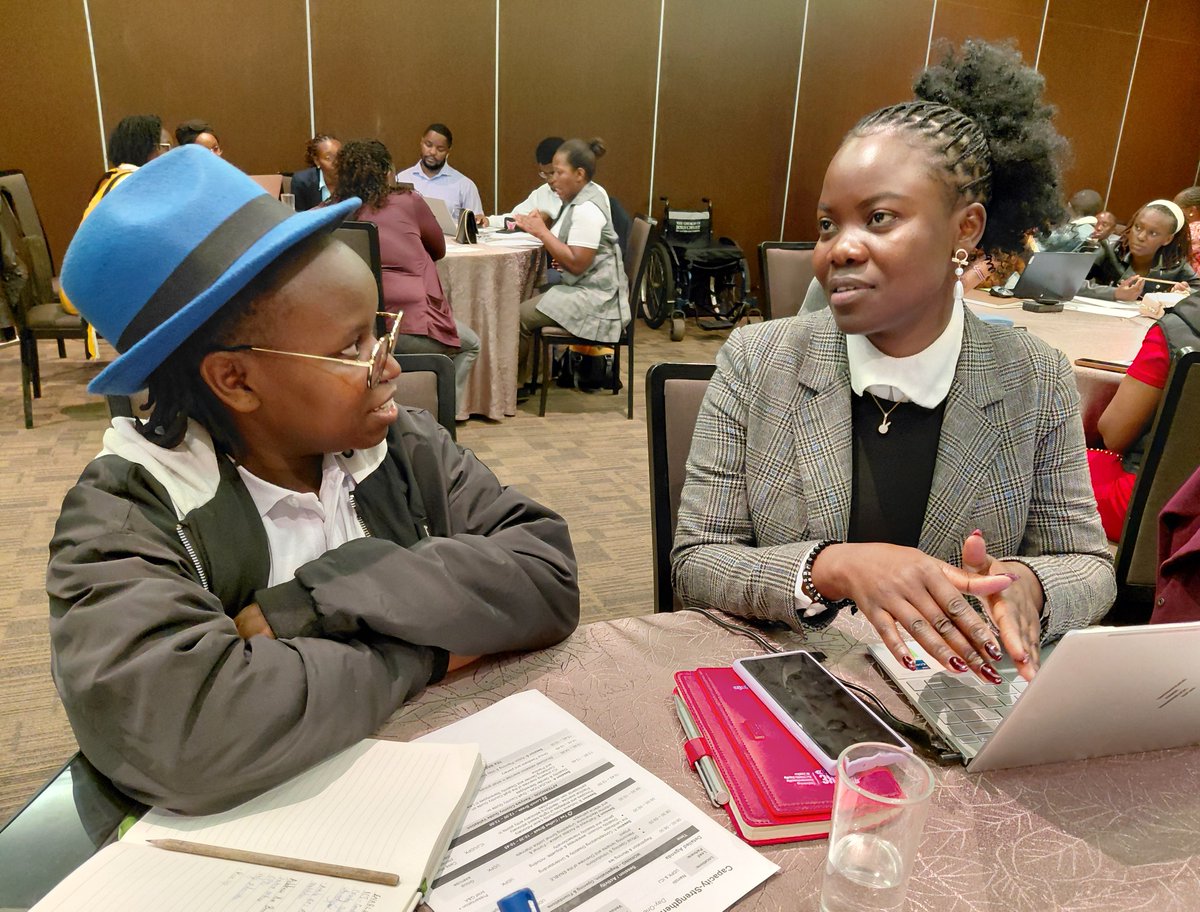
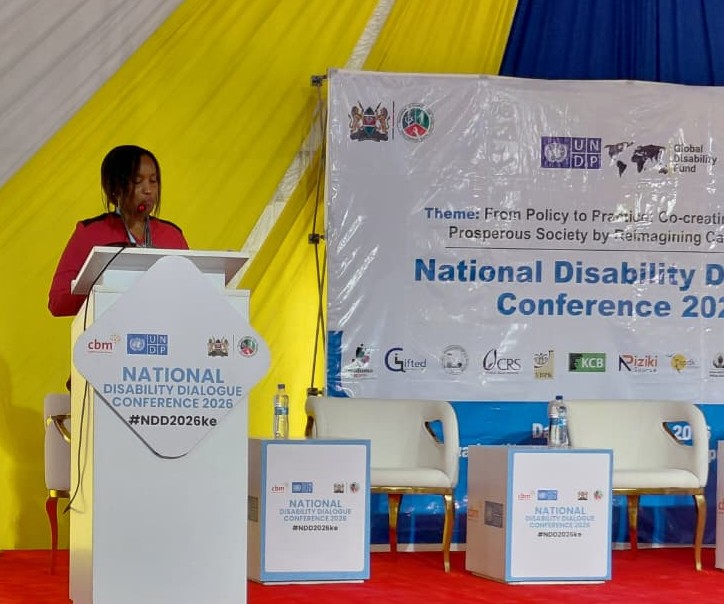
Day two of #DisabilityDialogue began with a thought-provoking speech from our CEO, Sally Nduta.
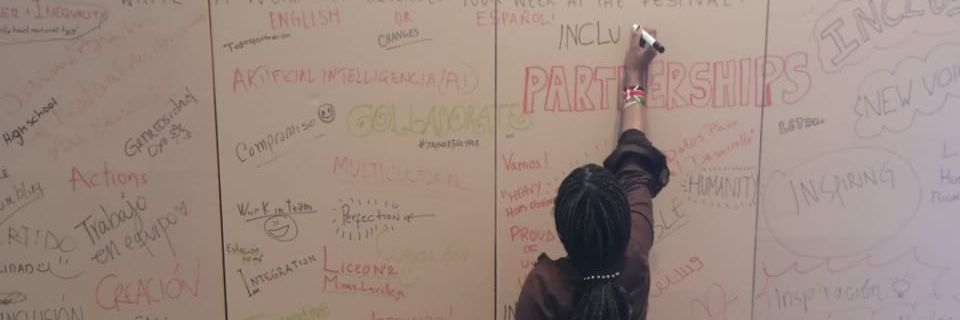
She shared that through meaningful partnerships legal documents have been able to be translated into different formats and distributed and has contributed to more awareness on the different policies.
Sally acknowledged the barriers faced by OPDs, noting that while they are expected to lead inclusion efforts and provide critical data and outreach, they are often under-resourced, excluded from decision-making, and their capacity is frequently questioned.
She stressed that strengthening OPDs through investment in institutional capacity and leadership, especially for women, youth, and underrepresented groups, is essential for effective disability inclusion.