I will be a Keynote Speaker at the 𝐆𝐥𝐨𝐛𝐚𝐥 𝐒𝐮𝐩𝐩𝐥𝐲 𝐂𝐡𝐚𝐢𝐧 & 𝐏𝐫𝐨𝐜𝐮𝐫𝐞𝐦𝐞𝐧𝐭 𝐓𝐫𝐚𝐧𝐬𝐟𝐨𝐫𝐦𝐚𝐭𝐢𝐨𝐧 𝟐𝟎𝟐𝟐 Conference. Utilizing #PredictiveData Analytics to Reduce the Cost of #WorkingCapital & Dealing with Uncertain Demand https://t.co/kORVg2DxTZ
The issue is not as straightforward as that. Many Zimbabweans in the diaspora have lost their hard-earned money through fraud when purchasing residential stands or building houses. Others have unknowingly purchased illegal stands, only to see their houses demolished.
Therefore, choosing to buy a house through a mortgage is not necessarily about affordability, but rather about security of the investment and protection of the asset. While building a house may be cheaper, it often comes with significant risks. Ultimately, what appears to be the cheaper option can end up being far more expensive.
MY LOYALTY IS A MATTER OF CONVICTION, NOT CONVENIENCE.
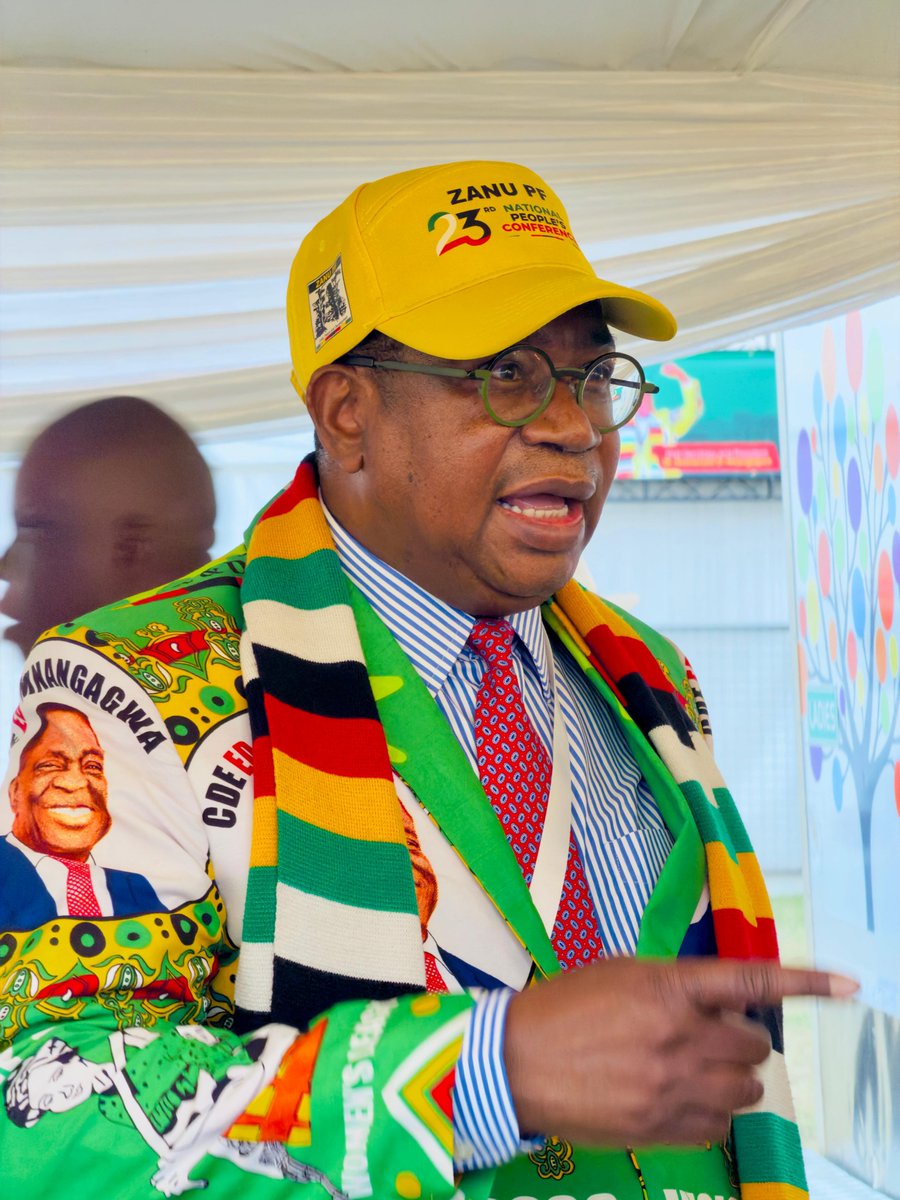
Standing next to His Excellency, President Emmerson Dambudzo Mnangagwa, is a moment I genuinely value. My support for him is deliberate and founded on my convictions about leadership, economic transformation and Zimbabwe’s future.
I am a Mnangagwa loyalist, and I have never been shy about saying so. My support goes beyond personalities; it is informed by economic performance, agriculture, mining, infrastructure development and the country’s overall economic trajectory. I believe leadership must be judged by measurable outcomes, not promises alone.
Consider the numbers. According to the World Bank’s 2025 GDP growth data, Zimbabwe recorded 8.1% growth, compared with 1.1% in South Africa and 3.8% in Zambia. In laymen’s terms Zimbabwe grew 7 times more than South Africa in 2025 alone. That’s astronomical growth. Agriculture grew by approximately 24%, mining by 7.3% and manufacturing by 4.2%, according to the African Development Bank. Merchandise exports reached approximately US$10.2 billion. Our gold, platinum and lithium resources further strengthen Zimbabwe’s position in the global economy.
I also recognise the commissioning of Hwange Units 7 and 8, adding 600MW to generation capacity, the rehabilitation of the Harare–Beitbridge Highway, airport expansion and other infrastructure investments. These developments strengthen productivity, trade and the foundations for industrialisation.
I am equally conscious of the challenges we still face and I understand that growth must ultimately be felt in people’s pockets. Recognising progress does not mean ignoring the work that remains.
My political position, however, has never been ambiguous. If there are factions within the party, of which I know none, I have made my position clear: I belong to the President. My allegiance is to Emmerson Dambudzo Mnangagwa. My loyalty is not dictated by political seasons, shifting alliances or convenience.
I also remain a man of conviction who will never participate in anything that undermines the Head of State. I have never known the President to be a man who undermines others or engages in unnecessary squabbles. I stand with the President. My convictions for peace should not be mistaken for weakness, my restraint for neutrality or my peace-loving nature for an absence of conviction. I am a man of peace, and I believe peace inspires investor confidence and economic prosperity.
I have long wanted to see Zimbabwe industrialise, diversify its exports, attract investment, create employment and move up the global value chain instead of depending on raw commodity exports. I believe H.E. President Mnangagwa has made significant strides towards that vision and continues to make it possible. For that reason, I believe we should support him.
I am proud of Zimbabwe, proud of its potential and unapologetic about the leadership I support.
My loyalty is deliberate. My conviction is firm. My allegiance is clear.
One President. One vision. One Zimbabwe.
NYIKA INOVAKWA NEVENE VAYO! 🇿🇼
#EDMnangagwa #MnangagwaLoyalist #Vision2030 #ZimbabweRising #EconomicTransformation #ZimbabweIsOpenForBusiness
Dinner in Harare, breakfast in London!
Thank you @FlyAirZimbabwe for a direct flight which helps connect businesses and families across our two countries 🇿🇼 ✈️ 🇬🇧
#dandarostreets Zimbabweans are rallying behind Ambassador Uebert Angel, crediting his alleged behind-the-scenes diplomatic efforts to push for sanctions relief and a better future for the country.
The support comes after the European Union lifted its remaining targeted sanctions on Zimbabwean individuals and entities in February 2026, with supporters praising Angel for what they describe as a quiet fight for the nation that he never sought public recognition for.
Follow Our WhatsApp Channel:
https://t.co/cYTwWjSLzD
THE BATTLE OF MAUNGWE
The Battle of Maungwe (June 1684) was a major engagement between the rising Rozvi forces under Changamire Dombo and a Portuguese-led force (with African auxiliaries and Mutapa allies). It is associated with the Maungwe region (the historic principality/kingdom of the Makoni dynasty) in what is now eastern Zimbabwe, near the present-day Mutasa area in Manicaland Province. Some accounts link the fighting specifically to Mhanda Mountain on the border between modern Mutasa and Makoni districts.
Historical Context
In the late 17th century, the Mutapa (Monomotapa) state in northern Zimbabwe was weakened by internal succession disputes, civil wars, and increasing Portuguese interference. Portuguese traders and settlers from bases along the Zambezi (Tete, Sena) and coastal areas had gained influence through trade in gold and ivory, supplied arms to rival factions, established feiras (trading posts), and sometimes intervened militarily. This eroded Mutapa authority and created openings for new powers.
The Battle
Portuguese authorities, viewing Dombo as a threat to their commercial position in the interior gold trade, launched a campaign. Sources describe a force under (or associated with) the Governor of Mozambique, including Portuguese troops, local African militia/auxiliaries, and Mutapa allies, confronting Dombo’s Rozvi in Maungwe around June 1684.
The fighting was intense and lasted a full day (some accounts describe a multi-day or protracted engagement). Rozvi warriors, primarily using traditional weapons (bows and arrows, spears, shields, axes), faced Portuguese firearms and limited artillery. Dombo’s forces reportedly broke or routed the Portuguese lines multiple times (accounts vary between four and five), though they themselves suffered significant casualties from gunfire. Both sides camped on or near the battlefield overnight intending to resume.
A key tactical or psychological element, recorded in Portuguese-linked accounts and later traditions, involved Rozvi women (accompanying the army) gathering firewood and, on Dombo’s orders, lighting a ring of fires around the Portuguese camp in the middle of the night (around 1 a.m.). The Portuguese and their allies, believing themselves surrounded, fled in panic. At dawn the Rozvi looted the abandoned camp. Dombo did not pursue aggressively, partly because of his own losses and because a Mutapa force (with some Portuguese elements) was simultaneously threatening his position in Butua; he later defeated that force as well.
Significance and Aftermath
The victory at Maungwe was an important early demonstration of Rozvi military capability against European firearms and helped establish Dombo’s reputation. It contributed to the broader process by which the Rozvi expelled or greatly reduced Portuguese influence on the Zimbabwe Plateau interior in the late 17th century (further actions included attacks on other feiras such as Dambarare in the 1690s). Dombo consolidated power in Butua (with centers such as Danangombe/Dhlo-Dhlo) and extended influence over much of the plateau, creating the dominant Rozvi state that lasted into the early 19th century.
Maungwe itself came under Rozvi overlordship (with the Makoni lineage continuing in a subordinate or integrated role in some accounts). The battle is remembered as a landmark in resisting external commercial and military penetration into the interior Shona states.
I’m so grateful to my Dad, who welcomed me as his son when I married my wonderful wife Amanda ❤️
Dad is a true inspiration. He came from very little but, through education, hard work and smart property investments, managed to build a good life for himself and family.
When I met Amanda, I pleaded that he allow us to marry. He said yes, and my life changed forever.
Dad’s big wish was that his childhood school be restored and made new.
Today we arrived in Zimbabwe, Wedza and visited his childhood school
I just made a pledge to fund the construction of a brand-new classroom block for the school, built entirely from scratch.
We wil name the building after Dad (Machekanyanga) 🫶
It was a surreal moment, and the welcome from all the pupils, parents, school teachers and authorities has been overwhelmingly positive.
I’m incredibly excited to bring Dad’s dream to life and share the journey of this next development with you all. ❤️
I am deeply honoured to have been appointed Secretary for Science and Technology in the ZANU PF Politburo by His Excellency, the President and First Secretary of ZANU PF, Cde Dr. Emmerson Dambudzo Mnangagwa, today at the close of the 23rd Annual National People's Conference.
It is a great honour and privilege to be entrusted with this important mandate to serve in the highest decision-making organ of our colossal revolutionary Party, ZANU PF, outside of Congress, in this digital era.
I wish to express my profound gratitude to His Excellency for the trust and confidence he has reposed in me through this greater responsibility.
I pledge to work collaboratively with all key stakeholders in Government, academia and the private sector to fully execute my mandate and to advance science, technology and innovation as key drivers of national development.
Thank you, Your Excellency Cde Dr. @edmnangagwa, for this trust. Together, we will work tirelessly to ensure that science and technology meaningfully contribute to the attainment of Vision 2030 and the improvement of the livelihoods of our people.
This is my all-time favourite verse, and whilst Paul was writing it to the Roman church who was under persecution because, instead of declaring that Caesar was Lord, they declared that Jesus is Lord. This wise Apostle, who is my favourite in the New Testament, is telling us today that we need to trust God enough to know that everything happening to us and around us has a purpose.
This will lead to ultimate good; however, it requires us to love God with all our heart, mind and might and know that he’s called us for his purposes, regardless of the circumstances going on around us!
Of course, all things are not necessarily good, but in all things we have a good God, and he is in control.
Your destination = a place far greater than your current suffering. Today, as everyday I try to first put God’s word in front of me, as I know God is really in control!!
I have experienced many times how an impossible situation that would appear to anyone as dreadful, with a most certain negative outcome, yet God has used it to do the unexpected and turn it around into a positive and victorious outcome!
The Greek word here, “synergei”, means ‘To cooperate with, work together ', and comes from sunergos, meaning to be a fellow-worker; in other words, to co-operate; so the next time you’re facing some difficulty, don’t let it stop you from loving God and fulfilling your calling and purpose by cooperating in his grand plan, because ultimately it’ll all work out for the good!
Paul also said in 2 Corinthians 12:9&10, ‘My strength is made perfect in weakness... For when I am weak, then am I strong.'
In the struggle of this mortal life, we can all face disappointment, sickness, uncertainty, difficulty, opposition, suffering, hunger, pain, anxiety, depression, hopelessness and the list goes on and on.
These things don't seem good or like any kind of blessing when they happen to us, but when we look back and contemplate with wisdom why they happened, they make total sense.
If Jesus Christ, who is equal to God himself, had to come down as a mortal man and suffer in the flesh to experience in one excruciating moment all our collective sin and then, with that pain, die on the cross, then surely we can't expect to not have to put up with some short-lived pain in this life?
Paul says we should "glory in tribulation" and summed it up nicely when he said "give thanks in all things", for they work to the good of those who love God.
Surely this is a blessing in itself, and we certainly know that our Father loves us enough to make sure that whatever we experience will "work for our good", and he will never let us go through more than we can bear.
After the trial always comes the witness, which should in one way or another be a "blessing" to you; or, in other words, if you had not gone through the trial, then would you be able to fully appreciate your circumstances and see the "blessing" afterwards, which is why all will see the “glory” revealed in us.
In the name of Jesus Christ,
Amen🙏
I’ve noticed most Ndebele people know Shona. at college, almost all the Ndebele students would communicate in Shona, but us Shona people🙌🏾🙌🏾. ko ndebele yacho neshona zvikangoitwa compulsory in schools.kutobva ku primary, my thinking.
This verse should be instructive ‘Mark 12:41–44 (NKJV)
Verse 42: “Then one poor widow came and threw in two mites, which make a quadrans.”
Verse 43: “So He called His disciples to Himself and said to them, ‘Assuredly, I say to you that this poor widow has put in more than all those who have given to the treasury;’”
Verse 44: “for they all put in out of their abundance, but she out of her poverty put in all that she had, her whole livelihood.”
I WANT TO THANK THE PUBLIC MEDIA AND @djollah_7 for saturation coverage of the recent helicopter crash and subsequent burial of all the five victims. The story was ably tackled from all angles and the viewers/readers were all the richer for it. @djollah_7 went beyond his usual format to superbly perform the role of a public broadcaster. Thank you most all.👏🏿👏🏿👏🏿👏🏿
Lobengula’s Diplomatic Mission to London
In 1889, King Lobengula of the Ndebele Kingdom sent a diplomatic delegation to Britain—a remarkable journey that demonstrates how seriously he took diplomacy and the growing European threat to his sovereignty.
Lobengula sent two senior representatives, Babiyane and Mtshede, accompanied by E. A. Maund. They travelled from southern Africa to Britain, where they met Lord Knutsford, the British Secretary of State for the Colonies.
On 2 March 1889, the delegation travelled to Windsor and was received by Queen Victoria. They delivered Lobengula’s message and received gifts for the King.
Their mission came shortly after the controversial Rudd Concession of 1888, which Europeans claimed gave them extensive mining rights in Lobengula’s territory. Lobengula became increasingly concerned about the implications of the agreement and sought clarification from the British authorities.
The delegation was also shown Britain’s military and industrial power. They visited places including Aldershot, Woolwich, Portsmouth and Birmingham, witnessing the enormous resources of the British Empire.
Yet there was a striking contradiction. While Lobengula’s representatives were in Britain engaging with its government, Cecil Rhodes was pursuing a Royal Charter for the British South Africa Company. The charter was granted later in 1889, accelerating the imperial expansion that ultimately threatened Lobengula’s kingdom.
Lobengula therefore did not simply wait for colonial conquest. He used diplomacy, negotiation and international representation to defend his interests.
His London mission is a reminder that African rulers were active political actors confronting European imperial expansion—not merely passive victims of it.