Jalen Brunson (@jalenbrunson1) with an all timer for the haters at the @nyknicks parade:
Success is the only revenge that matters.
Because as you grow, their criticism just fades into irrelevance.
As your impact gets louder, nobody can hear their opinions.
You don't defeat your detractors by arguing with them, you build something so massively impactful that they disappear in its shadow.
Because there's no greater waste of time than seeking validation from people living a life you wouldn't trade for anyways.
So far this World Cup has been a great reminder that we make too many assumptions about one another, and that the vast majority of humanity is awesome.
It's been pretty damn refreshing, honestly.
If, when you say regulation, you mean the dead and clammy hand of the commissar—the gentleman who has never in his life built a single thing, drafting rules to govern a thing he cannot define, to be enforced by men who cannot read them; if you mean the form in triplicate, the impact assessment upon the impact assessment, the compliance officer who breeds, in the warm dark of the org chart, further compliance officers unto the third and fourth generation; if you mean the moat—the deep cold moat that the giant digs around his own castle and christens, with a perfectly straight face, public safety—the drawbridge he hauls up behind himself the very instant he is across, lest any hungrier and hungrier man should follow; if you mean the precautionary principle, which, had it governed our grandfathers, would have banned the wheel pending further study of the hill, and left us yet shivering and raw in the mouth of the cave, blessing its excellent ventilation; if you mean the European disease—that magnificent open-air museum of a continent, which produces in our time precisely two things in great abundance, and they are regulation, and the eloquent and well-footnoted regret of cultivated men explaining at length why they have produced nothing else; if you mean the license required to think, the permission slip for honest arithmetic, the king’s wax stamp pressed upon the forehead of every new idea before it may draw its first breath; if you mean the agency dispatched, with trumpets, to slay a single dragon, which arrives at the cave, surveys the accommodations, and moves in—and spends the ensuing century laying eggs and devouring the very villagers it was sworn to defend; if you mean the startup that perishes not of the market’s honest verdict but of the filing fee, the genius decamping by the next tide to a freer and warmer shore; if you mean the law that arrives, faithful as the swallows, exactly one whole epoch too late—helmeted, plumed, and magnificently armed—to regulate the stagecoach—then certainly, my friends, I am against it.
But—but, my friends—if, when you say regulation, you mean instead the humble steel guardrail upon the mountain road at midnight, the very thing you curse on the easy days and bless on your knees the one night the fog comes down; if you mean the brakes—for it is the brakes, and not the engine alone, that permit a sane man to drive fast and yet arrive alive—and the buttress, without which no cathedral was ever flung so high, but only in spite of which, but because of which; if you mean the meat inspector, who is the single homely reason a man may eat a sausage in this republic without first composing his last will and testament; if you mean the firebreak cut clean through the forest before the dry season of the burning, the smallpox cordon, the buoy that marks the channel, the rule of the road that lets ten thousand strangers hurtle past one another in the dark at fearful speed and arrive, by its quiet grace, every one of them home; if you mean the honest scale and the true weight, the reason a pound is a pound and a dollar a dollar from Natchez to Nome; if you mean the firm and decent wall between the counterfeit voice and the widow’s bank account, between the deepfaked candidate and the ballot box on the eve of the vote, between the loosed and loveless machine and the schoolyard it neither knows nor pities; if you mean the simple plank of law that says the strong shall not, in the gray dawn, feed the weak quietly into the furnace and sell the rising smoke as progress; if you mean, in the end, the one slender thread of trust without which no citizen will ever dare to use the marvelous thing at all—for where there is no rule there is no trust, and where there is no trust there is no commerce, and a miracle that no man dares to touch is no miracle, but only a handsome and expensive ghost—then certainly I am for it.
This is my stand. I will not retreat from it. I will not compromise one inch of it.
What are the best cities to live in for the weather alone?
Sounds almost too trivial to ask. But I know more than a few people who make it their #1 filter, picking where to live around the climate, above taxes, cost, and even career. Call it "weathermaxing." I'll admit I may be one of them.
And funnily enough, someone once put hard numbers on it. Back in 1996, a study scored 600 cities on what humans genuinely find pleasant. Only one earned a perfect 100 out of 100, and it's a place most people never even think to consider.
What I looked for is the mid-warm sweet spot: mild winters, summers that never become a furnace, pleasant all 12 months.
I mapped the best ones, only to realize I have friends in almost all of them. In retrospect, not a coincidence.
A couple will surprise you. Let's start with that perfect-100 winner.
🧵
Father of 4 and 6 year old here. Full time business owner. Solid 6/10 dad bod. Huge fucking quads. I try real hard at life.
The secret to great sleep: exhaust yourself everyday. Put all your energy into the things you do. Love your wife and kids bigly. Work the long hours. Never skip leg day. Embrace the suck. Do the hard things. Go to bed wiped.
That's it. That's the secret. Good night.
I thought Tesla Full Self-Driving would make my commute easier.
I did not expect it to expose me as the problem.
Turns out I was not “driving defensively.”
I was conducting a one-man municipal audit of every idiot within 300 yards.
Someone going 40 in a 25?
I had notes.
Someone taking too long at a green light?
I had a full theory of civilizational decline.
Now the car drives and I just sit there like a reformed man.
No high blood pressure.
No death grip on the wheel.
No courtroom monologue about lane discipline.
My wife noticed immediately.
She said, “You’re way more chill in the car, I like this!”
That is when I realized Tesla didn’t just make the car drive itself.
It made me stop narrating the collapse of society from the driver’s seat.
Every school should have a greenhouse, a native plant garden, and fruit trees.
Kids shouldn't just memorize dates and facts.
They should grow food, watch pollinators at work, learn how soil actually works, and understand that they can actively help the environment, not just read about it.
A garden teaches patience, responsibility, biology, and stewardship in ways no textbook can.
Imagine an entire generation that grows up knowing how to care for the land instead of just consuming from it.
Seems like basic education for the world they're inheriting.
@aakashgupta How does the US deficit and inflation outlook change the math here relative to history, if at all?
What about the TAM of AI and space relative to history?
People keep confusing a bubble with “stocks go up and get overvalued”. A bubble is when when a prevailing trend and a prevailing misconception about that trend interact reflexively, each reinforcing the other until the gap between perception and reality becomes unsustainable.
A bubble is not when everyone realizes that right now every iota of AI demand eventually, at some point upstream, must move through memory OEMs. Nor is it when estimates continue rising because things are better than expected. And it’s not just when stocks trade expensive to historical valuations.
The reason behind the moves in the AI infrastructure layer so far have been simply that we don’t have enough. They’ve been driven by the fundamental reality more than the perception of the future. It’s why the bulk of the most bullish parts of this cycle have been lumpy and centered around earnings season when companies uniformly come out and confirm there’s still not enough. In the bubble, the reality is driven by the market - not the other way around.
Everyone keeps saying “people are gonna freak out if it’s not a bubble!”. I think that’s silly, we have a transformative new technology that needs crazy capital to fuel it coming to fruition, that has and always will result in a bubble as long as we have financial markets.
But if you want to call the top in a bubble, you need a much stronger view on what the misconception is and what negative catalyst forces broad perception to align with realizing it than you do on valuation.
Every company is realizing they’ve got once-in-a-generation air cover to fire their worst 30% of employees
Many of these companies have been hoarding talent for a decade. They don’t need to anymore AND they have a free pass to unwind it
You better believe they’re gonna do it
Winston Churchill fought his depression with bricks. He'd lay them for hours at his country home in Kent. He joined the bricklayers' union. And in 1921 he wrote about why it worked. It took psychology another 75 years to catch up.
He called his depression the "Black Dog." It followed him for decades. His method for fighting it back was as basic as it sounds: laying brick after brick, hour after hour.
Churchill spelled out his theory in a long essay for The Strand Magazine. People who think for a living, he wrote, can't fix a tired brain just by resting it. They have to use a different part of themselves. The part that moves the eyes and the hands. Woodworking, chemistry, bookbinding, bricklaying, painting. Anything that drags the body into a problem the mind can't solve by itself.
Modern psychology now calls this behavioral activation. It's one of the most-studied depression treatments out there. Depression sets a behavior trap. You feel bad, so you stop doing things, and doing less means less to feel good about. Feeling worse makes you do even less. The loop tightens until you can't breathe inside it.
Behavioral activation breaks the loop from the action side. You schedule the activity first, even when every part of you doesn't want to. Doing it produces small rewards: a wall gets straighter, a painting fills in, a messy room gets clean. Those small rewards slowly rewire the brain. Action comes first, and the feeling follows.
Researchers at the University of Washington put this to the test in 2006. They studied 241 adults with major depression and compared three treatments: behavioral activation, regular talk therapy, and antidepressants. For the people who were most severely depressed, behavioral activation matched the drugs. It beat the talk therapy. A 2014 review of more than 1,500 patients across 26 trials backed up the result.
Physical work like bricklaying does something extra on top of this. It crowds out rumination, the looping bad thoughts that grind people down during the worst stretches of depression. Bricklaying needs both hands and gives feedback brick by brick: each one is straight or crooked. After an hour you can see exactly how much wall you built. No room left for the mental chewing.
The line George Mack used in his post, "depression hates a moving target," is good poetry. The science behind it is sharper. Depression hates a brain that has somewhere else to be.
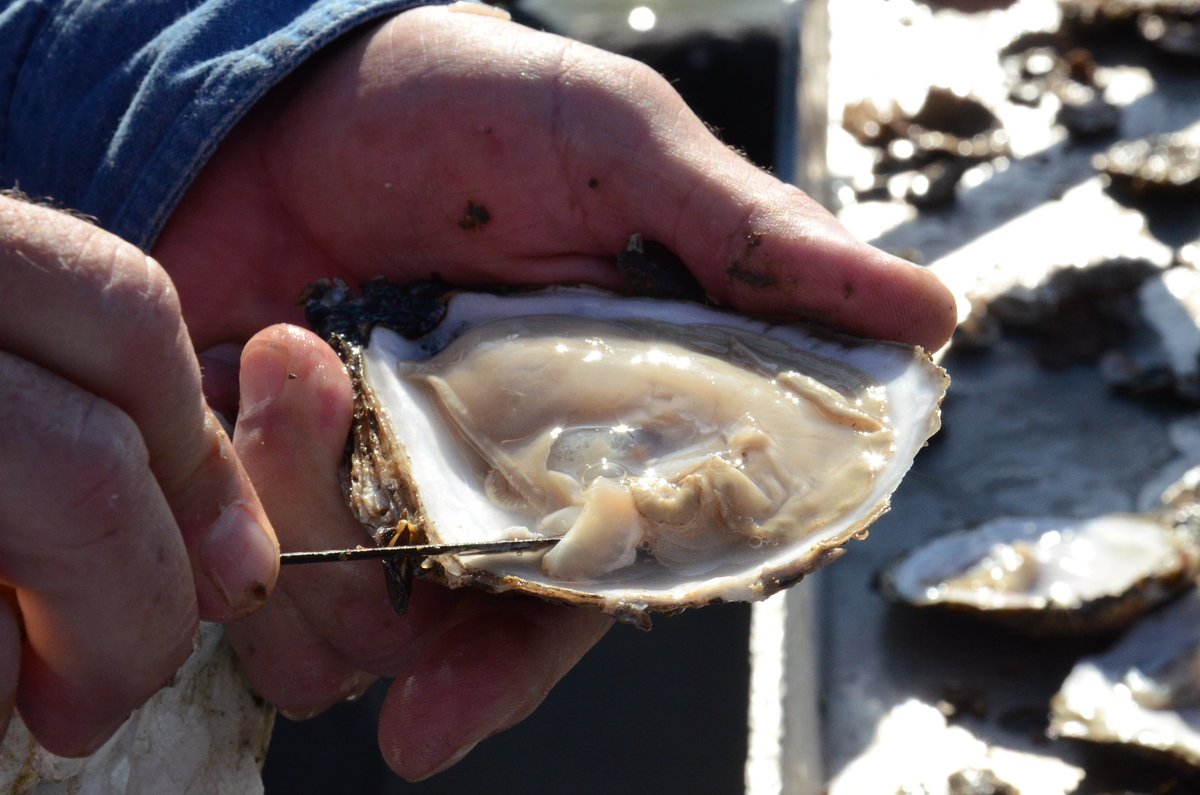
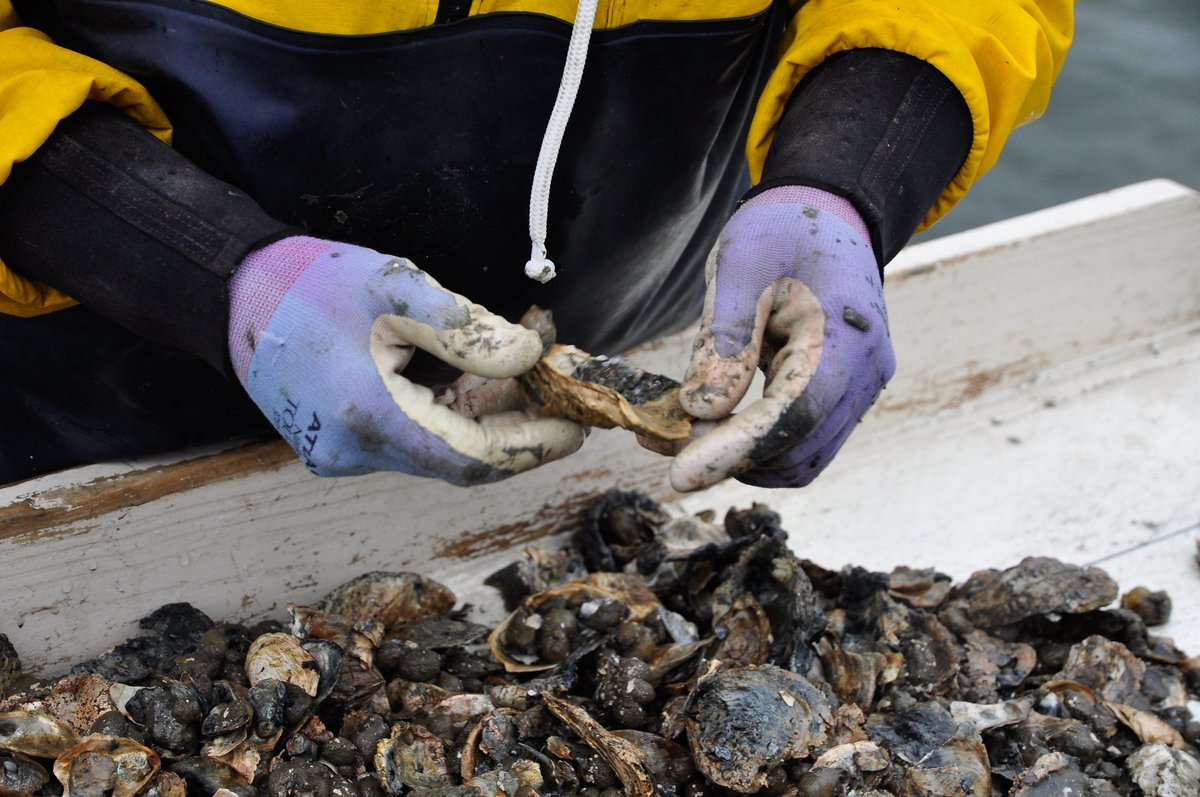
Last month, Maryland announced a historic year for oyster reproduction in the state. The concentration of new oysters (or oyster spat) was the second highest ever recorded in the 41-year modern history of the state’s fall oyster survey.
The outstanding spatset results—which were nearly six times higher than the long-term average—were matched by very high distribution of oysters throughout the Chesapeake Bay and low rates of mortality. The overall weight of oysters in Maryland waters is estimated to be more than five times higher than it was in 2002.
These results are great news for oysters, as well as great news for the Bay and all of Maryland. Oysters are a keystone species that build large reefs that are essential habitat for fish, crustaceans, and other marine life. A single mature oyster filters gallons of water daily, helping clean and clarify the water by consuming algae. With the latest estimates calculating more than 7.6 billion adult oysters in Maryland’s part of the Bay, that’s a lot of water getting filtered!
top 10 fastest growing economy, fastest dropping crime rate...
Baltimore is your *last chance* to live the "boomer dream" and get the historic walkable city rowhouse for <300k in America.
there are maybe *months* left.
🚨 WOW! Artemis II pilot Victor Glover gives the PERFECT response to a leftist reporter asking about skin color
"I hope we push that one day...it's about human history, humanity, NOT 'black history,' not 'women's history,' but that it becomes human history!"
RIGHT ON!
Victories for Americans and victory for humanity 🇺🇸🚀
Why aren’t any of these at risk hospitals publishing their full accounting so everyone can see where they spend their money ?
All but one group of hospitals that I have looked at potentially investing in, spend so much on consultants and fees that it’s no wonder they are at risk
Plus, I have NEVER seen an industry that is worse than hospitals when it comes to buying medications and items like implants, screws, other devices. They overpay for everything.
And then when you show them how to save money, their “supply chain” employees resist any change.
They are so set in their ways, it’s a shock more don’t go out of business.
Prove me wrong.