one thing an American might not expect in Brazil 🇧🇷 ...
...is that there a lot of 'white' Brasileros live in the favelas.
not so the case for poor neighborhoods in both the rest of Latin America & the US!
But who will build the roads... in France?
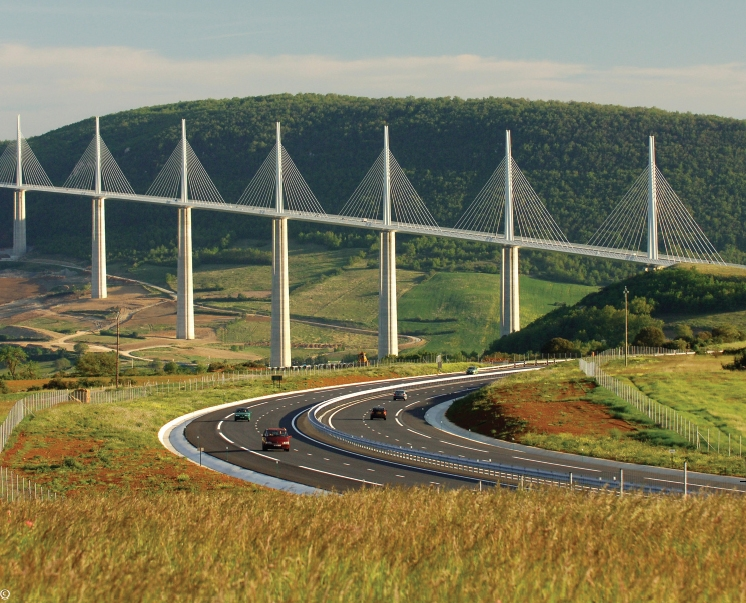
While French politicians debate infrastructure spending, private highways consistently outperform their state-managed counterparts in every metric that matters. The contrast hits you immediately: smooth private motorways carry you swiftly from Paris to Lyon, then dump you onto crumbling state asphalt where orange cones and half-finished repairs create endless bottlenecks.
Private highway operators like Vinci Autoroutes maintain 8,000 kilometers of French motorways through direct user fees. No political interference. No budget committees deciding whether pothole repair can wait another fiscal year. When your revenue depends entirely on drivers choosing your roads, maintenance becomes urgent business rather than a bureaucratic afterthought.
State highways rely on tax funding filtered through layers of political calculation. Politicians prefer ribbon cuttings for new projects over unglamorous repair work. Bureaucrats face no immediate consequences when roads deteriorate because drivers have no alternative. The incentive structure guarantees inferior outcomes.
Private operators face immediate market discipline. Poor road conditions mean drivers seek alternate routes, killing revenue instantly. Customer complaints reach decision makers within hours, not election cycles. Quality maintenance protects profit margins while political highways drain budgets regardless of performance.
The French model proves what free market economists have argued for decades: property rights and profit motives solve coordination problems that democratic processes cannot. When you own something, you maintain it. When everyone owns something, no one does. Private road quality reflects ownership and accountability. Public road deterioration reflects diffused responsibility and political time horizons.
@JacobAShell It's because the govt basically mandates this style of development. It can build a lot of high quality housing quickly & cheaply. But, maybe more importantly, it crowds out smaller developers that can create "slum-style" housing. But yeah, it's ugly.
@okaythenfuture Look, Nairobi seems nice as far as African cities go...
...but Kenya averages ~4% GDP growth per year. Thailand was averaging around ~7.5% back then.
Don't think this is happening. It will become more popular, sure, but let's be real.
@2024dion Isn't building any sort of structure above a handful of stories just infinitely more expensive though? Cut down on the lanes, but Boston's problem is more so the on & off ramps than just the wide roads.
Midland, TX actually has a ton of top tier nature getaways for weekend trips (New Mexico, Big Bend)
The problem is the city is devoid of human life - why don't the oil companies invest in a fake "main street" full of bars & restaurants?
Would do wonders for recruiting.
Midland, TX actually has a ton of top tier nature getaways for weekend trips (New Mexico, Big Bend)
The problem is the city is devoid of human life - why don't the oil companies invest in a fake "main street" full of bars & restaurants?
Would do wonders for recruiting.