@loveologian Argentina was definitely not uninhabited when a bunch of Spaniards, Italians, and Germans showed up there and called it "Argentina" though
So before you say "the public have been manipulated by the media", look at the professionals.
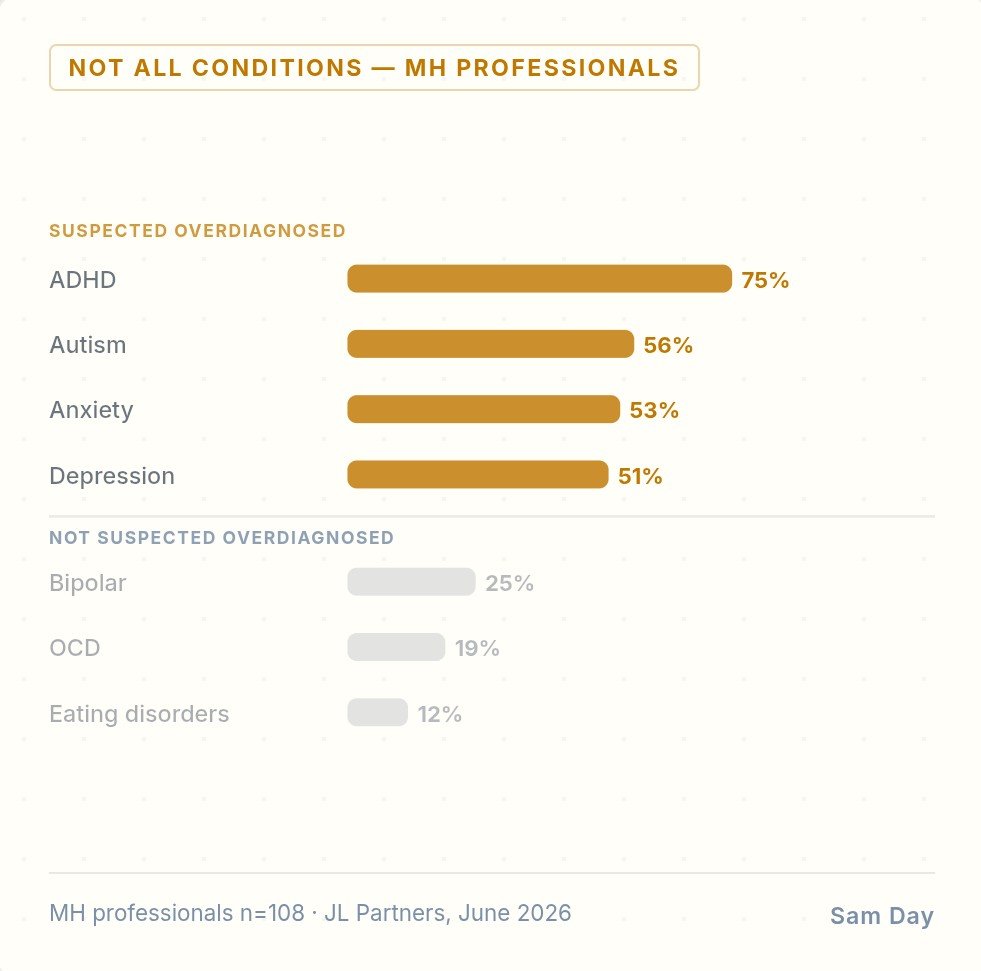
75% of mental health professionals think ADHD is over-diagnosed. Among the general public, it was 39%. In every condition I looked at, the clinical experts were more concerned than the public.
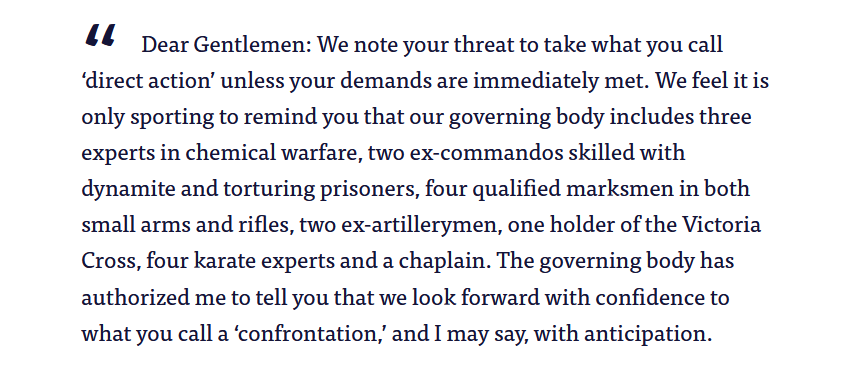
An oldie but a goodie. In 1968 a bunch of entitled hippy bastards sent a letter detailing their specious demands to the Warden and Fellows of Wadham College, Oxford. This was their letter of reply, which speaks to how far the academy has since fallen.
Over half of all NHS-funded ADHD assessments and a third of autism assessments are now carried out by private providers.
Private providers are profiting from the expansion of ADHD and autism diagnosis, @utafrith@naomicfisher
https://t.co/qOc9Dc9JN0
But this is not a blanket claim. Professionals drew a clear line.
ADHD (75%), autism (57%), anxiety (53%), and depression (51%) were seen as over-diagnosed. Bipolar, OCD, and eating disorders were more likely to be seen as UNDER-diagnosed.
These are some of the most serious conditions anyone can experience.
@SaveMHUK@cwestonclark Thanks! 86% of my respondents said that they were happy talking about this publicly. And the research itself was motivated by chats I've had with clinicians over the last year where they've been willing to discuss this stuff. So I do think the situation is better than you think
It's time to talk about mental health, medicalisation, and overdiagnosis.
When polls show that people think autism, ADHD, and anxiety are overdiagnosed, a common reply is:
"The public don't know what they're talking about. Ask an expert."
So that's exactly what I did. And it turns out experts are far more concerned than the public!
@Xavegriball That would be great in theory, but I don't know how it would be implemented in practice? Who does the assessing? Where do they resources and staff come from? I think we need to change diagnostic guidelines for clinicians, and also change the wider societal culture
@SamDayOxEP https://t.co/eW15Y3z2Q5 If you haven't seen this, you may find it interesting.
I am not in the sector, so this is purely my opinion, but I think diagnostic guidelines and legislation puts significant pressure on clinicians in MH space.
@Xavegriball Just one of many paradoxes.
I think it's arguably even more paradoxical that clinicians are most worried about over-medicalisation and overdiagnosis, but yet they're the ones doing the diagnosing?
Clearly, the will is there to change things, but incentives need to change too
@cwestonclark@SaveMHUK I find it odd that we haven't really had a large scale study into clinician's opinions on these issues before. The BBC and Pulse both surveyed GPs over the last year, but no-one has looked at psychiatrists and clinical psychologists. This research hopefully addresses that gap
@AllenFrancesMD Thanks so much for highlighting this Allen! I think it's very reassuring that most clinicians seem to be aware of these problems and willing to talk about it. It's a good first step
@nebulapillars_ Yeah, the findings surprised me in lots of ways. OCD feels like a condition that was perhaps most trivialised 10-15 years ago, but now seems to be less on the radar. So it's reassuring to hear that clinicians don't think it's being overdiagnosed. Maybe a model for ADHD/autism?
Medical practitioners admit to their profession's wrongly diagnosing normal feelings (often to adverse circumstances) as mental disorders.
For some, an ADHD diagnosis is seen as being trendy.