🇷🇺Vladimir Putin: "Serbs are a divided nation in Europe, and divided by force, that is unjust".
Serbia was on the winning side in both World Wars, yet territories were still taken from us. When borders are redrawn again, all Serbs must be in one country.
Just in my years coaching and being contacted by people online, I cannot tell you the number of times I hear some version of the story:
I went to an Orthodox Church, and the priest was evil and the people judged me.
And sometimes this is from bitter unwell people, but far more often from sincere people who are genuinely confused.
Some of them do end up wallowing in it, and unwilling to question maybe they misread the person, but thank God many eventually see and become Orthodox.
They eventually realize it was a demonic attack, invasive thoughts which are the main way demons attack us.
🔸 October 1 – Panagia Gorgoepikoos👂🔸
Today, we commemorate the miraculous icon of the Panagia Gorgoepikoos (“She Who is Quick to Hear”). The original icon dates back to the 11th century, and is kept at Docheiariou Monastery on Mount Athos where it is venerated by many pilgrims. In 1664, the head of the dining room at the Docheiariou Monastery, a monk named Neilos, was passing by the icon as usual with a lit torch on his way to the dining room. Suddenly he heard a stern voice call to him:
“Do not pass by here again with a torch and smoke up my icon.”
Neilos had no idea where the voice came from, so he ignored it and continued about his business. After a few days, he again passed the dining room with his torch and heard the voice: “Unmonastic monastic, how long will you irreverently and unhonorably smoke up my image?”. Immediately upon hearing this, Neilos was struck blind. He now understood that both the voices he had heard were the Theotokos, and accepted that his blindness was a just punishment for his disobedience.
When the other monks heard what happened to Neilos, they were terrified. From that time they began to show great reverence when passing by the icon, hanging a perpetual lamp and burning incense before it everyday. The blind Neilos spent all his time in a stall in front of the icon, imploring the Theotokos to forgive and heal him. He begged her to restore his sight, as a sign of her forgiveness, so that he might gaze upon her icon and honor her. At the appropriate time, the Theotokos healed Neilos, saying to him:
“Behold, I am granting you your sight, but see that you do not pass by here again with a lit torch. I am the Abbess of this Monastery, the Theotokos Gorgoepikoos, for quickly do I hear those who call upon my name.”
To this day many have testified to the miracles of the Panagia Gorgoepikoos, reminding us that the Most-Holy Theotokos is quick to come to the aid of those who call upon her faithfully. Written in the top left of the second icon are the words: “The Infant-bearing Mother, the Formidable Protection, holding Fire - a wonder, and yet It does not burn. In the year 1563, when the church of Dochiariou was built.”
⚡️BREAKING:
Iran's National Security Council Head has just issued a Warning to the UAE for inviting Netanyahu:
"Learn from the recent war, stop stoking conflicts, and cease making baseless claims regarding the Iranian islands
Netanyahu will not bring you security"
🚨 NO, No es Broma
Dice @FelipeCalderon que parece que se está regresando a la Dictadura Perfecta, cuando los creadorea de esa dictadura son el PRI con los que hizo el Amasiato para bloquear a AMLO y que pasara Peña para poder seguir privatizando el país y regalar nuestros bienes al extranjero...
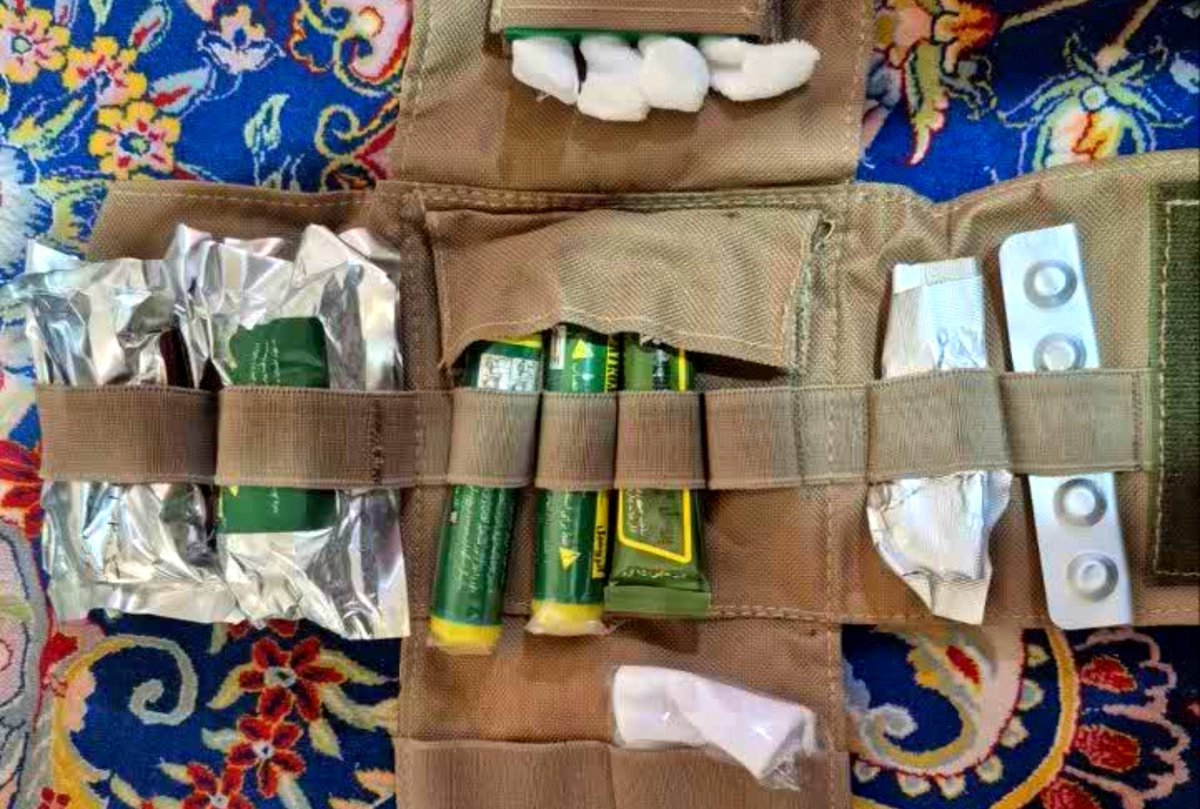
⚡️BREAKING: Iranian Troops Deployed in the Southern Regions have been issued Kits to Protect themselves against Nuclear or Chemical Attacks
The Persian Gulf Region is home to numerous Nuclear Power Plants as well as Oil and Gas Fields
If these facilities were to be damaged, Toxic and Radioactive Substances could spread throughout the region
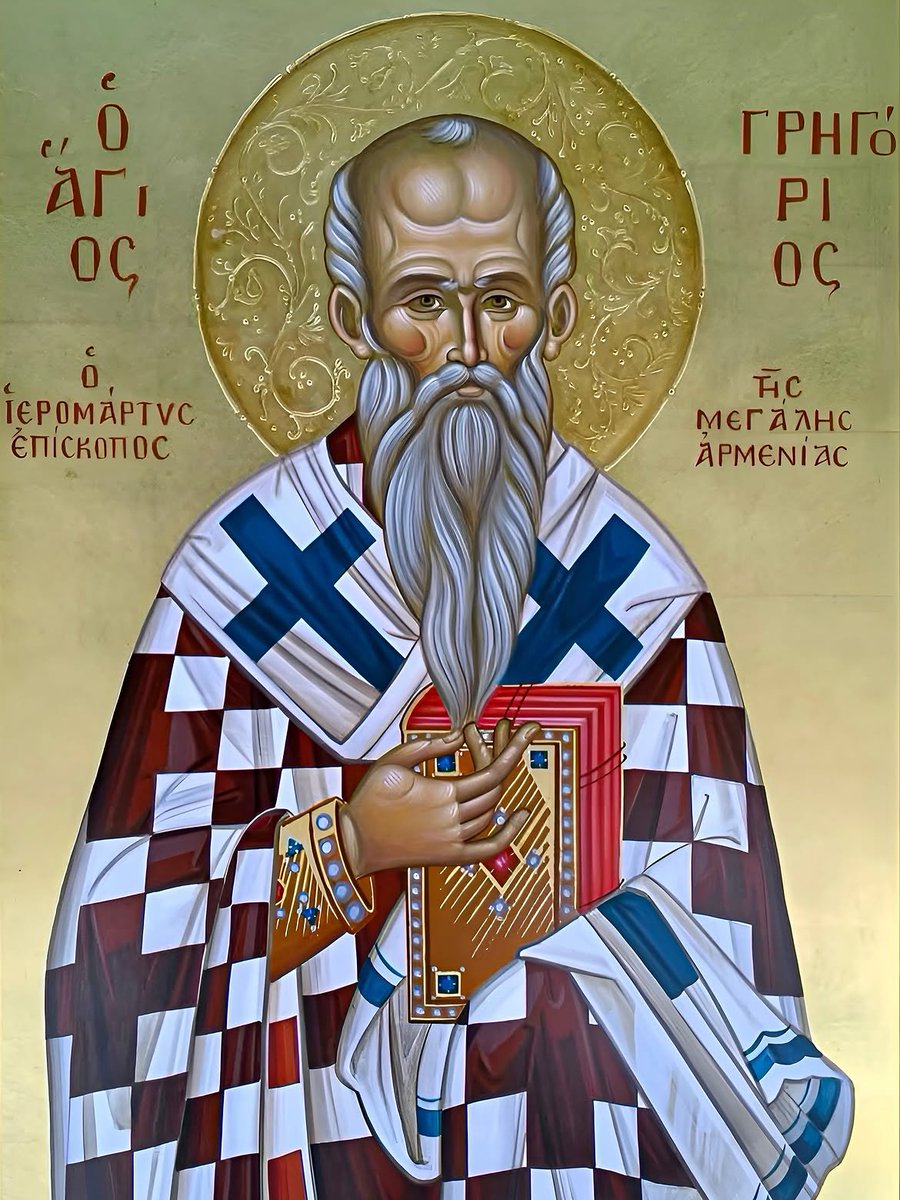
🔸 September 30 - Saint Gregory the Illuminator of Armenia 🇦🇲 🔸
Today, we commemorate Saint Gregory the Enlightener of Armenia and Equal to the Apostles. It was through his efforts that Armenia became the first nation in history to declare Christianity as its official religion in 301. St Gregory was born in 257, and descended from a line of Parthian kings. While still an infant, his father Anak, a Parthian prince, was persuaded by the Persian court to assassinate King Khosrov II of Armenia as part of their plan to weaken the Armenian kingdom.
After the assassination, Anak was executed by the Armenian nobles along with his entire family. The infant Gregory was the sole survivor, having been taken by a relative to Caesarea of Cappadocia in the Roman Empire. In this Christian city, he learned the True Faith, was baptized, and married. After the death of his wife, Gregory returned to Armenia in 280. To atone for his father’s sin, he served King Tiridates III, the son of the assassinated King Khosrov. Tiridates was intolerant of Christianity however, and ordered Gregory to worship the idols.
When Gregory refused, Tiridates subjected him to harsh tortures, and threw him into a pit of snakes. But Gregory survived here for 14 years, secretly sustained by bread brought to him by a widow. Continuing his persecution, the insane King butchered a convent of 37 nuns after which he developed a serious ailment and suffered disfiguration. When his sister had a dream that only Gregory could make him well, Tiridates removed Gregory from the pit, and the Saint healed him.
The grateful King released Gregory, who used his freedom to preach Christ and urge the people to reject idol worship. The people of Armenia accepted St Gregory’s call to Christ, and King Tiridates also accepted baptism in 301, adopting Christianity as the official faith of his nation. St Gregory was consecrated Bishop of Armenia, and replaced pagan temples with churches. In 318, he announced that he would be succeeded by his son Aristaces who attended the First Council of Nicaea in 325. St Gregory later retired to Upper Armenia near Mount Sebuh to live in asceticism. He reposed here in 331.
Rather, you are getting off the rabbit trail(s) which lead to nowhere and entering into eternity within time, the same Lord and Body, yesterday, today and forever.
FYI:
https://t.co/9MbC1N9b5D
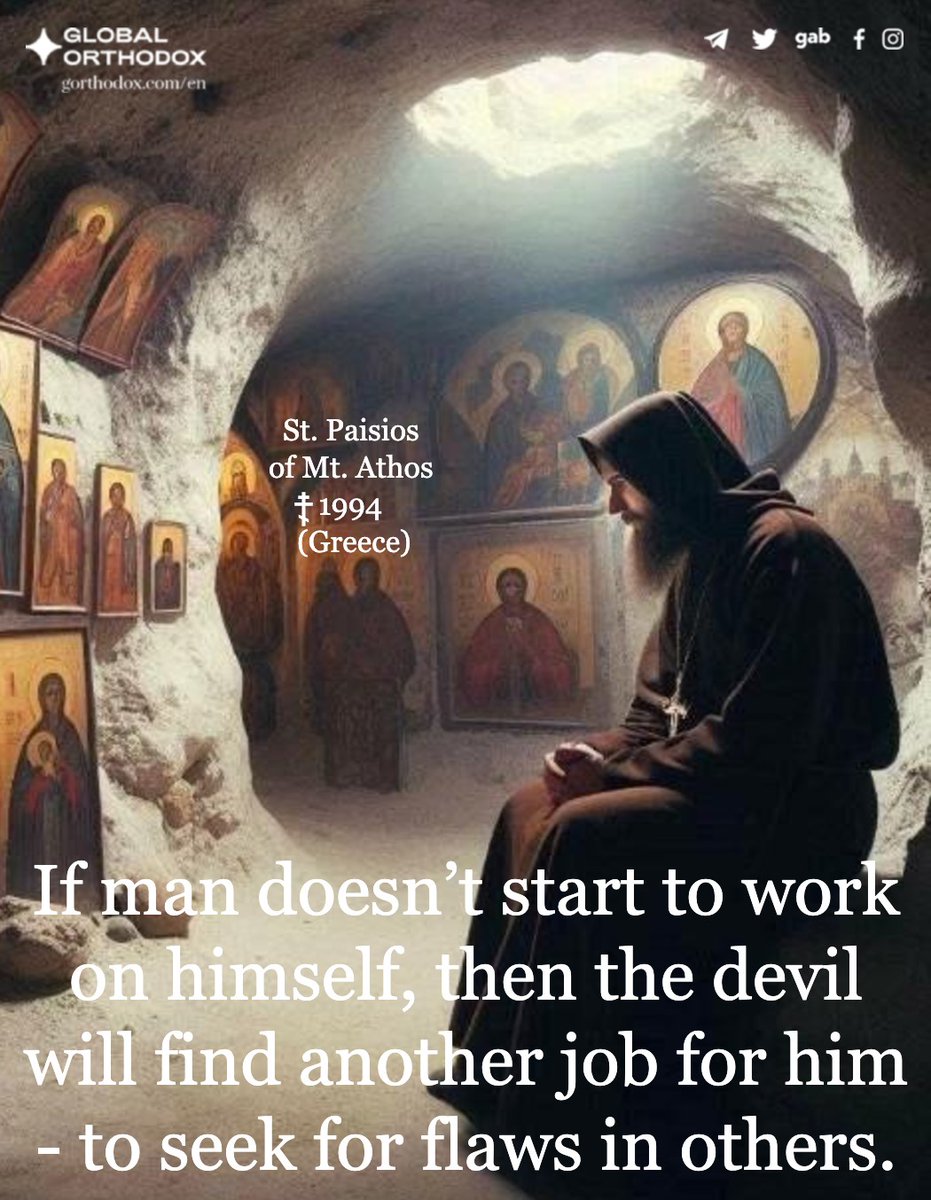
“Treat everything with love, kindness, patience and humility. Be like rocks. Everything erupts on you, but like the waves, everything falls back. You must be calm!”
— Saint Paisios the Athonite ☦️
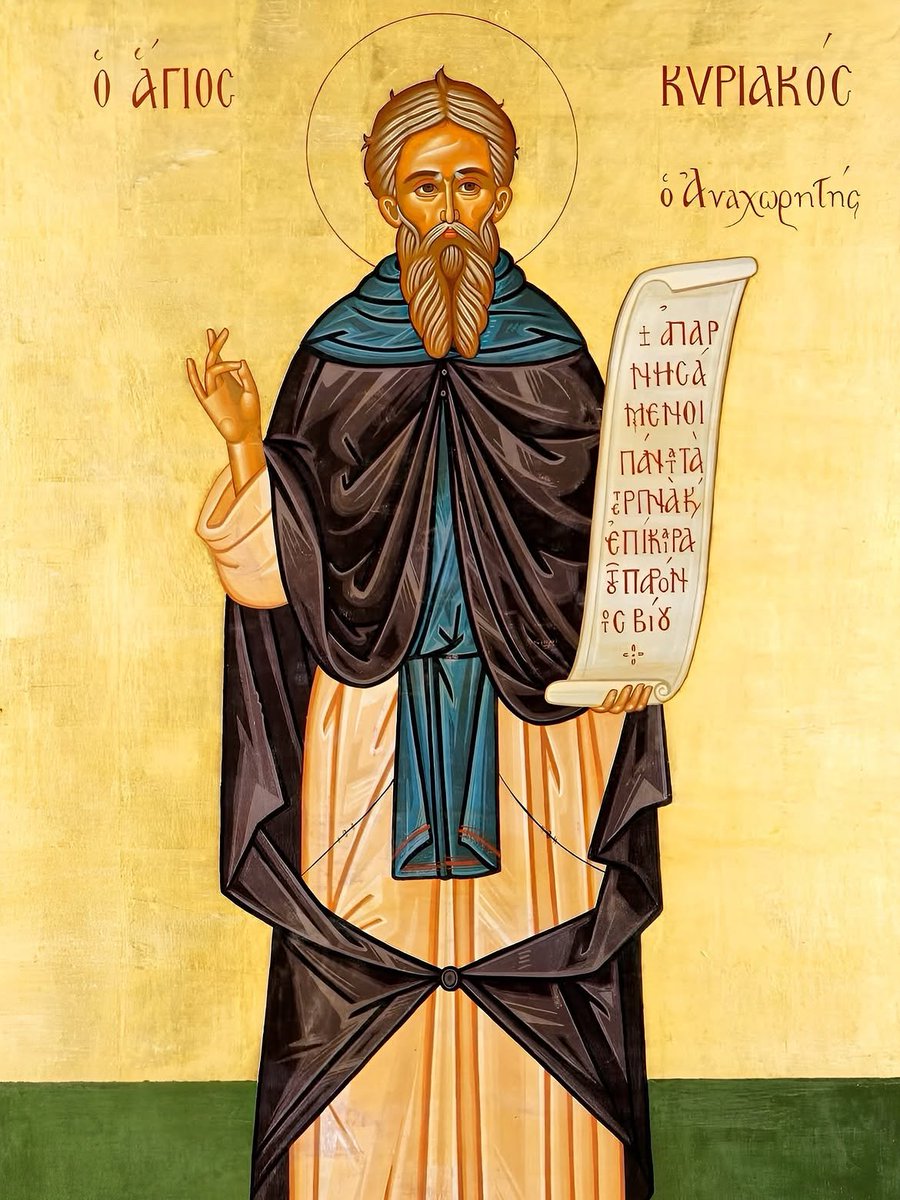
🔸 September 29 - Saint Kyriakos the Anchorite 🏜️🔸
Today, we commemorate Saint Kyriakos the Anchorite. St Kyriakos was born in 448 AD in Corinth, and was the son of a priest named John. He was ordained a reader in the church by Peter the Bishop of Corinth, who was his relative. His constant reading of the Holy Scriptures awakened his love for the Lord. Without telling his family, at age 18, Kyriakos boarded a ship to Jerusalem, having been deeply moved during a service by the words of the Gospel:
“If any man will come after Me, let him deny himself and take up his cross and follow Me” (Matthew 16:24).
After venerating the holy sites, Kyriakos became a disciple of St Euthymios the Great who tonsured him a monk, and placed him under the guidance of St Gerasimos of the Jordan who instructed him in asceticism. Following the death of St Gerasimos, Kyriakos eagerly entered the Lavra of St Euthymius, but he did not remain here long, since the monks were in continual disputes with the Monastery of St Theoktistos situated just below them. He therefore withdrew to the Souka Monastery of St Chariton, and settled in the cave where St Chariton once lived.
At age 40, Kyriakos was ordained to the priesthood, and was distinguished among the monks for his strict fasting and prayer. At age 70, the holy hermit retreated to the Natoufa desert (Wadi Natuf) where he lived off wild herbs and onions which lost their bitterness by his prayers. Many monks and faithful flocked to the graceful Elder who freed them from evil spirits, cured their illnesses, and guided them in the way of salvation. To escape human glory, Kyriakos fled to even more remote parts of the desert where a tame lion protected his garden from goats, and drove away thieves and barbarians.
Once, during a drought, the Saint’s suffered from thirst, but by his prayers, a cloud appeared in the sky and it rained abundantly. St Kyriakos was urged by the brethren to return to the Monastery of St Chariton, and he humbly obliged. Even in his old age, he was never idle in prayer or his monastic obediences. In 557 AD, at age 109, St Kyriakos blessed the brethren before peacefully entering his eternal sleep.
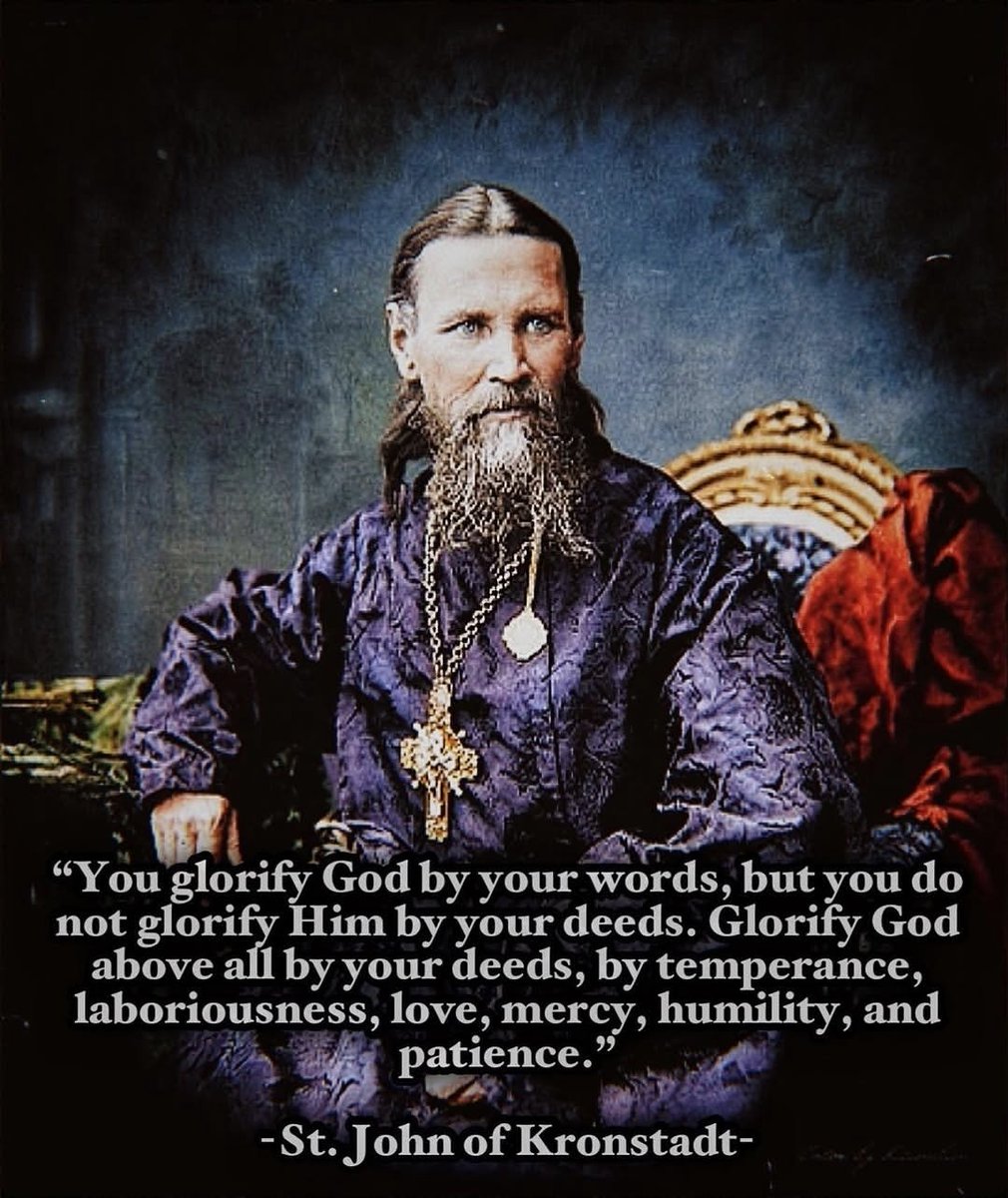
You glorify God by your words, but you do not glorify Him by your deeds. Glorify God above all by your deeds, by temperance, laboriousness, love, mercy, humility, and patience.
— Saint John of Kronstadt
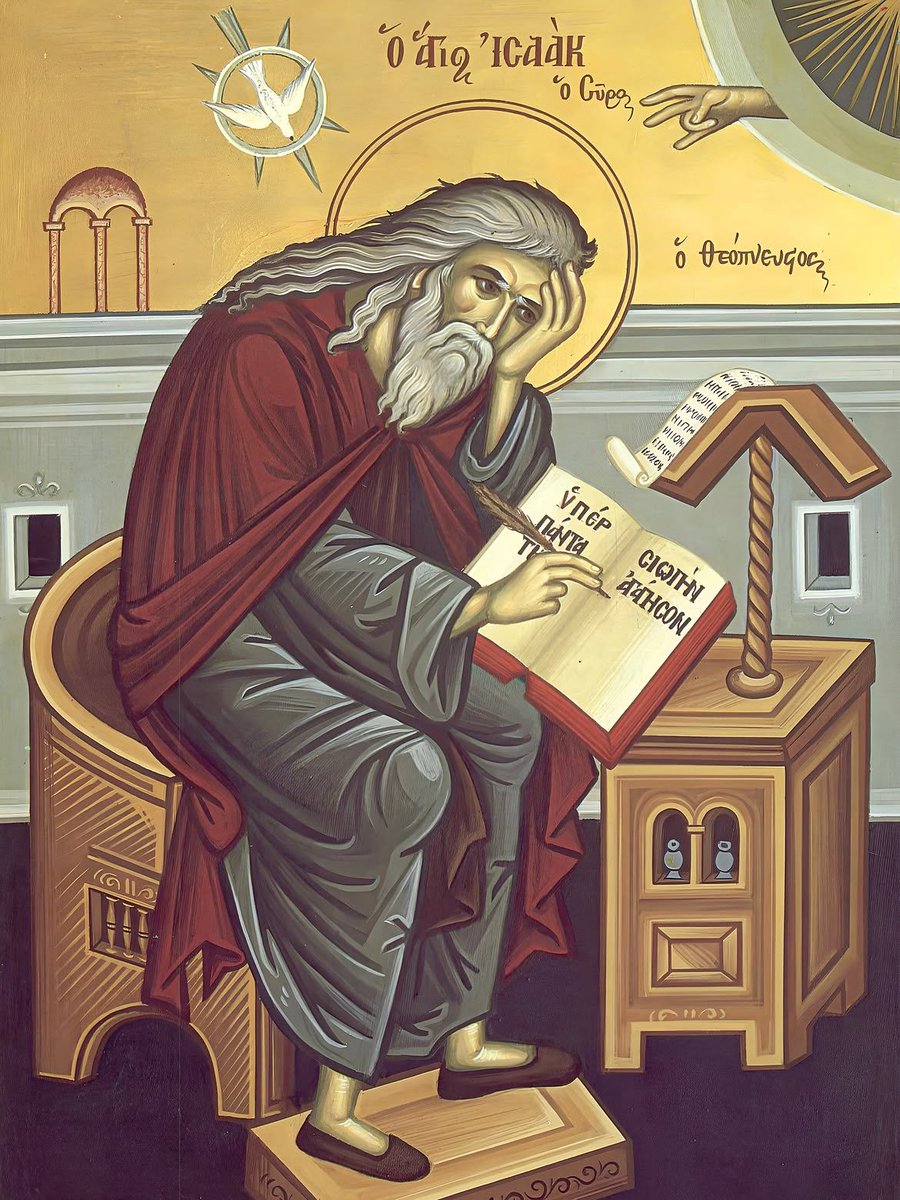
🔸 September 28 - Saint Isaac the Syrian ✍️ 🔸
Today, we commemorate Saint Isaac the Syrian. He was the Bishop of the ancient city of Ninevah in Upper Mesopotamia (located in the modern-day city of Mosul in northern Iraq) during the 7th century, and became known for his strict monastic life and ascetic writings. Saint Isaac was born in the region of Qatar on the western shore of the Persian Gulf. While still quite young, he entered the monastery of Mar Matthew near Ninevah and received the monastic tonsure here with his brother.
His wisdom, virtue, and ascetic zeal attracted the attention of the brethren, and they proposed that he head the monastery. Saint Isaac did not want this burden however, instead preferring a life of silence, so he left the monastery to live in the desert. His brother urged him more than once to return to the monastery, but Saint Isaac would not leave his place of solitude. Unable to escape the fame brought upon him by his holy life however, Saint Isaac was ordained Bishop of Ninevah.
Seeing the crude manners and disobedience of the inhabitants of the city, the Saint felt that it was beyond his ability to guide them. Seeking to again find a place of silence in which he could devote himself completely to the Lord, he resigned his office and went into the mountains to live with the hermits. There, he lived in solitude for many years studying the Scripture.
Eventually, blindness and old age forced him to retire to the monastery of Rabban Shabur, and having attained a high degree of spiritual perfection, he reposed here around the year 700 AD. A great teacher of ascetics, Saint Isaac left many important writings on the monastic practice. One of his most notable works, ‘The Ascetic Homilies of Saint Isaac the Syrian’, teaches the process of noetic purification through ascetic labors, especially that of hesychasm and nepsis (spiritual watchfulness), and emphasizes the necessity of stillness to purify the soul.