On #WorldVapeDay we want to tell everyone:
We are not scientists, we are not tobacco control experts, we are not industry, we are not vested interests.
We are the people, we are 'the interest', our lives are at stake, and our lives matter.
#EndVapeBan#WNTD2020@MoHFW_INDIA
Sky News has a short video following yesterday's article by Boidin et al in JAMA Cardiology.
Here's a clip from it featuring Dr. Matthew Evison, a Professor of Respiratory Medicine and one of the authors.
Scientists are calling out this new study that compares 17 vapers to 19 smokers over 1 week while ignoring past smoking or exercise habits. Small exploratory studies shouldn't be used to scare smokers away from switching. @mohfw_India@icmr_nicpr@ANI
https://t.co/GkhTvvxJQS
Grandfather of New Zealand tobacco control and pioneer of e-cigarette research Dr Murray Laugesen (1935–2026)
It is with great sadness that I share the news of the death of Dr Murray Laugesen on 11 October 2026, aged 90. He was a public health physician whose work shaped tobacco control in NZ for more than 40 years.
Murray served as principal medical officer in the New Zealand Ministry of Health (1984–1995) and was central to the development of the world-leading Smoke-free Environments Act 1990. He received the WHO Tobacco or Health medal in 1998 and the Queen’s Service Order in 2000. After leaving the public service he continued independent research and advocacy through Health New Zealand and as the founder of End Smoking NZ (established 2006).
He was a relentless reader of the scientific literature and an example of open-minded inquiry—always looking for cracks in settled assumptions and for interventions that could reach people on the lowest incomes and in remote settings, not only those who could access cessation medicines or expensive devices. Under his leadership, End Smoking NZ first advocated for legal access to Swedish snus. When that path was denied, Murray turned immediately to the next promising development.
Murray conducted the first independent analysis of the first Ruyan e-cigarette developed by Chinese pharmacist Hon Lik. His chemical and toxicological assessments, followed by a randomised crossover trial (Bullen et al., Tobacco Control, 2010, which included Murray, me - Marewa Glover, and Hayden McRobbie, among the authors), were among the first independent evaluations of the product’s emissions, nicotine delivery, craving relief and acceptability. The device contained no tobacco and produced no smoke. Murray recognised its potential as a scalable harm-reduction tool.
With founding End Smoking NZ colleague Dr Ross McCormick (psychiatrist), he argued for regulated access on the same pragmatic grounds that support methadone programmes: not everyone can or will quit entirely, but a satisfying, affordable, alternative can reduce disease and death. From the late 2000s our group educated clinicians, policymakers and the public about vaping and pressed for sensible regulation. Murray understood that political and public acceptance of scientific advances can take decades but he stayed focused and persistent.
New Zealand eventually enabled adult access. Daily smoking prevalence roughly halved between the early 2010s and the mid-2020s, with the steepest declines coinciding with wider vaping uptake. Murray lived to see this outcome—an uncommon privilege for a researcher. Many long-term smokers have gained years of improved health; youth smoking has fallen to historic lows. As Sweden’s longer experience with lower-risk nicotine products has shown, reductions in lung cancer and cardiovascular disease are predicted to follow.
On a personal note, in 1993, Murray recruited me into this mission — to reduce the suffering and premature deaths caused by smoking-related disease. I count myself extremely fortunate to have worked with and be mentored by him. He modelled what it means to be a careful scientist: to read widely, hunt for promising ideas, and remain open to evidence that points to better approaches.
His passing is a loss to the international tobacco harm-reduction community. The practical, evidence-driven approach he championed continues to save lives.
Photo: Murray, Me & ex-ASH NZ Director Trish Fraser at launch of his 2019 memoir, ‘My Life in Public Health’.
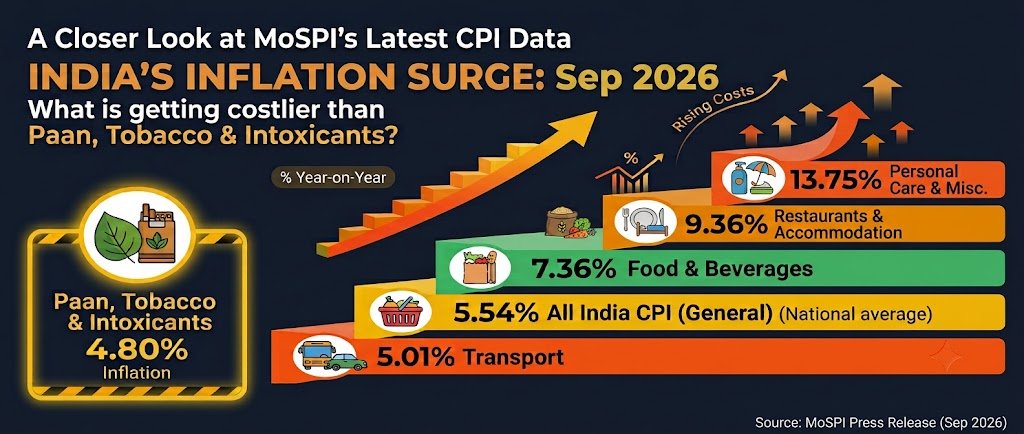
In India, toxic tobacco is getting cheaper compared to almost everything else, while the least harmful alternatives are banned. This is not tobacco control.
Misinformed editorial by @businessline oblivious to the reality that India has 200M users of toxic oral tobacco, who will benefit greatly by switching to far safer nicotine pouches. Snuffing out safer alternatives is snuffing out lives.
https://t.co/1v029qKc7I
India’s banned vape market hit $2.3B in 2025 and is still growing, almost as fast as the legal global market. The ban just handed the trade to a black market with no age checks and no tax. Our view...
@PMOIndia@JPNadda@NITIAayog@EACtoPM@ThePrintIndia
https://t.co/qAhiENdr9P
We've rebuilt our site.
New: court cases AVI fought since 2017, section for policymakers, living library of THR research, guide to what PECA actually bans (which does NOT include using a vape), and a way to report police harassment.
Have a look. Also..
https://t.co/2rrrT3ShVK
@Vapingit Got it too. Think someone has hacked the other person's account and they may not know it. The two giveaway was the link leads to site which wants access to your X account.
US govt-funded study of 2013-2023 federal health data finds switch away from cigarettes to vaping will cut future cancer rates. India, with its huge tobacco health burden, should follow suit.
@PMOIndia@mohfw_India@icmr_nicpr@IMAIndiaOrg@NITIAayog
https://t.co/6FzmNPPV4Q
We welcome the US FDA's decision to allow a brand of nicotine pouches to be marketed with the health claim of relative safety versus smoking. Oral nicotine pouches can be an effective low-risk substitute for toxic smokeless tobacco used by 200 million Indians.
New LSE case study reveals how @CRUK_Policy funded an insider lobbying model in South Asia to raise tobacco taxes. We strongly oppose such dark measures since good intent doesn't justify bypassing democratic processes.
@FCTCofficial@whosearo@PMOIndia
https://t.co/bocSAszgFA
Harm reduction is not an 'industry' narrative; it's a public health principle supported by the @WHO across multiple health challenges....Adults WHO SMOKE have a right to access safER alternatives that can reduce harm ! see here 👉🏿https://t.co/QllHoifq55