1. El EZLN no le debe nada a nadie, menos a los izquierdas chilangos que se sienten “decepcionados” ¿?
2. El Ejército exhibe un encuentro en el que ciertos grupos, no buscadoras, querían traerlos para “enseñarles cosas” que obvio ellos no necesitan.
3. Y por el que seguro están enojados: sin pelos en la lengua señalan que de mala manera, a todos los del SOMOS MX que se han colgado y han utilizado el tema de los desaparecidos a conveniencia. Y a esa bandera le dicen NO 👇
Con enfermedad crónica renal crónica G3, la ingesta baja de proteínas <1.2gr/día se asoció con ↑42% el riesgo de llegar a diálisis y ↑2 veces el de muerte. Seguimiento de 9 años
Más y mejor evidencia para abandonar esa práctica obsoleta de restringir la ingesta de proteínas
Cohorte KNOW-CKD
JAMA Network Open 2026
10.1001/jamanetworkopen.2026.34568
Preparativos Zapatistas para el Encuentro Abrazo con familias Buscadoras. Parte I: Jóvenes Teatristas | OCTUBRE DE 2026 | ͶÀTIꟼAƆ ⅃Ǝ | @EZLN | https://t.co/aBdNrthxBV
Can we please stop treating sepsis like a hydration problem?
#Nephpearls#AKIinICU
📌 More IV fluids ≠ better resuscitation
Yes, hypovolemia matters. Yes, early fluids can be lifesaving. But once you’ve restored enough preload, continuing to pour liters into a patient who isn’t fluid responsive can become harmful rather than helpful.
The question shouldn’t be: “How much more fluid can I give?”
It should be: “Will the patient actually benefit from more fluid?”
Sepsis is a problem of perfusion, vasodilation, distributive shock, altered microcirculation, and - often- cardiac dysfunction. A patient can be hypotensive and still be adequately or even excessively volume-loaded.
And there’s a cost to the reflexive “another liter” approach: pulmonary edema, impaired oxygenation, tissue edema, abdominal compartment issues, worsening organ function, and a harder road to recovery.
Fluids are a tool. They are not the treatment for every hypotensive septic patient.
✅ Assess fluid responsiveness. Reassess after interventions. Use dynamic measures when appropriate. And recognize when the physiology is telling you that it’s time for vasopressors—not another bag of saline.
✅ Sepsis resuscitation should be physiology-driven, not liter-driven.
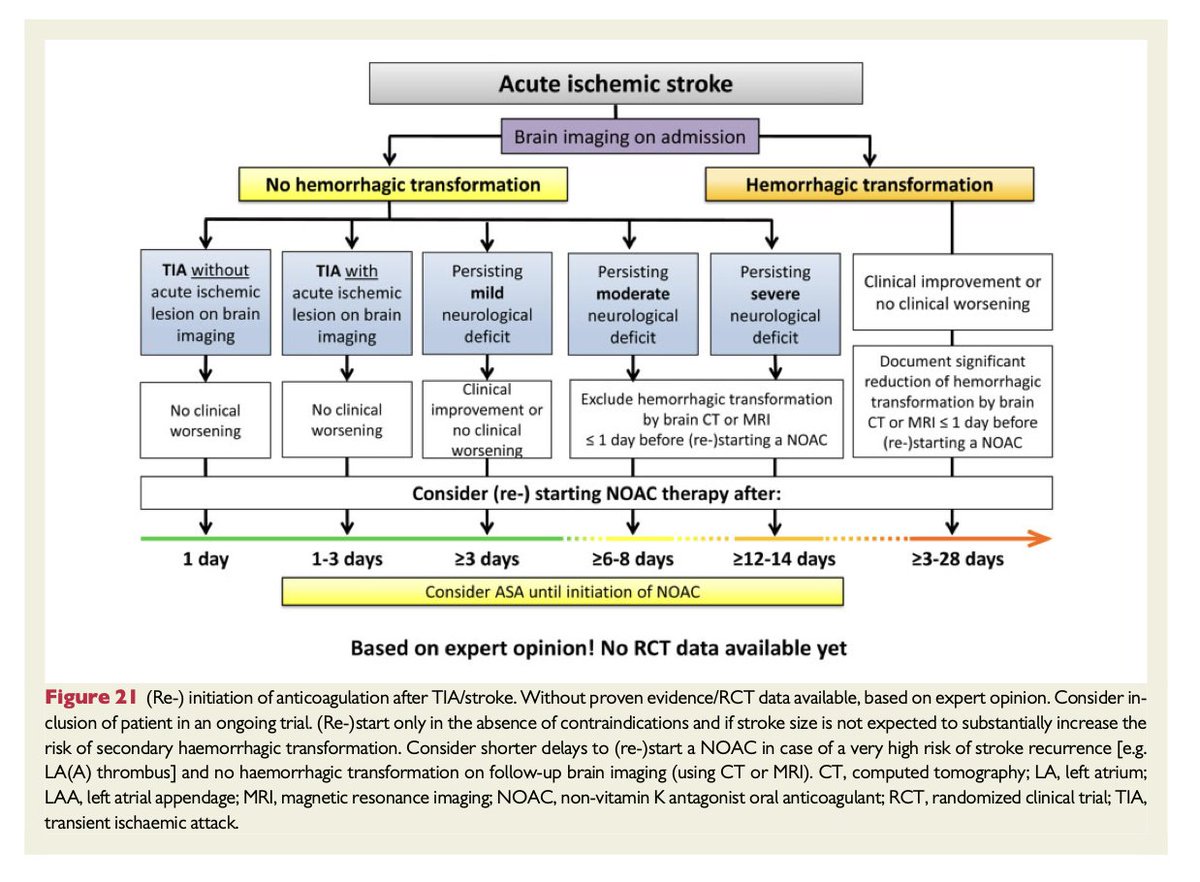
Guarda esta imagen, luego me agradeces.
Si un paciente con FA presenta un ACVi mientras recibe anticoagulación, el riesgo de transformación hemorrágica obliga a suspenderla.
La pregunta de siempre es: ¿cuándo reiniciarla?
Esta gráfica ayuda a responderlo y, en general, favorece el reinicio durante la primera semana especialmente si no existe transformación hemorrágica o no es extensa la isquemia.