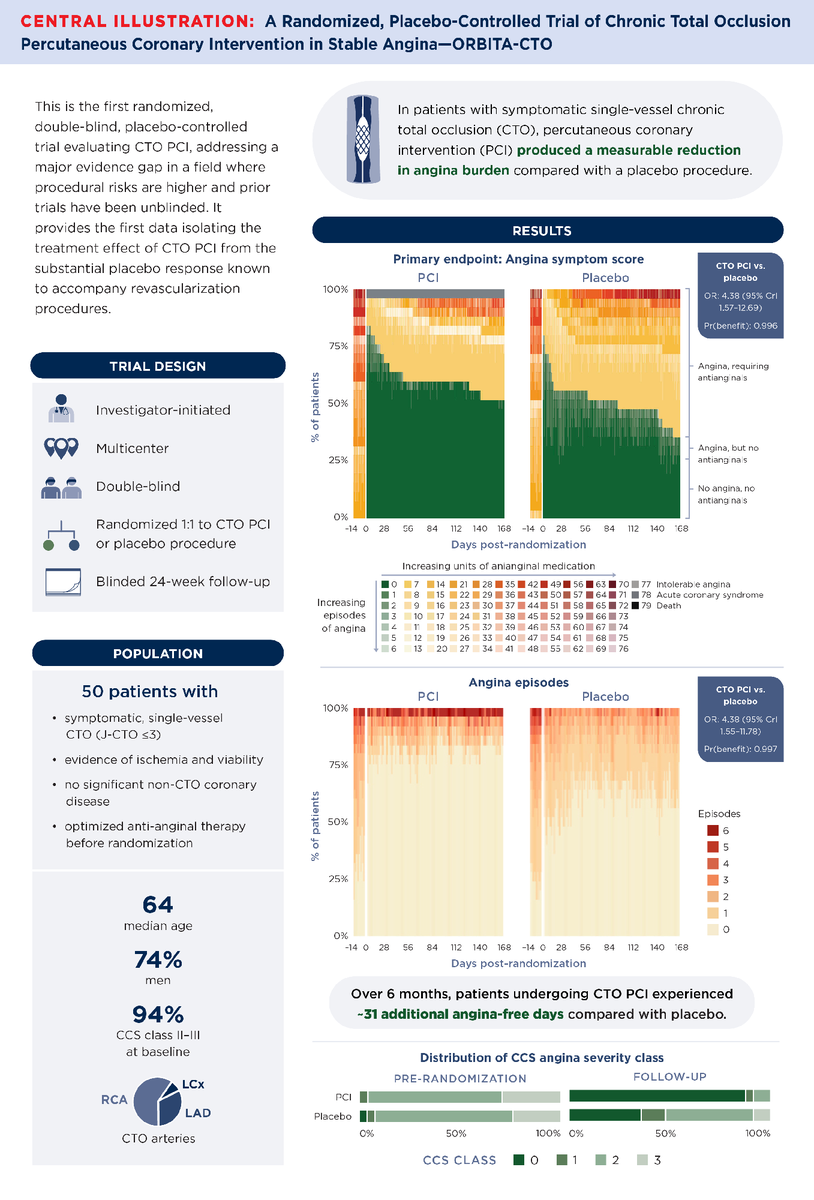
In patients with symptomatic single-vessel chronic total occlusion, percutaneous coronary intervention for coronary chronic total occlusion (CTO PCI) improves angina beyond placebo.
Get the details in #JACC: https://t.co/yX0FDuSOjl #ACC26#PCI#CTO@dr_skhan1
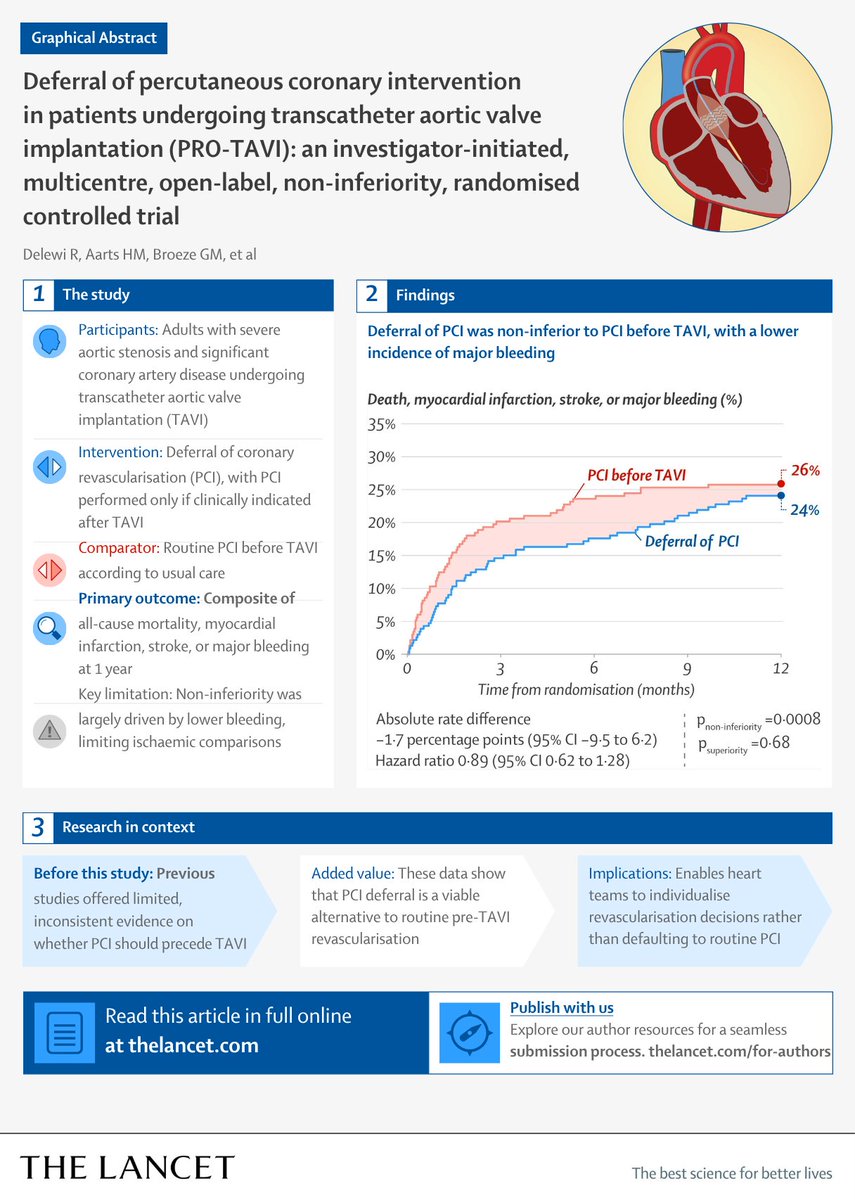
PCI before TAVI—necessary?
In patients with CAD, deferring PCI was noninferior to a PCI-first strategy at 1 year for the composite of death, MI, stroke, and major bleeding.
https://t.co/KwN2tauPyY #ACC26
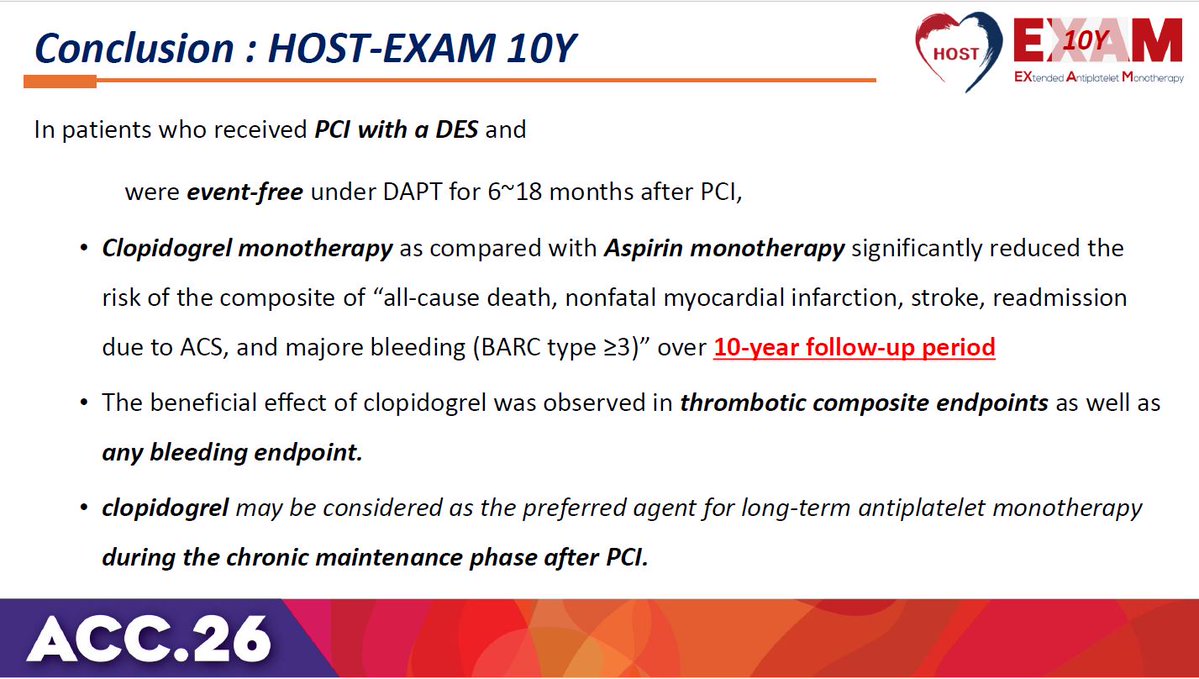
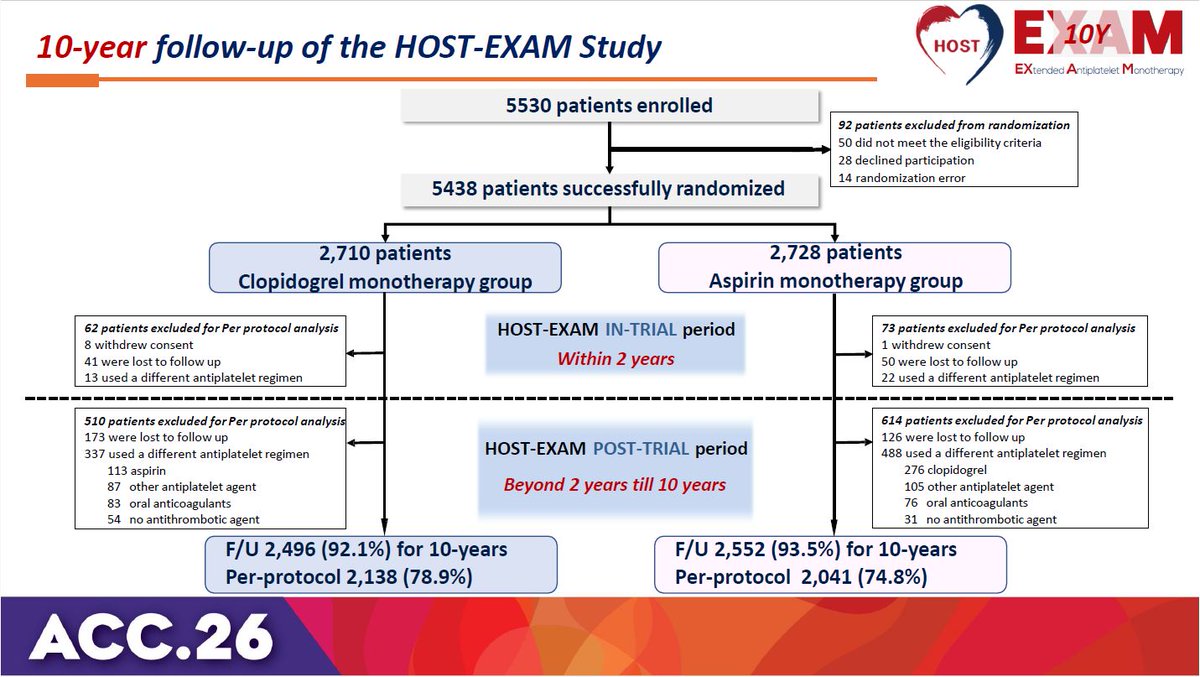
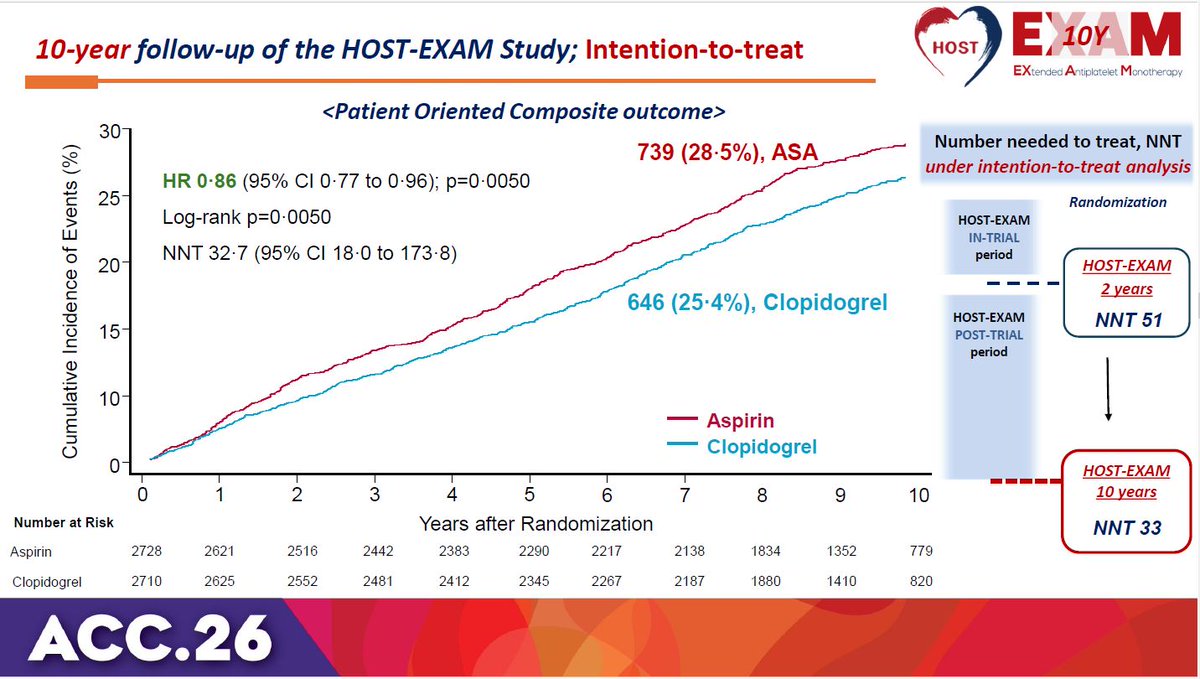
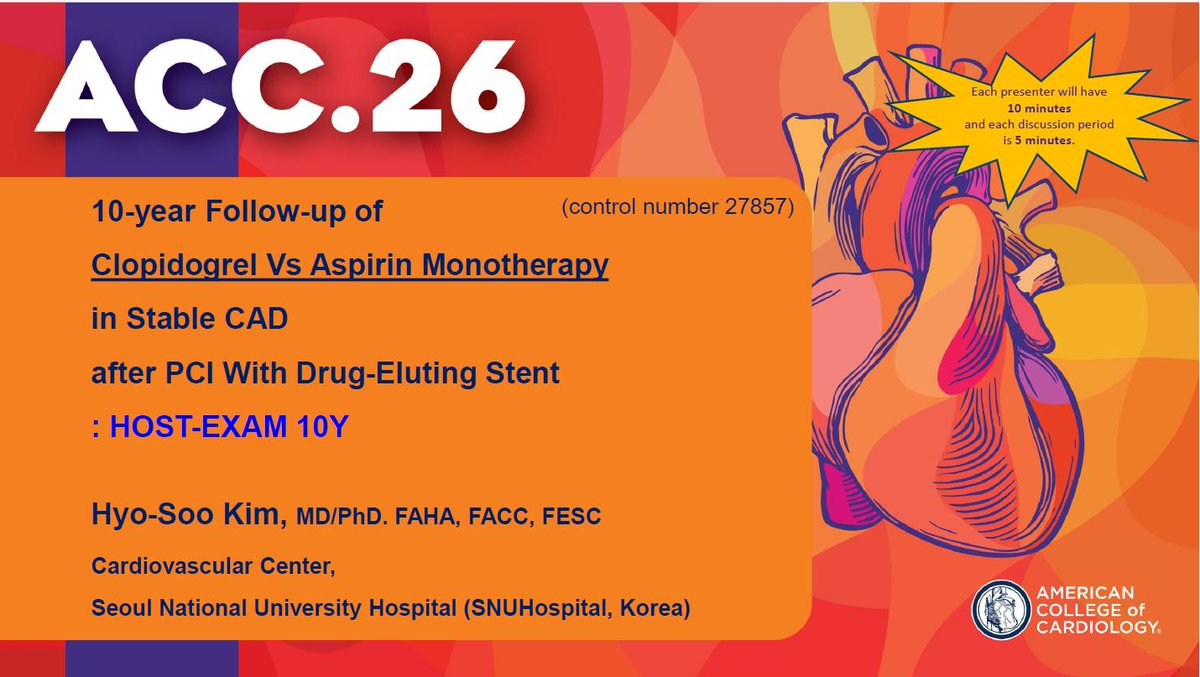
HOST-EXAM trial 10-year results: Clopidogrel monotherapy is superior to aspirin for chronic maintenance after PCI, significantly reducing both thrombotic and bleeding events. #ACC26 View slides here: https://t.co/ihoudzlxIi
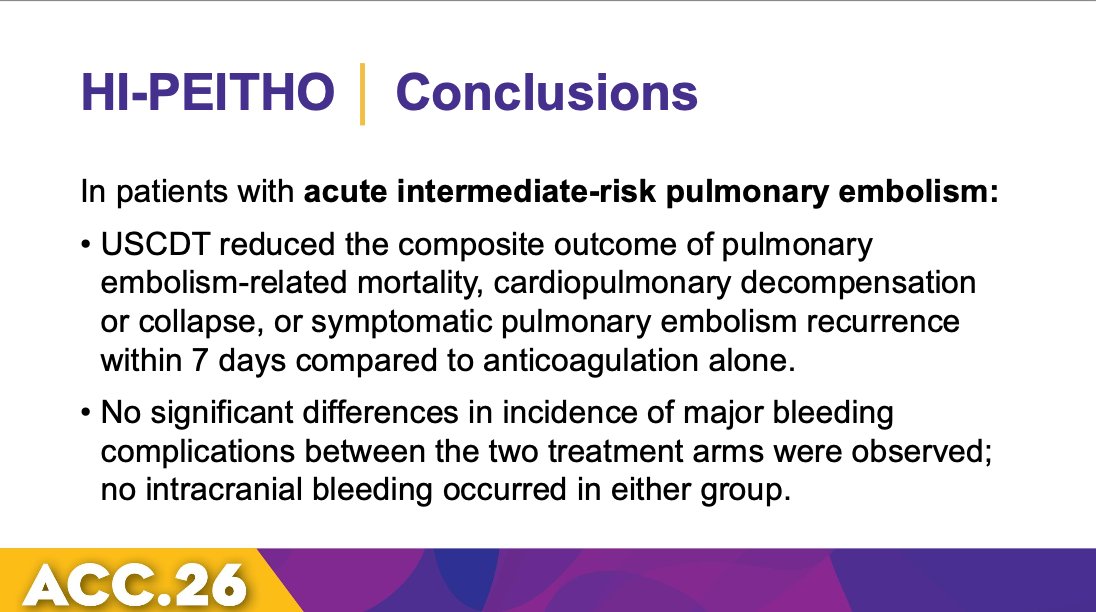
HI-PEITHO key takeaways #ACC26
🫀 Intermediate-risk PE = stable patients with RV strain + positive biomarkers
⚖️ ultrasound-facilitated catheter-directed thrombolysis + AC vs AC alone in this “gray-zone” group
📉 ↓ Early clinical deterioration: 4.0% vs 10.3%
🚑 Benefit driven by ↓ hemodynamic collapse—not mortality
🩸 No ↑ major bleeding or ICH → supports selective early intervention
Newly diagnosed #AtrialFibrillation? This flowchart breaks down acute & long-term management, rate vs. rhythm control, and when to consider catheter ablation.
Ref: UpToDate, AHA 2023, Mayo IM Board Review Course (Dr. Abhishek Deshmukh)
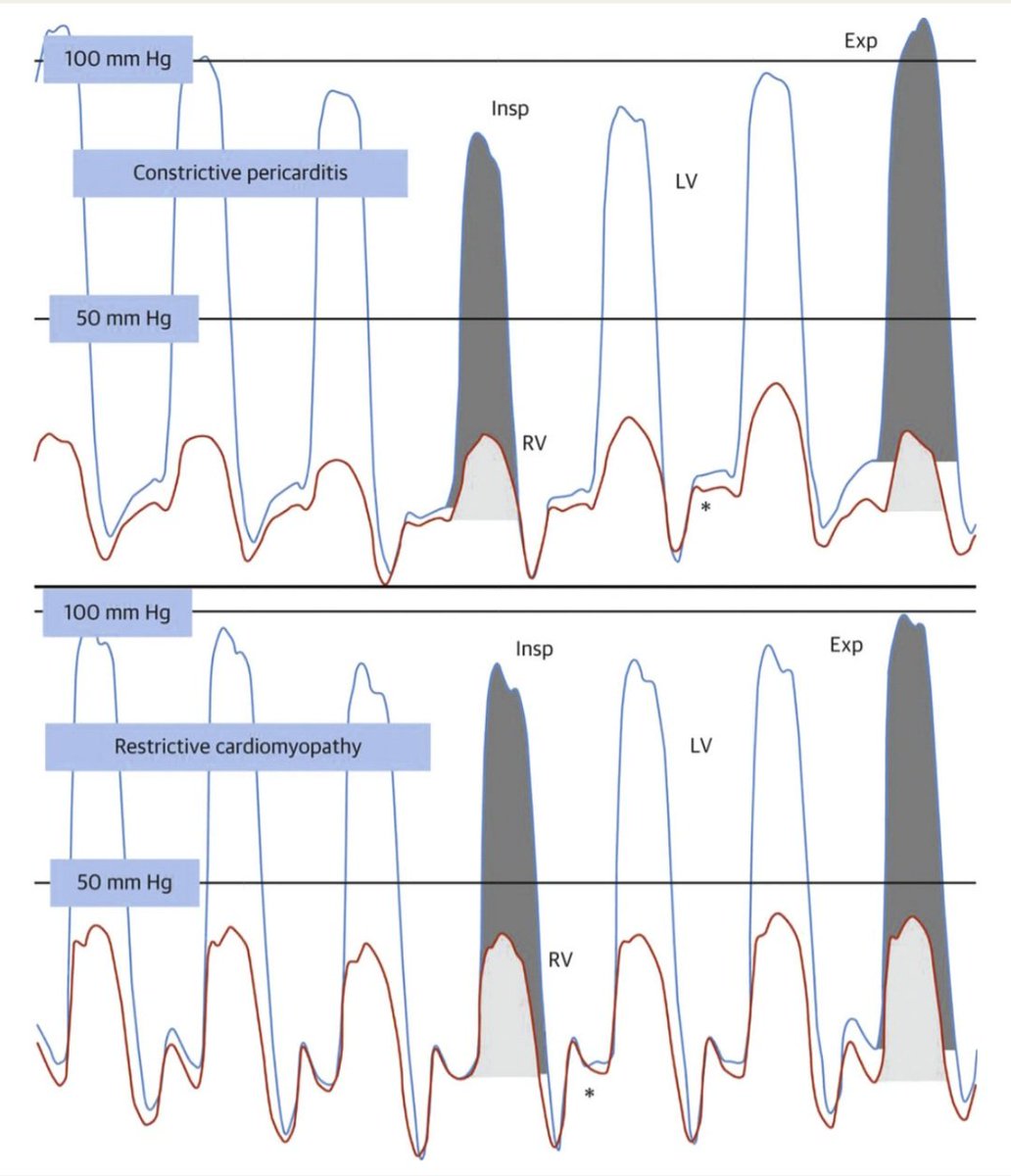
Evaluación hemodinámica para diferenciar entre Pericarditis Constrictiva 🆚️ Miocardiopatía Restrictiva. 🤨🔎🫀💢⁉️
🔶️Mediante una evaluación invasiva, la MCR se caracteriza por presiones de llenado diastólico elevadas y una rápida igualación de las presiones de llenado de las 4 cámaras durante la diástole, con un patrón frecuente de "caída y meseta" o "raíz cuadrada" (dip-plateau) en los trazos de presión.
🔶️Este patrón se hace mas evidente con maniobras que aumentan el llenado ventricular, como la infusión de volumen, elevación de las piernas o inspiración profunda.
✔️Pericarditis Constrictiva: signo raíz cuadrada〽️ con descenso (dip) mas rápido, mayor interdependencia ventricular (mas notoria), igualación casi completa de las presiones diastólicas (diferencia de VI y VD es <5 mmHg).
✔️Miocardiopatía Restrictiva: signo raíz cuadrada〽️ con descenso (dip) menos pronunciado, menor interdependencia ventricular (menos notoria), igualación de las presiones diastólicas pero suele haber mayor diferencia (VI > VD por >5 mmHg).
https://t.co/XowDKM09uJ
https://t.co/KibVpIA1Mh
FFR vs iFR
Both are invasive physiological measurements used to assess the significance of coronary artery stenosis during coronary angiography.
● FFR (Fractional Flow Reserve):
Ratio of the maximum achievable blood flow in a diseased coronary artery to the theoretical maximum flow in a normal coronary artery.
● iFR (Instantaneous wave-Free Ratio):
Measures pressure gradient across a coronary stenosis during a specific part of the cardiac cycle (diastole's "wave-free period") when resistance is naturally low.
When to Use Each?
✅ Use iFR for simpler, faster assessment without drugs.
✅ Use FFR when hyperemic data is critical or in borderline cases.
Is STEMI reperfusion a satisfied need?
🚩NO! - Most developing countries still face significant barriers for reperfusion
So, let me take you through our new "Clinical Consensus Statement for STEMI reperfusion in LMICs, representing ACVC, EAPCI, EAPC, ESCWGT & SSL"
A tweetorial
Preventive percutaneous coronary intervention for non-flow-limiting vulnerable atherosclerotic coronary plaques in diabetes: the PREVENT trial
🥸 Preventive PCI in diabetics!!!
😱Look at this
👇👇👇