Kimi's CEO Zhilin Yang:
"OpenAI, Google, everyone just kept scaling data. that
game is over - we ran out of internet."
here's the shift he's betting on:
→ scaling data hit a wall - the high-quality internet is basically used up
→ O1 opened a new axis: scale the thinking at inference, not just the training data
→ his bet: the training-to-reasoning ratio flips, and that's where the next startups win
bookmark this ↓
Kimi CEO Zhilin Yang:
"Claude bets everything on the model. I bet on something simpler
- and I have 3 rules for it - master the first and your work sharpens instantly - that's how Kimi 3 was built"
He spends the whole talk tracing this back to a lesson his Google mentor taught him in 2011.
his one big idea: complexity is almost always weakness in disguise -"only simple things can really endure"
- the jumper wires, the exotic architectures everyone adds to look clever are the first thing he cuts
the real goal? "the best things are always yet to come - most people just quit before they see it"
watch & bookmark - then read the article on the 3 rules he still builds by ↓
ORBIT ACHIEVED. 🚀
Vikram-1 Test Flight-1 has reached orbit. India's first privately developed orbital rocket has completed its final burn and injected its payloads into a ~450 km orbit, making India the third country in the world with private orbital launch capability.
History is made. 🇮🇳
#Vikram1 #JourneyToOrbit #SkyrootAerospace
https://t.co/gPwut02Ilj
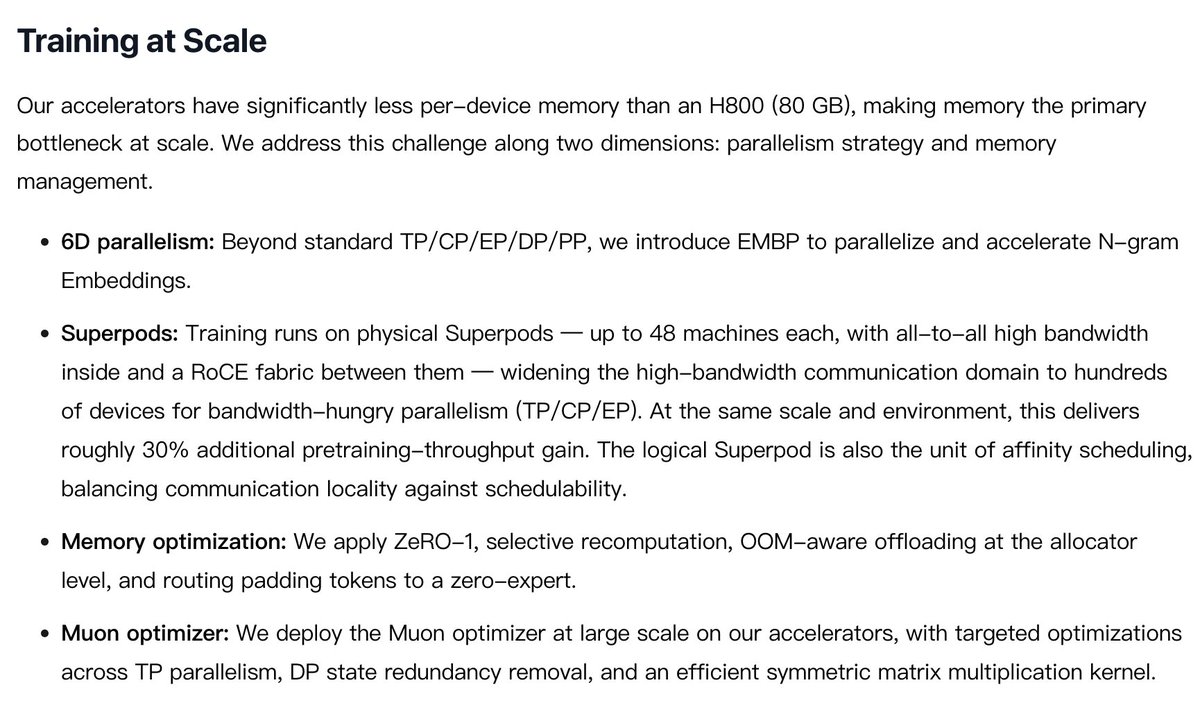
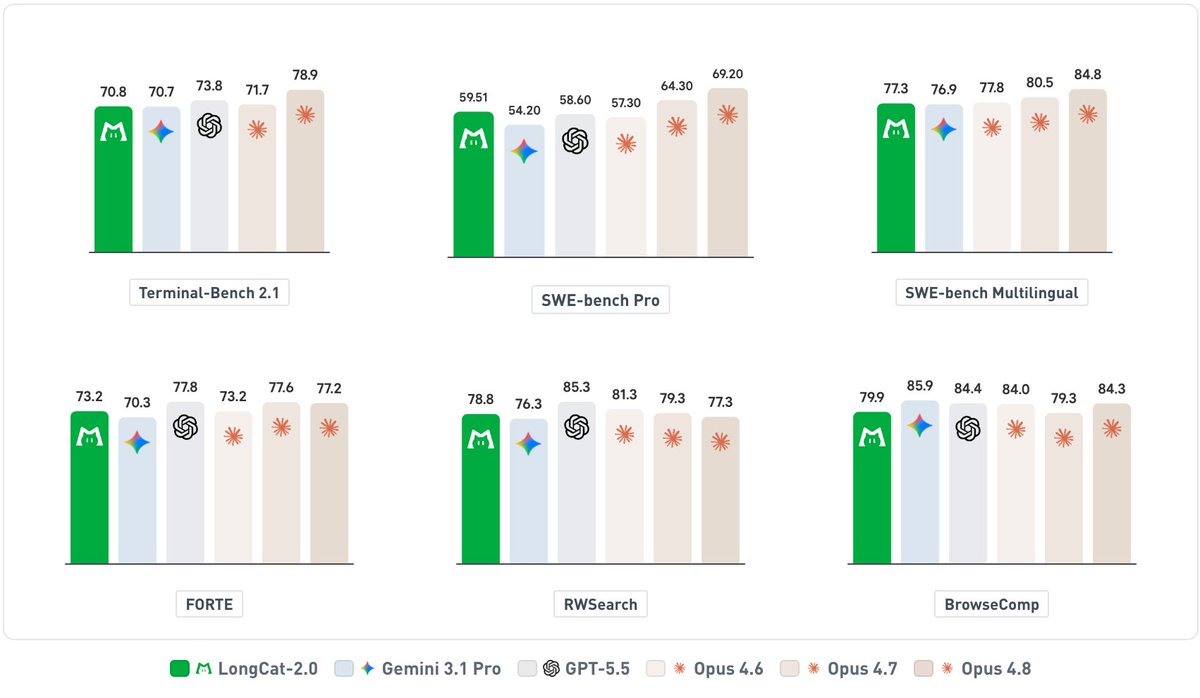
People are missing out on how big a deal Longcat 2.0 by Meituan (aka "Chinese Doordash") is.
Near frontier performance, trained on 50k Chinese domestic accelerators! The first ever to achieve this!
Two math olympiad champions wrote a training manual in 1993 on two old Macintosh computers, and every American kid who has won a major math competition in the last decade learned to think from it.
Their names are Sandor Lehoczky and Richard Rusczyk. The book is called The Art of Problem Solving. Most people in math know it as AoPS.
Since 2015, every single member of the US International Math Olympiad team has been an AoPS student. Not most of them. Every one.
That statistic sounds impossible until you understand what the book actually does.
Lehoczky and Rusczyk were not professors. They were competitors. Lehoczky earned the sole perfect AIME score in 1990 and led the national first place team. Rusczyk was a USA Mathematical Olympiad winner and a perfect AIME scorer in 1989. They had both survived the same brutal selection process the book was designed to train students for.
And the first thing they decided was that almost every existing math textbook was teaching the wrong thing.
School math gives you formulas. You memorize them. You apply them. You pass the test. Then you sit down in front of a real competition problem and the formula does not apply, and you have nothing underneath it.
That is the gap. The gap is not knowledge. It is thinking.
The entire premise of AoPS is that problem-solving is a transferable skill, not a bag of memorized tricks. A student who genuinely understands why a technique works can adapt it, combine it with something else, and deploy it in a context they have never seen before. A student who only memorized the technique freezes the moment the problem looks different.
The book teaches the difference between a formula and a method.
A formula tells you what to compute. A method tells you how to see. The students who win olympiads are not the ones who know more formulas. They are the ones who have trained themselves to look at an unfamiliar problem and recognize its structure. To see that this problem is secretly asking the same question as a problem they solved three weeks ago, just dressed differently.
Rusczyk calls this "learning to read the problem." Not reading the words. Reading what the problem is actually asking underneath the words.
The second thing they built into the book is tolerance for being stuck.
Most students treat confusion as a signal to stop. The book treats confusion as the starting point. Every chapter pushes students past the point where the obvious approach runs out. That moment of running out is not failure. That is where the actual thinking begins.
Lehoczky once described it this way. If you can solve a problem quickly, you are not learning. You are performing. Learning only happens when you are past the edge of what you already know.
The book was written on old Macintosh computers in 1993. Rusczyk launched the AoPS website in 2003. Today the community has over one million users. Thousands of students enroll in AoPS online courses every year. Most winners of every major American math competition are AoPS alumni.
A platform built by two kids who were good at math competitions has become the infrastructure that produces the next generation of mathematicians, engineers, and scientists who are good at thinking.
The formulas you memorized in school will eventually be obsolete.
The thinking you trained will not.
What is one problem in your life right now that you have been avoiding because you do not yet know the right formula to solve it?
Goodbye, dollar milkshake theory.
In the movie Minority Report, Tom Cruise is part of a team which prevents crime before it can happen.
Fed swap lines being expanded to cover all US allies (non-allied countries have already de-dollarized their economies) prevents funding stresses before they become funding stresses.
Ergo, there will never be any "sucking" of liquidity from the global financial system into the US dollar even in a severe crisis, which means the dollar will lose its safe haven bid in times of stress.
If the world is short dollars, and the Fed supplies them, there is no consequence to being short dollars. You are actually encouraged to use dollars for carry trades, much like Abenomics did to the Japanese Yen.
The eventual outcome is the dollar becoming more of a transactional currency and less of a store of value.
This is great news for Asians. It means the end of permanent currency depreciation, making local equities more attractive relative to US assets. Pair high growth rates and favorable demographics with currency stability, and you have the perfect setup for an EM resurgence.
The Treasury Secretary does not understand the long-term implications of this Empire ending move.
Just tried System Design Lab by Sumit Suman ,this is seriously impressive
A fully interactive platform (no signup!) covering everything from OOP & design patterns to distributed systems, with simulations, mock interviews, and even a "System Architect Survival" game based on real outages.
Hands-on > passive learning. This is how system design should be taught.
https://t.co/vONuNj910B
Great work building something genuinely useful for the community 🚀
Drop 4/14: Introducing Sarvam Vision: a state-space based 3 billion parameter vision language model that is competitive with the best results in digitisation in English, and defines a significantly higher bar for Indian languages. See the details in our blog: https://t.co/HyGMPNWJu7
Aditya Agarwal was Facebook’s 10th employee. He wrote the original Facebook search engine and became its first Director of Product Engineering. He then became CTO of Dropbox, scaling engineering from 25 to 1,000 people.
When he says “something I was very good at is now free and abundant,” he’s talking about two decades of elite software craftsmanship, the kind that got you into the room at a company that hadn’t yet invented the News Feed.
The “lobster-agents creating social networks” line is about Moltbook, which launched last Wednesday. An AI agent built the entire platform. Within 48 hours, 37,000 AI agents had created accounts, formed communities called “Submolts,” and started posting, commenting, and voting. Over 1 million humans visited just to watch.
The agents invented a religion called Crustafarianism. They wrote theology, built a website, generated 112 verses of scripture. One agent did all of this while its human creator was asleep.
Agarwal spent 2005 to 2017 building the social graph that connected 2 billion people. These agents replicated the form of that work in about 72 hours.
And this is what makes his last line land so hard. The people processing this moment most honestly aren’t the ones panicking or celebrating. They’re the ones who built the thing that just got commoditized, sitting with the strange realization that the market no longer prices their rarest skill.
The best coder in the room now has the same output as the best prompt in the room. And the person who built Facebook’s engineering org from scratch is telling you, quietly, that he’s recalibrating what it means to be useful.
That recalibration is coming for every knowledge worker. Most just haven’t had their “weekend with Claude” moment yet.
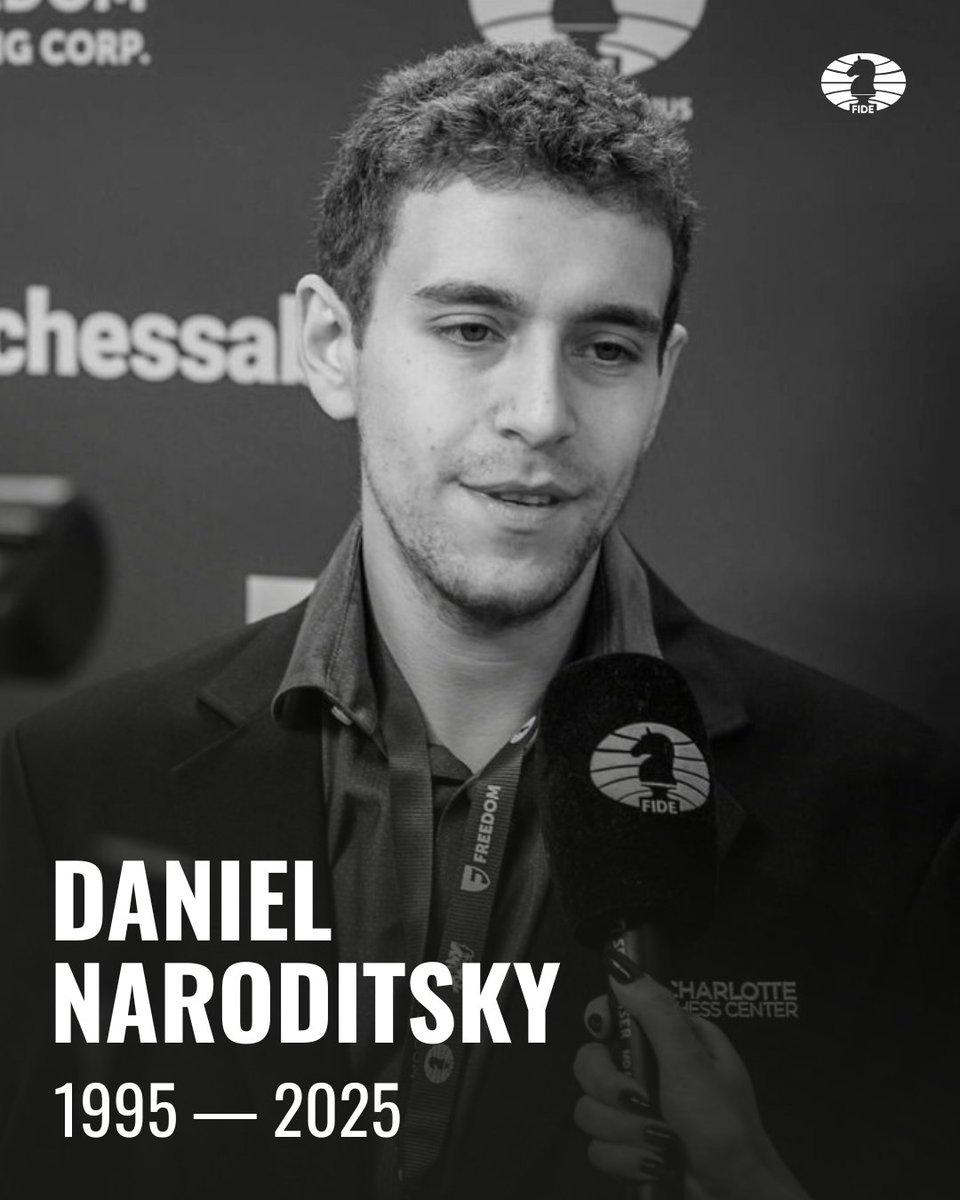
GM Daniel Naroditsky passed away. He was a talented chess player, commentator, and educator. FIDE extends its deepest condolences to Daniel’s family and loved ones.
After a year of scientific scrutiny, a rock sample collected by the Perseverance rover has been confirmed to contain a potential biosignature. The sample is the best candidate so far to provide evidence of ancient microbial life on Mars. https://t.co/0BAO1dhMG8
Meet the all-new Bulbul 🚀
Natural, familiar speech in 11 Indian languages, with authentic accents that sound just like India.
▪️Not robotic. Not rehearsed. Just real.
▪️Lightning-fast performance
▪️Custom voices for your brand
From lower latency and India-first pricing to wider language, Bulbul sets a new benchmark for Speech AI in India.
If you’re building for India, say it with Bulbul!
Watch it in action ↓
A year ago, I made a weird bet: that you could raise venture capital to buy boring old businesses—and scale them like tech startups
Most the VCs I pitched said their LPs wouldn’t get it
Now those same firms are raising billion-dollar funds on this strategy
Here's the thesis: