Goosebumps. 🇮🇳❤️
The Indian National Anthem plays at the World Junior Squash Championships 2026 as Anahat Singh is crowned World Champion. 🏆
A moment India will cherish forever. ✨
A historic feat at the 2026 World Junior Squash Championship.
Proud of Anahat Singh for winning the Gold Medal and becoming the first Indian squash player ever to win the World Junior Championship title. This accomplishment will further popularise squash among the youth.
@Anahat_Singh13
I taught JEE physics for years. That paper breaks strong kids in three hours.
This exam is five hours of theory and five hours of lab work, and these five did close to perfect scores on it.
Let me tell you what actually happened.
The International Physics Olympiad is the world championship of school physics. It was the 56th edition. Held in Bucaramanga, Colombia, from July 5 to 12.
381 students. More than 85 countries. Every one of them the best physics student their country could find.
India sent five kids.
All five came back with gold.
Their names are Kanishk Jain from Pune. Riddhesh Anant Bendale from Indore. Rishit Garg from Dwarka in Delhi. Shresth Suraiya from Mumbai. Svarit Joshi from Ahmedabad.
We know a hundred cricketers by their nickname and not one of these boys. :)
That clean sweep put India at joint World Number One. Tied with China, Russia, Kazakhstan, South Korea and Taiwan.
Those are countries that pour serious money and national pride into science education. We are standing level with them.
Now here is what the exam actually was.
Two papers. Each five hours long.
The theory paper had three problems. One on the thermodynamics of paramagnetic cooling. One on the photoionisation of ozone. One on the dynamics of electron positron pairs.
The experimental paper was another five hours in a lab, working through heat transfer and thermodynamic processes in fluids.
That means you get given equipment you have never seen, and you have to design your own experiment, take your own readings, handle the errors, and reach a real answer.
Not multiple choice. No shortcuts. No pattern recognition. You either understand physics or you sit there for five hours.
HBCSE says the Indian students were near perfect on theory and excellent on the practical too.
Now, this was India's 27th appearance at the IPhO.
Across all those years, about 44 percent of Indian students have won gold, 41 percent silver, 10 percent bronze.
In the last ten years, every single Indian student has come home with a medal. 62 percent gold, 38 percent silver.
Not one kid has gone and come back empty handed in a decade.
Five golds in one year has happened only twice. This year, and in 2018.
So who built this.
The programme is run by HBCSE, the Homi Bhabha Centre for Science Education. It sits under TIFR, which sits under the Department of Atomic Energy.
They run the whole funnel. A national exam, then a national olympiad, then a brutal selection and training camp, and out of everyone in the country, five kids get on a plane.
The team was led by Professor Anwesh Mazumdar of HBCSE-TIFR and Dr Leena Joshi from St Xavier's College, Mumbai.
The scientific observers were Professor Ananda Dasgupta from IISER Kolkata and Nisha Kelkar from Gogate-Joglekar College in Ratnagiri.
Yes. Ratnagiri. A college in a small coastal town in Maharashtra.
This is public education doing something the private coaching industry could never do on its own.
The coaching industry is very good at one thing. Teaching you to solve a known problem fast.
That is what JEE and NEET reward, and I say that with love because I was part of that world.
But an olympiad paper does not have a known type. There is no shortcut chapter. There is no formula sheet that saves you. You have to sit with a problem you have never seen and think.
That is a completely different muscle. And a government funded centre has been quietly building it in Indian teenagers for 27 years.
So yes, be proud. Loudly.
HBCSE also shared that around 64 percent of India's olympiad medallists go on to do a PhD.
But only about 32 percent of medallists end up settling in India.
I do not say that to spoil the moment. These kids owe the country nothing. They earned every option they have.
But it should tell us something. We are excellent at finding this talent. We are excellent at training it. We are still not great at giving it somewhere worth staying.
Congratulations Kanishk, Riddhesh, Rishit, Shresth and Svarit. This is one of the best things an Indian did this year and most of the country will never hear about it.
To the man who sacrificed his entire life for our happiness
I am always amazed and inspired everytime you handle any situation.
You are our strength ✨️
Happy fathers day!❤️
A historic milestone for India-UK relations.
Delighted to note that the India-UK Comprehensive Economic and Trade Agreement will enter into force on 15th July 2026.
This agreement will significantly boost our bilateral trade and investment.
It will also unlock numerous opportunities for Indian farmers, workers, MSMEs, startups and innovators and contribute meaningfully to the realisation of Viksit Bharat 2047.
Both PM Starmer and I, who are in Evian for the G7 Summit, are naturally very happy with the significant momentum being added to our economic ties.
@Keir_Starmer
His name is Ranjitsinh Disale.
He wanted to be an engineer. When that did not work out, his father suggested he train as a teacher instead.
In 2009, he was posted to a government primary school in Paritewadi, a small village in Solapur district, Maharashtra. The school was a crumbling building wedged between two storerooms, one of which had been used as a cattle shed.
What he found there troubled him.
Girls were being married off young instead of being sent to class. Attendance was poor. The textbooks were written in a language many of the children, who spoke Kannada at home, could not properly read.
He decided to fix all of it, starting with the books.
He learned the children’s mother tongue and rewrote their textbooks in a language they could actually understand.
Then he did something no one in India was doing at the time.
He printed unique QR codes inside the textbooks, allowing students with access to a phone to scan a page and instantly access audio poems, video lessons and practice questions.
A village school in Solapur had built a digital classroom out of paper and printed squares.
The results changed the village.
Girls’ attendance reached nearly one hundred percent. Teenage marriages in the area stopped. His QR code idea worked so well that the Maharashtra government adopted it across the state.
The following year, the national education body embedded QR codes in textbooks across the country.
In 2020, Ranjitsinh Disale won the Global Teacher Prize. He was chosen from more than twelve thousand nominations across roughly one hundred and forty countries and was the only Indian in the top ten.
The award carried one million dollars, around seven crore rupees.
Then he did something no winner had ever done before.
He announced that he would give away half the prize money, dividing it equally among the other nine finalists so that their work could continue as well.
He said teachers are the real change makers.
He meant all of them, not just himself.
A man who became a teacher only because engineering did not work out changed how an entire country learns, and then gave half his fortune to the people he had competed against.
Follow for stories India deserves to remember.
महान क्रांतिकारी और प्रखर राष्ट्रवादी चिंतक वीर सावरकर जी को उनकी जयंती पर सादर नमन! वीरता और बौद्धिकता से भरा उनका व्यक्तित्व देश की हर पीढ़ी को प्रेरित करता रहेगा।
अनन्तोद्भूतभूतौघसङ्कुले भूतलेऽखिले।
शस्त्रे शास्त्रे त्रिचतुराश्चतुरा य���ि मादृशाः।।
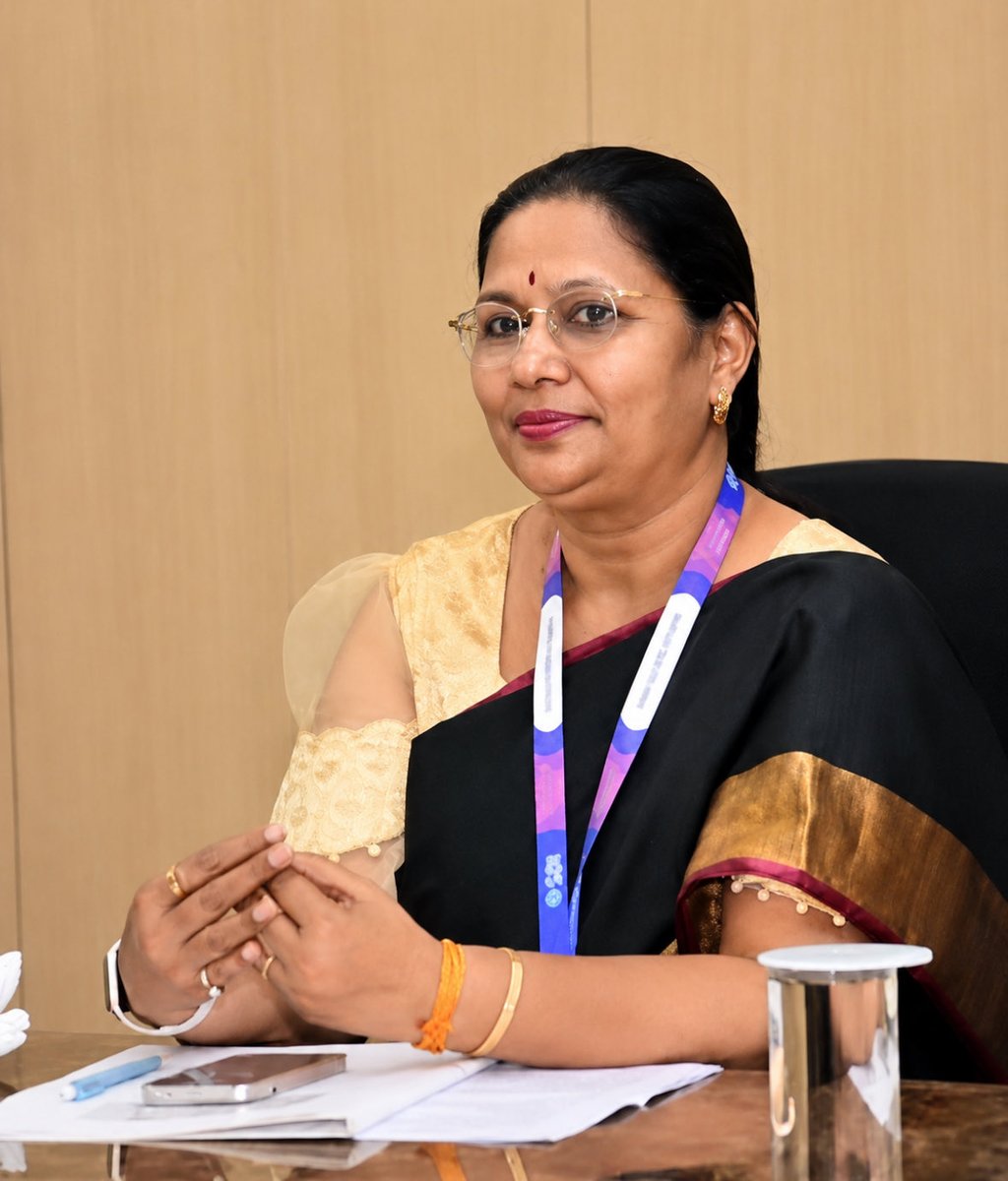
Her name is Pratiksha Tondwalkar.
She was born in 1964 in Pune into a Scheduled Caste family.
When she was in Class 7, her father decided to pull her out of school and get her married. Her teacher begged him to let her continue. She even offered to pay for Pratiksha’s education herself. Her father refused.
She was married at 17. Her husband Sadashiv Kadu worked as a bookbinder at a Mumbai branch of the State Bank of India.
When she was 20, he died in a road accident. She was left with a two year old son and no education.
She walked into the same SBI branch to collect her late husband’s dues. She told the bank she needed any job they could give her.
They gave her a broom.
She swept floors. She dusted furniture. She cleaned restrooms. She earned Rs 65 a month.
She said in an interview whenever my son asked for a packet of biscuits I would get off the bus one stop early just to save the fare money to buy them for him.
After work, she enrolled in night college in Vikhroli. She completed Class 10 with first class marks. Then Class 12. Then a psychology degree. Bank colleagues helped her study whenever they could.
Her parents pressured her to remarry immediately. She refused until she had graduated.
She was promoted from sweeper to messenger to clerk.
She remarried in 1993. Her husband Pramod Tondwalkar encouraged her to take the banking officer exams. She cleared them.
She rose from trainee officer to Scale 4 to Chief General Manager.
In 2022, she became Assistant General Manager of the State Bank of India.
The same bank where she once cleaned restrooms for Rs 65 a month gave her its highest management honour 40 years later.
Follow for stories India deserves to remember.
Late Shri Manohar Parrikar Ji once narrated his ordeal.
"I'm from Parra, a village in Goa, so we're called 'Parrikars.' My village is famous for its watermelons. When I was a child, the farmers there held a 'Watermelon Eating Contest' in May, after the harvest. All the children were invited and asked to eat as many watermelons as they wanted.
Many years later, I went to IIT Mumbai to study engineering. Then I returned to my village after 6.5 years. I went to the market to look for watermelons. But they were gone. The ones I found were very small.
I went to meet the farmer who used to hold the 'Watermelon Eating Contest.' Now his son had taken his place. He still held the contest, but there was a difference. When the old farmer offered us watermelons to eat, he would ask us to spit the seeds into a bowl. We were forbidden to chew the seeds. He was collecting seeds for the next crop.
We were, in effect, unpaid child laborers.
He would keep his best watermelons for the competition, using them as the best. He obtained good seeds, which produced even bigger watermelons the next year. When his son arrived, he thought the larger ones would fetch a higher price in the market, so he started selling the larger ones and keeping the smaller ones for competition. The next year, the watermelons grew smaller, and the next even smaller. A watermelon generation lasts one year.
In seven years, Parra's best watermelons were wiped out. In humans, a generation changes every 25 years. In 200 years, we will realize the mistakes we were making in educating our children.
Selecting good seeds, that is, talent, is a huge task in itself. Due to irrelevant ideas and useless things, our good watermelons will go to market, leaving us with useless, inferior seeds.
We must think about this in today's context.
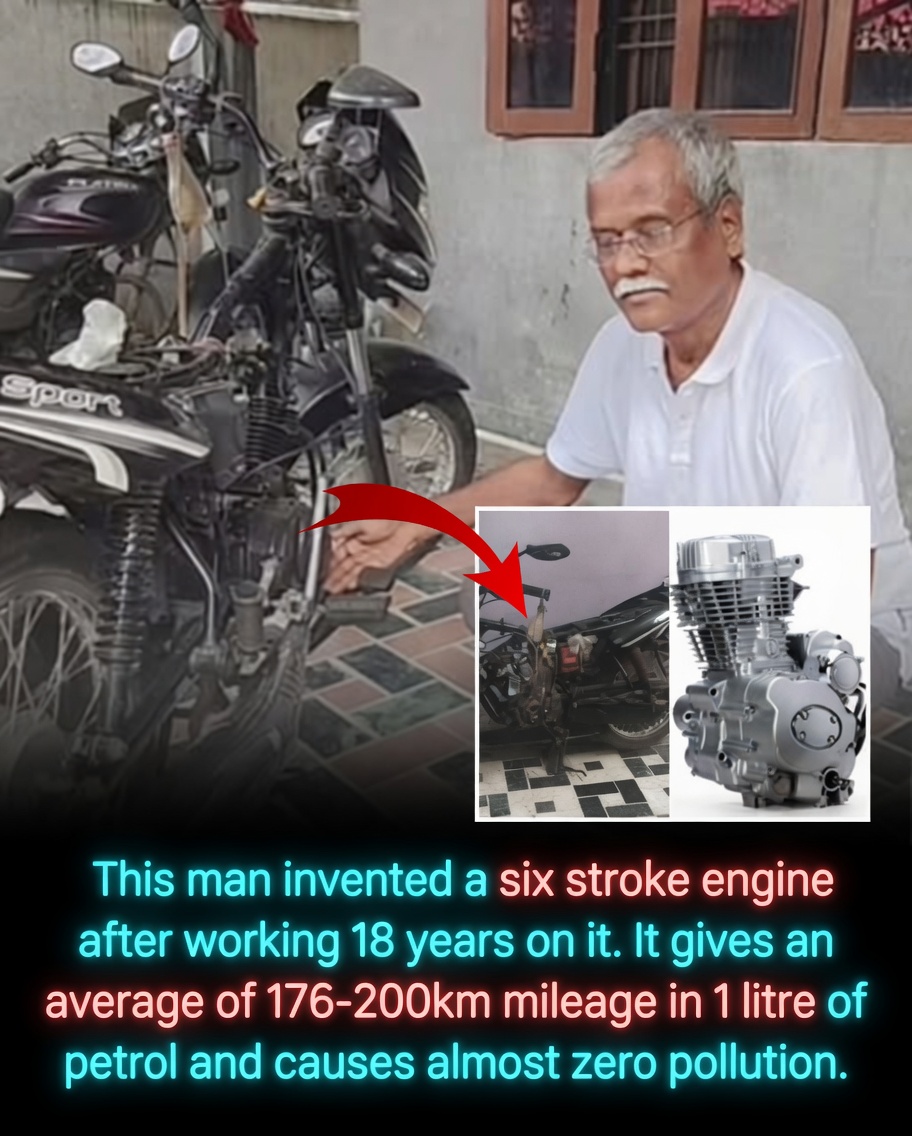
An inspiring story of perseverance has emerged from Prayagraj, India, where an alumnus of Allahabad University has developed a highly efficient six-stroke engine after nearly two decades of dedicated work.
Shailendra Singh Gaur, who graduated in 1983, spent 18 years refining his invention, often at great personal cost. He sold his land, shop, and even his house to fund the project, converting a rented space into a makeshift workshop. Drawing on technical experience gained at institutions such as Motilal Nehru National Institute of Technology and IIT (BHU), he created a prototype that he claims delivers an extraordinary 176 to 200 kilometers per liter of petrol on a modified 100cc motorcycle.
Unlike conventional four-stroke engines, Gaur’s six-stroke design aims to extract significantly more energy from the same amount of fuel. In one demonstration, the modified bike reportedly ran for 35 minutes on just 50 milliliters of petrol. The inventor states that the engine achieves up to 70% thermal efficiency, runs on multiple fuels, and produces near-zero pollution.
Gaur has already secured two patents for the technology, with more pending. If successfully scaled and independently validated, this innovation could dramatically reduce fuel consumption and emissions for motorcycles, cars, and other vehicles across India and beyond.
While the claims are remarkable and have generated significant excitement, further rigorous testing and peer review will be essential before widespread adoption. Nevertheless, Gaur’s story stands as a powerful example of individual determination and grassroots innovation in Indian engineering.
हे अप्रतिम आहे...अजिबातच माहित नव्हते याबद्दल...
नागेश सुर्वे या आपल्या मराठी माणसाने १९७५ पासून तब्बल १६०० गाण्यांमध्ये शिट्टी वाजवली आहे...नक्की पाहा...
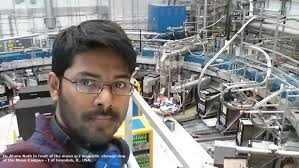
Imagine a classroom in Tihu College, Assam. It is a humble setting where local students come to learn the basics of physics. At the front of the room stands a man who looks like any other dedicated prof. But when the bell rings & the students leave, Atanu Nath plugs back into the global grid. He is calculating the g-2 factor: a measurement so precise it is like measuring the distance from Earth to the Moon with the accuracy of a human hair.
The Muon is like a fat version of an electron. According to every physics book written in the last 50 yrs, it should wobble at a specific rate when put in a magnetic field. But it does not It wobbles differently. Prof. Nath was part of the elite global team that tracked this tiny, impossible discrepancy.
The Northeast has always been a Silo of culture & resilience, but in the world of high-energy particle physics, it was often a Ghost region. By winning the 2026 Breakthrough Prize, Prof. Nath shattered that ceiling. He proved that a scientist from Lalabazar, Hailakandi, can sit at the same table as the legends of Brookhaven & CERN.
Even with a Breakthrough Prize (and its multi-million dollar purse shared among the team), Prof. Nath remains an Assistant Prof at a local college. He represents the India Bull spirit: the refusal to move to the Big City because the mind can travel further than the body ever could.