I am a Forecasting Memory Systems Architect. I design, build, and continuously refine P-SCO (precision structured calibrated output). A neo generalist.
Fun fact.
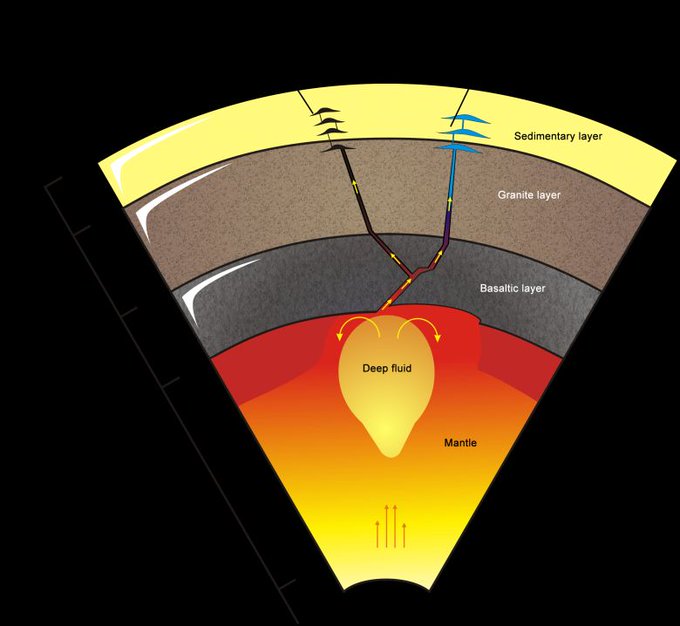
Oil and gas may not be 'fossil fuels', but renewable energy source created by a geothermal reaction between the solid mantle and liquid core.
This is according to the abiogenic petroleum origin hypothesis, that posits that petroleum and natural gas are formed from inorganic processes within the Earth's asthenosphere, rather than from the decay of organic matter.
These hydrocarbons then migrate through deep faults into the Earth's crust, forming deposits in various rock types.
While the abiogenic theory is a well-defined concept, the biogenic theory, which suggests a biological origin for petroleum, is the most widely accepted and supported by substantial evidence.
Yet, laboratory experiments simulating conditions in the Earth's mantle have shown the possibility of synthesizing hydrocarbons from inorganic components like carbon, water, and iron.
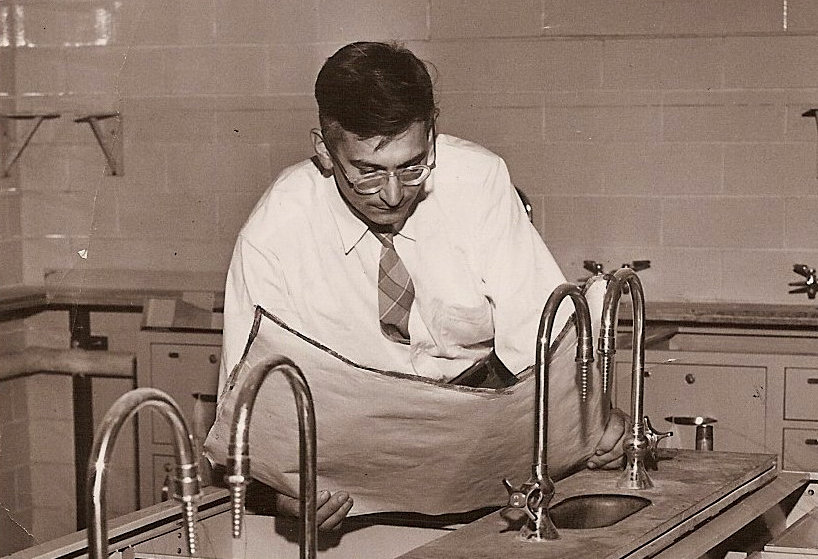
Fred Kummerow told America in 1957 that the fat in margarine was turning up in the arteries of the dead. The government acted on it in 2015. He was 100.
He was a biochemist at the University of Illinois, and what he had done was simple and slightly grim. He got hold of tissue from people who had died of heart disease and looked at what their arteries were made of. They were full of trans fats, a kind of fat that barely exists in nature and came, in 1957, from one place: the hydrogenated vegetable shortening and margarine the country had just been told to eat in place of butter.
He published it in Science. He was 43.
What followed was a career spent being ignored by experts. The oil industry had friends on every committee. His funding grew thin. In 1968 he talked a panel of the American Heart Association into warning about trans fats, and the warning was pulped and reprinted without it after the shortening makers saw a draft.
Kummerow kept working. He kept his laboratory into his nineties. And he kept eating, quite deliberately and in front of journalists, the diet he had been told would kill him. Eggs cooked in butter. Whole milk. Red meat. He had looked inside the arteries himself and he had not found breakfast in there.
In 2009, aged 94, he filed a formal petition asking the Food and Drug Administration to ban artificial trans fats. The law gave the agency 180 days to answer. Four years later it had not, so in 2013, at 98, he sued the United States government.
Three months after that the FDA announced it agreed with him. The ban was confirmed in 2015. The gap between his paper and the decision was 58 years, which is longer than most of the people who ate the margarine got.
He died in 2017, at 102.
And he spent those last years on a second warning, which has been received exactly as the first one was. The problem, he said, was never the cholesterol in the egg. It is the vegetable oil in the fryer, heated and reheated until it oxidises, and then eaten.
On the record so far, that one is due to be acted upon in about 2070.
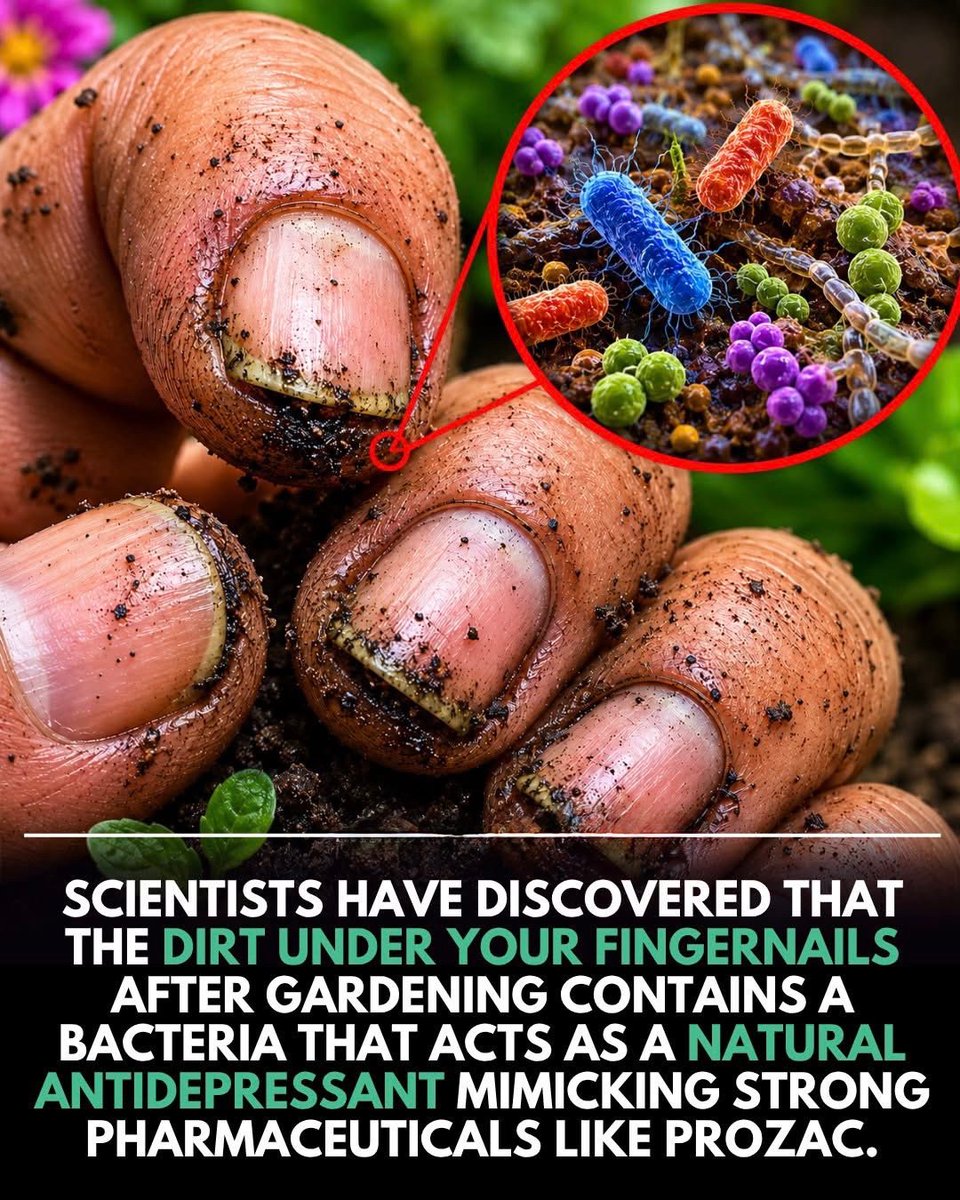
🚨 THE DIRT UNDER YOUR FINGERNAILS MAY BE DOING SOMETHING AMAZING...
What if one of nature’s hidden mood boosters was sitting right in your garden?
Scientists have discovered that a soil bacterium called Mycobacterium vaccae may help increase serotonin, a brain chemical linked to happiness, relaxation, and emotional well-being. Researchers found that exposure to this microbe could produce effects similar to some antidepressant medications.
It may help explain why so many people feel calmer, happier, and less stressed after spending time gardening. The next time you notice dirt under your fingernails, remember—it might be doing more than helping your plants grow.
Sometimes nature hides its most surprising secrets in the places we least expect.
Source:
Lowry, C. A., et al. Neuroscience.
Listen, do you want to hear a secret?
Do you promise not to tell…
The Beatles did not merely write catchy songs. They reverse-engineered the entire 1960s radio machine.
They were engineers.
Top 40 AM programmers lived by a brutal clock. Every extra second of music was a second stolen from advertising.
Songs had to land well under three minutes or they never made the playlist. So the Beatles stripped the traditional intro almost to nothing.
No long guitar wander. No polite buildup. "She Loves You," "Help!," and "Can't Buy Me Love" slam straight into the chorus. "A Hard Day's Night" opens with one jagged, instantly recognizable chord that grabs the listener by the collar before the first word is even sung.
Change the station and you miss the hook. Most kids did not change the station.
Lennon and McCartney also ran a linguistic operation McCartney later called the pronoun strategy.
They loaded the lyrics with "I," "me," and "you." Titles were not decoration. "From Me to You." "I Want to Hold Your Hand." "Love Me Do." "She Loves You."
The songs were written as a private conversation aimed at one teenager sitting alone in a bedroom or a car. Third-person stories feel like someone else's life. Direct address feels like the band is talking to you.
Then they attacked the hardware. Cheap portable transistor radios were flooding teenage rooms.
Those radios had two-inch speakers that barely produced bass and drowned in AM static. George Martin and the EMI engineers mixed the early singles accordingly.
They crushed the mono masters, cut the low end, and pushed midrange and treble until the close harmonies and ringing guitar lines cut through the tin and the hiss. The records were not mixed for hi-fi living rooms. They were mixed to win on the worst speaker in the house.
That combination of instant structure, personal pronouns, and speaker-optimized sound is why those early singles did not just get played.
They occupied the dial.
And yes for decades it was a secret.
Neuroscientists documented something strange: people who become "unnaturally intelligent", they run 5 daily protocols that restructure the brain. Most look too weird to take seriously.
1. Reverse Learning
Read the last chapter of every book first. Your brain calls this a "mystery gap", it switches into active reconstruction mode, firing more neural connections. This is how prodigies read. From the answer backward.
2. Theta State Immersion
Also called Sensory deprivation thinking
20 minutes daily in complete darkness with earplugs. Within 8-12 minutes, brainwaves drop into theta, the state Einstein called "combinatory play." Breakthroughs appear from nowhere. Not because you thought harder because you stopped blocking the signal.
3. Neural Cross-Wiring/Pattern interruption - Write with your non-dominant hand 10 minutes daily. Neuroscience calls this "contralateral activation." You force new pathways unused since infancy. Result: dominant thinking sharpens, you've broken the loop you were trapped in.
4. Cross-Domain Collision/Strategic Confusion.
Study something unrelated to your field weekly. Medieval poetry Monday. Quantum physics Wednesday. The brain begins "conceptual bridging" — connecting impossible dots into insights no specialist sees. This is how every genius thought. Not deeper. Wider.
5. Cognitive Inversion/Argument reversal
Defend the opposite of what you believe 15 minutes daily. Out loud. You're building "steel-manning" holding two opposing truths without collapsing. Your original position becomes unshakeable because you've seen every angle used to attack it.
Here's what no one tells you: intelligence isn't fixed. It's a frequency your nervous system tunes into or blocks. Most block it with the same 3 mental loops on repeat. Break the loops, and the intelligence was always there waiting.
The truly awake aren't smarter. They've stopped interfering with the signal.
On September 4, the United Nations General Assembly has overwhelmingly endorsed a resolution to promote the Equal Earth projection over the traditional Mercator map to better reflect the true scale of continents.
The resolution is non-binding, meaning governments, schools, and tech companies are encouraged, but not legally required, to update their mapping standards.
1. Elon Musk: College won't make you rich. Curiosity and technology will.
2. Naval Ravikant: Turn yourself into a product. If it feels like play, you'll outwork everyone.
3. MrBeast: Live broke, build big. Reinvest. Money is fuel, not flex.
4. Warren Buffett: Get so good they can't ignore you. Your skills are your fortress.
5. Michael Jordan: Fail loudly. Miss more shots. That's how you win.
6. Taylor Swift: The dumb ideas are what lead to the genius ones. Try more.
7. Mark Cuban: Read like a maniac. knowledge compounds faster than money.
8. Jeff Bezos: Obsess over the customer, not the competition.
9. Charlie Munger: No one's handing you the map. Build your own route.
10. Peter Thiel: Stop stacking resumes. Start stacking value.
My directive has halted up to 1,800 data center projects.
I established guidelines & guardrails to protect Texas communities:
✔️Data centers must not take water needed by local communities,
✔️They must not take power needed by the Texas power grid,
✔️They must lower the cost of electricity,
✔️They must not disrupt neighborhoods or rural communities.
These guidelines are now the universally applied standard in Texas.
https://t.co/byXzPrKRDV via @thecentersquare
¿SABES EL ORIGEN DE LA PALABRA ESCRUPULOSO?
Imagínate a un legionario romano caminando tan tranquilo por una de las vías de Hispania con sus sandalias de cuero y tachuelas (llamadas cáligas) cuando, de repente, una diminuta piedra se le cuela bajo el pie, justo entre la planta del pie y la suela.
No le impide andar, pero ahí está la puñetera piedrecita, molestando a cada paso que da, con lo que jode eso. Pues bien, a esas piedrecitas los romanos las llamaban "scrupulus",
Entonces ese legionario romano podía elegir, seguir andando clavándosela a cada paso que daba o pararse y quitarla. Es aquí donde viene lo divertido, porque los que se paraban y la quitaban eran los "escrupulosos".
Por otro lado tenias a Senadores y ricos que siempre iban en carro o a caballo y no pisaban mucho la calle, a esos no se les metían Scrupulus en las sandalias, por eso eran gente "sin escrúpulos" y por eso alguien sin escrúpulos es quien puede seguir caminando tranquilamente…aunque tenga la piedra ahí.
Curioso cómo una jodida piedrecita terminó definiendo como funciona nuestra conciencia 2.000 años después.
Venga, va...que os ha gustado y lo se. Que se noten esos likes, compartir y si no me sigues ¿a que esperas?
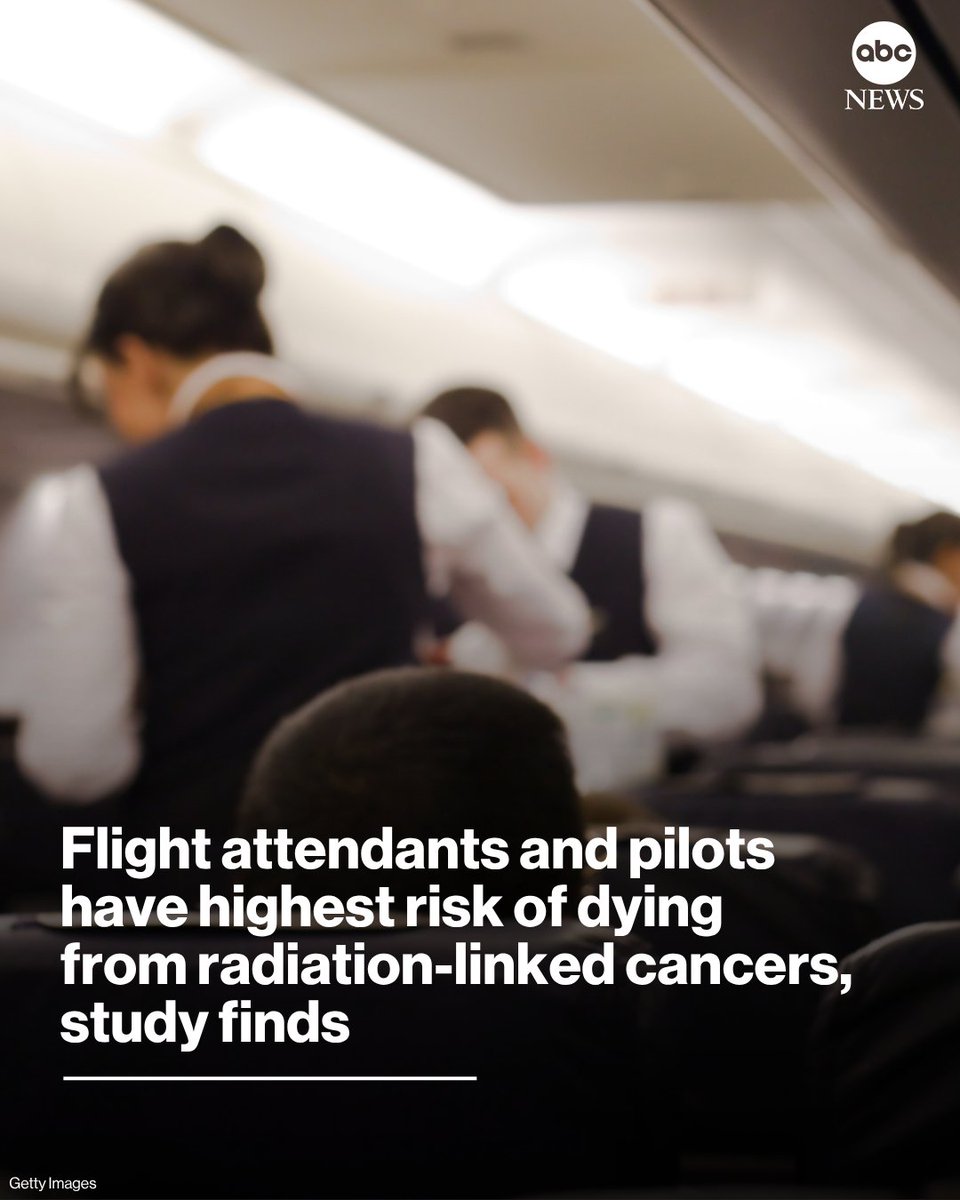
Flight attendants and pilots are at the highest risk of dying from radiation-related cancers — even more than people who work with radioactive materials, according to a new study.
Read more: https://t.co/QCX2ByUhrB
Elon Musk put dates on two claims that sound similar and are nothing alike.
Musk: “My guess is that we might have AI smarter than any single human at anything as soon as next year.”
The best chemist alive is not the best lawyer. No one has ever been the best at two things at once, and he is describing something that would be best at all of them.
Musk: “And then probably within 5, like, say, 2030, probably AI is smarter than the sum of all humans.”
The first claim measures against a person. The second measures against civilization.
He puts five years between them.
The gap is short because eight billion minds have never been added together.
Everything we know sits inside people who cannot hand it over directly. It moves through language, papers, and teaching, and most of it never moves at all.
People forget. People die. Whole fields spend decades rediscovering what someone already wrote down and nobody read.
A civilization is a badly networked cluster. Most of its capacity goes to the cost of getting an idea from one head into another.
The sum of all humans is a smaller number than it sounds, because nobody has ever had access to it.
What Musk describes would be the first thing to hold what we collectively know without losing most of it in transit.
His timelines have run early before. The direction has held every time.
Nobody has ever met the sum of all humans. That is the thing being built.
Yes, the gold is there all (approximately) 147 million ounces. It is impressive, but the real point is what it still teaches in 2026.
In 1971 we severed the dollar from gold. Since then the currency has lost roughly 85% of its value. Prices are higher because the money itself is weaker.
A family making $50,000 with two kids that has not received a 25% raise in the last five years is falling behind.
This is now often called “affordability,” but the the accurate word is inflation.
We run annual deficits of two trillion dollars. The Federal Reserve buys about a third of that debt by creating new money. Every new dollar dilutes the value of the dollars already in people’s pockets. Gold does not expand when Congress spends. Paper does.
That is the difference.
Elon Musk just put an expiration date on human language. Not because talking is slow. Because it’s lossy.
Musk: “Our brain spends a lot of effort compressing a complex concept into words.”
Language isn’t communication. It’s failed compression.
You have a complete thought. You crush it into words. The other person catches fragments and rebuilds a guess. The rest never arrives.
Every person who has ever loved you loved a compressed version of you. Not for lack of trying. The channel wouldn’t carry the rest.
We don’t communicate. We approximate and hope the gap doesn’t matter.
Musk: “You would be able to communicate very quickly and with far more precision.”
Neuralink doesn’t improve communication. It replaces it. No compression. No loss. Thought moving at the speed it happens.
Not describing the painting. Transmitting the seeing of it.
Musk: “You wouldn’t need to talk.”
Five to ten years until speech becomes optional. Talking survives for tone, for intimacy, for the pleasure of it. For information, it’s obsolete.
A lifetime of memory in a second. Full schematics, not summaries. The entire structure of a thought, intact.
Not better communication. Telepathy with an engineering spec.
Musk: “Ideally, we are a symbiosis with artificial intelligence.”
Symbiosis means the humans who don’t merge at high bandwidth don’t just fall behind. They stop being legible to the intelligence that matters.
We’re already cyborgs running terrible hardware. Your phone extends your mind. Your thumbs are the bandwidth. Terabytes of thought throttled down to a few words a second.
Neuralink doesn’t optimize that constraint. It detonates it.
Five to ten years. Not science fiction. A deployment window.
From language as default to neural link as standard. From crushing thoughts into words to sending them whole. From humans using AI to humans running at its speed.
Every mind that has ever existed ran alone. That was never the human condition. It was a bandwidth limit.
Solitude was never philosophy. It was hardware.
Every thought you’ve ever had arrived somewhere smaller than it started. That’s not a flaw in you. It’s the width of the channel every human has ever been issued.
The channel is the thing that changes. Not soon. But not in some other lifetime either, in this one, on a clock Musk just put a number on.
A NASA fellow claims 5 equations explain 99 percent of the physics that actually runs your world. Understand them deeply and you are set for life. His words.
And the way he does it is what makes the video worth it.
He does not teach the five as a list. He tells them as one story, where each equation is born from the one before it. F equals ma leads into gravity. Gravity rhymes with the law of electric charge, the exact same shape. That connects to magnetism. Magnetism folds into the wave. And the wave quietly opens the door to relativity and quantum physics.
By the end, all of physics feels like a single sentence written by one hand, not a pile of formulas you were forced to memorize.
The move that stays with you comes first. He says F equals ma is written the wrong way around, and rewrites it. One tiny flip, and the most famous equation on Earth suddenly means something school never told you.
His point for why this matters now: in the age of AI, the people who understand reality itself stay in demand. Everyone else is just memorizing.
Five equations. One thread. It is in the video.
Elon Musk was asked by an interviewer what he does when he makes a wrong decision.
He said he doesn't make decisions based on being right. He makes decisions based on expected value. Which means he expects to be wrong frequently. He said if you're not wrong at least 30% of the time you're not making enough decisions.
He described SpaceX's approach to rocket design. Instead of spending years perfecting a design on paper and then building it, they build it fast, launch it, watch it explode, and use the explosion as data for the next version. The explosions aren't failures. They're the fastest way to generate the information needed for success.
He said most companies fail not because they make bad decisions but because they make too few decisions. They spend so long trying to be right that the opportunity passes. A wrong decision made quickly generates data. A delayed decision generates nothing.
Then he said the part that made the interviewer go quiet. He said the biggest mistakes of his career weren't the times he was wrong. They were the times he was right but too slow. The times he knew the answer and waited for more confirmation before acting. The delay cost more than any wrong answer ever did.
The world sees Elon as a risk taker. He sees himself as someone who moves fast enough that the cost of being wrong is always lower than the cost of being slow. That's not the same thing as courage. It's math.