@KA_Todd19@TrumpGirlLove Not only to your nation, to the whole world. To break the nuances of normality and superimpose cruelty and banality on top. Last year Pakistani terrorists killed 26 hindu tourists in Kashmir, our own land. America stood by Pakistan else we would have obliterated that country
@GenFlynn@TrumpGirlLove Two days ago I watched a video in which General Musharraf the dictator of Pakistan was boasting to a tv channel how they had built their military arsenal because of afghan problem and how well pakistani army could smuggle in Osama bin Laden. Who is accountable?
Peter Burton Hanson, Sue Kim Hanson, and their two-and-a-half-year-old daughter Christine Lee Hanson died together on September 11, 2001, when United Airlines Flight 175 struck the South Tower of the World Trade Center.
The family lived in Groton, Massachusetts. Peter, 32, worked in software sales and had turned their yard into a garden, planting more than thirty trees along with lilacs and roses.
Sue, 34 or 35, was a doctoral candidate in immunology at Boston University, only weeks away from defending her dissertation. Christine, their only child, had never flown before.
The trip to Los Angeles was meant to let Sue’s relatives meet her for the first time and to take her to Disneyland. They had originally been booked on September 10; a last-minute work meeting forced Peter to move the flight one day.
A few days earlier Christine had told her grandmother the only thing on her mind: she was going to Disneyland.
At 8:52 a.m. Peter called his father, Lee Hanson, from the plane.
He said the flight had been hijacked. Lee contacted authorities. In a second call Peter described the situation worsening—a flight attendant stabbed, knives and Mace on board, the plane descending.
He tried to steady his father: if the worst happened, it would be over quickly. Then his voice broke. “Oh my God. Oh my God. Oh my God.”
The line went dead. Moments later, at 9:03 a.m., the grandparents watched on television as the aircraft hit the tower.
Christine was the youngest of the eight children killed that day. Lee Hanson spent the remaining years of his life pressing for accountability; he died in 2018 without seeing a full public reckoning.
His widow Eunice has said that if she could ask the hijackers one question, it would be how they could look into a small child’s eyes and choose to end her life.
Christine spent her last days talking about Mickey Mouse and helping her father in the garden. She never reached Disneyland.
Rest in peace, Peter, Sue, and Christine. 🌹🌹🌹
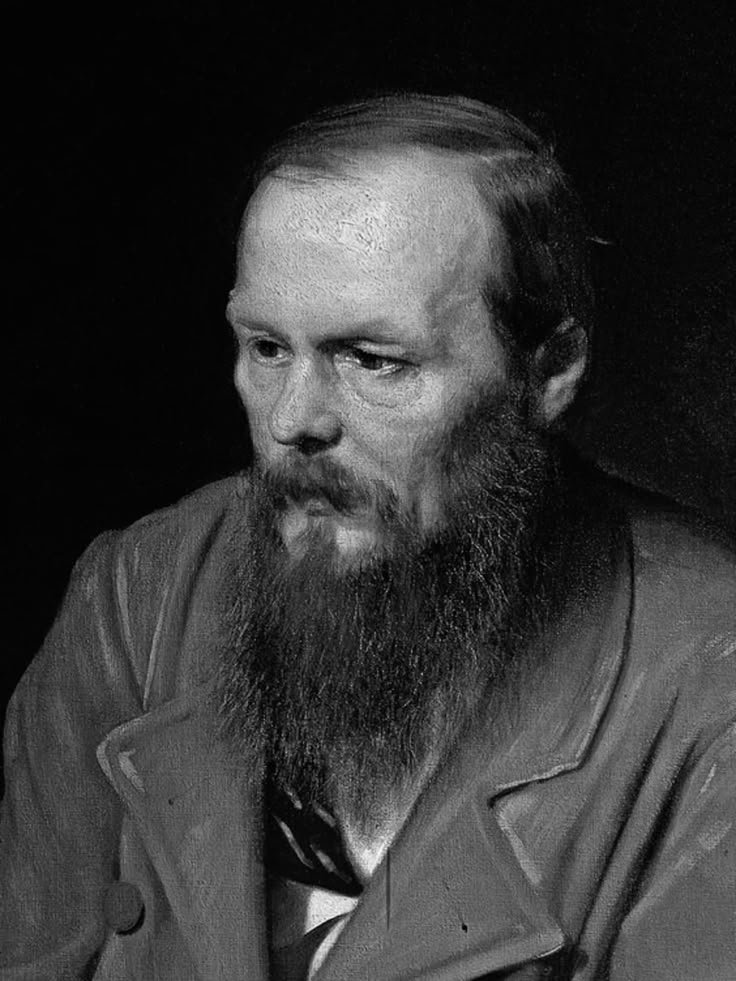
Dostoevsky was 28 when they stood him in front of a firing squad. Blindfolded. Hands tied. He could hear the rifles being loaded.
At the last second, a messenger on horseback arrived. The Tsar had commuted the sentence. The entire execution was staged. Psychological torture designed to break him.
It worked. He had a seizure on the spot.
They sent him to a labor camp in Siberia for four years. Freezing. Starving. Sleeping on wooden planks next to murderers. His epilepsy got worse. He had no paper. No pen. Nothing.
When he got out, he was broke. His first wife died. His brother died. He inherited his brother’s debts. He was so desperate for money that he signed a contract with a publisher that would have given away the rights to everything he’d ever write if he missed the deadline.
He wrote The Gambler in 26 days to make it. Dictated it to a 20-year-old stenographer named Anna. Married her three months later.
Then the real work started. Crime and Punishment. The Idiot. Demons. The Brothers Karamazov. The greatest novels in the history of the Russian language. Maybe any language.
The man who stood blindfolded before the firing squad, who convulsed on the ground while soldiers watched, who slept next to killers in Siberia for four years, who was buried in debt and grief.
That man wrote: "Every minute can be an eternity of happiness."
He earned the right to say it.
It's never over. Never give up, friend.
@JayantBhandari5 A Russian friend told similar takes of his country when the Bolsheviks grabbed power through violence. The biggest crook and drunkard became the local Soviet head. Rest is history known to all of us....
El hombre que accionó la palanca y después no pudo dormir
Su nombre estuvo en secreto durante 30 años.
Se llamaba Shalom Nagar. Nació en Yemen, emigró a Israel siendo niño, sirvió como paracaidista y después entró al Servicio Penitenciario.
En 1961, con alrededor de 25 años, fue elegido como uno de los 22 guardias que custodiarían a Adolf Eichmann en la prisión de Ramla.
No los eligieron al azar. Buscaban guardias que no hubieran perdido familiares directos en el Holocausto. Querían un juicio, no una venganza.
Durante seis meses, Nagar lo vigiló. Probaba su comida antes que él, para asegurarse de que nadie la hubiera envenenado. Lo acompañaba en silencio, sin hablarle casi nunca.
En diciembre de 1961, Eichmann fue condenado a muerte. La sentencia fue confirmada en apelación.
Entonces llegó la pregunta más difícil: ¿quién lo haría?
Nagar contó después que fue elegido por sorteo. Y que él no quería hacerlo. Sus superiores le mostraron fotos de lo que había hecho el nazismo. Le dijeron que era una orden, no una elección.
Aceptó.
La noche del 31 de mayo al 1 de junio de 1962, en Ramla, Nagar accionó la palanca.
Fue la única ejecución judicial civil en la historia del Estado de Israel.
Después ayudó a bajar el cuerpo para la cremación. Tenía las manos temblando tanto que no pudo seguir. Lo mandaron a su casa. Las cenizas fueron esparcidas en el mar, fuera de las aguas territoriales israelíes.
Esa noche no terminó esa noche.
Durante años, Nagar soñó que Eichmann lo perseguía. No se arrepintió nunca de haber cumplido la sentencia. Decía que había sido justicia. Pero el peso de haberlo hecho lo acompañó toda su vida.
Por eso volvió a la Torá. Por eso volvió a la fe de su infancia. Por eso se hizo shochet, especialista en sacrificio ritual kosher, un oficio donde cada gesto está regulado por la ley, donde nada se hace con ira, donde todo se hace con respeto.
Como si toda su vida hubiera estado buscando una manera de hacer las cosas con orden, con límite, con santidad.
Su identidad se conoció recién en 1992. En 2010, las cineastas Netalie Braun y Avigail Sperber contaron su historia en el documental _The Hangman_.
Nagar murió el 26 de noviembre de 2024. Habían pasado 62 años desde aquella noche en Ramla.
Durante tres décadas nadie supo su nombre. Pero él nunca pudo olvidarlo.
No fue un héroe de película. Fue un joven guardia que cumplió una orden terrible, en nombre de un pueblo que había decidido hacer justicia y no venganza.
Y que pagó por eso, en silencio, el resto de su vida.
Un oficial de la Wehrmacht se topa con una mujer judía cuya familia estaba a punto de ser asesinada. Esto fue lo que hizo.
Febrero de 1942. Lemberg, en la Ucrania ocupada.
Una mujer con la estrella amarilla en el abrigo caminaba por las calles, deteniendo a cada oficial alemán que pasaba. Se llamaba Gittel Goldberg.
Su marido Wolf y su hijo Abraham, de 19 años, acababan de ser separados de ella en el gueto de Lemberg y enviados al campo de trabajo forzado de Janowska. En ese campo, una selección podía significar la muerte o la deportación a Belzec.
Gittel era de Turingia, Alemania. Hablaba alemán. Por eso solo se dirigía a los uniformados alemanes. Muchos la ignoraron. Algunos se burlaron.
Solo uno se detuvo a escucharla.
Era el Hauptmann Hans Hartmann, nacido en 1896 en Wolfratshausen, Baviera. Oficial de una unidad de reparación de vehículos de la Wehrmacht, no lejos de Lemberg. En su taller, cientos de judíos trabajaban reparando tanques y vehículos que volvían destrozados del Frente Oriental.
Hartmann anotó los nombres. Al día siguiente intentó conseguir que padre e hijo fueran liberados para trabajar con él. El comandante del campo, el SS-Hauptsturmführer Fritz Gebauer, se negó.
Hartmann no se quedó ahí.
A la mañana siguiente condujo su vehículo militar hasta la puerta principal de Janowska. Hablando con los guardias, invocando su autoridad militar, logró que le entregaran a Wolf y a Abraham Goldberg. Los llevó hasta el lugar acordado, donde Gittel los esperaba.
Cuando padre e hijo quisieron agradecerle con un juego de escritura Pelikan bañado en oro, Hartmann se negó.
_“Quédenselo. Probablemente sea el último objeto de valor que les queda.”_
Pocos días después, Hartmann fue trasladado a una unidad de reparación en el norte de África, con el Afrikakorps de Rommel. Sobrevivió a la guerra y volvió a su pueblo, donde trabajó como jefe de correos.
Los Goldberg también sobrevivieron. Lograron encontrarlo en Wolfratshausen y mantuvieron contacto por carta, hasta que en 1949 emigraron a Israel.
Hartmann murió en 1970, sin considerarse un héroe. Para él, solo había hecho lo que su deber humano le pedía.
El 16 de julio de 1963, Yad Vashem lo reconoció como Justo entre las Naciones, con el expediente número 0008. Fue uno de los primeros alemanes en recibir esta distinción.
No los salvó un ejército. Los salvó un hombre que decidió detenerse a escuchar.
#SupremeCourt: CJI Surya Kant expresses displeasure at #JudicialOfficers repeatedly approaching courts for service and post-retirement benefits, etc. instead of focusing on court work
"They are opening their mouth too much now. In every matter, the judicial officers are now moving application [saying] you grant us this. Why don't they work in courts? We know their disposal, what they are doing whole day. You go at 10'o clock. Nobody's in court - sitting in chamber, taking coffee.
As if we are not aware of what's happening. 24 hours they are thinking what perks and service benefits we are getting! whether our [retirement] age is being increased or not. people are waiting outside in queue, they don't deal with those matters!" CJI said during a hearing.
"Bring me a written order from the Chief Minister saying the police cannot check your vehicles."
Someone who trusts, and sometimes pays the highest price for that very trust.
It was June 2017. Shrestha Thakur, a young Deputy SP posted in Bulandshahr, Uttar Pradesh, was conducting a vehicle check. She stopped the bike of a local worker from the ruling party. He had no papers, so she fearlessly issued a challan.
Soon, several party leaders arrived at the spot and began throwing their weight around. But Shrestha Thakur did not budge. Her reply that day, caught on camera, is still remembered by people.
Five party workers were sent to jail for obstructing government work. Her integrity was talked about across the country. But a few days later, on 1 July 2017, she was transferred to Bahraich, near the Nepal border. She wrote very politely on Facebook that she had received her "reward" for her work.
The world saluted her courage. But perhaps fate had another test in store.
In 2018, a man came into her life through a matrimonial website. He claimed to be a 2008-batch IRS officer posted as Deputy Commissioner in Ranchi. Her family trusted him, and the two were married.
But the truth that emerged after the wedding knocked the ground from under their feet.
He was not an IRS officer at all. He had stolen the identity of a real IRS officer with the same name (identity theft). Not only that, he was using Shrestha Thakur's name and position to extort money from people. Just think: a woman who built her identity through complete honesty was deceived on such a scale.
But Shrestha Thakur was not one to break. About two years later, she divorced the fake man. Even then he did not stop and kept misusing her name. Finally, in February 2024, Shrestha Thakur opened a legal front against him, and Ghaziabad Police arrested the fraudster, Rohit Raj, and put him behind bars.
If a sharp police officer who knows the law can fall victim to such a cunning "matrimonial fraud," how great is the danger for ordinary families?
These days, blindly trusting online relationships can prove costly. Before making a big decision like marriage:
- Don't rely only on profiles, photos, or paperwork.
- Personally verify the person's office, colleagues, and background on the ground.
- If you have any doubt, stop and investigate thoroughly.
Shrestha Thakur's story teaches us two things. First, never bow before wrongdoing. Second, instead of staying silent after being cheated, real courage lies in fighting back and getting the offender punished.