Sanskrit is an ancient language that originated in the Indian subcontinent. Our purpose is to introduce the Sanskrit language & literature to a wider audience
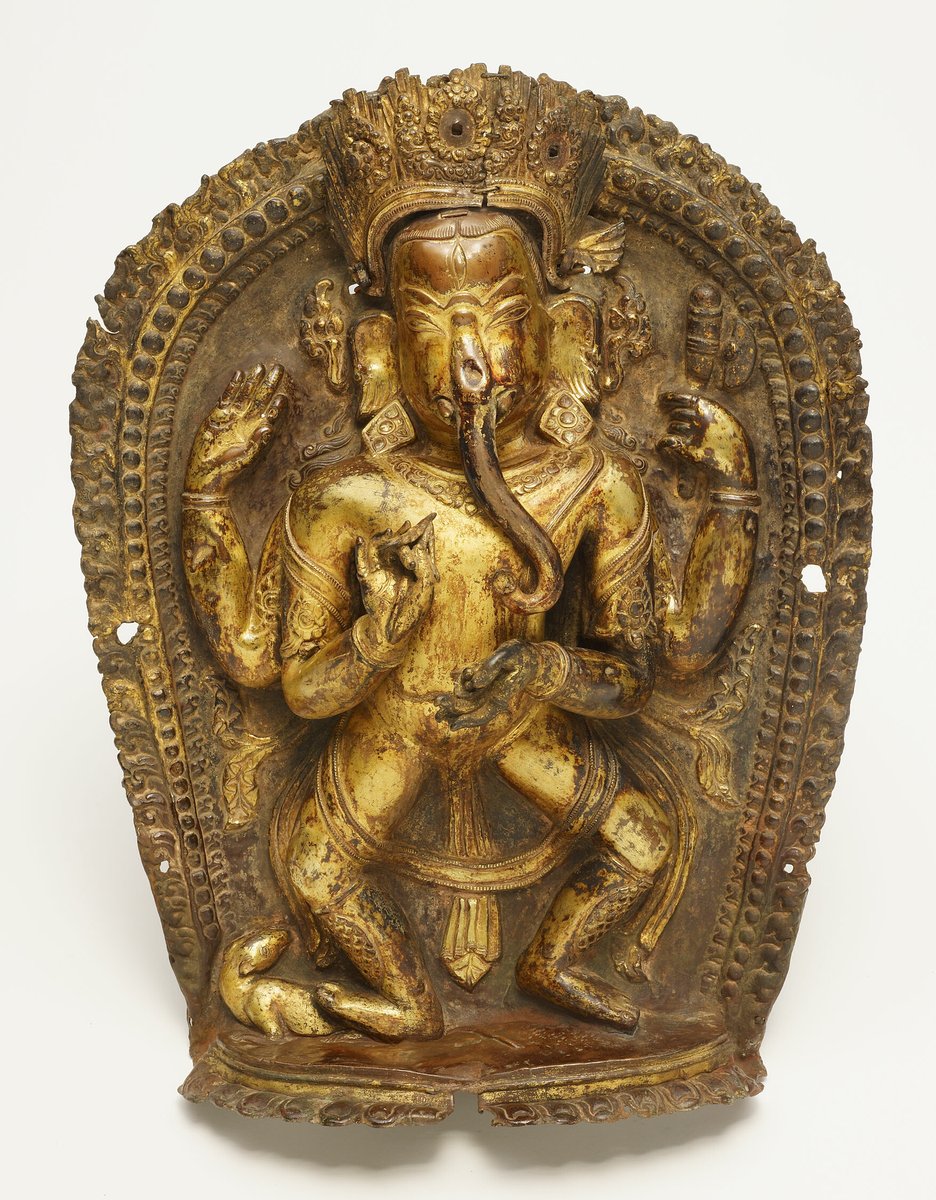
Bhagwan Ganesh, remover of obstacles;
Bhagwan Ganesh is shown in a dancing pose. His mouse mount is seen at his foot.
(16/17th century CE; Gilt bronze repoussé; Katmandu Valley, Nepal)
#GaneshChaturthi
Hindu deities are usually shown with the mounts on which they ride. Between Shiva's bull and Parvati's lion sits their son, Bhagwan Ganesha, depicted with the elephant head, while their second son, Kumara, who has six heads, reaches out to his peacock, offering it food or drink.
#MahaShivaratri#Hinduism#india#festival
Bhagwan Shiva and His Family,
early 19th century, Himachal Pradesh, India
Kangra Style opaque watercolor and gold and silver paint on paper
Shiva, accompanied by his family, embodies both the ascetic yogi and the devoted husband and father. Adorned with little more than serpents, jewelry, and prayer beads, he raises a cup as his wife, the goddess Parvati, serves him a drink of bhang, a cannabis-infused beverage.
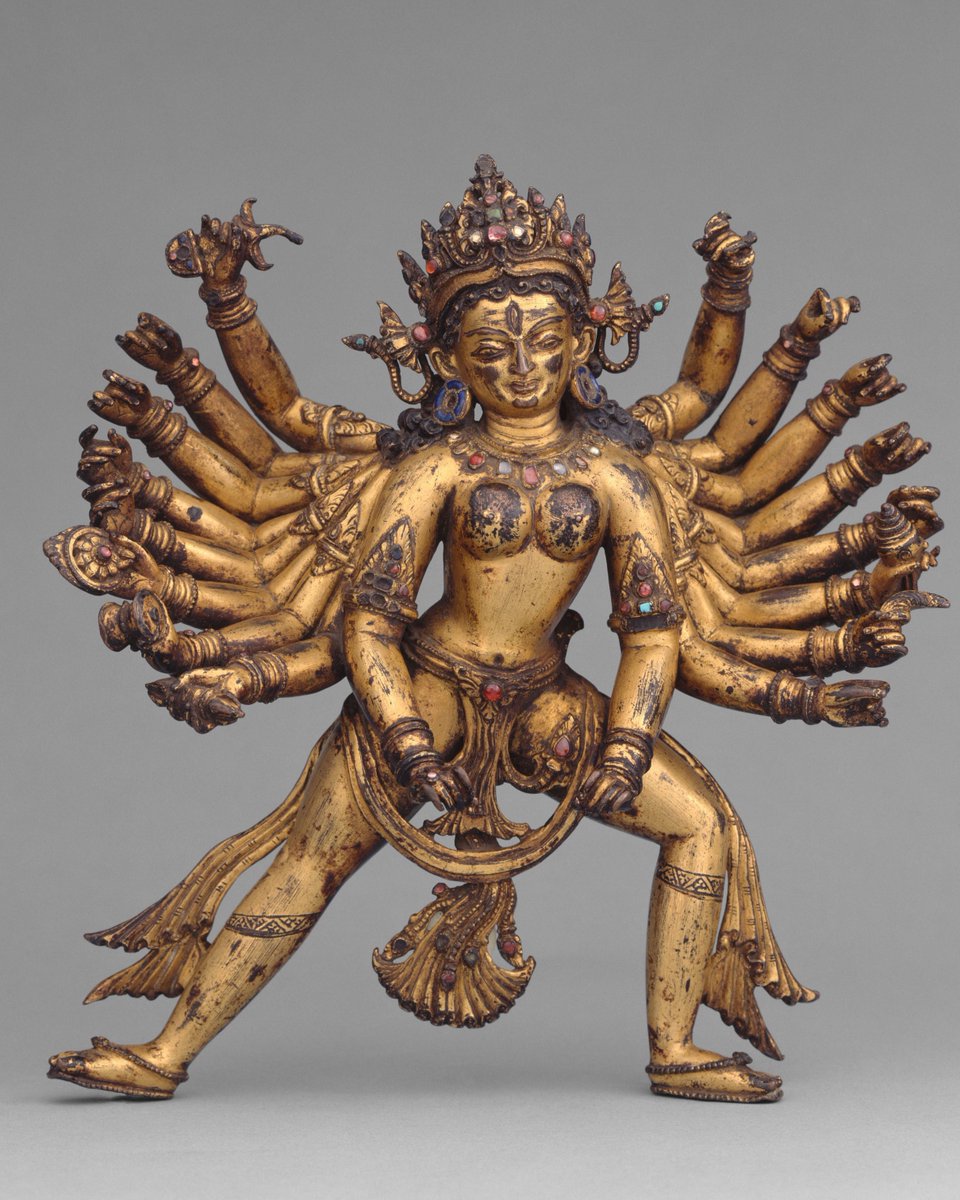
Eighteen Armed Devi Durga, the Unconquerable one, the Slayer of the Buffalo demon Mahishasura.
(Copper Alloy Sculpture inlaid with semiprecious stones; 14th Century, Nepal)
#Navrati#India#Sanskrit#DurgaPuja
The divine ambiance is suggested by the architectural elements reminiscent of a south Indian temple shrine. This setting is further enriched by celestial musicians and garland bearers.
The regal assembly is revered by a group of holy men (rishis) and Hanuman's monkey army, all with hands joined in the anjali mudra, a gesture of devotion. Hanuman himself kneels before his Lord, respectfully touching his foot.
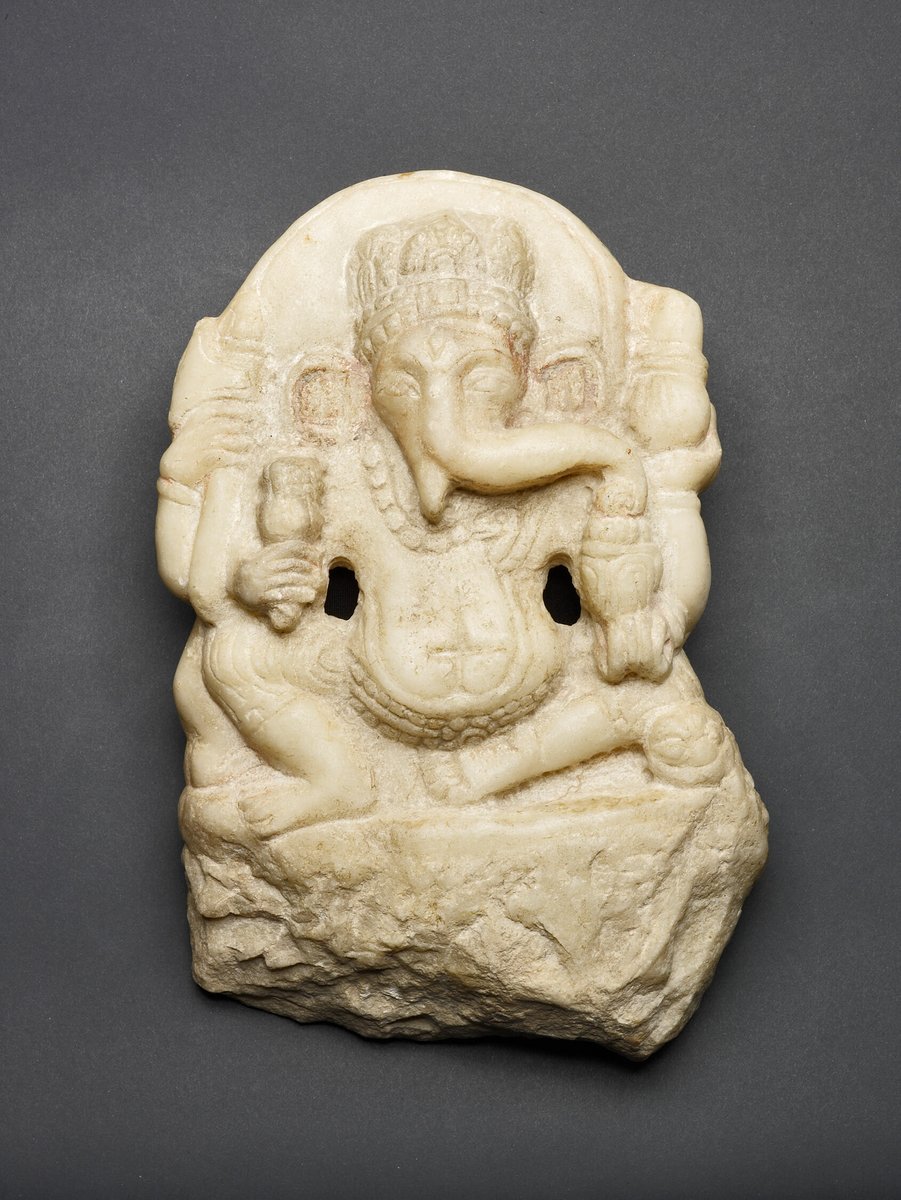
Karttikeya, God of War & Commander of the divine army; Schist sculpture; 600CE-1200 CE, India.
Karttikeya, the God of War & commander of the divine army, is the son of Shiva and Parvati and the brother of Ganesha.
#KarthikaiDeepam#festivals#India#sanskritlessons#sanskrit
Additionally, he is typically depicted with four arms.
In this representation, one of his hands firmly grasps a weapon, typically a battle axe. Another of his hands holds a broken tusk, a distinctive feature that is integral to his iconography.
Ganesha is characterized by his unique appearance, featuring a stout and chubby body along with an elephant's head, which is a notable aspect of his divine form.
Balancing the mountain effortlessly on a single finger, Krishna played his flute and enjoyed a refreshing paan offered by a milkmaid. In the depiction below the image of the four-armed Krishna, Indra appeared vanquished, kneeling in submission to Krishna's superior might.
Bhagwan Krishna lifting the mountain Govardhan.
(भागवतपुराण; Persian translation of Bhāgavata Purāṇa, Ink & Gold on paper, 1625, India)
# festivals #Janmashtami#india # sanskritlessons #SanatanaDharma#Krishna
However, Krishna, with remarkable ease, elevated the nearby Mount Govardhan like a colossal umbrella, providing shelter to all. This incredible feat filled everyone with joy and gratitude.