Singer|SANTITA JACKSON Show|M-F: 6-8aC|@AM950Radio|YOUTUBE|FBLive: SANTITA JACKSON & FRIENDS|Keep Hope Alive Radio Show EP|iHeartRadio|Co-Host, Sundays 8-10aE
The Minab school strike that killed hundreds of schoolgirls occurred in southern Hormozgan province — home to many Afro-Iranians.
Footage from the massive funeral is a reminder of a part of Iran and a community that many outside and even inside the country rarely hear about.
Police sexually assault Black middle school girl—call it a "full body search."
"They proceeded to intrusively touch in between her breasts," mom said.
"Under her breasts and down between her hips."
All over a rumored cell phone.
"I felt violated," the 14 year old girl said.
"But didn't even understand that you’ve been violated because you seeing everybody get violated, too."
Shanayah Mosley said her daughter—along with all other students—already pass through a metal detector on the way into school.
"There was no just cause for a search in the first place," she said.
The student resource officer has been reassigned to regular patrol duty pending an investigation.
Incident occurred at Bessemer City Middle School in Bessemer, Alabama
Alabama’s Focus Act passed last year does make it against state law for students to use a cell phone at school.
Posting first full length and credited video here to help raise awareness.
Burkina Faso’s🇧🇫 Thomas Sankara was assassinated on this day in 1987, 3 months after calling on African countries to not pay back debt to European countries and institutions such as the IMF and World Bank:
‘I would like this conference to clearly declare that we cannot pay this debt…just to avoid being assassinated individually. If Burkina Faso is the only one to refuse, I won’t be at the next conference.’
When Ghana’s Kwame Nkrumah built schools and factories without Western loans, the CIA called him “dangerous.” When Congo’s Patrice Lumumba refused to grant Belgium and the US mining rights, he was killed within 7 months. Thomas Sankara fed his country without foreign aid. He lasted 4 years.
They Called African Independence a Threat. History Reveals Why.
Ghana’s Kwame Nkrumah invested in schools, factories, and national development because he believed political independence meant little without economic freedom. Yet his government became a target of intense Western suspicion, and the CIA supported efforts to remove him from power.
In Congo, Patrice Lumumba challenged foreign interference and fought for genuine national control over the country’s immense mineral wealth. In 1961, he was assassinated with the involvement of Belgian officials and the complicity of the CIA in earlier efforts to eliminate him.
Then came Thomas Sankara of Burkina Faso. He promoted food self-sufficiency, public health, women’s rights, and independence from foreign aid. In 1987, he was murdered in a coup.
These leaders were not perfect, and their legacies deserve honest examination. But their stories raise an uncomfortable question: What happens when African leaders try to control Africa’s resources and destiny?
We all know the answer.
Sources: CIA historical records on Ghana; Belgian parliamentary inquiry into Lumumba’s assassination; Thomas Sankara biographies and historical records.
Sylvanus Olympio was shot on January 13, 1963. He was two days away from pulling Togo out of the CFA franc, when the imperialists struck.
The story that gets told is simple. A group of Togolese soldiers, led by Sergeant Étienne Eyadéma, stormed the presidential residence in Lomé. Olympio fled, hid in a car outside the US embassy, and was found and shot at the gate. Eyadéma admitted it: "He could not stay there. There would have been demonstrations. He would not move. I shot him" .
That is the version that fits the official record. It is also incomplete.
Olympio was not killed over a military pay dispute, though that is the trigger the soldiers used. He was killed because he was about to sign Togo's withdrawal from the CFA franc zone and launch a national currency backed by the Deutsche Mark. He had already founded the Banque Centrale du Togo in 1962. The agreement was days from being signed .
France had reasons to want him gone. De Gaulle's Africa advisor, Jacques Foccart, said it plainly after Olympio's death: "Sylvanus Olympio was not one of our friends" . The French ambassador in Lomé knew the coup plotters personally. They were former French army soldiers. France opposed an independent investigation into the assassination .
After Olympio was killed, his brother-in-law Nicolas Grunitzky was installed as president. He immediately abandoned the national currency plan and signed cooperation agreements reaffirming Togo's use of the CFA franc. The currency Olympio died trying to leave is still in use today .
The scholarship is careful. Historians like Skinner and Glasman argue the coup was rooted in the discontent of ex-French soldiers Olympio refused to integrate into Togo's tiny army. The monetary story is "an underlying factor," not the single bullet . But the timing is hard to ignore. Olympio was killed while negotiating monetary independence. The negotiations ended with his death. Togo stayed in the franc zone.
His brother-in-law took power. The man who pulled the trigger, Eyadéma, ruled Togo for 38 years after overthrowing Grunitzky in 1967.
Olympio's chair at the founding of the OAU in May 1963 was left empty. It was meant to be a warning. It became a template .
rape is white culture we really mean it. The Stoughton Police Department's cover-up: the rape and murder of a white officer, Matthew Farwell, who groomed, impregnated, and Murdered Sandra Birchmore. He staged a hanging, and it was ruled a suicide. Black people are you listening
Britain likes to tell the story of the day it abolished slavery.
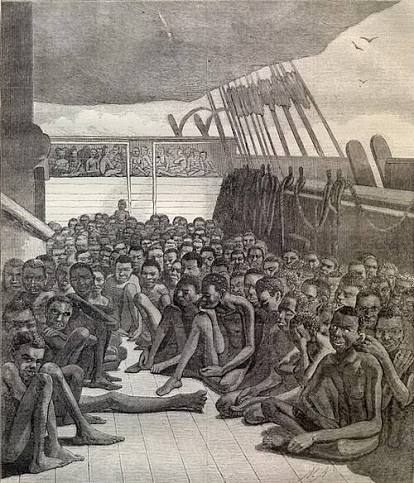
Here is the part that gets left out: on the day the law took effect, almost nobody was actually freed.
They were reclassified as "apprentices" and made to keep working for their former owners, unpaid, for another six years.
The Slavery Abolition Act took effect on 1 August 1834. Children under six were freed. Everyone else over six became an apprentice bound to the same estate.
Field workers owed forty-five hours a week, unpaid, for six years. Domestic workers owed four years.
They could be flogged for refusing. Special magistrates were appointed to hear complaints and were frequently the planters' friends. Women could be punished on the treadmill.
Meanwhile the owners received twenty million pounds in compensation — a sum so large that Britain borrowed it, and did not finish repaying the loan until 2015.
So the arithmetic of British abolition, honestly stated: the enslavers were paid, and the enslaved were required to work another four to six years for nothing.
Freedom was not given in 1834. It was scheduled, and then the people it was owed to forced it forward. https://t.co/V6OJtayKnF
“If one day you hear the Europeans praising me, know that I have betrayed you.”
—Samora Machel, communist revolutionary, independence leader, liberation fighter, and the first President of Mozambique🇲🇿, born on this day in 1933.
Big Mama Thornton performing "Hound Dog". She released the song first in 1953 before Elvis Presley (1956), his biggest worldwide rock and roll hit record.
Thornton was a blues singer who helped shape the sound of Rock&Roll. She released the song “Hound Dog” in 1953 and it sold two million records and went #1 on the R&B charts.
Unfortunately Thornton only received about $500 from those profits.
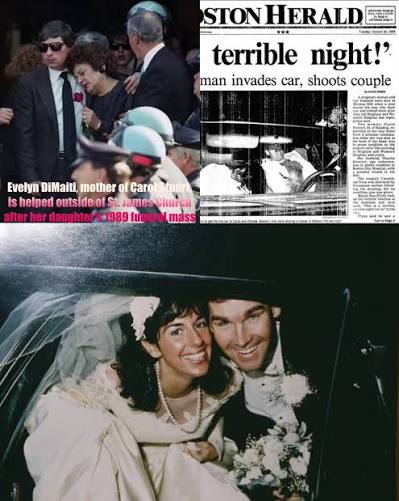
A man in Boston shot his pregnant wife and told police a Black man had done it.
The city believed him instantly — and then tore its own Black neighbourhood apart looking for someone who did not exist. October 1989.
Within hours, police flooded Mission Hill. Over the following weeks Black men were stopped, searched, and strip-searched in the street. Homes were entered. Teenagers were pulled off basketball courts.
A man named Willie Bennett was arrested and named publicly as the suspect. His family's home was raided. His name was in every newspaper in America.
Stuart picked Bennett out of a line-up.
Then Stuart's own brother went to the police and said he had helped dispose of the gun and the wife's belongings.
Stuart died before he could be charged.
Boston had spent nearly three months believing a story whose only evidence was that a white man had said a Black man did it.
Willie Bennett was released. His life did not recover.
In 2023 — thirty-four years later — the city of Boston formally apologised to Bennett, to his family, and to the Black residents of Mission Hill, and the police department acknowledged what it had done.
One sentence from one man was enough to put a whole neighbourhood under occupation. It took the city a third of a century to say sorry for believing it.
Siddharth Kara just said it on Rogan: Britain paid the slave owners a fortune. Taxpayers finished the Bill in 2015.
£20 million.
Forty percent of the entire national budget.
Then they borrowed the money.
British taxpayers were still paying that loan in 2015.
Not 1850.
2015.
People who never owned a slave, never saw a plantation, were still on the hook for compensating men who treated human beings as property.
The Gladstones cashed one of the biggest checks.
Tens of millions in today’s money.
On top of the fortune they already extracted.
The enslaved got five more years of unpaid “apprenticeship.”
Then Britain just replaced them with Indian indentured labor and kept the machine running.
That’s the part that doesn’t make the museum plaque.
I found out about this when I was a kid after reading Zora Neale Hurston’s, Their Eyes were Watching God. Hurston would pass in 1960 about 40 miles from where the levee broke. She was poor, alone, largely forgotten and was buried in an unmarked grave.