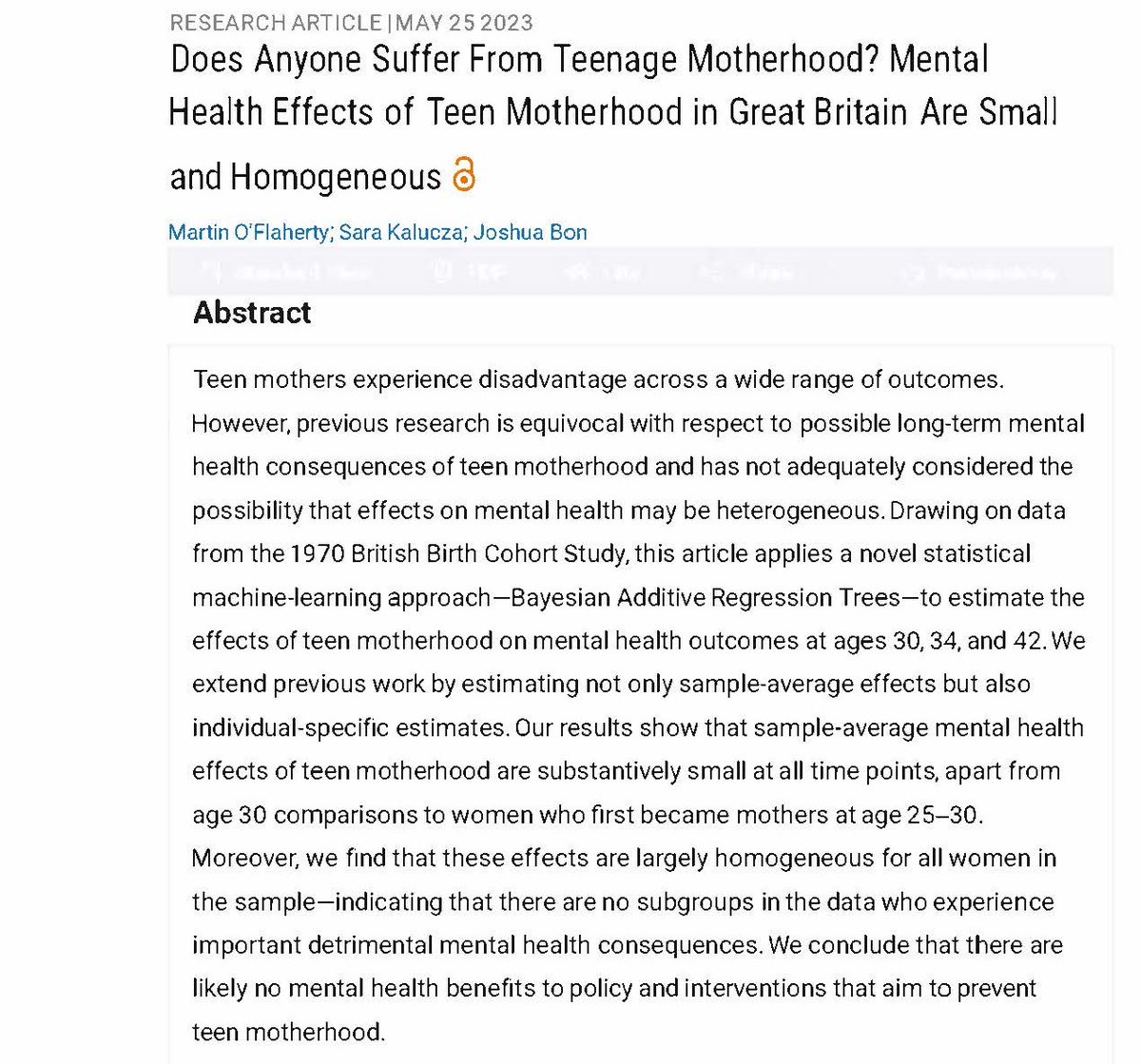
Very happy to see this paper out! We wondered, perhaps small average effects are hiding sub populations for which teenage parenthood are more or less detrimental? Turns out, not really.
Martin O’Flaherty @SaraKalucza & Joshua Bon (@bonstats) apply a Bayesian approach (BART) to assess mental health outcomes & find “causal effects of teen motherhood…are likely to be both small & homogeneous.” @arc_gov_au@umeauniversity@QUTDataScience
https://t.co/p9Bf96cGoG
I shall not go back and re-plot all my figures in my manuscript about to be submitted, I shall NOT go back and re plot all my figures in my manuscript.. hggnnnnn
@ManneGerell Well what sounded like some students messing around outside at some point was actually our student union celebrating in a Viking like way, the successful push back of the terrorists. We don't usually let the guests handle the fighting, we're polite like that in the north.
Amazing PhD opportunity to work on an important topic with the great @malcolmfair, and to share Fika with me!Fully funded PhD position at the Dept of Sociology at @UmeaUniversity focusing on the comparative political sociology of climate policymaking https://t.co/WnPLtd1ijS
@ChelseaParlett 4! Jane Austen -> Hodgkin lymphoma -> bimodal -> statistics -> machine learning (first I had a more fun one including Thailand's finance minister, but it was 5)
@DChristensen73@ProfMattFox Or heterogeneous treatment effect, which i have no idea how to depict in a DAG. ( Because it's been 6 years since i went to DAG-class)
I shall not go back and re-plot all my figures in my manuscript about to be submitted, I shall NOT go back and re plot all my figures in my manuscript.. hggnnnnn
I am happy to announce that my little pet project "#ggseqplot" is now available on #CRAN.
It's an #RStats library that allows to conveniently re-produce sequence analysis plots from the #TraMineR library using #ggplot2
👉 https://t.co/h0OO0yeWbi
@SeqAnalysisAssn (1/8)
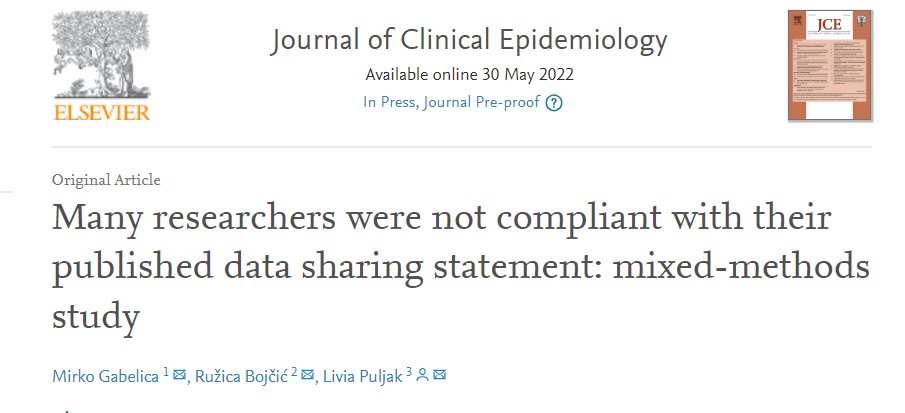
Data Available Upon Request: 14% of Authors responded, about half of those shared their data, landing at a whooping grand total of 6.8%. Great piece of #OpenScience research!
Our new study shows that data availability statements are not very useful; 1670 (93%) authors who indicated that data are available on request either did not respond or declined to share their data with us. Journal of Clinical Epidemiology: https://t.co/4IT2Dgphl4