When an older heart is transplanted into a younger person, it doesn't stay "old." Vadim Gladyshev's lab shows the heart actually starts aging on the timeline of the body it's now living in — its biological age shifts to match the recipient, not the original donor, at the molecular level.
https://t.co/ANN7lejhRw
El estrés grave en la infancia podría dejar una “cicatriz” molecular dentro de neuronas, de manera que el cerebro quedaría más sensible al estrés décadas después.
Esa marca no cambiaría la secuencia del ADN, sino cómo queda plegado. En neuronas que usan dopamina para procesar recompensa y amenaza, el estrés temprano podría aumentar una enzima que abre un poco el empaquetado genético y deja “a punto” los genes de respuesta al estrés. Así, esos genes no tendrían que estar encendidos todo el tiempo: bastaría un nuevo golpe en la vida adulta para activarlos con más facilidad.
El resultado no sería solo un recuerdo psicológico, sino una predisposición biológica: las mismas células reaccionarían de más, la señal de estrés se amplificaría y la tolerancia a dificultades posteriores podría bajar. Por eso el efecto se describe como latente: la huella se formaría en el desarrollo y se notaría, sobre todo, cuando el cerebro vuelve a enfrentarse al estrés.
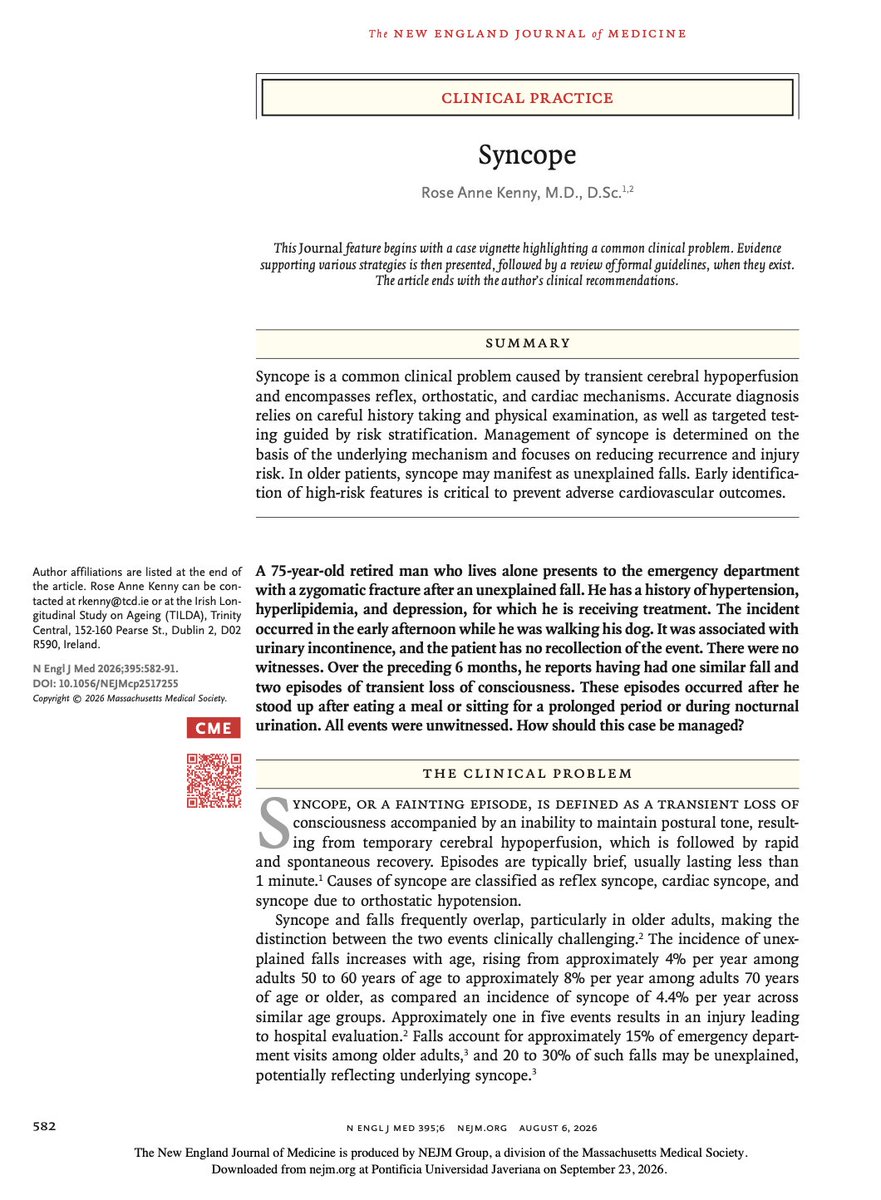
Sincope NEJM 2026.
Buena revision para ponerse al día con las cosas mas importantes. Cojea un poco con las figuras 2 y 3 pero de resto, está excelente.
Recomendado.
Revista Q1.
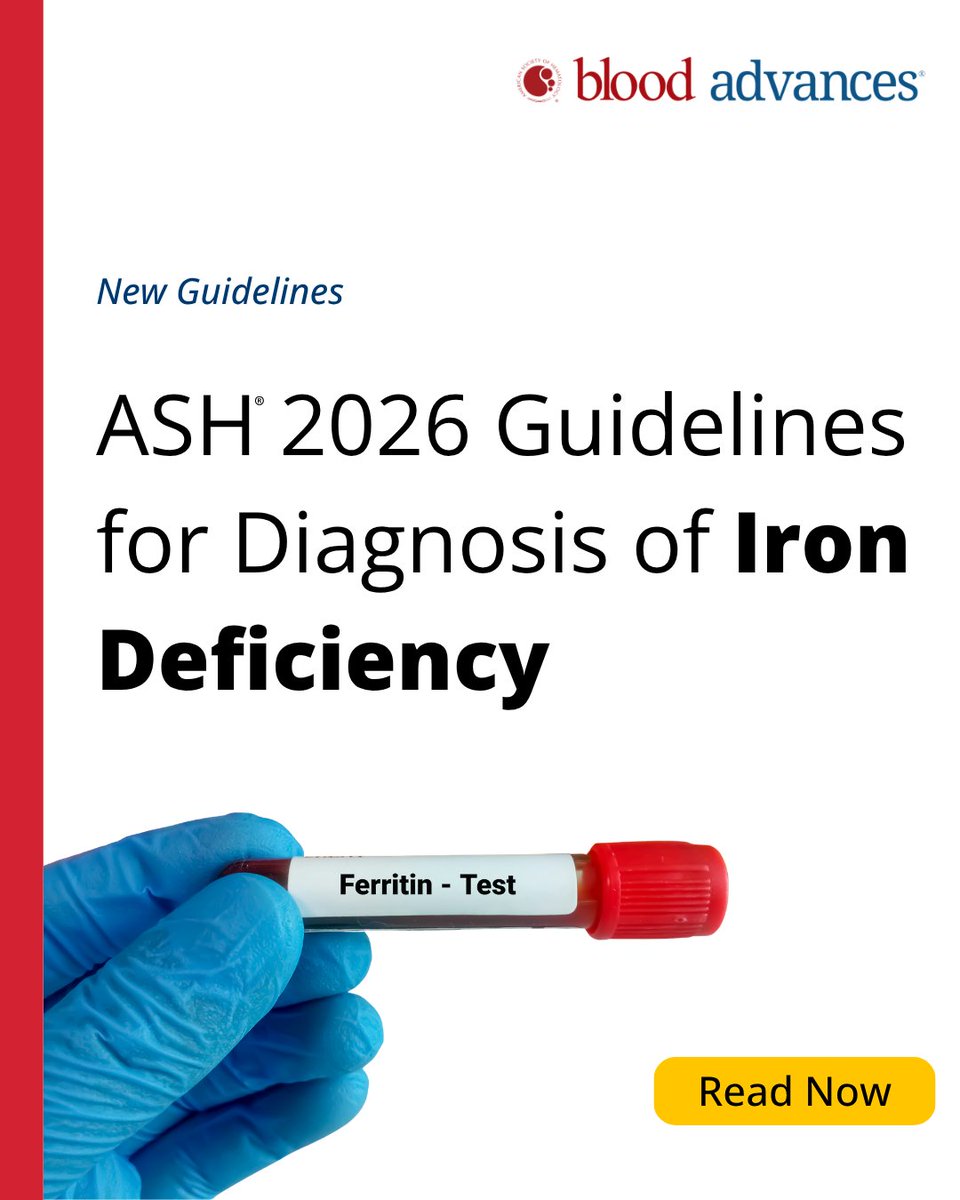
New clinical guidelines for iron deficiency from ASH aim to help identify cases that may otherwise go undiagnosed. Updated ferritin thresholds support earlier, more accurate diagnosis. Learn more: https://t.co/yUyjruMzzG @BloodPortfolio
ünlü bir sinir bilimci var: robert sapolsky.
“zebralar neden ülser olmaz?” adlı kitabında tam da taşı gediğine koyuyor.
doğada bir zebra düşün.
bir aslan tarafından kovalandığında inanılmaz bir stres yaşar. kalp atışı hızlanır, kortizol yükselir, beden alarma geçer.
✍️In patients with pre-existing RBB block, the development of a new fascicular block during acute chest pain strongly suggests proximal LAD occlusion and identifies patients at ⤴️⤴️risk for conduction-related 🫀arrest.
En Suecia, una persona puede estar tomando un café, trabajando o paseando tranquilamente cuando su móvil recibe una alerta: alguien cercano acaba de sufrir un posible paro cardíaco.
Y entonces sale corriendo a ayudar.
El sistema se llama SMS-livräddare y conecta a los servicios de emergencia con miles de voluntarios formados en reanimación cardiopulmonar.
Cuando se detecta un posible paro cardíaco, las personas registradas que se encuentran cerca reciben la ubicación de la víctima. Algunas son enviadas directamente hasta ella para comenzar la RCP, mientras otras pueden dirigirse primero hacia un desfibrilador cercano.
Los estudios realizados en Suecia han demostrado que estos voluntarios consiguen llegar antes que los servicios profesionales y comenzar maniobras que pueden mantener con vida a la víctima hasta que llegue la ambulancia.En 2022, el sistema ya contaba con alrededor de 130.000 voluntarios registrados en varias regiones del país.
De Omar A. Ballesteros.
إلى الأطباء: معلومة ع السريع ✨
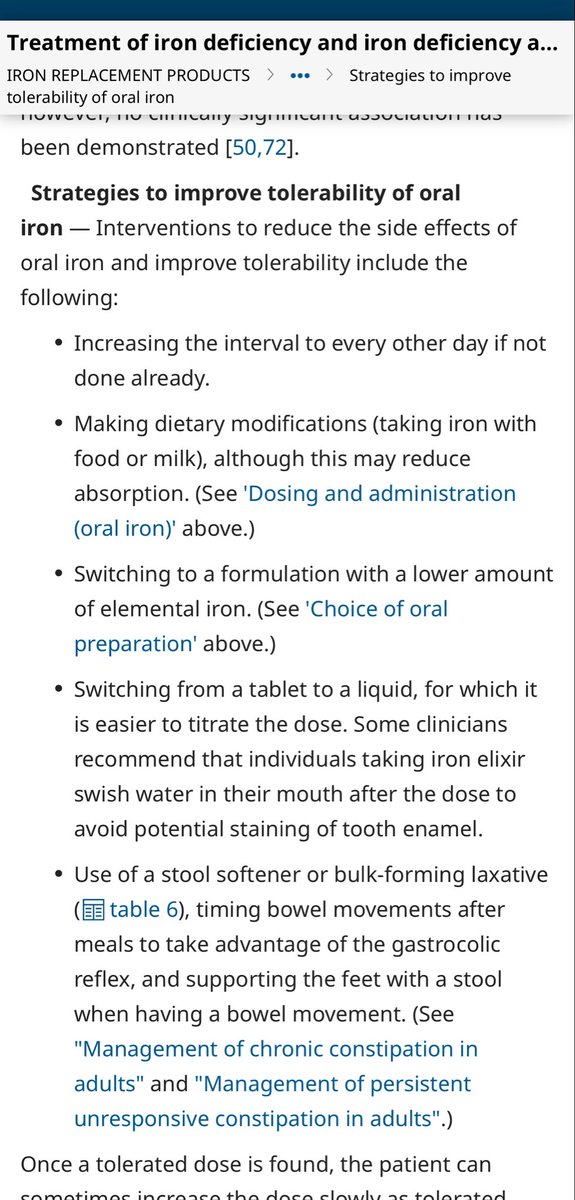
لو مريض أخذ Ferric Carboxymaltose المتوفر عندنا باسم Ferintus …وبعدها جاك في الطواريء بزيادة في الـ fatigue وألم وضعف في العضلات وألم في العظام؟
في شن ح تفكر؟ 🤔
ما تستعجلش وتقول إنها من anemia!
أول شيء ح تفكر فيه هو
Hypophosphatemia
The man who cracked the biology behind Ozempic still works as a hospital doctor and made almost nothing, while the drug built on his discovery became the best-selling medicine on Earth.
His name is John Eng.
He worked at a Veterans Affairs hospital in the Bronx, treating diabetes patients all day and running experiments on the side. No big lab. No famous university behind him. Just a hospital bench and a question that would not leave him alone.
The question was about a lizard.
The Gila monster is a fat, slow desert lizard from Arizona. It eats maybe three or four times a year. That is not a typo. It can go months without a single meal and its blood sugar stays perfectly stable the entire time. No spikes. No crashes. A human who ate like that would be dead or in a coma. The lizard is fine.
In the early 1980s, some government researchers noticed that the venom of this lizard did something strange to the pancreas, the organ that controls blood sugar. They filed it away as a curiosity and moved on. Nobody chased it.
Eng chased it.
He could not exactly go catch a venomous lizard in the Bronx. So he did the only thing he could afford. He ordered dried, preserved Gila monster venom out of a mail-order catalog from a reptile supplier in Utah. It showed up in the post. He started pulling it apart to see what was inside.
In 1992 he found it. A molecule nobody had ever documented, hiding in the venom. He named it exendin-4.
Here is why it mattered.
Your own body makes a hormone that tells your pancreas to release insulin after you eat. It is called GLP-1. It works beautifully. There is just one problem. It falls apart in about two minutes. Your body destroys it almost as fast as it makes it, which makes it useless as a medicine. Scientists knew about it and kept hitting the same wall.
The lizard molecule did the exact same job. It walked up to the same door in your cells and opened it the same way. But it did not fall apart in two minutes. It kept working for hours. The lizard had evolved a version of the human hormone that survived. Nature had already solved the problem medicine was stuck on.
Eng knew what he was holding.
His own employer did not care. The VA refused to patent it, because a lizard diabetes drug did not count as a "veteran-specific" problem. So Eng paid for the patent himself. Out of his own pocket. A hospital doctor spending his own money to protect a discovery his bosses had shrugged at.
Then he went looking for a drug company to build it.
For three years, every door shut. A diabetes drug made from lizard spit sounded like a joke. Serious pharmaceutical people did not want their name on it. One scientist who watched it happen said Eng was completely frustrated, that none of the important people would even look at him.
In 1996 he pinned a poster to a wall at a diabetes conference and stood next to it. Most people walked past. One researcher from a small California company called Amylin stopped and actually read it. One month later they licensed his patent.
That poster became a drug called Byetta. The FDA approved it in 2005, thirteen years after Eng first pulled the molecule out of that mail-order venom. It was the first drug of its kind ever sold. A twice-a-day shot for diabetes, grown from the spit of a lizard that eats twice a year.
Byetta was the proof. It showed the whole world that this pathway worked in real humans. And once everyone could see it worked, the giants moved in.
A Danish company took the same idea and built a better version. Instead of copying the lizard, they modified the human hormone directly so it would survive in the body the way the lizard's did. That drug is semaglutide. You know it by its other names. Ozempic. Wegovy.
So no, Ozempic is not literally lizard venom. It is built from the human hormone. But nobody would have built it if a lizard in the desert had not proven the whole idea could work first, and if one Bronx doctor had not refused to let that proof die on a shelf.
In 2025 alone, that single family of drugs did over 48 billion dollars in sales. It has become the best-selling prescription medicine on the planet. Celebrities take it. Your neighbors take it. It is on every feed you scroll. People treat it like it appeared out of nowhere two years ago.
It did not. The door it walks through was found in lizard venom by a hospital doctor who bought his samples by mail.
Here is the part that should sit with you.
John Eng got paid for Byetta, the drug built directly from his lizard molecule. But Ozempic and Wegovy, the ones worth tens of billions, were built from the human hormone instead of his exendin-4. So he does not collect a cent from the biggest drug story in the world. The man who proved the whole thing was possible watches the boom from the outside.
Every person injecting themselves this week is using a door that a lizard evolved and a forgotten doctor refused to stop knocking on.
The molecule was always there. The lizard had it the whole time.
It just took one man who wouldn't stop asking why a monster in the desert never goes hungry.
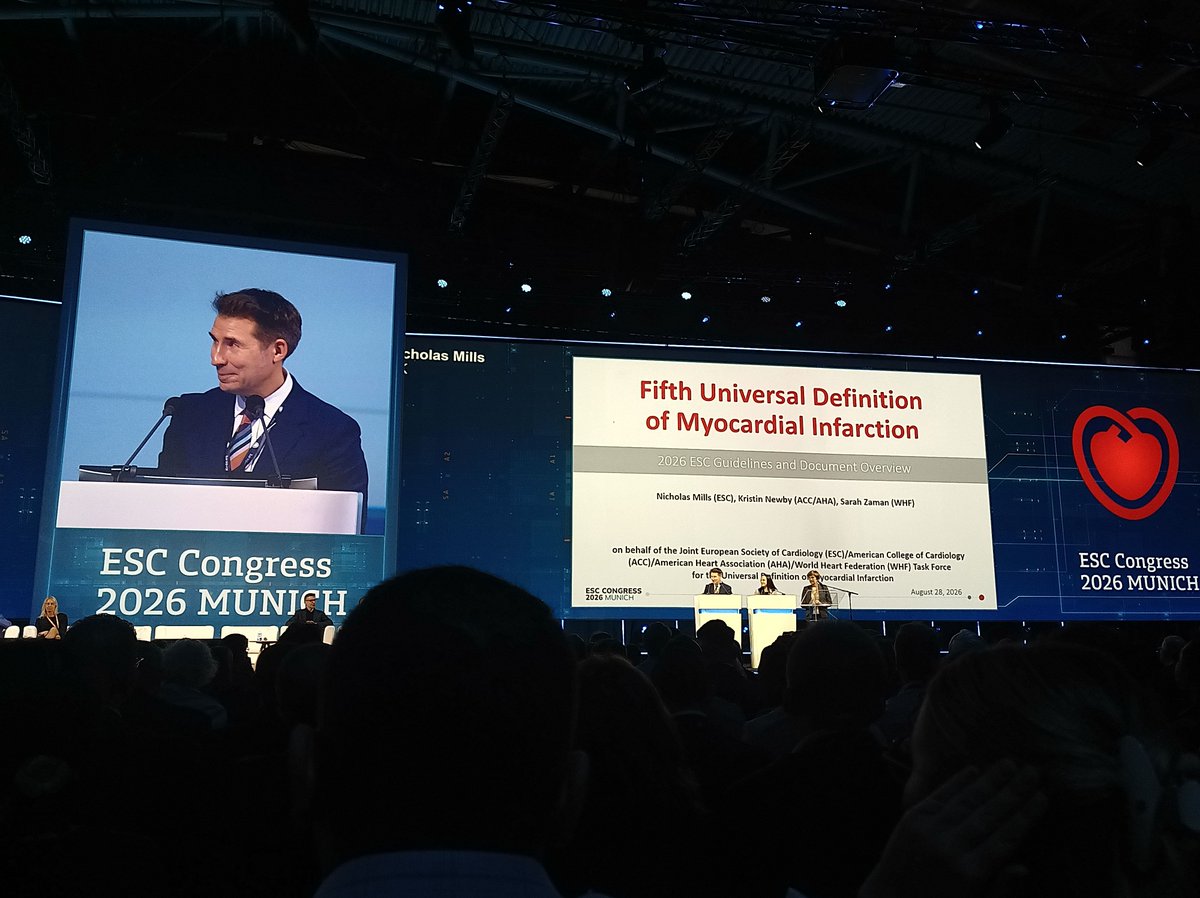
🫀Types 1, 2, 3, 4 and 5 myocardial infarction as we knew them are gone.
Perhaps the most important conceptual change presented this morning at #ESCCongress comes from the Fifth Universal Definition of Myocardial Infarction.
The new classification moves away from numbers and toward pathophysiology.
We now have three clinical categories:
Primary MI now includes the complete spectrum of acute primary coronary pathology, not only atherothrombosis.
Plaque rupture or erosion, spontaneous coronary artery dissection, coronary embolism and coronary vasospasm all belong here.
Even restenosis, stent thrombosis or graft failure occurring more than 30 days after a procedure are considered new primary coronary disease rather than late procedural MI.
This fundamentally cleans up one of the problems of the old Type 2 classification.
And Type 2 MI?
The concept becomes secondary myocardial infarction, but importantly with greater diagnostic specificity.
An ICU patient with sepsis, anaemia, hypoxaemia, hypotension, tachyarrhythmia or severe hypertension may have a rise and fall in troponin.
That establishes acute myocardial injury.
It does not automatically establish myocardial infarction.
For secondary MI, the injury must occur in the context of oxygen supply–demand imbalance with evidence supporting myocardial ischaemia, and the new document places much greater emphasis on objective coronary or cardiac imaging when appropriate.
For those of us working with critically ill patients, this distinction matters enormously.
Troponin is a marker of myocardial injury.
Ischaemia makes it myocardial infarction.
The mechanism tells us which infarction we are dealing with.
There are other major changes.
Type 3 MI disappears. Sudden cardiac death suspected to be due to MI should instead be classified as primary, secondary or procedure-related according to the clinical setting or post-mortem findings.
Types 4 and 5 disappear as separate entities. PCI- and surgery-related events are unified under procedure-related MI, applying a common mechanistic framework to cardiac procedures.
And importantly, the old arbitrary troponin thresholds of 5× and 10× the 99th percentile are no longer the basis for defining PCI- and CABG-related MI. The emphasis shifts toward demonstrating a clinically meaningful procedural coronary complication and myocardial consequences.
Another fascinating change:
MINOCA no longer means “myocardial infarction with non-obstructive coronary arteries”..It is now “myocardial injury with non-obstructive coronary arteries.”
A deliberate reminder that MINOCA is a working diagnosis, not an aetiological endpoint.
@European Society of Cardiology
@escardio
#ESCCongress #MyocardialInfarction #Troponin #ACS #CriticalCare #Cardiology @escardio@ACCinTouch@American_Heart@worldheartfed@ehj_ed@KralerSimon@drmilicaa
EV ALMADAN ÖNCE KESİNLİKLE BAKMANIZ GEREKEN SİTE
Hangi saatlerde güneşin binaya nereden vurduğunu gösteren mükemmel bi site. Ev alırken, kiralarken mutlaka bakılması gereken şeylerden.
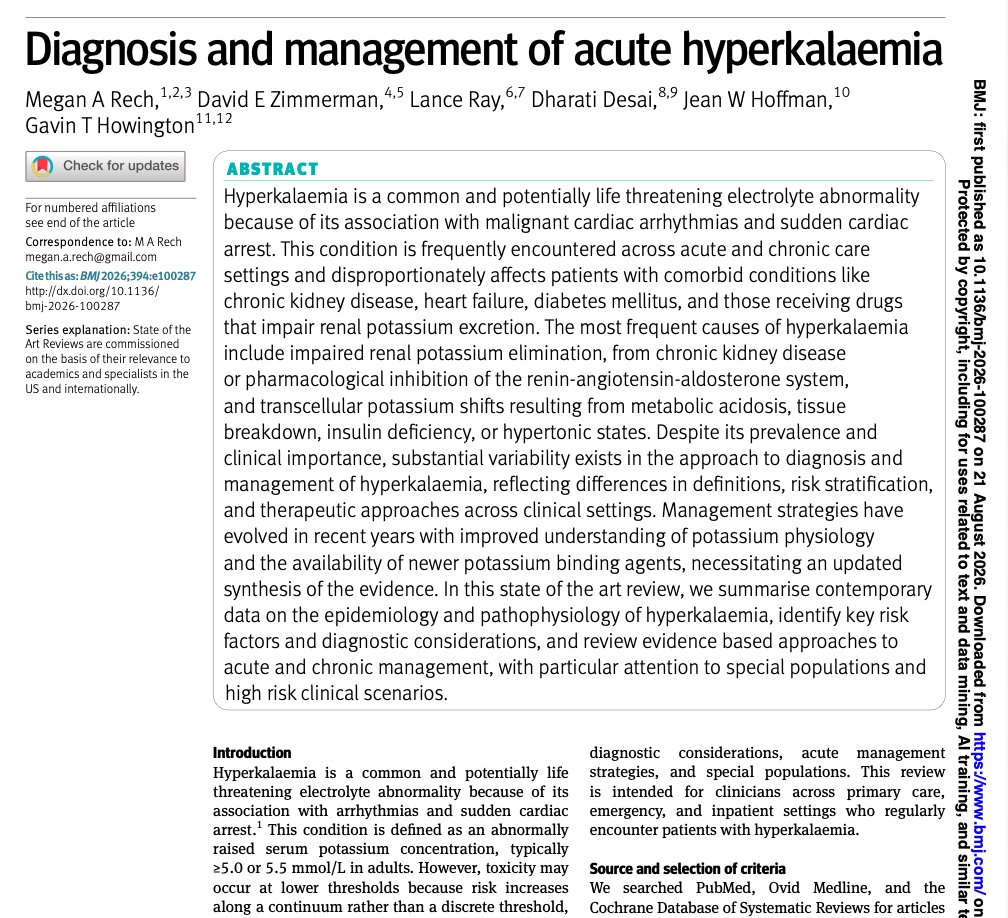
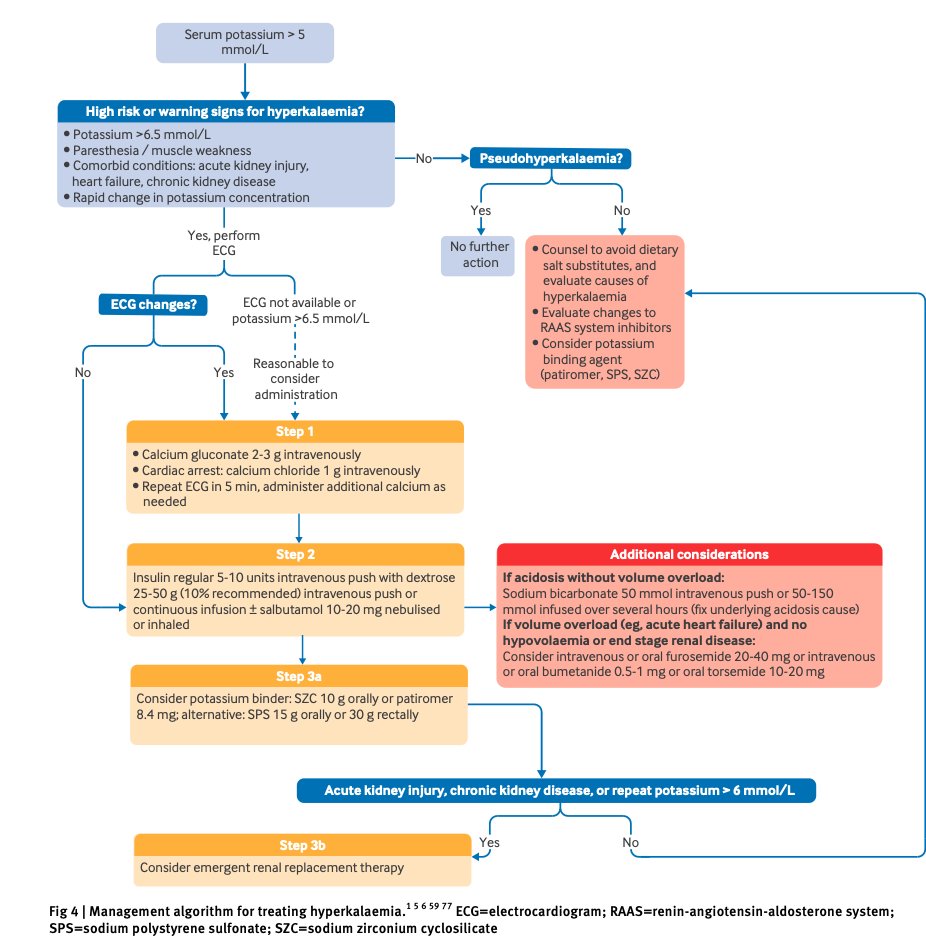
Nueva revisión de hiperkalemia aguda (BMJ 2026). Lo que cambió, y que probablemente sigas haciendo:
🔴 Dextrosa al 10%, no al 50%. La glucosada hipertónica puede EMPEORAR la hiperkalemia.
🔴 Insulina 5 U (o 0.1 U/kg, máximo 10 U). Misma caída de potasio que con 10 U, con casi la mitad de hipoglucemias (OR 0.55).
🔴 1 g de gluconato de calcio no sirve. 97% necesitó tres dosis de 1 g y una sola dosis no funcionó en NINGUNO. Dosis: 1-3 g.
🔴 El calcio no "estabiliza la membrana". Restaura la conducción por canales de calcio. Traducción práctica: sirve cuando hay QRS ancho, no en la onda T picuda aislada.
🔴 Bicarbonato: no se recomienda de rutina.
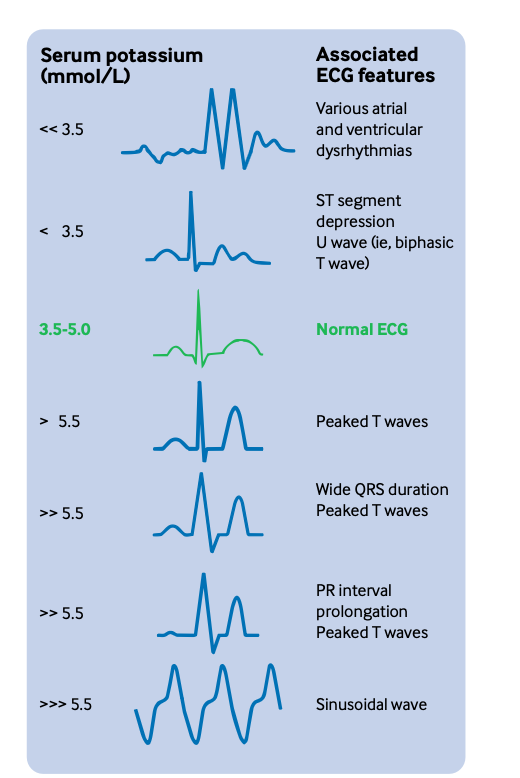
🔴 La onda T picuda aparece en menos del 25% de los pacientes con K de 5.5-7.0. Un ECG normal NO descarta hiperkalemia.
🔴 Reevalúa el potasio a los 60 min y otra vez a las 2-4 horas. El rebote es frecuente
El tema ya está re-escrito y actualizado en Memodi y Accio. Completo en el canal (https://t.co/3O93s10lns).
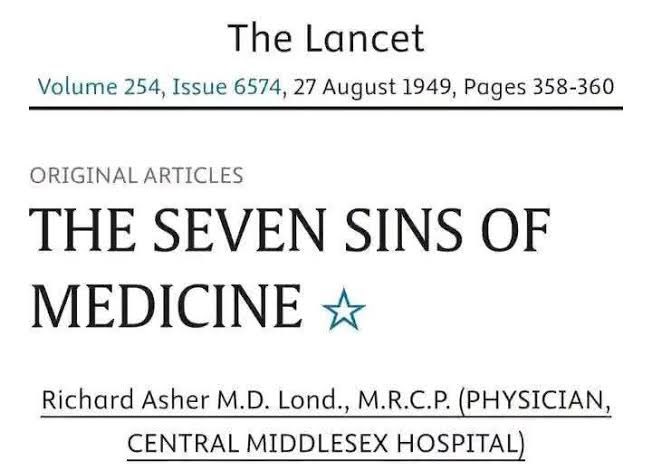
7 Pecados Médicos
(Publicados por Richard Asher en 1949)
Siguen vigentes :
1.- Obscuridad: (Utilizar lenguaje complicado y rebuscado)
Si no eres capaz de explicarlo de manera simple, quizá tú tampoco lo entiendas.
2.- Crueldad: (Realizar Procedimientos innecesarios)
3.- Malas Maneras (Falta de cortesía básica)
4.- Sobreespecializacion (centrarse en un solo órgano olvidando todo el paciente
5.- Amor por lo Raro (obsesionarse con casos raros)
6.- Estupides común (pensar en protocolos, algoritmos etc) no tener criterio propio ni juicio clínico
7.- Pereza (no esforzarse, no revisar, no profundizar)
When you buy your next pair of spectacles, don't merely check whether the frame looks good on your face. Also check if it sits well.
One small but important detail is called pantoscopic tilt.
Look at yourself from the side while wearing your spectacles. Ideally, the frame should not sit perfectly vertical like a wall.
The bottom of the spectacle frame should usually be slightly closer to your cheeks than the top. This slight forward tilt is called pantoscopic tilt.
How much tilt is normal?
For most spectacle wearers, a pantoscopic tilt of approximately 8–12 degrees is commonly considered appropriate. The exact amount can vary depending on your face, frame, prescription and the type of lenses.
Why is it important?
Your spectacle lenses are designed to work best when you look through their optical centre or the viewing zone. If the frame sits at the wrong angle, the lens position in relation to your eyes can change.
This becomes particularly important if you have:
1. A high spectacle power
2. Progressive or multifocal lenses
3. A strong cylindrical power
4. Special occupational lenses
Too much or too little tilt can sometimes affect visual comfort and may contribute to blur, distortion or difficulty adapting to the glasses.
What can you check when buying spectacles?
Put on the frame and look at yourself from the side. Ask:
Is the frame sitting slightly tilted forward, with the lower rim a little closer to my face?
Also check whether:
*The frame is not touching your cheeks.
*Your eyelashes are not constantly touching the lenses.
*The frame is sitting comfortably on your nose.
*The lenses are positioned correctly in front of your eyes.
*The frame does not slide down when you look down.
Again, don't assume that a frame sitting straight is necessarily sitting correctly.
#myopia
Image from google
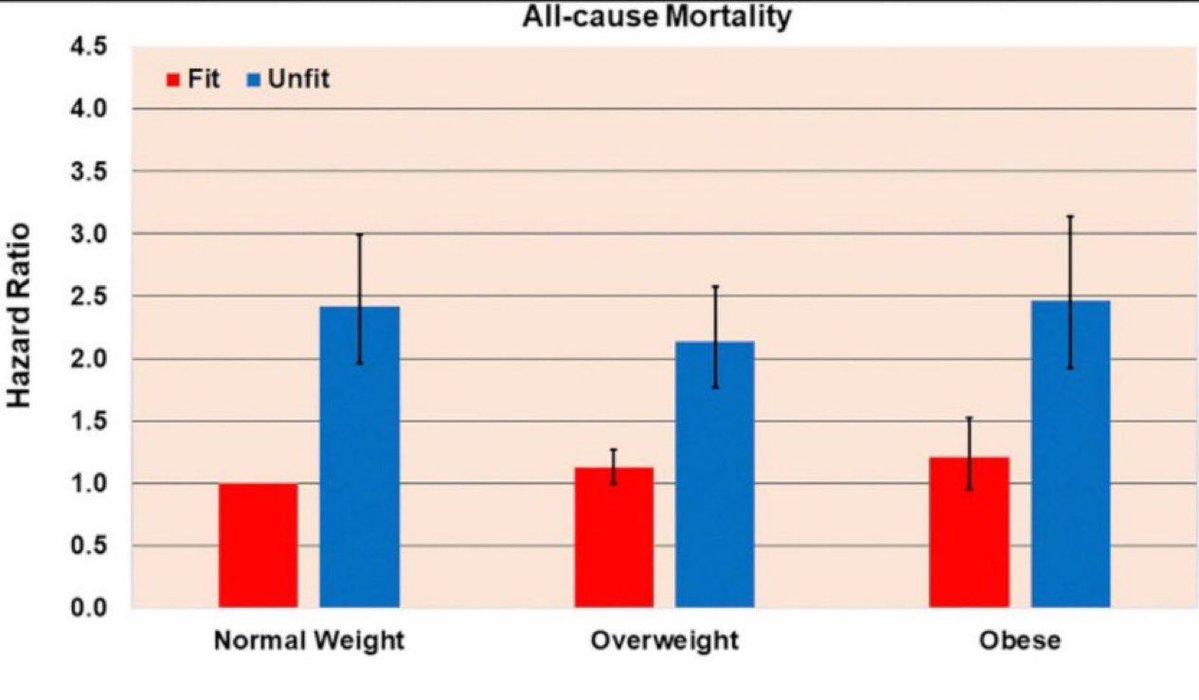
🤔QUÉ ES MÁS IMPORTANTE: ¿ESTAR EN FORMA O TENER UN PESO NORMAL?
🚩🚩La mortalidad asociada al sedentarismo es INDEPENDIENTE al peso corporal.
🤯Tener normo-peso y ser sedentario atribuye MAYOR RIESGO que vivir con la obesidad y estar en forma.
👨⚕️💪🏻El factor clave e irremplazable ni por nutrición ni por farmacología es el EJERCICIO FÍSICO.
The TG/HDL-C ratio is calculated by taking your Triglycerides and dividing them by your HDL ("good") cholesterol:
Formula: Triglycerides (TG) ÷ HDL-C
It is a powerful marker for insulin resistance and atherogenic dyslipidemia.
A child accidentally swallows a small button battery from a toy.
What is the FIRST safe thing to give while rushing to the ER?
A) A glass of warm milk
B) Two teaspoons of pure honey
C) A spoonful of mustard
D) Plenty of plain water