@SarahFitzWiMIN@marklewismd Saw your post and this came to mind. I saw them on the Late Late Show a few years back. May come in handy - designed for medical access https://t.co/VMmjJbKmBy
Hi everyone, blood supplies are very low going into the Christmas period. Donating is the best present you could ever give someone, it’s free and you could quite literally save someone’s life.
If you’re eligible, please arrange to donate ASAP
https://t.co/d2bqW0PZjv
@Sineadmcgar@KitMurray I do wonder why the private hospitals don’t arrange the same intensive physio post-op for their patients after these surgeries as recovery likely suboptimal without it. Should be part of the tariff.
Have tried to arrange for pts as their GP and no easy option.
Can you remember a better cameo from a sub?!?
Ireland WU17's Aisling Meehan scored a 13 minute hat-trick to give them a 4-2 win against Portugal! 🔥
What a way to complete the hat-trick 😮💨
Where were you when @iocmedia defended a man who wants to punch women in the face? Where were you?
Take your pathetic “safeguarding initiatives” and shove them somewhere painful.
#NonEGuisto
#IStandWithAngelaCarini
#SaveWomensSports
@tipptrina @itsthatgirlsuzi Pertussis (Whooping Cough) is included in the 2, 4 and 6 month vaccinations so if your baby had all the regular childhood vaccines they should be protected.
https://t.co/d3m44t7rEH
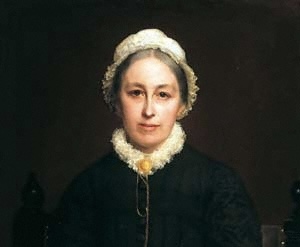
Woman of the Day suffragist Emily Davies born OTD 1830 in Southampton, founder of Girton College, Cambridge, a lifelong campaigner for equal rights for women and one of the first women to address a Royal Commission as an expert witness.
Her father had traditional views about education for girls. His sons attended private schools and university. His daughters had to sit at home and practise their needlework. Emily wanted to train in medicine - after meeting Barbara Bodichon, founder of the English Woman’s Journal, she wrote an article entitled Female Physicians in May 1860 - but she knew her poor early education was a barrier.
1860 was quite a pivotal year. While staying with friends in Aldeburgh, 29 year old Emily sat by the fireside with the daughters of the house, 23 year old Elizabeth and 13 year old Millicent, all three brushing their hair, while they debated the future for women. Emily made her feelings clear: “Women can get nowhere unless they are as well educated as men. I shall open the universities.” Elizabeth agreed, “Yes, we need education but we need an income too and we can't earn that without training and a profession. I shall start women in medicine. But what shall we do with Millie?” Emily turned to the young girl, “After these things are done, we must see about getting the vote. You are younger than we are, Millie, so you must attend to that."
Emily set up the local branch of the Society for Promoting the Employment of Women, wrote letters promoting women's rights, supported her friend Elizabeth in her medical studies, was a founding member of a women’s discussion group called the Kensington Society and concentrated on campaigning for girls to sit secondary school exams.
In October 1862, as secretary to a committee given the task of enabling women to go to university, Emily found 83 girls to sit local exams in Cambridge as a trial run. It was a success. As a result, nearly a thousand teachers signed a petition in support of official secondary school exams for girls in Cambridge and the right was granted in 1865.
Universities were a harder nut to crack. The Universities of Oxford, Cambridge, and London were exclusively male domains and refused to admit women. Emily made it her mission to ensure that in the end, they would.
In 1866 - another pivotal year - she published The Higher Education of Women which argued: “Many persons will reply, without hesitation, that the one object to be aimed at, the ideal to be striven after in the education of women, is to make good wives and mothers. And the answer is a reasonable one, so far as it goes, and with explanations. Clearly, no education would be good which did not tend to make good wives and mothers; and that which produces the best wives and mothers is likely to be the best possible education. But having made this admission, it is necessary to point out that an education of which the aim is thus limited, is likely to fail in that aim.”
The same year, Emily helped to organise John Stuart Mill’s 1866 petition to Parliament in favour of granting the vote to women and persuaded her friend Elizabeth to be the first to sign. Some 15,000 women signed that petition - women from all over the country, women from every walk of life. It was the largest known petition to Parliament.
In 1869, Emily led the campaign to found Britain's first women's college with the support of Barbara Bodichon and other notable women.
Girton College was originally located in Hertfordshire but in 1873, moved to Cambridge where Emily pressed for a curriculum equivalent to those offered to men of the time. The ruling body of the University of Cambridge refused but as Mistress of the College from 1873 to 1875, Emily trained women students for the Cambridge Tripos anyway. She watched the Tripos results like a hawk and even just a month before her death, wrote to congratulate Miss K. Snell of Girton on taking a position above the first man in the second part of the Law Tripos.
Cambridge University responded by blocking the official award of degrees to women and refusing to recognise them as university members. It did not grant women degrees until 1948.
Emily did not live to see it. She died in 1921 at the age of 91 but she did see the admission of women as doctors because her friend Elizabeth - Elizabeth Garrett Anderson - delivered on her promise by achieving that in 1865.
Emily also lived to see the vote granted to women because her friend Millie - Millicent Garrett Fawcett - delivered on her promise too. In December 1918, when British women voted for the first time in national elections, 88-year-old Emily was one of those who entered the polling station with head held high.
Today, women have equal access to higher education and no one thinks it at all remarkable. That’s Emily’s achievement.
Woman of the day suffragist and women’s rights advocate Josephine Butler born OTD 1828 in Milfield, Northumberland. She campaigned for women’s suffrage, better education for women, the end of coverture in British law (the legal view that married women were simply chattels - the property - of their husbands and not persons in their own right), the abolition of child prostitution and an end to the human trafficking of young women and girls into European prostitution.
Born into an affluent and forward-thinking family in which sons and daughters were treated equally, she married George Butler who shared her interest in social reform but she became particularly active after their fourth child, Eva, died falling from a banister.
At first, Josephine began by helping and supporting women confined to workhouses but she soon identified a wider and more pervasive problem: the double standards universally applied to women and almost universally and nonchalantly accepted by men, in which a "moral lapse in a woman was spoken of as an immensely worse thing than in a man". The Butlers began to help the many “fallen women” of Oxford in the later stages of venereal disease who were treated so much more harshly than their clients. Some were invited to live in the Butler home while they tried to recover from the ravages of their treatment.
What incensed Josephine were the Contagious Diseases Acts, legislation that sought to control the spread of STDs in the Army and Royal Navy - not by curbing the behaviour of men but by controlling women. The Acts authorised the police to detain women in certain areas of the country if suspected of being prostitutes. No evidence needed; just the police officer’s word. If a magistrate agreed, women were given painful and intrusive internal examinations with steel instruments - a procedure Josephine called “steel rape”. Any woman found to have an STD was confined to a “lock hospital” against her will until cured. If she refused to be examined or hospitalised, she was imprisoned and made to carry out hard labour.
The mere fact that a woman had even undergone an internal examination meant that her name and reputation were shredded and "the Acts had the effect of turning them to prostitution by barring respectable ways of life to them".
Josephine toured Britain in 1870, travelling over 3,700 miles in order to attend and speak at 99 meetings where she focused attention on working-class family men. The majority were outraged at the vivid but factual description she gave of steel rape but she also faced significant opposition. Pimps threw cow dung at her, smashed the windows of her hotel rooms, even threatening to burn down a building while she was inside speaking.
Campaigning by Josephine and others including Florence Nightingale finally resulted in the Acts being repealed in 1886, but along the way, she was confronted by another widespread scandal. Child prostitution.
There was a lucrative and lively trade to the Continent in the trafficking of British girls as young as 12 destined for European brothels. There was no point in appealing to the police over there. They were part of the problem. In fact, Josephine was instrumental in securing the removal from office of a Belgian chief of police. She filed a deposition and sent it to both the Procureur du Roi (Chief Prosecutor) and the British Home Secretary. As a result, the deputy police chief and twelve brothel owners complicit in a conspiracy of kidnapping, trafficking and child rape were tried and imprisoned.
Josephine enlisted the help of William Stead, influential crusading editor of the Pall Mall Gazette. Stead, whose own mother had campaigned against the Contagious Diseases Acts, ran a series of highly controversial articles about child prostitution - an early form of investigative journalism - and to illustrate his point, he purchased a 13 year old girl named Eliza Armstrong from her mother for £5.
The newspaper articles threw Victorians into a state of moral panic - they pulled no punches, none at all. Copies changed hands for twenty times their original value and the office was besieged by 10,000 members of the public. Public demand was so great that the Gazette's supply of paper ran out and had to be replenished with supplies from the rival Globe.
Stead’s campaigning journalism led to his conviction and a three month sentence for abduction - the girl’s father objected to the £5 being handed to his wife when in law, both mother and daughter were HIS property - but it also led to legislation that raised the age of consent for girls from 13 to 16. Young Eliza was provided with education and training in domestic service and some years later, wrote to Stead to thank him for saving her from her fate. She was the inspiration for George Bernard Shaw’s Pygmalion, by the way.
After her success in influencing the repeal of the Contagious Diseases Acts at home, Josephine turned her attention to India where a British Major-General had issued standing orders for local girls - some as young as 11 - to be kept in special accommodation near Army camps, examined regularly (steel rape again) and for local commanders to ensure “the provision of a sufficient number of women, [and] to take care that they are sufficiently attractive” for the comfort of soldiers. Josephine compared the girls to slaves and raised such a stink about it that the resulting public outrage forced the House of Commons to pass a unanimous resolution repealing the legislation and order the Indian government to cancel the practice.
During the course of her activism, Josephine Butler wrote more than 90 books and pamphlets, travelled countless miles around Britain and the world, changed the way feminists and suffragists conducted future struggles, and brought into the political fray groups of people that had never been active before.
When she died in 1906 at the age of 78, Millicent Fawcett hailed her as "the most distinguished Englishwoman of the nineteenth century" but the last word must surely go to Josephine herself.
“God and one woman make a majority".
@HorganRoberta@HSELive The hospital/treating team should have given supporting letters for the application. Here is some more info. There is also a form that the GP can fill in (however they may not have all the up to date treatment). Hope this helps https://t.co/DbNmwC7ImJ
@LGUSSupport Have DMed you. This seems to be a common fault from what I can see when I searched in and the online suggestions (and what the Tech tried) don’t seem to work. Might be worth checking to see if there is a common software fault?
Today is #InternationalWomensDay2024 so let’s have a roll of honour for women inventors. This list is not exhaustive - there are many others - but how many of their inventions make a difference to your life?
Tabitha Babbitt, born 1779 in Massachusetts, invented the circular saw.
Jeanne Villepreux, born 1794 in France, invented the aquarium.
Nancy Johnson, born 1794 in Philadelphia, invented the ice cream maker.
Sarah Mather, born 1796 in Brooklyn, invented the underwater telescope.
Ada Lovelace, born 1815 in London, invented the computer algorithm.
Sarah Boone, born 1832 in North Carolina, invented the ironing board.
Maria Hauser Beasley, born OTD 1836 in North Carolina, invented the life raft.
Margaret A. Wilcox, born 1838 in Chicago, invented the car heater.
Miriam Benjamin, born OTD 1861 in Charleston, invented the first call bell.
Mary Anderson, born 1866 in Alabama, invented the windscreen wiper.
Florence Parpart, born 1873 in New York, invented the electric washing machine. She also invented the fridge.
Margaret Knight, born 1838 in Maine, invented the flat-bottomed paper bag.
Josephine Cochran, born 1839 in Ohio, invented the dishwasher.
Letitia Mumford Geer, born 1852 in New York, invented the modern syringe.
Ida Hyde, born 1857 in Iowa, invented the micro electrode.
Annie Jump Cannon, born 1863 in Delaware, invented the Harvard spectral classification system.
Anna Connelly, born 1868 in Philadelphia, invented the external fire escape.
Lillian Gilbreth, born 1878 in California, invented the foot pedal rubbish bin.
Georgia “Tiny” Broadwick, born 1893 in North Carolina, invented the parachute ripcord.
Alice Parker, born 1895 in New Jersey, invented the gas central heating furnace.
Katharine Blodgett, born 1898 in Schenectady, invented low-reflection glass.
Maria Telkes, born 1900 in Budapest, invented the thermoelectric power generator.
Grace Murray Hopper, born 1906 in New York, invented the computer programme that allows you to use English rather than machine code to talk to your computer.
Mellita Benz, born 1908 in Dresden, invented the coffee filter.
Ruth Benerito, born OTD 1916 in New Orleans, invented wrinkle-resistant fabric.
Marie Van Brittan Brown, born 1922 in Jamaica, invented the home security system.
Stephanie Kwolek, born 1923 in Pittsburgh, invented Kevlar.
Yvonne Brill, born 1924 in Winnipeg, who invented the fuel-efficient rocket thruster that keeps today’s satellites in orbit.
Evelyn Berezin, born 1925 in New York, invented the first computerised airline booking system.
Barbara Askins, born 1939 in Tennessee, Invented photo enhancement for photos taken from space.
Patricia Bath, born 1942 in New York, invented laser cataract surgery.
Shirley Ann Jackson, born 1946 in Washington DC, invented caller ID and call-waiting.
Ann Tsukamoto, born 1952 in California, invented stem cell isolation.
Olga González-Sanabria, born in Puerto Rico sometime in the 1950s, invented space station batteries. These are her words but do you know something? This could have been said by any woman on the list:
“I believe the greatest challenge I faced as a woman was being heard. I found that in a work setting, the voices of women are ignored creating a lot of frustration. I learned to communicate through others in order to be able to contribute to the mission. Also the need to prove yourself over and over again was an issue that I had to manage and have patience.”
What else could women have achieved throughout the ages if we hadn’t been denied education, opportunity, fair treatment or even just recognition, solely on the basis of our sex?
Life without women is not difficult. Difficult isn’t the word. It’s impossible.
Happy #InternationalWomensDay2024, sisters.
💚🤍💜






![TheAttagirls's tweet photo. Woman of the day suffragist and women’s rights advocate Josephine Butler born OTD 1828 in Milfield, Northumberland. She campaigned for women’s suffrage, better education for women, the end of coverture in British law (the legal view that married women were simply chattels - the property - of their husbands and not persons in their own right), the abolition of child prostitution and an end to the human trafficking of young women and girls into European prostitution.
Born into an affluent and forward-thinking family in which sons and daughters were treated equally, she married George Butler who shared her interest in social reform but she became particularly active after their fourth child, Eva, died falling from a banister.
At first, Josephine began by helping and supporting women confined to workhouses but she soon identified a wider and more pervasive problem: the double standards universally applied to women and almost universally and nonchalantly accepted by men, in which a "moral lapse in a woman was spoken of as an immensely worse thing than in a man". The Butlers began to help the many “fallen women” of Oxford in the later stages of venereal disease who were treated so much more harshly than their clients. Some were invited to live in the Butler home while they tried to recover from the ravages of their treatment.
What incensed Josephine were the Contagious Diseases Acts, legislation that sought to control the spread of STDs in the Army and Royal Navy - not by curbing the behaviour of men but by controlling women. The Acts authorised the police to detain women in certain areas of the country if suspected of being prostitutes. No evidence needed; just the police officer’s word. If a magistrate agreed, women were given painful and intrusive internal examinations with steel instruments - a procedure Josephine called “steel rape”. Any woman found to have an STD was confined to a “lock hospital” against her will until cured. If she refused to be examined or hospitalised, she was imprisoned and made to carry out hard labour.
The mere fact that a woman had even undergone an internal examination meant that her name and reputation were shredded and "the Acts had the effect of turning them to prostitution by barring respectable ways of life to them".
Josephine toured Britain in 1870, travelling over 3,700 miles in order to attend and speak at 99 meetings where she focused attention on working-class family men. The majority were outraged at the vivid but factual description she gave of steel rape but she also faced significant opposition. Pimps threw cow dung at her, smashed the windows of her hotel rooms, even threatening to burn down a building while she was inside speaking.
Campaigning by Josephine and others including Florence Nightingale finally resulted in the Acts being repealed in 1886, but along the way, she was confronted by another widespread scandal. Child prostitution.
There was a lucrative and lively trade to the Continent in the trafficking of British girls as young as 12 destined for European brothels. There was no point in appealing to the police over there. They were part of the problem. In fact, Josephine was instrumental in securing the removal from office of a Belgian chief of police. She filed a deposition and sent it to both the Procureur du Roi (Chief Prosecutor) and the British Home Secretary. As a result, the deputy police chief and twelve brothel owners complicit in a conspiracy of kidnapping, trafficking and child rape were tried and imprisoned.
Josephine enlisted the help of William Stead, influential crusading editor of the Pall Mall Gazette. Stead, whose own mother had campaigned against the Contagious Diseases Acts, ran a series of highly controversial articles about child prostitution - an early form of investigative journalism - and to illustrate his point, he purchased a 13 year old girl named Eliza Armstrong from her mother for £5.
The newspaper articles threw Victorians into a state of moral panic - they pulled no punches, none at all. Copies changed hands for twenty times their original value and the office was besieged by 10,000 members of the public. Public demand was so great that the Gazette's supply of paper ran out and had to be replenished with supplies from the rival Globe.
Stead’s campaigning journalism led to his conviction and a three month sentence for abduction - the girl’s father objected to the £5 being handed to his wife when in law, both mother and daughter were HIS property - but it also led to legislation that raised the age of consent for girls from 13 to 16. Young Eliza was provided with education and training in domestic service and some years later, wrote to Stead to thank him for saving her from her fate. She was the inspiration for George Bernard Shaw’s Pygmalion, by the way.
After her success in influencing the repeal of the Contagious Diseases Acts at home, Josephine turned her attention to India where a British Major-General had issued standing orders for local girls - some as young as 11 - to be kept in special accommodation near Army camps, examined regularly (steel rape again) and for local commanders to ensure “the provision of a sufficient number of women, [and] to take care that they are sufficiently attractive” for the comfort of soldiers. Josephine compared the girls to slaves and raised such a stink about it that the resulting public outrage forced the House of Commons to pass a unanimous resolution repealing the legislation and order the Indian government to cancel the practice.
During the course of her activism, Josephine Butler wrote more than 90 books and pamphlets, travelled countless miles around Britain and the world, changed the way feminists and suffragists conducted future struggles, and brought into the political fray groups of people that had never been active before.
When she died in 1906 at the age of 78, Millicent Fawcett hailed her as "the most distinguished Englishwoman of the nineteenth century" but the last word must surely go to Josephine herself.
“God and one woman make a majority".](https://pbs.twimg.com/media/GLBmc2BWMAAwsiB.jpg)





