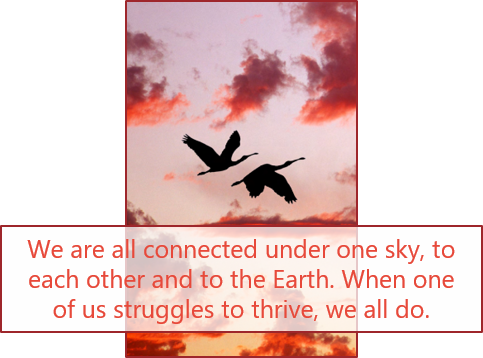
Hi new followers! I am a conservation biologist/quantitative ecologist studying birds across North America. I was recently asked what ‘one sky’ means to me & wanted to share my response below since it serves as my daily motivation. Excited to learn about your research too!
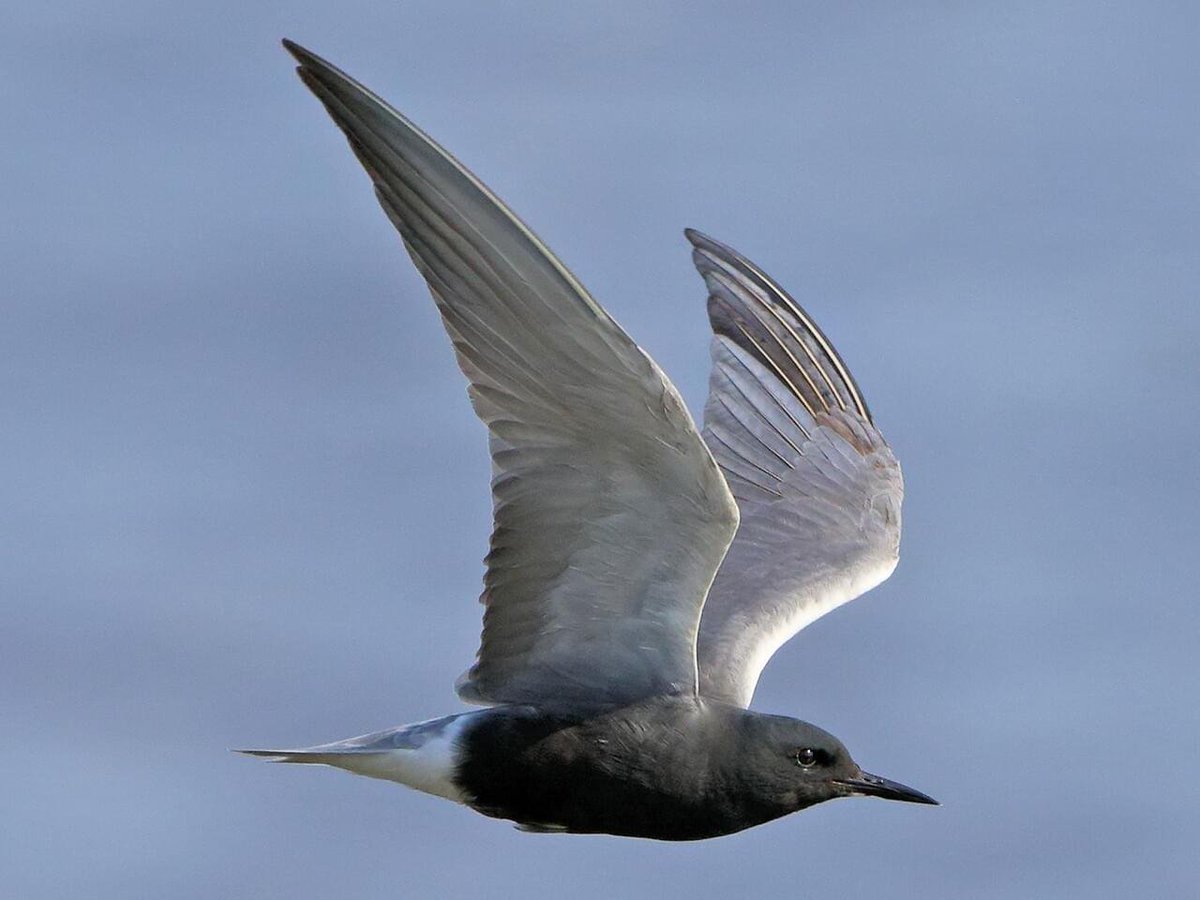
#EEBer Dr. Kayla Davis from the @ZipkinLab and @audubonsociety team up to protect the #blacktern: strategically expanding conservation and land management practices outside of their breeding habitat can be key for this species' #conservation
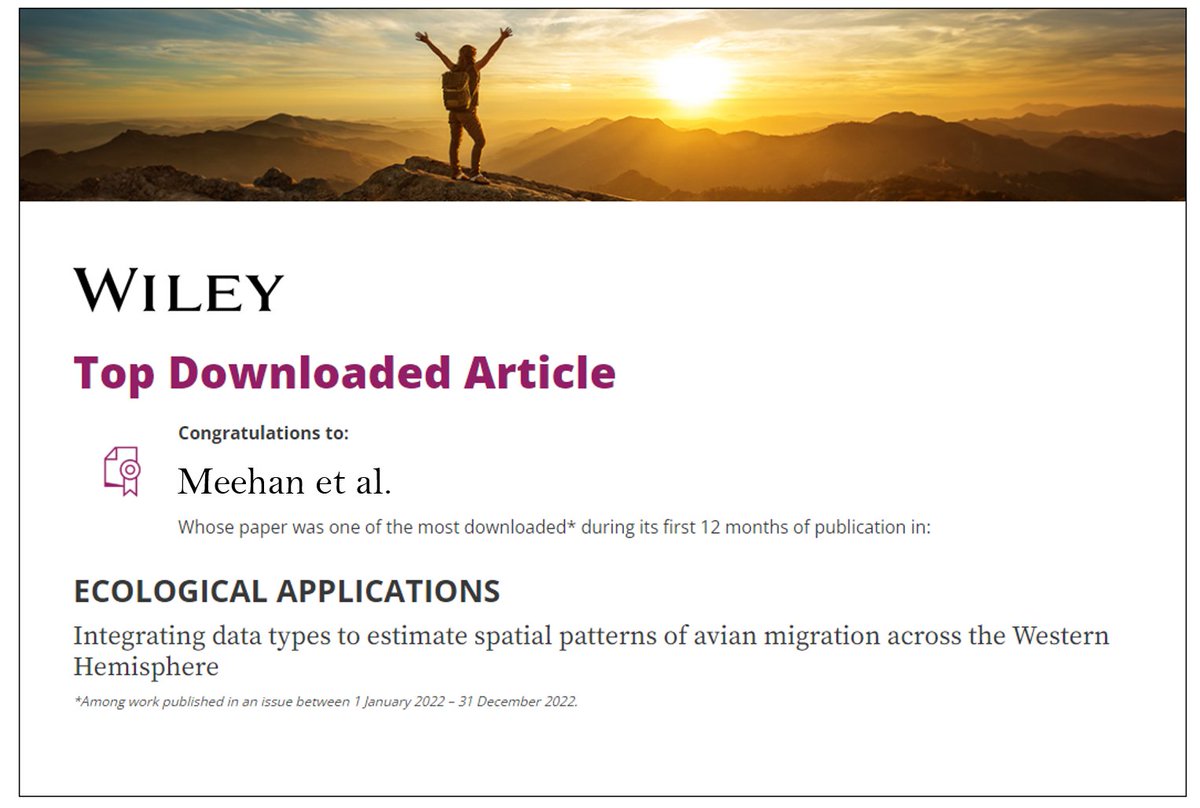
Excited to see that our @audubonsociety science team's 2022 paper in @ESAApplications was in the top 10% of downloads! Data integration + birds + migration = 🪄
Registration is open for a 4-day workshop 24-27 June 2024 @ Swiss Ornithological Institute in Sempach, Switzerland taught by Marc Kéry and myself on hierarchical spatial modeling of species distributions using spOccupancy and spAbundance. Details here: https://t.co/EhFQuG25Ma
Join us next Thursday 12/14 for an update on Great Lakes Piping Plover recovery progress! We have a lot to celebrate from this summer's breeding season! https://t.co/reBCUU0DwI
The @ZipkinLab is taking #robinhood approach to #modeling: getting info from data-rich species to inform conservation of data-poor species. In a new study at @AnimalEcology, they explore how integrated community models help us understand rare or elusive species
The @DefraGovUK and England Wild Bird Indicators, that I have helped create @_BTO, have been published today 🥳 The results aren't great, but I have mixed emotions of seeing our hard work published using fantastic citizen science data @BBS_birds@WeBS_UK@ukrbbp@Natures_Voice 🐦
5-day workshop by Marc Kéry, Dusit Ngoprasert, Ngumbang Juat on "Applied hierarchical modelling of species distribution and abundance with R package unmarked and spOccupancy" in Bangkok, Thailand. Registration: https://t.co/U4oKHksZRc
Some exciting new functionality in spOccupancy is now available on CRAN including:
✅ Multi-species, multi-season occupancy models
✅Multi-species spatially-varying coefficient occupancy models
More details: https://t.co/VXqxW1oxYR
For the first time outside the state of Michigan, captive-reared Great Lakes Piping Plovers were released into the wild. Find out more about this recovery milestone for the species—and how @Audubon_GL & partners worked to protect the endangered shorebird. https://t.co/564RCokSRh
Were you involved in Great Lakes piping plover conservation this summer? Or do you just want to proclaim your love for these little shorebirds? Order your t-shirt today! All profits go to the UMN PIPL Conservation Team to support research & monitoring: https://t.co/YAU1Mr7rxt
🚨 Science Job Alert 🚨
The @audubonsociety science team is looking for a spatial ecologist.
Can be based anywhere in the US, and this position is represented by @thebirdunion.
Salary range: $60,000-70,000/year.
https://t.co/Lx1vXxZ6zk
Are you attending #AOS_SCO23 in London, Ontario? Join us on Tuesday 8/8 for this special presentation from @BirdsCanada!
Guide to Helping Birds in Canada https://t.co/51CqVQcjA2
@SCO_SOC
*** PLEASE SHARE WIDELY ***
We are recruiting! Department Head - Fish, Wildlife, and Conservation Biology at Colorado State University.
https://t.co/MkWBo7QvTb
Posting ID: 202300246F
Full Consideration Date: 9/8/2023
Close Posting Date: Open until filled
Yes, long-distance power lines can kill birds.
But they're a hell of a lot better for the avian world than climate change.
New report from @audubonsociety calls for a massive transmission buildout to support solar and wind farms. My story for @latimes: https://t.co/Zlzxd0jTaq
We @audubonsociety developed a new framework to translate hemisphere scaled processes, like bird #Migration, into local conservation actions.
People need to be involved in every step. A fancy map can only do much. Local capacity and interest is key!
https://t.co/DSjBU1JLh3
The Northern Lights were visible from the University of Michigan Biological Station along Douglas Lake, just south of the Mackinac Bridge, overnight (July 22, 2023). Watch the @UMBS time lapse to see the colorful sky dance. #northernlights#auroraborealis
Some birds are more vulnerable to climate change, and some are more vulnerable to habitat loss. Then there are the particularly vulnerable that are getting squeezed hard by both. https://t.co/ZbhktvEQRR
The latest news from AOS & SCO-SOC 2023 (#AOS_SCO23). Merch is here! Order by midnight ET tonight (7/17)to receive in time for conference. Field trip registrations links now available! https://t.co/AE4ZyBLMaU…
🚨Journalism job alert 🚨
Associate Editor for Audubon magazine. Pay scales dependent on geography (click through). This position is part of @thebirdunion https://t.co/I3I88vuzDr