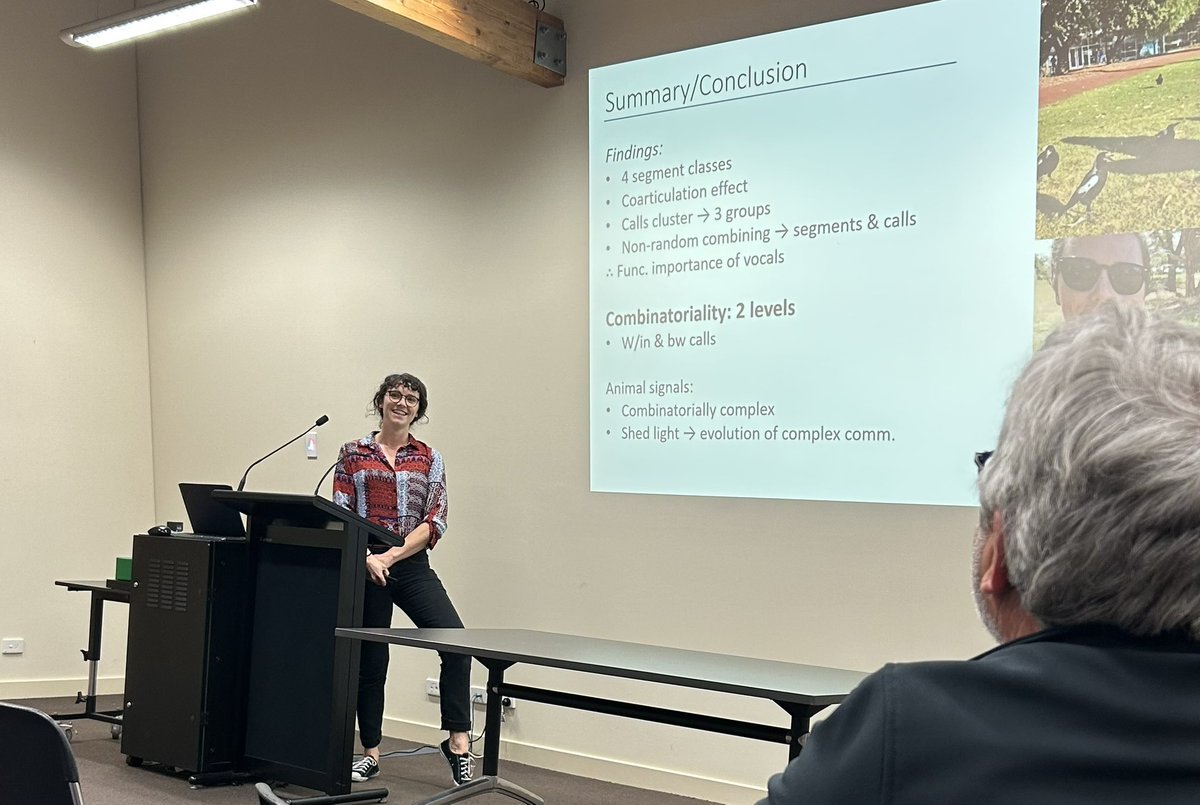
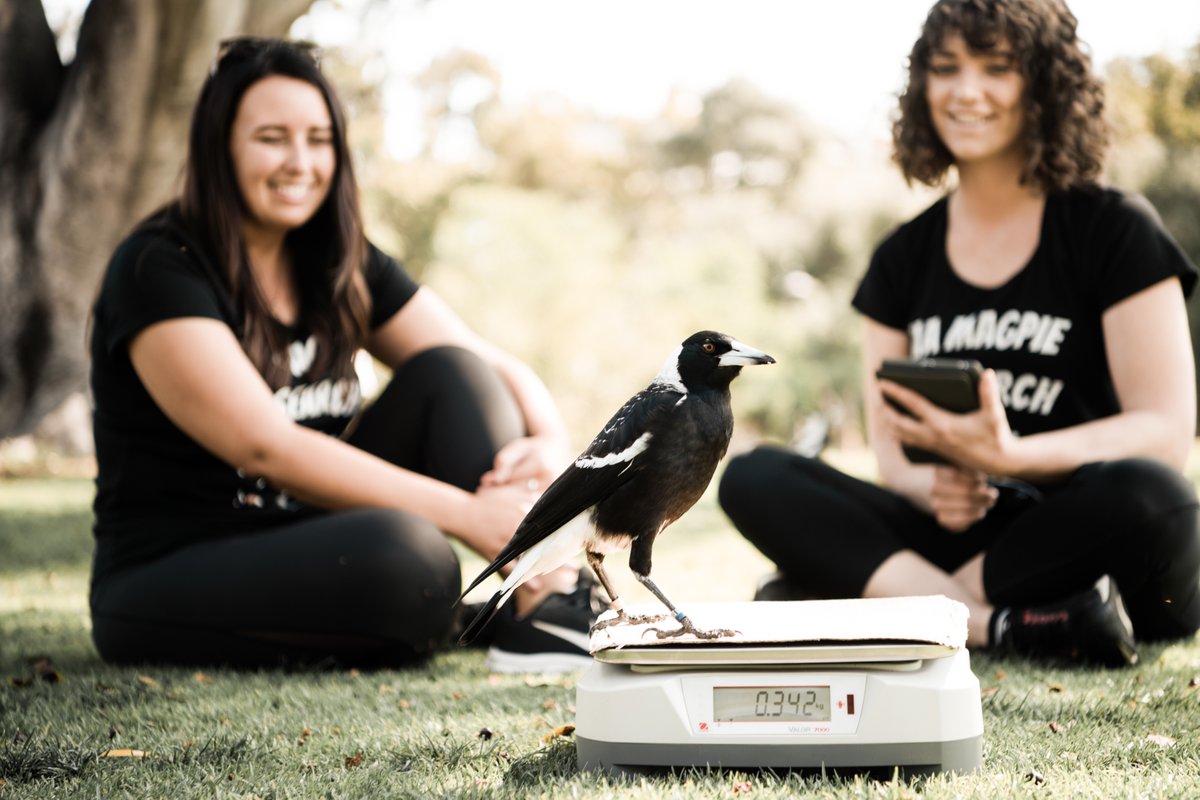
Was a delight to talk to Birdlife WA this week! I presented findings from my research on combinatoriality in WA magpie vocal communication. For more info, see https://t.co/fcKrgwFRjq
@BirdlifeOz@BiolSci_UWA @CEB_UWA
📷: Rochelle Steven & @mandy_ridley
@G_Blackburn_ and I filmed a doco with the ABC about magpie research today! The birds behaved beautifully, Grace did an awesome job explaining her PhD experiments 😊 @BiolSci_UWA @CEB_UWA @uwanews
Many congrats to @Sarah_LWalsh for her talk to BirdlifeWA this evening about her research on multi-level combinatoriality in magpie communication! For details about Sarah’s research, see https://t.co/ICgddC1JMb
@BiolSci_UWA @CEB_UWA
New paper in @NatureComms 6 years in the making and led by the amazing @Mael_Lx Call combinations and compositional processing in wild chimpanzees
@UZH_en@snsf_ch@ISLE_uzh@NCCR_Language
https://t.co/Sj4XfnQnii
Good news! My article "Female Western Australian magpies discriminate between familiar and unfamiliar human voices" received enough citations to be a #topcitedarticle in Ethology
@Sarah_LWalsh@LizzieSpeechley@mandy_ridley
https://t.co/CIMmbug9i4
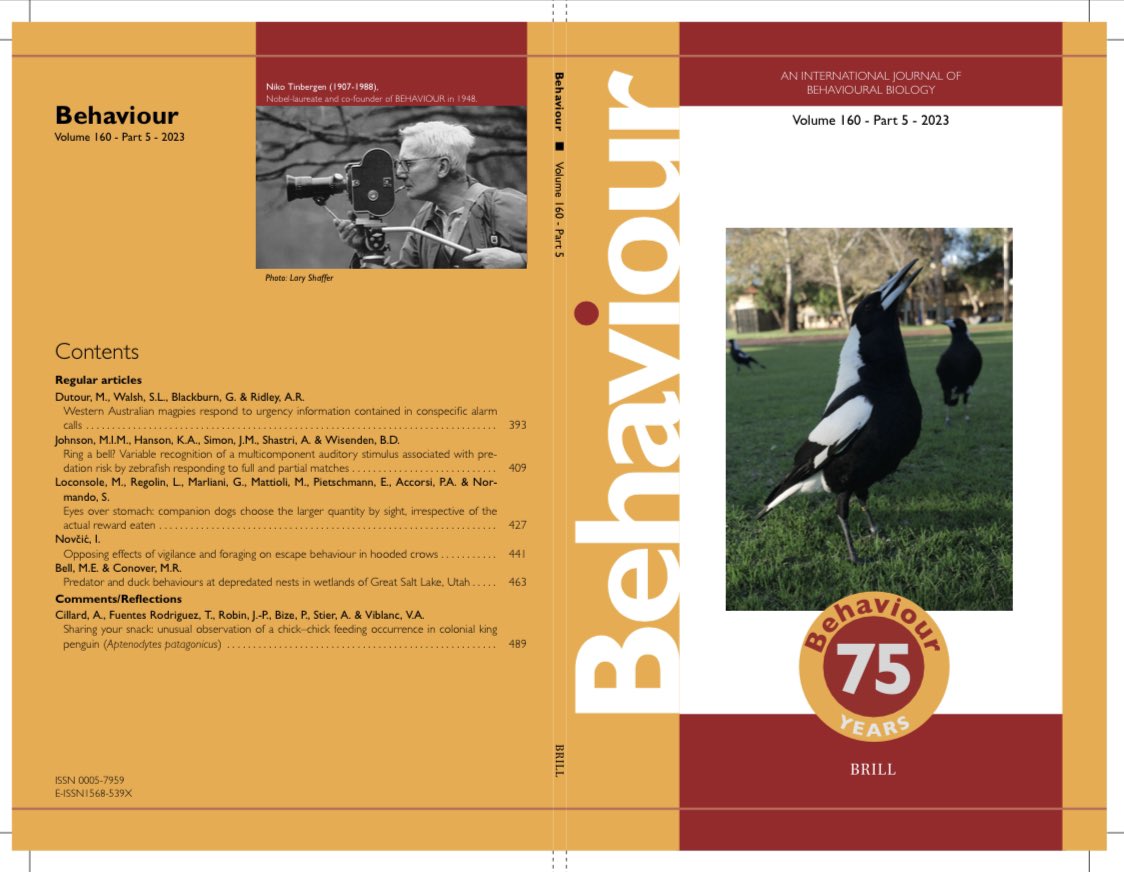
New paper out! Western Australian magpies respond to urgency information contained in conspecific alarm calls.
@mandy_ridley@Sarah_LWalsh@G_Blackburn_
https://t.co/LINXdx4Ewy
Our latest paper, headed by @Sarah_LWalsh adds evidence to the presence of analogues of language-specific traits in non-human animals. Open Access here: https://t.co/XZ0Ocedy4E
Our latest paper, headed by @Sarah_LWalsh adds evidence to the presence of analogues of language-specific traits in non-human animals. Open Access here: https://t.co/XZ0Ocedy4E
Multi-modal predator presentation for our experiments: this taxidermied raptor is mechanised so that it moves! We hope this seems a more realistic perched predator to the magpies 🤞 Developed by @Sarah_LWalsh for her PhD research
Magpies can distinguish between familiar & unfamiliar human voices: a handy trait for a species living in highly urbanised areas & sometimes persecuted for infamous swooping behaviour. Congrats to @DutourMylene & co-authors @LizzieSpeechley@Sarah_LWalsh https://t.co/wx8fMBRlaO
Here's the 2nd podcast about our magpie research with @jones_ann: this one on cognition & communication. I'm so lucky to work with marvellous collaborators, postdocs and students on this wonderful animal! @BiolSci_UWA@UWAresearch
https://t.co/wMdsTVqPkz
If you are interested in our magpie research, here’s the first of two podcasts, an interview between @jones_ann and I on the ABC: The real magpies of Western Australia https://t.co/f6HUjqGmlz @BiolSci_UWA@UWAresearch
In celebration of the star of the show for our lab research: the wildlife. We are so privileged they let us work with them each day. Thanks from my colleagues, students and I to you, Ms Magpie, your daily antics in-field thrill us each day. 🙂❤️🪶 @Sarah_LWalsh@LizzieSpeechley
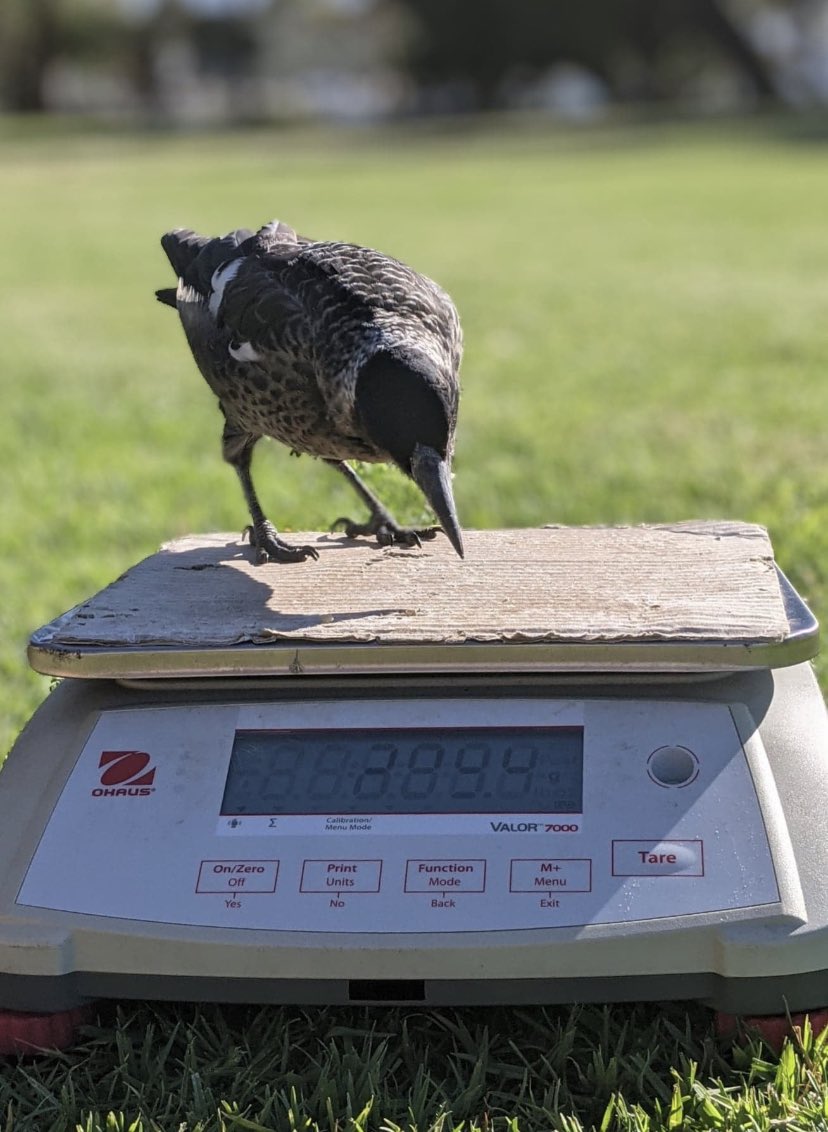
Our fledglings are now old enough to be weighed regularly! Unlike last year, a mild start to the summer meant good offspring survival. This fledgling form group SCL is now learning to forage independently at nearly three months old. Photo by @Sarah_LWalsh
YAY!! 🎉🎉 Our first magpie fledgling of the year! Fledged from one of our smaller grips, they are very vulnerable and poorly flighted in their first days post-fledge. BUT: don’t pick them up if you see them like this! Usually they are fine and their parents are close by.
Our latest magpie paper, headed by the wonderful @DutourMylene shows fine-scale acoustic adjustment of alarm calls according to predator distance: handy way of communicating level of threat! @Sarah_LWalsh @CEB_UWA @BiolSci_UWA https://t.co/WMwxqDIHTT