Critical we team up across governments, NGOs, civil society, communities, companies, academia and many more to remove the barriers and drive solutions to achieve universal health coverage for all
Everyone, everywhere has a right to quality healthcare. That’s why Philips is committed to #HealthForAll. Read more on how we are driving #uhc and why teaming up with our partners is critical: https://t.co/nuYTb3xUxx #UHCDay#ESG#SDG3#accesstocare
.@AMREF and @Philips are leveraging our complementary skills and capabilities to develop business and finance models for #UHC together. https://t.co/skg4JETzvM #HealthforAll#UHCDay
The actual implementation of #digital health technologies for #UHC remains complex and challenging, especially in low-resource settings. Read here for the lessons learned & key findings: https://t.co/ICtM39fo13 #UHCDay@Devex
This video by @UNFPA explains the upcoming #NairobiSummit for those who truly believe in knowledge not ignorance, freedom not emasculation, choice not force and gender equality not gender supremacy! Welcome @Atayeshe
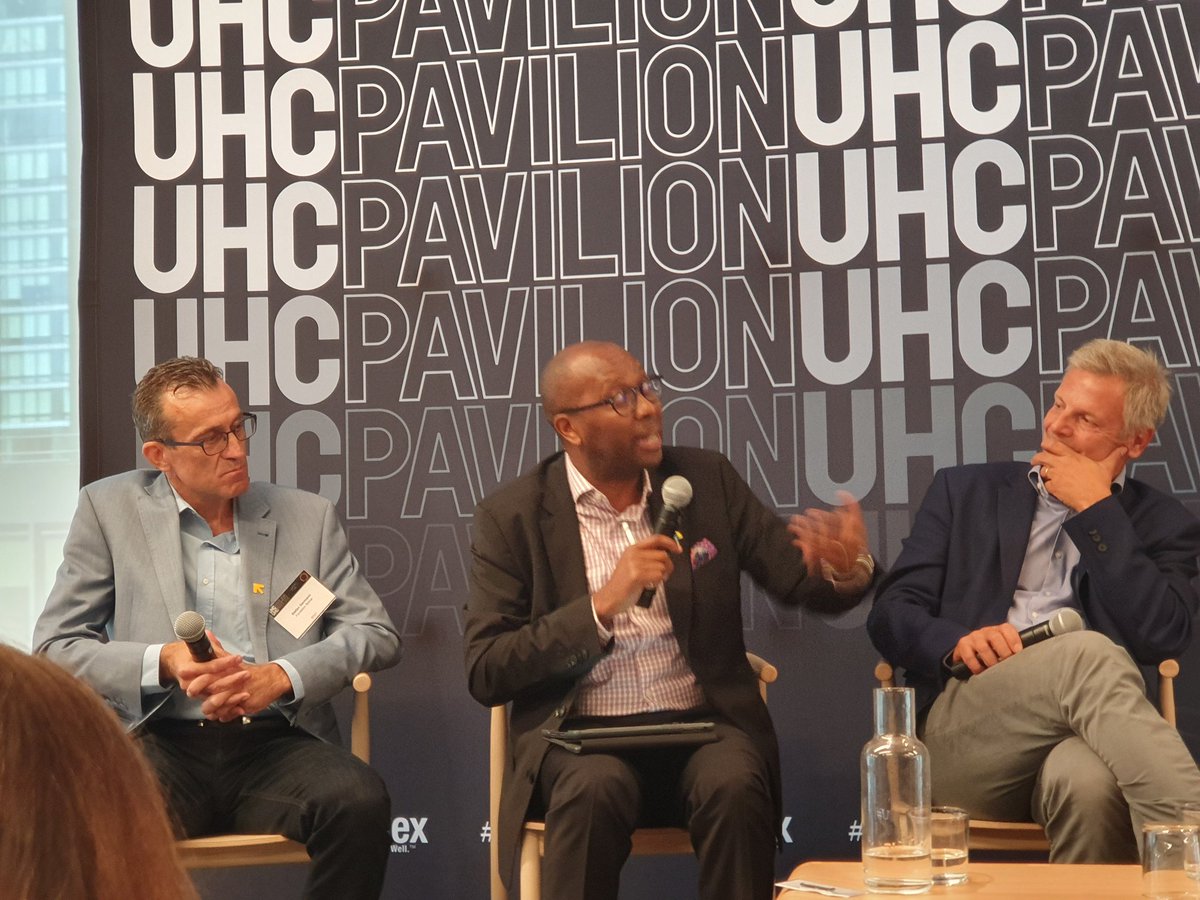
Co-chair @UHC2030@daktari1: We are talking the walk instead of walking the talk. We need to give up our own power & let the power of the people lead. They are not beneficiaries but makers of change. We don't empower them, they already have power. #CS4UHC#HealthForAll#HLMUHC
UHC is only going to be a reality if digital health is part of the plan. We need to create enabling ecosystems for implementation for digital health and for programs to scale. #HealthyAccess
Q7: What’s the one piece of advice you would give policymakers and global health representatives attending the High-level Meeting on UHC in September?
#HealthyAccess
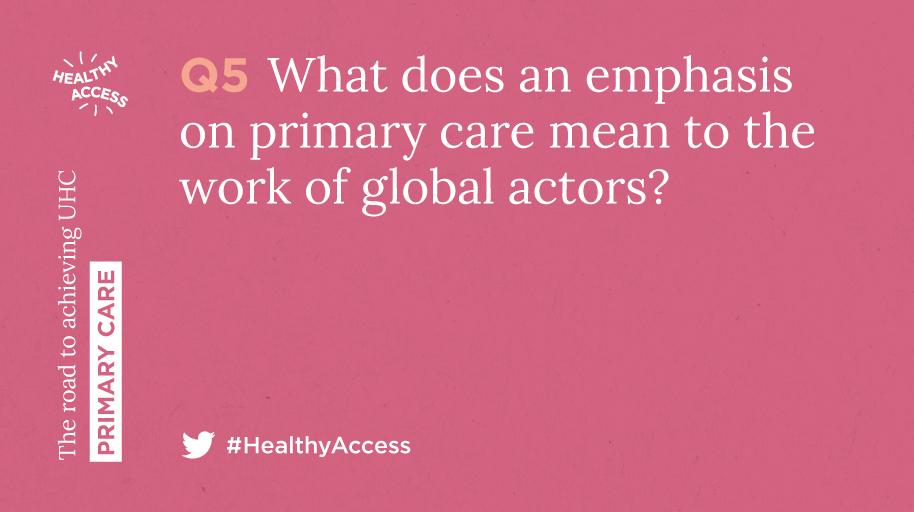
For us, we see strengthening primary care has the potential to increase access, improve quality and reduce the cost of the entire health system. This will invariably mean a shift from tertiary care to primary care, and from curative to preventative care. #HealthyAccess
A3: In our partnerships with CSOs like @AMREF we have seen their crucial role in bridging the gap between communities and the formal health system. #HealthyAccess
Communities needs to be included in designing and implementing any changes in their healthcare system. Even though there are great technologies, it will not deliver results if people do not trust it and eventually embrace it. #HealthyAccess
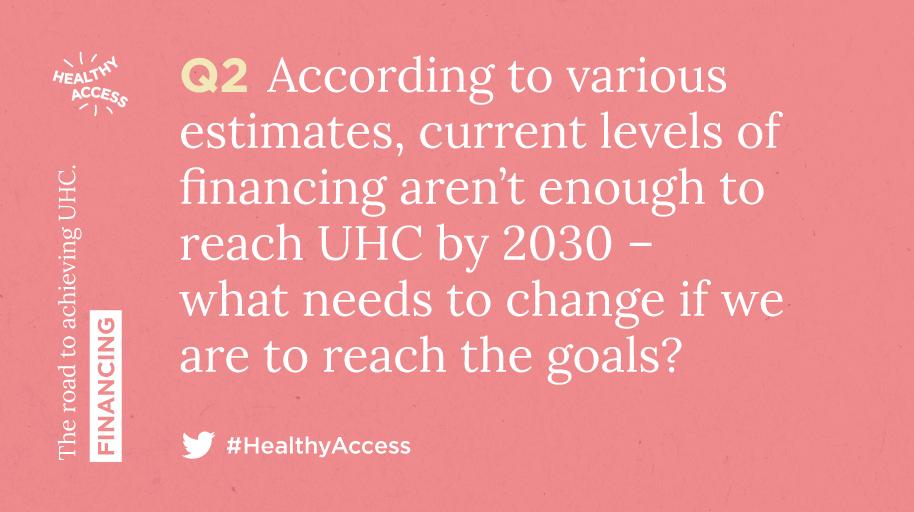
A2: Financing schemes need to change from input-based to results-based where payment is linked to the volume of services provided; measure the benefits to the patients treated; and impact/ results are defined at population level. #HealthyAccess
Q2: According to various estimates, current levels of financing aren’t enough to reach UHC by 2030 - what needs to change if we are to reach the goals?
#HealthyAccess
Q2: According to various estimates, current levels of financing aren’t enough to reach UHC by 2030 - what needs to change if we are to reach the goals?
#HealthyAccess
A1: Telehealth also has the potential to overcome shortages of healthcare professionals by increasing access to specialists in bigger and more well-equipped medical centres, hospitals and academic institutions. 2/2 #HealthyAccess
Q1: What is one digital health innovation or application you think will drastically change how people access health care in the next few years? How?
#HealthyAccess
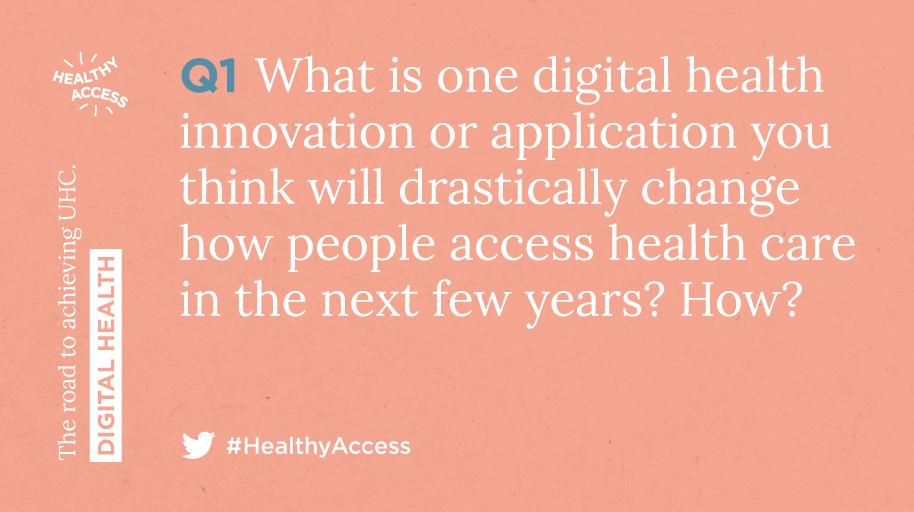
A1: One such innovation is telehealth. By enabling healthcare professionals to diagnose and treat patients without needing to see them face-to-face, telehealth effectively helps lower the costs of delivering healthcare services. 1/2 #HealthyAccess
Q1: What is one digital health innovation or application you think will drastically change how people access health care in the next few years? How?
#HealthyAccess