There is a disturbing trend of young lawyers trying to be concise.
A 2nd-year drafted an executive summary for a banking client using bullet points and plain English.
She proudly stated that she reduced a 50-page compliance memo into a 2-page brief.
I asked her if she thought the client was paying $950 an hour for brevity.
She muttered something about respecting the CEO's time.
I explained that clients don't pay us to solve their problems quickly.
They pay us to make their problems look so incomprehensible that only we can solve them.
I made her rewrite the summary using dense, impenetrable legalese.
It took her 12 hours to bury the conclusion on page 42.
The client called me the next morning to thank us for our incredibly thorough analysis.
Clarity is a customer service concept.
We are in the business of intellectual intimidation.
Google Cloud AI engineer just showed how they go from idea to deployed app at Google in 30-minutes using Claude.
26-minutes. free. by Google AI team.
one person + Claude + Google Cloud = a full engineering org running on a laptop.
worth more than any $500 vibe-coding course.
Today a med student asked what actually happens to consciousness under GENERAL ANESTHESIA. The fact that we still don't have a real answer is terrifying.
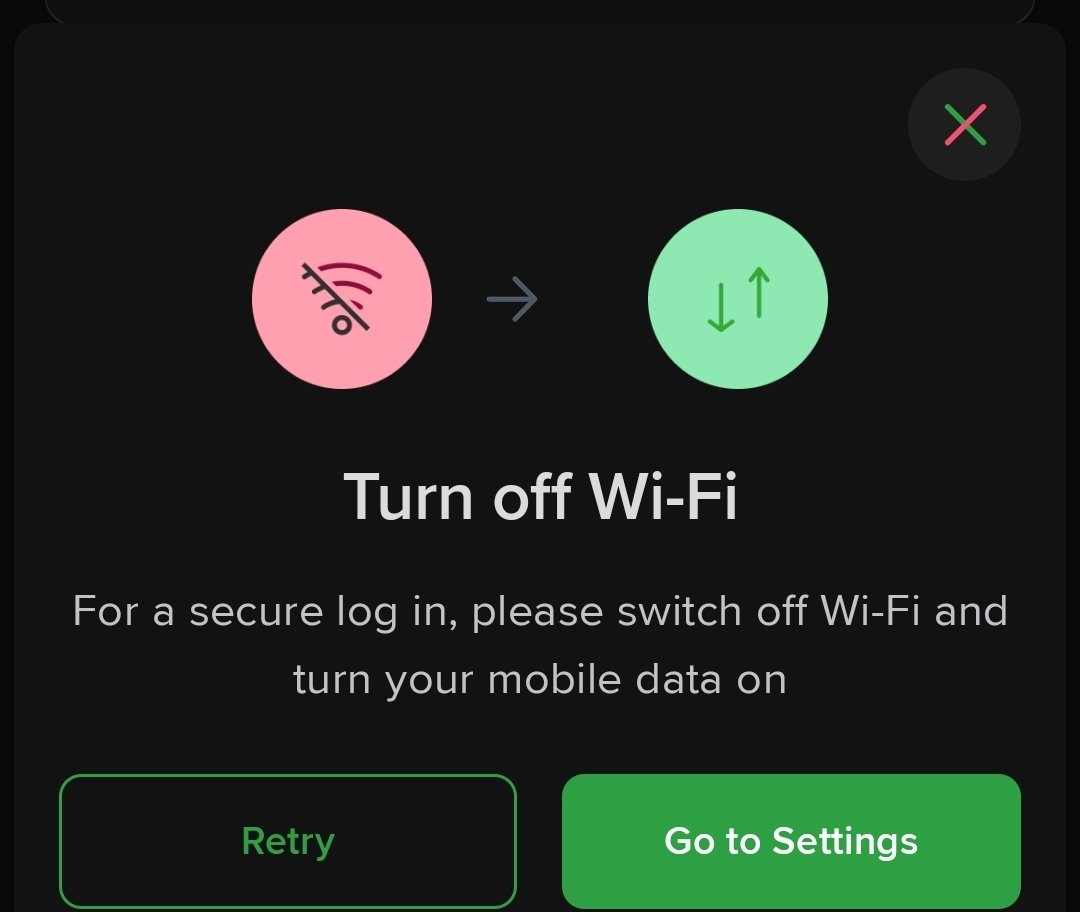
It's a trade-off btwn system security & user convenience. At the end of the day, customer funds have to be protected.
With the rise of cyber attacks targeting financial institutions, the approach taken is understandable from a technical perspective /end
Safaricom is really caught up between a rock & a hard place.
Originally, mpesa's primary end-user infrastructure was the sim card. This eliminated security risks since safcom are in control of the communication channels btwn the user's sim card & their servers. /1
Safaricom app is still on this nonsense when you're not in Kenya.
Effectively paralyses one from transacting their money as soon as you leave the border.
Which geniuses thought this is a good idea in 2026 ?
This leaves safcom with 2 options
1. Redesign their systems & implement robust security measures. This is quite expensive & takes time
2. Force users to authenticate strictly using their safcom sim cards & data. This is cheaper & faster since it's uses original implementation /3
Your Android phone is sending data to Google every 4.5 minutes.
Even when you're not touching it. Even when the screen is off.
A peer-reviewed study from Trinity College Dublin confirmed it.
12 settings to change right now:
Your Android phone’s storage is full.
You delete photos, videos, apps. It’s still full.
Because it’s not the visible files that are eating up your storage. Most of it is the HIDDEN junk that Android never tells you about.
I cleaned mine yesterday and got 23GB back without deleting a single photo.
Here’s how:
Most backend systems in 2026 appear secure on paper, with
HTTPS everywhere, basic authentication, and a few firewall rules. But at mid-to-senior engineering level, the real risks sit much deeper: architectural flaws, subtle misconfigurations, and operational blind spots that attackers (and regulators) quietly exploit.
Here are 12 security issues that often undermine systems that look solid.
Three weeks ago, a threat actor called ByteToBreach walked through Nigeria’s financial infrastructure using a single unpatched vulnerability at Sterling Bank as the door.
What followed was nine days of undetected access with core banking data, sensitive customer information and employee records exfiltrated before the actor pivoted into Remita, Nigeria’s government payment backbone.
From Remita they took everything.
3TB of data.
Including sensitive and personal information of over a million Nigerians (across both breaches).
I spent the last week reconstructing the full attack chain from the artefacts the actor published.
I have now produced a narrative investigation on my new substack and a technical analysis on @WebSecurityLab covering the complete breach from the first CVE exploit to the published HSM key directory.
This was published in the hope that the lessons from these events prove more durable than the events themselves.
Security failures of this scale are painful.
They are also, when documented carefully and honestly, among the most valuable contributions one can make to an ecosystem that is still maturing.
Nigeria’s banking story is one of the most compelling in the world.
It deserves a security culture to match.
Read the full investigation here:
https://t.co/1YwFS7I6Eu