Lots of people are advocating for more American open-source models these days which is amazing but very few people do anything about it!
Latest example, Alex Karp came out advocating for American open-source models as a necessity! At the same time, @PalantirTech is a free org on HF with 0 open-source models and 0 public datasets shared.
Time to switch from talking to contributing for all!
@neural_avb I was checking the performance chart, did you notice any difference from sonnet 4.6, based on the effort. Seems like it is cheaper than Sonnet 4.6 but might have subpar performance unless at high
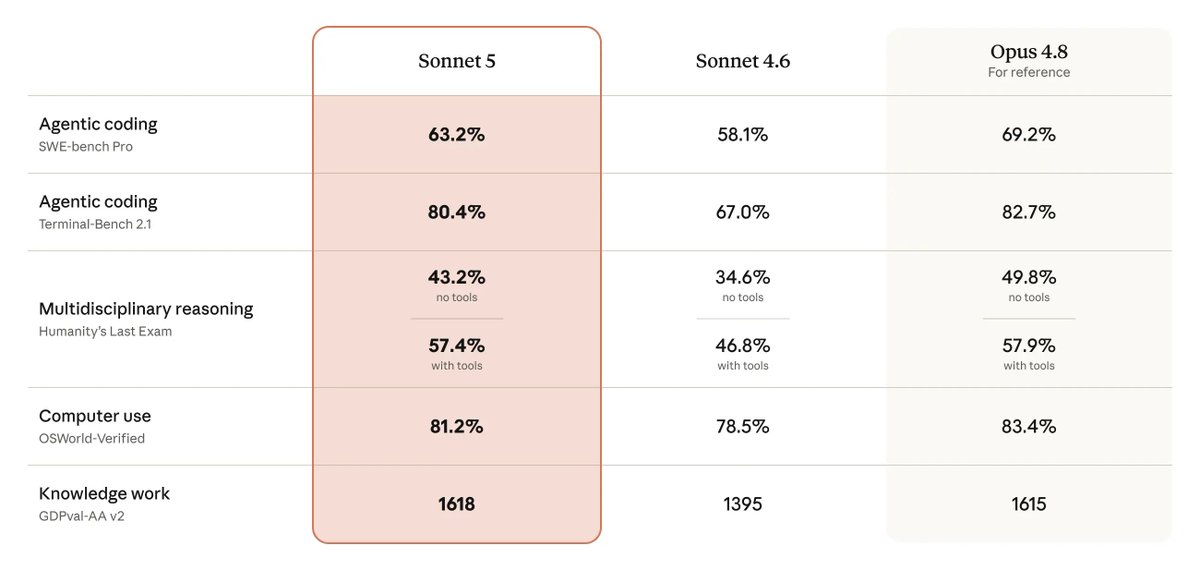
Claude Sonnet 5 benchmarks. The pass rate - cost graph shows Opus 4.8 low cheaper and better performance than Sonnet 5 xhigh. It is cheaper than Sonnet 4.6 but I assume usable performance improvements only at high and xhigh? Anyone have any other insights from using the model?
One thing I'm really interested in getting into is formal verification + modern AI (LLMs) + whatever. This seems like a very exciting space to be in (I am reviewing NeurIPS papers)
I teach college and here's the thing:
Writing is a materialized form of thinking. It is not just a way to record thoughts. It is a concrete route to understanding.
If one uses a machine to write, they cease thinking. They abandon a route to understanding. Not good!
Have seen this sentiment a lot lately.
Too many people submitting slop PRs for OSS so Hashimoto poisons his agents md.
But there are certainly people who are just trying to learn, so how do you even differentiate between them?
I think the responsibility is on the learner. I have a non tech friend who works in a call center, who made a PR and got ripped a new ass by the maintainers. Slop code, rebase that lost a commit.
But he’s a persistent dude, he told me he’s gonna figure out what he did wrong and prove them wrong. I respect it.
I think people forget, getting better is more of an attitude problem than an intelligence one.
Also this dude just really loves the idea of coding, didn’t even graduate high school.