@gdb@gdb This bug was found by albertnetymk, who proposed the fix in OpenJDK PR #32781 on Sept 9, 7 weeks before Codex “found” it on Oct 30. Was the discovery independent, or did Codex pick up from the open PR? Either way, credit should go to Albert!
https://t.co/ZSc9SKAaJV
@LundukeJournal Sounds very inclusive!
But they should probably have own distro. If they don't, they have to audit a 3rd party distro and even that doesn't let them fix anything until upstream does it.
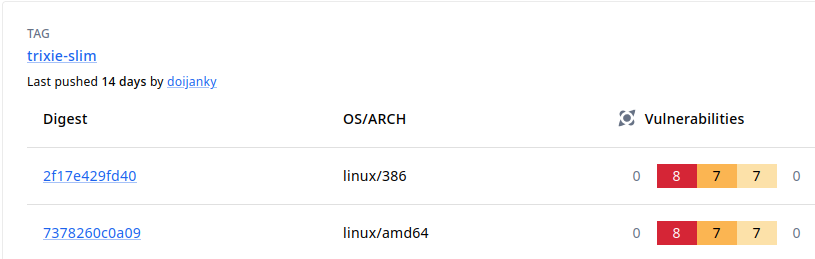
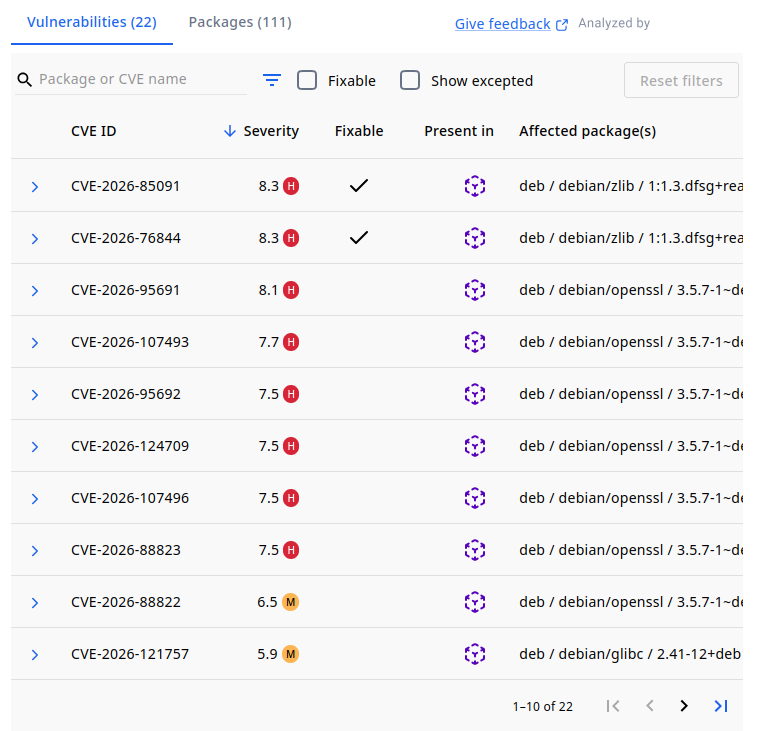
This is latest `trixie-slim` and it's just a 30MB container, not a distro. 20 vulns.
Like "native vector databases" (vs. databases that bolted it on - initially they sucked, now they suck less).
The Rackspace example stands, but there are additional dimensions. Many pricey Azure solutions will become obsolete and easier to rebuild for agents from scratch. Coreweave can build new apps just for agents. Azure, like PostgreSQL, has to build for AI while not losing traditional customers (hard, inefficient).
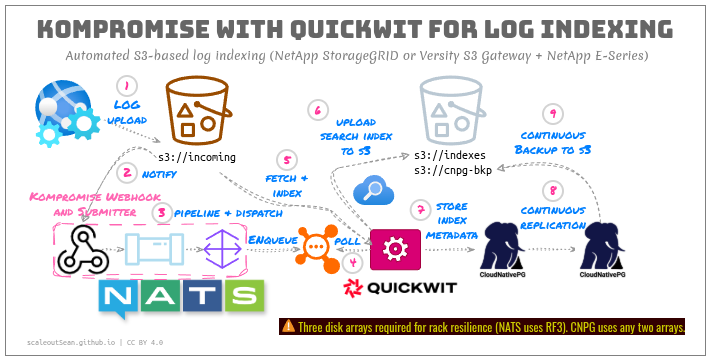
My use case was slightly unusual: unstructured logs are exported from the "primary" SIEM, e.g. CSV. I upload those to a bucket, and have Webhook notifications set up on that "incoming" bucket.
The Webhook server, once it learns of a new log file in s3://incoming/<log-filename>, downloads the file, parses, converts it to JSON that's suitable for import by Quickwit. Then you can ingest it in any supported way e.g. curl POST - https://t.co/5t2mDYyxdq
Tried this with Quickwit and StorageGRID 12.1 in late September: log upload->Webhook->pipeline->SQS->Quickwit->index on S3, as a non-streaming scenario (as oppsed to using Vector + sink).
Separately, Quickwit's metadata (Postgres) can be continuously backed up to S3 as well, so all block (NATS, PostgreSQL, Quickwit cache) fits nicely on a small and fast EF-Series array.
MinIO and @datadoghq are joining forces to power the security and observability lakehouse for enterprise AI.
Through this strategic partnership, AIStor becomes the first high-performance, on-premises lakehouse certified for Datadog Bring Your Own Cloud (BYOC).
Together, we're enabling enterprises to retain and analyze every log at scale while maintaining complete control over their data. https://t.co/vJF0oS7rx4
https://t.co/kUAHLShOWu
Good to see a major S3 vendor gets it. I created a slightly more elaborate integration with optional Webhook notifications for pre-caching a few months back. #Kompromise
Someone re-wrote curl in Rust (because rewriting working code is required by the Cult of Rust).
That Rust curl clone contains 4,832 uses of “unsafe” in order to make it work.
Because the point of Rust is MeMoRY sAfEtY. 🤪
Creating *thousands* of new millionaires while making billions of users happy is most certainly *not* a risk, let alone the biggest.
Also, I'm curious if Mr. Delangue plans to donate his personal proceeds to help us avoid the risk of power concentration. I accept donations!
As I’ve said for years, concentration of power, capabilities and wealth is the biggest risk in AI. The natural tendencies for it are super strong and without much much stronger open-source, we might end up in a world with more asymmetry and inequalities than ever!
@LundukeJournal I've bought into several similar projects. Basically, you make a donation and hope they come up with something, anything, not even necessarily usable as you only hope everyone's donations will eventually result in a viable tech/product one day. Wouldn't expect to actually use it.
BallsBuster is not nice and welcoming. You either know your stuff or you don't.
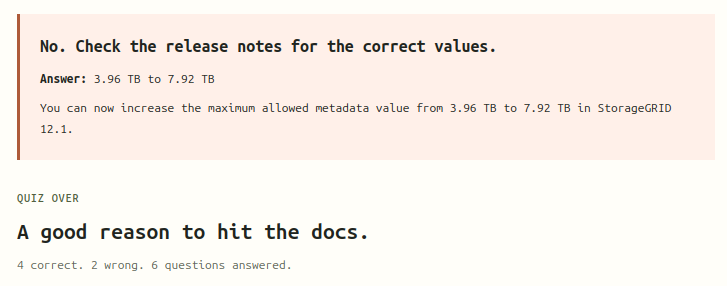
I need to make the hard questions harder, but this StorageGRID demo is now decent: bucket snapshot, fast enum, doco filtering, secure workflow, reverse Web proxy + (cloud) embeddings, search & AI chat
@esrtweet Emails are coming in. Maybe some are delayed or still in queue, I can't tell. Now I can also Send email to myself, and it takes 2 minutes to receive it.😅