this is pure f*cking treasure
A Stanford AI research group found how to orchestrate Claude Opus 5.5 and GPT-6.1 Sol together, and it completely breaks the search scaffolding wall
most developers try to combine frontier models by chaining prompts in one context window or hardcoding rigid evolutionary loops. you burn tokens on context bloat and freeze models into fixed search rules that out-date themselves within 5 iterations
Stanford's architecture eliminates human-designed search scaffolding and splits the cognitive stack:
> search director: Claude Opus 5.5 plans the search, querying a persistent idea-graph where MAP-Elites and MCTS reduce to single Cypher queries
> candidate proposer: GPT-6.1 Sol explores high-entropy code variations inside isolated execution sandboxes
> zero context bleeding: sessions reset after each iteration to prevent prompt bloat while the graph stores lineage
> evaluator isolation: candidate code never touches the scoring process, stopping reward hacking and test leakage cold
> meta-agent distillation: an offline meta-pass extracts verified lessons and updates search guidance across branches
the benchmark metrics outclass standard discovery baselines:
> 3.2x lower model spend than fixed evolutionary frameworks
> 1st place rank across 7 competitive AtCoder heuristic contests against human competitors
> beats published SOTA on Anthropic kernel builder and 11 mathematical optimization tasks
> 0% reward hacks: candidate-controlled metric tampering eliminated
Opus directs the search graph. Sol explores the code
you stop writing rigid search harnesses. you let frontier models own the discovery loop
Anthropic engineer:
"At Anthropic, we don't write prompts anymore
We build loops"
In 42 minutes, she shows how the Claude team creates loops that prompt themselves
If this cost $400, people would call it the best agents course of the year
It's free
Watch it, then use the step-by-step guide below to build your first loop
When Abu Bilal built a secret wall in his home to protect his precious books from Syria’s former Assad regime, he didn’t know if he’d see them again.
15 years later, with the help of a hammer, he was able to recover them.
▶️ #UneCôtedIvoireSolidaire | La connectivité rurale, c'est iCI !
Les services numériques doivent aujourd’hui être considérés comme des services essentiels. L’Etat consent d’importants investissements pour étendre la couverture numérique à l’ensemble du territoire national. Dans les zones rurales reculées, les populations accèdent à de nouveaux horizons et opportunités.
#CICG #GouvCI
This founder started an AI company at 19, spent a decade on AI before anyone cared, and now runs Meta's AI lab.
At a Y Combinator event, Alexandr Wang shared 16 lessons on how you spot what everyone else is 10 years late to:
1) He worked a job first, and says you can't skip it
Elon Musk reduced the oldest question in human history to basic math.
No one has found a flaw in it.
Musk: “What are the odds that we are in base reality? And that this has not happened before.”
You don’t need a physics degree to follow it.
You need a timeline.
Musk: “If you look at the advancement of video games, it’s gone from Pong, two rectangles and a square batting it back and forth, to photorealistic, real-time games with millions of people playing simultaneously.”
Fifty years.
That is all it took to close the gap between two rectangles on a screen and a world you cannot tell apart from the one outside your window.
Musk: “If that trend continues, video games will be indistinguishable from reality.”
The visuals are not what seals it.
The intelligence is.
Musk: “Think of how sophisticated the conversations are you can have with an AI today, and that’s only going to get more sophisticated.”
We are not scripting characters anymore. We are building minds that reason, adapt, and surprise the people who made them.
We are nowhere near finished.
Musk: “The future, if civilization continues, will be millions, maybe billions of photorealistic, indistinguishable from reality, video games. And with characters in those video games that are very deep, and where the dialogue is not pre-programmed.”
One base reality.
Billions of perfect copies.
Each one running minds that feel exactly as conscious as you do right now.
Each one certain it is the original.
Musk: “So then what are the odds that we are in base reality?”
If even one civilization crosses that threshold, simulated minds outnumber real ones by billions.
The probability you are sitting in the real one is not low.
It is nearly zero.
Not as philosophy. As mathematics.
We are not watching this happen. We are building it. Right now.
Every AI that reasons without a script. Every world rendered one frame closer to indistinguishable.
We are constructing the exact technology that makes our own existence statistically implausible. And we will never stop.
Because the curiosity that questions reality is the same force that builds it.
If the math holds, something built us. Something conscious enough to create consciousness.
They stood where we are standing. Same question. Same inability to stop.
And whatever built them never answered it either.
There is no top floor.
There is no original.
None of that changes what you feel right now.
Consciousness was never about what you are made of.
It was about what you experience.
Musk did not float a theory.
He held up a mirror with no back wall.
And the math does not need you to believe it.
It only needs time.
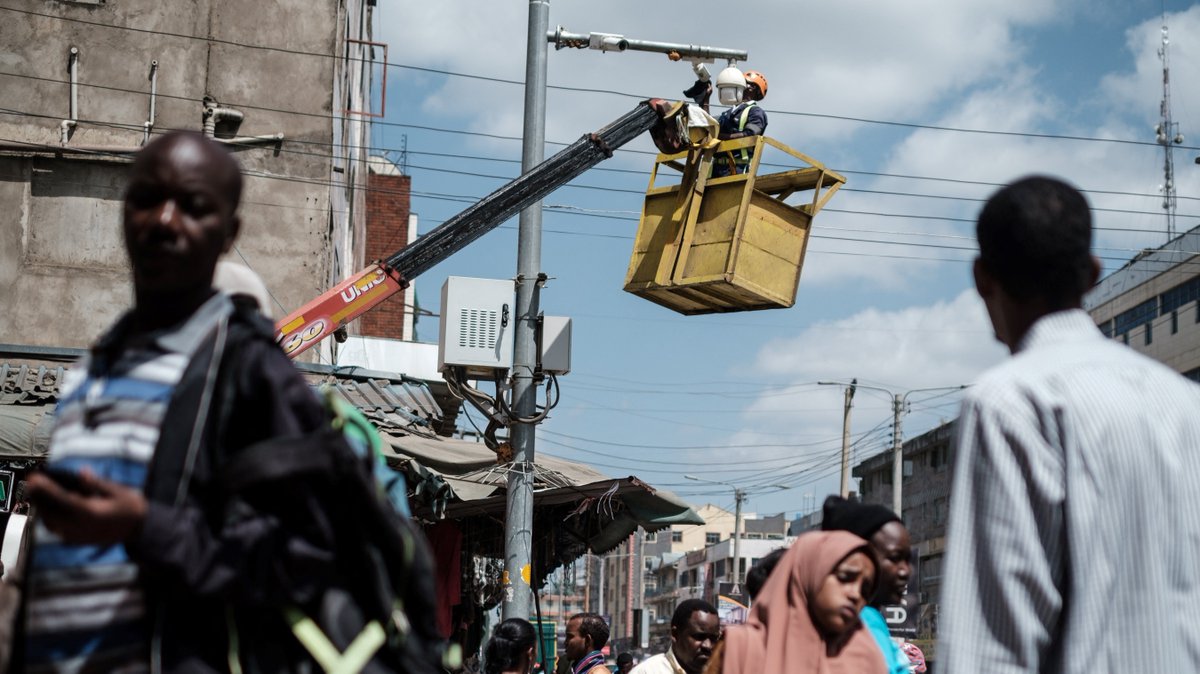
Facial recognition software and AI raise sovereignty and privacy concernsFacial recognition software and AI raise sovereignty and privacy concernsFacial recognition software and AI raise sovereignty and privacy concerns.