I'm obsessed with cognitive biases.
A "cognitive bias" is a systematic error in thinking that destroys decision-making.
11 most powerful (and dangerous) cognitive biases I've found: 🧵
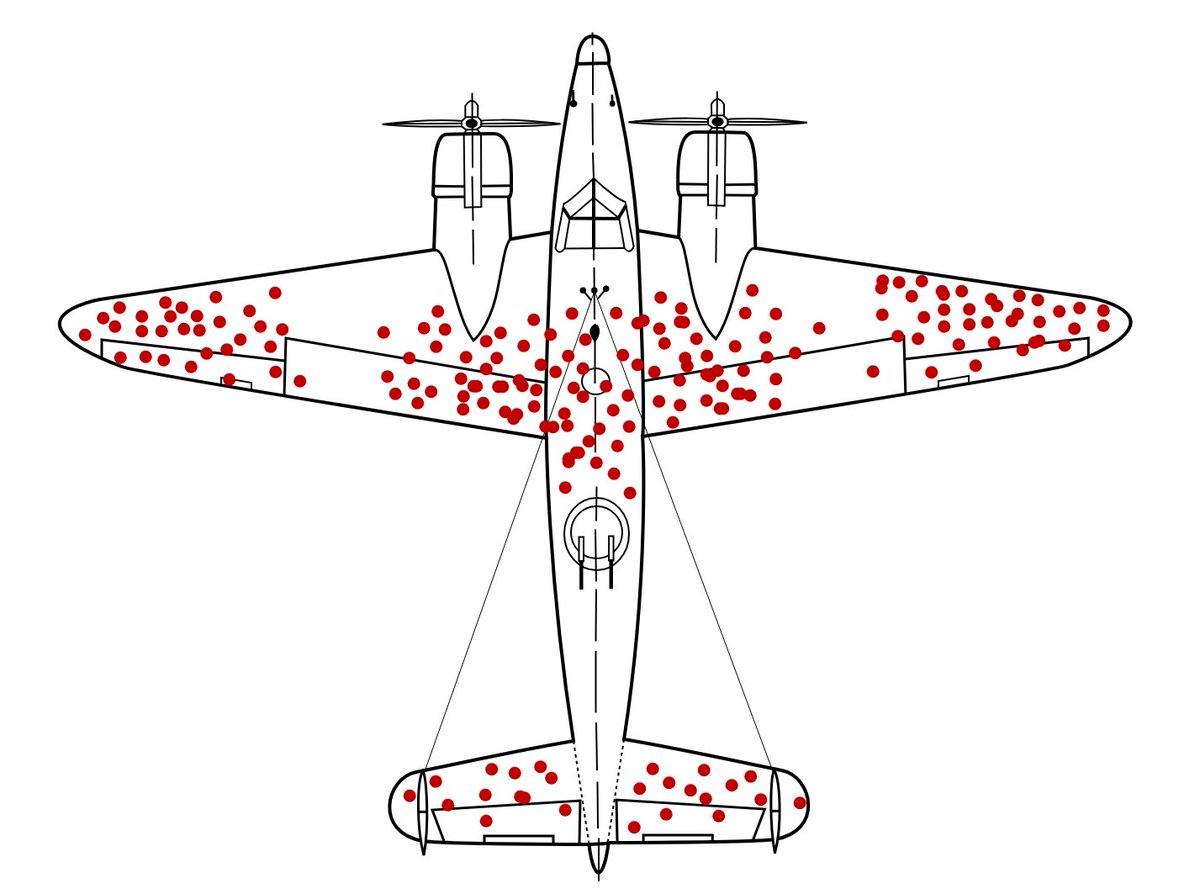
1. Survivorship Bias:
Apple pushed Steve Jobs out in 1985 and left the company to a Pepsi executive.
12 years later Apple was weeks from bankruptcy, selling a dozen versions of the same Mac that nobody could tell apart.
Jobs came back, walked up to a whiteboard, drew four boxes and killed every product that didn't fit in one.
I remember reading somewhere that Shopify told its employees in 2025 that before asking for more headcount, they had to prove AI couldn't do the job.
@tobi@davidsenra
Tobi Lutke says we probably have to replace all human written code within the next 6 or 12 months:
“I think software will basically be near bug free. It will be 100x faster in many instances."
“We are currently in the midst of an unbelievable awakening to cybersecurity. Most companies are in some form of code red, just trying to fix everything.”
“The quality of all software is going to just go through the roof.”
“We will live in a world where all computers are entirely malleable in a sense that it's going to be the computer that supports you and your job perfectly in exactly the way you want.”
China used about 2.3 times as much electricity as the US last year.
Elon Musk thinks that's the clearest read on who is winning manufacturing:
"If China passes three times the US electricity output, it means that its industrial capacity, as a rough approximation, will be three times that of the US."
"China is a manufacturing powerhouse next level. It's very impressive. Roughly China does twice as much ore refining on average as the rest of the world combined."
He doesn't think America closes that gap with people. China has about four times the population, and:
"The average work ethic in China is higher than in the US. We tend to get complacent and entitled. We definitely can't win on the human front, but we might have a shot at the robot front."
"In the absence of breakthrough innovations in the US, China will utterly dominate."
Jensen Huang resigned as Nvidia's CEO on November 12, after reports of affairs.
Palmer Luckey on why he wants Jensen to stay at Nvidia:
"China wants Jensen out. So I want him in."
Even though he doesn't even agree with Jensen on China: "I don't think that we should be exporting chips to China. He thinks that there is an argument. I think there are reasonable arguments... I just happen to not be quite on their side."
His point is that Beijing and Chinese companies want different things:
"China doesn't want Nvidia to sell GPUs to Chinese companies. There are Chinese companies that want to buy Nvidia GPUs."
"There's 600,000 H200 GPUs sitting in a port right now because China will not give them an import permit because they want to build an internal domestic processor industry."
"They're thrilled to have Jensen out. They know that it makes America weaker to knock him out."
On the interim CEO, Colette Kress, Nvidia's CFO since 2013:
"I'm sure this CFO lady they put in as interim CEO is a perfectly wonderful woman, but she is not Jensen. His personal relationships are the reasons that everyone is willing to do business, because paper means nothing. Paper gives you the right to sue somebody after you think they screwed you. That doesn't actually solve problems."
1970, Bruce Lee loaded a barbell for a set of good mornings and skipped his warm-up.
On the first set, he heard a pop in his lower back. He had damaged a sacral nerve, and he was told he might never practice martial arts again.
He spent months in bed. He couldn't train, so he read and wrote. Those notes later became the Tao of Jeet Kune Do.
He also took one of his business cards and wrote two words on the back: "Walk on." He kept it where he could see it every day.
He went back to training before his back had healed, and he lived with the pain for the rest of his life.
The Big Boss, Fist of Fury, Way of the Dragon and Enter the Dragon all came after that injury.
Genius-maxxing will be the only thing that matters in 2027:
• Read old lindy books
• Do more math and physics
• Disconnect from social media and do deep work
• Slow down and evaluate/ challenge before you accept
Cognitive weightlifting is literally the cheat code.
In 2014, Palmer Luckey sold Oculus to Facebook for about $2 billion.
In 2017, Facebook fired him because he donated $9,000 to a pro-Trump group.
In 2025, his company Anduril partnered with Meta to build headsets for the US military.
“Mark Zuckerberg is not the one who fired me. He runs this massive organization. I was like an update on his daily brief.”
“There’s people who, they’re like, oh, but shouldn’t he have stood up for you? No, man, he’s running a multi hundred billion dollar company. His job is not to countermand the signal he gets from his deputies one, two, three levels down.”
The people he blames are the ones he built Oculus with.
“These are people who I’d worked with since the very beginning, and they decided that I was a millstone around their neck, and they cut it loose.”
“The guy who’s worth tens or hundreds of millions of dollars because I bet on him, I put him in a position, I protected him as the Facebook politics tried to replace his job. Those are the people that I loathe.”
“I’m not a forgiving guy.”
He made the deal anyway.
“If I can make a deal with Mark that says that all the tech I sold him can be used to help the US Army... I am gonna make that deal. I am not that mean of a guy that I could say, well, this could save a lot of soldiers, but Mark Zuckerberg, he really should’ve stood up for me.”
Kevin O’Leary told 20 Gen Z workers: “Anyone in America can become wealthy if they work hard enough.”
Kieran, a security guard: “I work 80 hours a week on average and paying 55% of my income just toward rent alone, and another 40% toward other bills.”
Kevin: “You’re articulate enough to be a supervisor; you’re sitting here debating with me, and you’re doing a good job. You’re going to find a better job, and you’re going to myopically focus on that.”
When Kieran said the jobs aren’t out there, Kevin replied: “I don’t agree with you, you’re just not looking hard enough.”
Marc Andreessen explained why the idea behind Harvard Business School is collapsing...
Andreessen co-founded Netscape in 1994 and a16z in 2009. He has sat on Meta's board since 2008.
The book he always recommends is James Burnham's The Machiavellians.
Burnham described two modes of running a business.
The first is bourgeois capitalism: the founder runs it, with their name on the door.
"The classic archetype for bourgeois capitalism was Henry Ford, you know, in the 1920s, and today it's Elon Musk."
Then, between the 1880s and the 1920s, a new philosophy arrived: managerialism.
The idea was that a professional manager could replace the founder and run anything.
That one idea gave us:
Harvard and Stanford business schools
Management as a universal skill
The 1970s conglomerate, where it didn't matter what the company did as long as it had a good manager
"The problem with his argument is that assumes that managers are going to do a good job."
Andreessen's view is that for the last 30 years in the West, they generally haven't.
Managers can run something that stays the same. A bank. A power company. "As long as the car is the car."
"But the minute things change, the manager personality type... doesn't know how to deal with change."
His example is space.
For 100 years, every rocket was used once and thrown away.
"And then this, like, crazy guy in California comes up with this thing where the rockets land on their butt, and you can't replicate it. You're like, what good are your management skills at that point?"
"So I think this is where Burnham's thesis collapses... Yes, there's a need to run things at scale, but no, the managers actually can't do it, because they can't adapt. The founder can just learn how to run things at scale."
Luca Ferrari (CEO @bendingspoons) on acquiring Evernote for $200 million:
When Bending Spoons acquired Evernote in early 2023, it was doing roughly $90 million in revenue and was approximately breakeven. The company had 350 employees.
What Ferrari saw: a quarter of a billion people had used Evernote over its history, creating a powerful brand. Several million active users and customers. A highly tenured customer base... paying customers had been on the platform five to ten years on average. Most revenue came from predictable subscriptions.
Most importantly: "Substantial opportunity for improvement across the board."
Bending Spoons paid about $200 million. Ferrari believes they bid 50% higher than the next highest offer.
The transformation was dramatic. "A year and a half after the acquisition closed, we were more around 50 to 60 team members." Today, Evernote runs with about 20 people.
Bending Spoons' overall adjusted operating income margin is around 54-55%, and individual businesses owned for more than a couple years tend to be more profitable than that.
How did 20 people replace 350?
First, access to talent. "We got 800,000 job applications. Last year, we hired fewer than 300 people. If you're running Evernote, even if you're Steve Jobs, 800,000 people are not applying to Evernote."
Second, ability to take risks. "If you're running Evernote, and that's all you do, and you make the change I just described in terms of headcount, if something goes wrong, you're out of a job. It's not that we want something to go wrong, but we can make bets that are the expected outcome is highly appealing, but maybe they are a little bit more risky."
Third, the proprietary technology platform. "It just enables us to do so much more with fewer people. But if you're running Evernote standalone, you're not going to have resources to develop those technologies."
Fourth, freedom from perverse incentives. "Making a change that would result in a smaller number of non-selective users or subscribers will get you so much hail. Even though it's maybe the right thing to do for the business, we could make some of those unpopular decisions more easily."
Product innovation accelerated: "If you look at the timeline of product improvements, features, before we acquired it in the two, three years before and after, it's night and day. I feel very comfortable saying it's at least three times as fast under almost any frame of measurement, despite the team being much smaller."
I'm leaking the exact 5 cold email prompts I run on Claude Opus 5.5 (the prompt, the variables & the exact email each one wrote back).
They come from 4 plays we pulled out of 1,000+ GTM campaigns & $50M+ in revenue generated for our clients.
Every prompt starts the same way: Opus finds something true about the prospect before it writes a word...
> a bad review they left your competitor
> a client of yours they look like (this play gets 2 prompts)
> a new job they just started, after using your product at the last one (so they already know it works)
> a role they're hiring for
That detail becomes line 1 of the email ("Caught your review of Lusha on TrustRadius. Had the exact same frustration..."), and Opus finds it for every person on your list.
So 2 companies in the same batch get 2 different emails.
All 5 prompts are in the images. Feel free to steal them 👇
Steve Jobs explains the difference between a great idea and a great product...
In 1995, Jobs was running NeXT. Apple, the company that had pushed him out ten years earlier, was losing its way.
He was asked what went wrong.
“John Sculley got a very serious disease. It’s the disease of thinking that a really great idea is 90% of the work. And if you just tell all these other people, ‘here’s this great idea,’ then of course they can go off and make it happen.”
“The problem with that is that there’s just a tremendous amount of craftsmanship in between a great idea and a great product.”
“Designing a product is keeping five thousand things in your brain, these concepts, and fitting them all together, and continuing to push to fit them together in new and different ways to get what you want.”
“Every day you discover something new that is a new problem or a new opportunity to fit these things together a little differently. And it’s that process that is the magic.”
Then he told the story.
As a kid, Jobs got to know a widowed man in his eighties who lived up the street. One day the man took him into his garage and pulled out a dusty rock tumbler: a motor, a coffee can, and a band between them.
They collected some ordinary, ugly rocks from the backyard and put them in the can with a little liquid and grit powder. The man switched on the motor and told him to come back tomorrow.
The next day they opened the can and pulled out beautifully polished stones.
“That’s always been in my mind my metaphor for a team working really hard on something they’re passionate about.”
“It’s that through the team, through that group of incredibly talented people bumping up against each other, having arguments, having fights sometimes, making some noise, and working together, they polish each other and they polish the ideas.”
“It looked good to me.” The five most dangerous words in the age of AI-generated code.
Just because it looks right doesn’t mean it’s ready to ship.
Who would’ve thought we’d make a musical about it at @hud_hq?
The holiday FOOD TRAIN is coming.
Food addiction is deeply misunderstood.
Here are 10 things you need to know.
1. Processed food is heroin.
Dr. Vera Tarman
Amazon had a run of outages this year tied to AI-assisted code changes. (Amazon says the humans applied it wrong.)
their fix: junior and mid-level engineers now need a senior to sign off on every AI-assisted change.
works great until the senior has a queue of AI PRs at 6pm on a friday and types LGTM
“It looked good to me.” The five most dangerous words in the age of AI-generated code.
Just because it looks right doesn’t mean it’s ready to ship.
Who would’ve thought we’d make a musical about it at @hud_hq?
Steve Jobs explains the difference between a great idea and a great product...
In 1995, Jobs was running NeXT. Apple, the company that had pushed him out ten years earlier, was losing its way.
He was asked what went wrong.
“John Sculley got a very serious disease. It’s the disease of thinking that a really great idea is 90% of the work. And if you just tell all these other people, ‘here’s this great idea,’ then of course they can go off and make it happen.”
“The problem with that is that there’s just a tremendous amount of craftsmanship in between a great idea and a great product.”
“Designing a product is keeping five thousand things in your brain, these concepts, and fitting them all together, and continuing to push to fit them together in new and different ways to get what you want.”
“Every day you discover something new that is a new problem or a new opportunity to fit these things together a little differently. And it’s that process that is the magic.”
Then he told the story.
As a kid, Jobs got to know a widowed man in his eighties who lived up the street. One day the man took him into his garage and pulled out a dusty rock tumbler: a motor, a coffee can, and a band between them.
They collected some ordinary, ugly rocks from the backyard and put them in the can with a little liquid and grit powder. The man switched on the motor and told him to come back tomorrow.
The next day they opened the can and pulled out beautifully polished stones.
“That’s always been in my mind my metaphor for a team working really hard on something they’re passionate about.”
“It’s that through the team, through that group of incredibly talented people bumping up against each other, having arguments, having fights sometimes, making some noise, and working together, they polish each other and they polish the ideas.”
Elon Musk on the biggest danger of AI:
"I think probably the biggest danger of AI, or maybe the biggest danger of AI and robotics going wrong is government."
"People who are opposed to corporations or worried about corporations should really worry the most about government because government is just a corporation in the limit."
"Government is just the biggest corporation with a monopoly on violence."
Musk finds it strange that people think corporations are bad but government is good: "The government is simply the biggest and worst corporation."
He believes corporations actually have better morality than government because they face competitive pressures and accountability that government doesn't.
On the specific risk: "The government could potentially use AI and robotics to suppress the population. Like that is a serious concern."
His solution: "If you have a limited government, if you limit the powers of government, which is really what the U.S. constitution is intended to do, then you're probably gonna have a better outcome than if you have more government."
Musk commits: "I will do my best to ensure that anything that's within my control maximizes the good outcome for humanity."
The key insight is that while people often frame AI risk as coming from profit-maximizing corporations, Musk sees the real threat as coming from an entity with coercive power and no competitive discipline.