❗️ T-Mobile's cybersecurity team physically cut a network cable at a data center with a pair of scissors to stop Chinese hackers from infiltrating their systems.
T-Mobile CIO Jeff Simon has described how his team cornered Salt Typhoon in November 2024. A router in a California data center appeared to be talking to another T-Mobile box, but that box was powered off.
The traffic was really coming from a second telecom's router in Chicago, spoofed to impersonate T-Mobile's own device. Staff drove to the site and cut the cable with scissors.
Simon said the intruders reached edge routing gear, not core systems or customer data.
Dario Amodei (CEO of Anthropic) called 2026 the year of the one-person billion-dollar company.
Greg Isenberg turned it into the ultimate playbook
↓Save this before everyone copies it
[here are the 7 rules he settled on:]
→audience before product: tweet first. watch what lands. build after. the market tells you what to build
→services become software: don't hire a social media manager. build the agent. sell the agent. the business is the fulfillment layer
→agents by function not headcount: engineering, design, marketing, sales, support, data. one LLM layer above each. you manage the layer not the people
→high value × high repetition: the only box worth being in.
→outcome-based pricing over seats: charge per resolution, per lead, per output. scales faster than seat models
→human touch as the moat: over-automate and it caps at $300K. let the human in the loop be a premium offering
→compound code + audience + capital: naval's three levers. compound in at least one from day one
first solo unicorn is 2026 to 2028.
the structure is the alpha. the idea is table stakes.
must read by @leopardracer
Andrej Karpathy wrote something that every Claude Code user has felt but couldn't articulate.
Three quotes. Read them slowly.
"The models make wrong assumptions on your behalf and just run along with them without checking. They don't manage their confusion, don't seek clarifications, don't surface inconsistencies, don't present tradeoffs, don't push back when they should."
"They really like to overcomplicate code and APIs, bloat abstractions, don't clean up dead code... implement a bloated construction over 1000 lines when 100 would do."
"They still sometimes change/remove comments and code they don't sufficiently understand as side effects, even if orthogonal to the task."
You've seen all three. Probably this week.
Someone turned these three observations into a single CLAUDE[.]md file. Four principles, one install, directly addresses each quote:
1./ Think before coding
Don't assume. Don't hide confusion. State ambiguity explicitly. Present multiple interpretations rather than silently picking one. Push back if a simpler approach exists. Stop and ask rather than guess.
2./ Simplicity first
No features beyond what was asked. No abstractions for single-use code. No "flexibility" that wasn't requested. No error handling for impossible scenarios. The test: would a senior engineer say this is overcomplicated? If yes, rewrite it.
3./ Surgical changes
Don't "improve" adjacent code. Don't refactor things that aren't broken. Match the existing style even if you'd do it differently. If you notice unrelated dead code, mention it, don't delete it. Every changed line should trace directly to the request.
4./ Goal-driven execution
Transform "fix the bug" into "write a test that reproduces it, then make it pass." Transform "add validation" into "write tests for invalid inputs, then make them pass." Give it success criteria and watch it loop until done.
This last one is Karpathy's key insight captured directly: "LLMs are exceptionally good at looping until they meet specific goals... Don't tell it what to do, give it success criteria and watch it go."
It's a single file. Drop it into any project.
1/
Your LLM is wasting half its "brainpower" on organizing context the wrong way—and it's not about model size.
Let me take you down a rabbit hole. 🧵
2/
Picture this: You ask an LLM to find a single fact buried in a massive document (think "needle in a haystack").
It should ace this, right?
But instead, it struggles, missing the answer even when it's right there in the context.
Why? Because of how it positions information.
3/
Most LLMs assign positions to tokens like this:
Token 1 → Position 1
Token 2 → Position 2
Token 3 → Position 3
...all the way to Token 4000.
It's linear, fixed, and sounds logical. But here's the kicker:
That rigid structure is actually hurting performance. 🤔
4/
Enter Cognitive Load Theory (CLT)—a framework from education psychology.
CLT says: Your brain has limited working memory. If you waste it on organizing information (extraneous load), you've got less left for deep thinking (germane load).
Sound familiar? That's exactly what LLMs do.
5/
LLMs with fixed positions waste their "working memory" (the context window) on uninformative structures.
So when the model needs to connect two distant but super relevant tokens (like a question and an answer 2000 words apart), it's already too cognitively "cluttered" to notice.
5/
Now, what if the model could reorganize the context on its own?
What if it could say: "These two tokens are far apart in the text, but they're related—so I'll assign them closer positions."
That's the wild idea behind REPO: Context Re-Positioning. 🧠
7/
REPO introduces a lightweight module (f_ϕ) that learns to assign continuous, relevance-based positions to tokens, instead of that rigid 1, 2, 3, 4... sequence.
It's like giving the model a mental map that highlights what matters—and it does this automatically during training.
8/
Old way (RoPE, standard encoding):
Linear positions: 0, 1, 2, 3...
Attention favors nearby tokens
Struggles with noisy or long contexts
REPO way:
Adaptive positions: 12.4, 12.5, 0.7, 13.1...
Attention finds the needles in the haystack
Crushes noisy, structured, and long tasks
9/
Here's where it gets crazy:
REPO doesn't just improve performance a little. On tasks with noisy, irrelevant context (like needle-in-a-haystack QA), it outperforms baselines by +11 to +13 EM points.
And on longer contexts? The gap widens—up to +13.25 points at 16K tokens. 📈
10/
But that's not even the most interesting part.
When researchers dug into how REPO was re-positioning tokens, they found something unexpected...
11/
REPO learned to assign positions in hybrid patterns.
For some chunks of text, it used constant positions (like assigning everything the value "5").
For others, it used monotonic (increasing) positions.
And for most? A wild mix of both.
The model was self-organizing context.
12/
Think about that: The model wasn't told how to reorganize.
It just learned, from data, that sometimes grouping tokens together (constant) is useful, and sometimes ordering them (monotonic) is better.
It's like the AI version of Marie Kondo-ing your closet. ✨
13/
And here's the kicker for long-context tasks:
REPO assigns positions in a denser, non-linear space than traditional methods.
Instead of spreading tokens across 0 to 4000, it might use a range of, say, 0 to 800—but with way more precision where it matters.
14/
So, what does this mean for you?
If you're building LLMs for:
Retrieval-augmented generation (RAG)
Long documents (legal, medical)
Structured data (tables, graphs)
...REPO could be a game-changer. And it's lightweight—only 0.9% more parameters.
15/
Now, you might be thinking: "Wait, doesn't bigger models solve this?"
Not really. Pure scaling helps, but it's inefficient.
REPO shows that a small architectural tweak can outperform throwing more compute at the problem. Scaling laws aren't everything. 🔥
16/
But here's what keeps me up at night:
If re-positioning context is this powerful, what else are we getting wrong in LLM design?
Are there other "extraneous loads" we haven't even noticed yet? Food for thought...
17/
My prediction: In 2-3 years, adaptive position encoding (like REPO) will be as standard as RoPE is today.
We'll look back and wonder why we ever used rigid, linear positions in the first place.
18/
This isn't just about positions. It's a reminder:
The best AI improvements don't always come from bigger models or more data.
Sometimes, they come from making the model smarter about how it uses what it already has. 🧠
19/
TL;DR:
Fixed positions = cognitive clutter.
Adaptive re-positioning = smarter attention.
REPO proves that letting models reorganize context unlocks hidden performance—especially where it matters most.
Now go build something cool with this. 🚀
20/
If you made it this far, you're officially a context re-positioning nerd. Welcome. 🤓
And if you found this thread useful, subscribe —I'm always digging into wild AI research and sharing what I find!
Just fell down a rabbit hole on something called the "Platonic Representation Hypothesis" and it's messing with my head.
Basically, as AI models get bigger and more capable, their internal representations start converging. Vision models, language models, different architectures. They're all slowly approximating the same underlying model of reality.
If this holds up, it's a huge unlock. We could translate between models instead of treating each one like a sealed black box, reuse interpretability wins across systems, and maybe align models at the representation level, not just by policing outputs.
The crazier implication is philosophical. Maybe MEANING isn't just a human convention. Maybe there are natural coordinates in reality and sufficiently strong learners keep rediscovering them.
So what's actually driving the convergence? The data, the objective, some deep simplicity bias? And where does it break?
Dan Elkayam, 27, was a young French Jewish engineer, tragically murdered in the Chanukah massacre at Bondi Beach. He died a hero, shielding a young girl with his own body to protect her.
Dan loved to travel and play football. He had left France to live in Australia and explore Asia.
In Australia, he met his partner, Krystal Troyano. The couple travelled together and dreamed of starting a charity to provide education through football in some of the underprivileged areas they had visited. Dan would teach football, and Krystal would teach English.
Dan wasn’t just a name or a casualty.
He was a whole universe, filled with dreams and hopes, with his entire life ahead of him.
May his memory forever be a blessing.
Another beautiful Shchedryk performance amidst ruins.
It was set in what used to be a @DTEK_Ukraine thermal power plant — now destroyed by russia.
The contrast between russia’s destructive nature and the Ukrainian will to create beauty even in the darkest times is palpable.
Nano Banana, but make it holiday and extra nano.
Open the Gemini app and type: “Micro diorama: tiny people [insert action] on/with [insert object(s)], winter forest background, soft golden light. AR 1:1”
Drop your outputs in the replies! Nano Banana, but make it holiday and extra nano.
Open the Gemini app and type: “Micro diorama: tiny people [insert action] on/with [insert object(s)], winter forest background, soft golden light. AR 1:1”
Drop your outputs in the replies! Nano Banana, but make it holiday and extra nano.
Open the Gemini app and type: “Micro diorama: tiny people [insert action] on/with [insert object(s)], winter forest background, soft golden light. AR 1:1”
Drop your outputs in the replies! Nano Banana, but make it holiday and extra nano.
Open the Gemini app and type: “Micro diorama: tiny people [insert action] on/with [insert object(s)], winter forest background, soft golden light. AR 1:1”
Drop your outputs in the replies! ↓
Mother writes: My daughter Adar Ben Simon, 20, was a commander and fighter in a rescue and search unit.
On October 7, she heard that terrorists had infiltrated the Zikim base.
Adar immediately jumped in and protected 120 new soldiers.
She put all the recruits in the protected room and went out to fight the terrorists.
She strove for contact and fought with all her might!
After a hard fight, she fell in battle.
I ask that you share in her memory!💔🕯
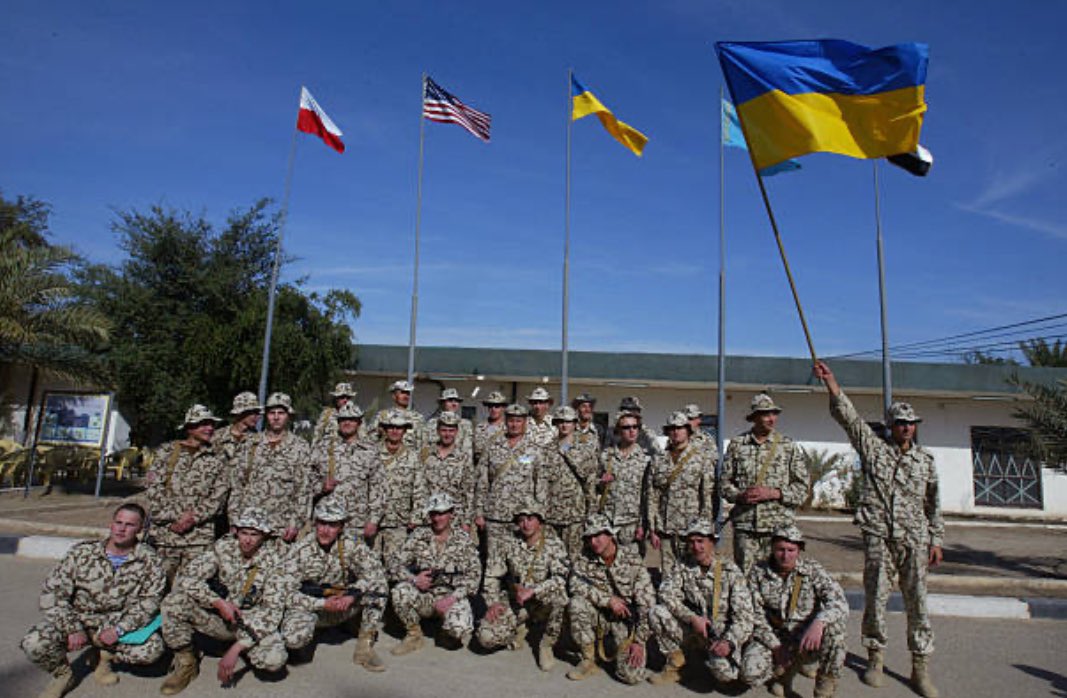
The photo shows the Ukrainian 🇺🇦 army in Iraq 🇮🇶 helping the United States 🇺🇸 fight against the regime of Saddam #Hussein.
When the United States 🇺🇸 asked for help, Ukraine 🇺🇦 responded by sending its troops and joining the U.S. 🇺🇸 coalition.
In Iraq 🇮🇶, 18 Ukrainian soldiers were killed while serving alongside the United States 🇺🇸.
Today, Ukrainians are not asking the United States to fight for us.
We are simply asking you not to side with the aggressor - Russia 🇷🇺.


![GeminiApp's tweet photo. Nano Banana, but make it holiday and extra nano.
Open the Gemini app and type: “Micro diorama: tiny people [insert action] on/with [insert object(s)], winter forest background, soft golden light. AR 1:1”
Drop your outputs in the replies! ↓](https://pbs.twimg.com/media/G83Xdl7bYAAxD3L.jpg)
![GeminiApp's tweet photo. Nano Banana, but make it holiday and extra nano.
Open the Gemini app and type: “Micro diorama: tiny people [insert action] on/with [insert object(s)], winter forest background, soft golden light. AR 1:1”
Drop your outputs in the replies! ↓](https://pbs.twimg.com/media/G83XdlwagAcmNjl.jpg)
![GeminiApp's tweet photo. Nano Banana, but make it holiday and extra nano.
Open the Gemini app and type: “Micro diorama: tiny people [insert action] on/with [insert object(s)], winter forest background, soft golden light. AR 1:1”
Drop your outputs in the replies! ↓](https://pbs.twimg.com/media/G83XdlvbMAAWqeL.jpg)





![techNmak's tweet photo. Andrej Karpathy wrote something that every Claude Code user has felt but couldn't articulate.
Three quotes. Read them slowly.
"The models make wrong assumptions on your behalf and just run along with them without checking. They don't manage their confusion, don't seek clarifications, don't surface inconsistencies, don't present tradeoffs, don't push back when they should."
"They really like to overcomplicate code and APIs, bloat abstractions, don't clean up dead code... implement a bloated construction over 1000 lines when 100 would do."
"They still sometimes change/remove comments and code they don't sufficiently understand as side effects, even if orthogonal to the task."
You've seen all three. Probably this week.
Someone turned these three observations into a single CLAUDE[.]md file. Four principles, one install, directly addresses each quote:
1./ Think before coding
Don't assume. Don't hide confusion. State ambiguity explicitly. Present multiple interpretations rather than silently picking one. Push back if a simpler approach exists. Stop and ask rather than guess.
2./ Simplicity first
No features beyond what was asked. No abstractions for single-use code. No "flexibility" that wasn't requested. No error handling for impossible scenarios. The test: would a senior engineer say this is overcomplicated? If yes, rewrite it.
3./ Surgical changes
Don't "improve" adjacent code. Don't refactor things that aren't broken. Match the existing style even if you'd do it differently. If you notice unrelated dead code, mention it, don't delete it. Every changed line should trace directly to the request.
4./ Goal-driven execution
Transform "fix the bug" into "write a test that reproduces it, then make it pass." Transform "add validation" into "write tests for invalid inputs, then make them pass." Give it success criteria and watch it loop until done.
This last one is Karpathy's key insight captured directly: "LLMs are exceptionally good at looping until they meet specific goals... Don't tell it what to do, give it success criteria and watch it go."
It's a single file. Drop it into any project.](https://pbs.twimg.com/media/HFxpgTJbYAA1sT-.jpg)



![GeminiApp's tweet photo. Nano Banana, but make it holiday and extra nano.
Open the Gemini app and type: “Micro diorama: tiny people [insert action] on/with [insert object(s)], winter forest background, soft golden light. AR 1:1”
Drop your outputs in the replies! ↓](https://pbs.twimg.com/media/G83XdmDasAA0Rwb.jpg)