If you want relationship advice, look towards semiconductors. A semiconductor without defects is a rock, useless. Put in a small number of defects and it conducts electricity better, but still not useful. But when you put two different semiconductors together (either different doping type or different band gap) and their Fermi levels align, this is where the magic happens--diodes, 2DEGs. The basis of useful semiconductor devices is the defects and the interfaces.
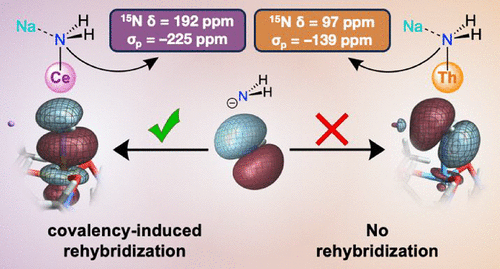
Comparison of Bonding in Isostructural Cerium and Thorium Parent Amide Complexes | Inorganic Chemistry https://t.co/a28eOtf4uX Autschbach, Schelter, and co-workers @InorgChem#cerium#thorium#amide#DFT#15NNMR
🌻The “God of #Fluorine,” Karl Otto Christe, passed away on April 19, 2026, in California.
He was born in Ulm, Germany, and studied chemistry at the University of Stuttgart @Uni_Stuttgart from 1957 onwards. He received his PhD in 1961 for work with Josef Goubeau and emigrated to California a year later.
There he worked first for #Stauffer Chemical Co. and from 1967–1994 for Rockwell International, a company well known for producing rocket fuels. From 1994–2005, Christe was a Senior Staff Advisor at the Air Force Research Laboratory of Edwards Air Force Base @AFResearchLab, and in parallel he was a Professor at the Loker Hydrocarbon Research Institute of the University of Southern California @UniversityofSo5.
Christe was most famous for the first completely chemical synthesis of elemental fluorine. Furthermore, he synthesized iconic ions like NF₄⁺ and ClF₆⁺ as well as extremely reactive polynitrogen ions like the linear-angled N₅⁺ and the cyclic N₅⁻, and he was well known as an expert in #EnergeticMaterials.
He received the “Apollo Achievement Award” for his contributions to the Apollo missions and a wide range of prizes from the ACS @AmerChemSociety, the #SFC, and the GDCh @GDCh_aktuell. Christe’s contributions to inorganic chemistry cannot be overestimated.
The Booker Lab at the University of Pennsylvania, in Philadelphia, and HHMI is searching for a lab manager. If interested, please apply at the HHMI link below.https://t.co/wFjZnkired
There’s an unlikely and little-known connection between NASA’s Artemis II lunar mission and one of Hans Bethe’s most practical yet least celebrated contributions from the late 1950s.
While consulting for AVCO on ICBM reentry vehicles, the Nobel laureate teamed up with engineer Mac Adams to publish a landmark 1959 paper: “A Theory for the Ablation of Glassy Materials.” The problem they tackled seemed almost impossible at the time: a nose cone slamming back into the atmosphere at Mach 25 would be enveloped in plasma hotter than 5,000 °F. Any normal material would simply vaporize. Pure insulation wouldn’t work; it would have to be impractically thick. Bethe and Adams realized the solution wasn’t to resist the heat but to embrace controlled sacrifice. They focused on glassy materials like fused quartz and glass-phenolic composites that would melt rather than char or burn chaotically.
Here’s what their theory showed: The outer surface reaches melting point and forms a thin, viscous liquid film. The hypersonic airflow shears this molten layer away, blowing it off as gas and droplets. The energy is carried outward and is absorbed in melting, vaporization, and convection instead of conducting inward. The ablation front steadily recedes, layer by layer, but the solid material behind it stays near room temperature. A shield only about an inch thick is enough. It was active cooling by mass loss, not passive protection. The heat shield literally burns away, turning the incoming plasma’s fury into exhaust that protects the vehicle.
That same foundational physics underpins today’s Orion capsule heat shield for Artemis II. Orion uses Avcoat - the only difference being that it is a charring ablator instead of a melting, glassy one, but descended from the same principles. The outer blocks pyrolyze and char at thousands of degrees, releasing gases that block the plasma and carry heat away, while the interior stays cool enough for the crew.
So when you watch Orion plunge through the atmosphere at 25,000 mph with its glowing plasma sheath, you’re seeing 1950s nuclear-missile research - refined by one of the 20th century’s greatest theoretical physicists - still keeping astronauts safe on the way back from the Moon. ICBM tech to lunar return. Science really is the ultimate long-term investment.
I'm finalizing one grant application this week. I'm writing it without any AI assistance despite temptations. One reason is that writing grants used to be an integral part of the creative process, so I would let evolve ideas and understand myself better what I want to discover.
Annual reminder: if you’ve been accepted to multiple graduate programs and are still deciding, please let the ones you’re definitely not going to know as soon as possible!
-Someone who got into his PhD off the waitlist the day after the deadline
I would like to thank @berachm who encouraged me to switch field from transition metals to rare earths and @SchelterGroup who first introduced me to f- element chemistry. They made me realize that Rare earths are future for science!! Looking forward to explore REE chemistry now!!
Happy to share that I have joined @iitjodhpur as Assistant Professor of Chemistry. My heartfelt gratitude to my Ph.D supervisor @berachm, postdoctoral supervisors @SchelterGroup, and Prof.Marinella Mazzanti for their guidance support and motivation throughout my academic journey!
The first material to superconduct above liquid nitrogen temperature was YBa2Cu3O7 (YBCO), and it is still the workhorse behind most high-Tc ‘products.’ A tale related to the publication of its discovery in the late 1980s, probably apocryphal, is as follows. The authors submitted the results for peer review–Tc up to 93K, unfathomable just a year prior. Because of the highly charged atmosphere around high-Tc at that time, in the version they sent for peer review, they said that the compound was made with Ytterbium (Yb) not Yttrium (Y). At the proofs stage they were like ‘oopsie!’ and corrected to composition. According to lore, this caused global Ytterbium prices to spike.